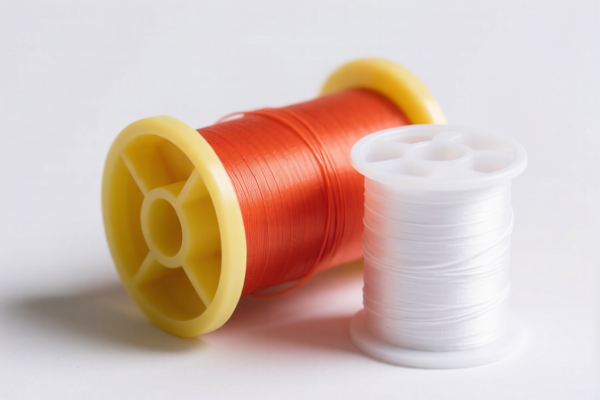
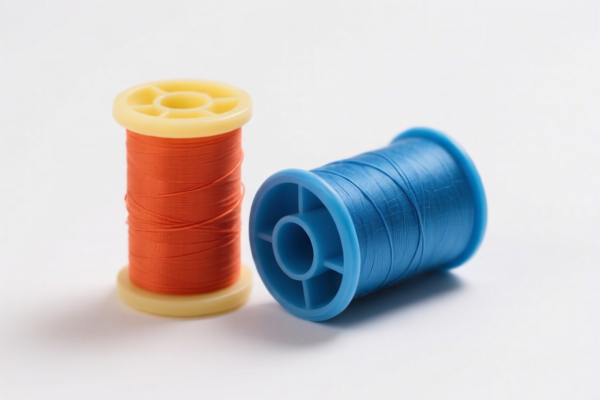
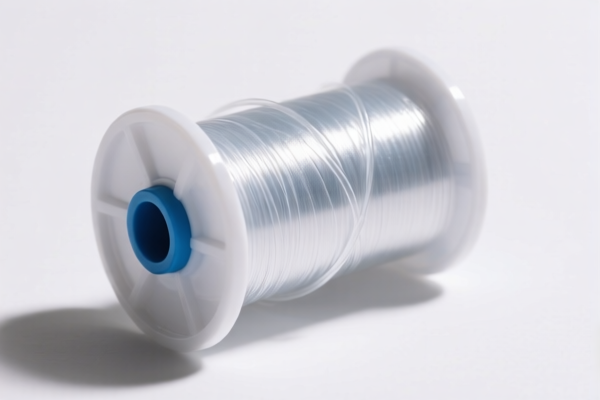
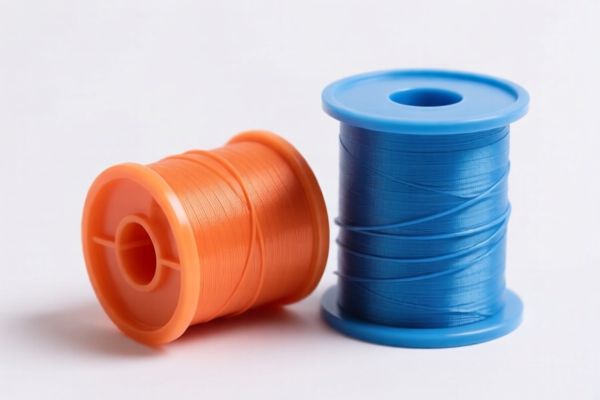
plastic spool
CN → US| HS编码 | 关税税率 | 原产国 | 目的国 | 文档 |
|---|---|---|---|---|
| 3916903000 | 41.5% | CN | US | 官方文档 |
| 3926909989 | 22.8% | CN | US | 官方文档 |
| 3926906090 | 39.2% | CN | US | 官方文档 |
| 8448399000 | 17.5% | CN | US | 官方文档 |
| 3916905000 | 40.8% | CN | US | 官方文档 |
商品图片
AI分析
🧵 Plastic Spool (Industrial/Textile Accessories)
🌐 HS Code Reference & Clearance Guide | 2026 Latest Tariff Analysis | Professional Clearance Strategy
📌 Part 1: Product Definition & Classification: Do You Really Understand "Plastic Spool"?
A Plastic Spool is a cylindrical or disk-shaped object used to wind thread, yarn, wire, or cables. In international trade, its classification depends heavily on its specific use and physical structure. It is not a single commodity but a component that can fall under several chapters depending on its primary function.
⚠️ Key Distinction Points:
- If it is a textile accessory (part of a machine) → It may fall under Chapter 84 (Machinery);
- If it is a general plastic article (standalone) → It falls under Chapter 39 (Plastics);
- Critical Rule: If the spool is specifically designed for a machine and essential to its operation, Chapter 84 often takes precedence over Chapter 39.
📦 Part 2: HS Code Classification Details (2026 Latest Tariff Authority Comparison)
Based on the provided data, here are the five possible HS Codes and their logical justifications:
| HS Code | Product Description | Application Scenario | Logic/Justification |
|---|---|---|---|
3916.90.30.00 |
Plastic Spools (Monofilament/Bulk) | Used for winding plastic monofilament or bulk materials | Shape-Based: Classified as an extension form (bulk/rod-like) of plastics. No material conflict. |
3926.90.99.89 |
Other Plastic Articles (Spool-like) | General-purpose plastic spools used as parts or accessories | Shape-Based: Fits the "other articles" category. Matches spool/roll-like accessory characteristics. |
3926.90.60.90 |
Plastic Spools (Other Articles) | General plastic spools without specific mechanical belt use | Fallback Principle: No conflict with mechanical belts. Acts as a general plastic product fallback. |
8448.39.90.00 |
Plastic Spool (Textile Machine Accessory) | Spools used specifically in textile machinery | Function-Based: Classified as an auxiliary machine/accessory for textile machinery. Plastic material is non-conflicting. |
3916.90.50.00 |
Plastic Spools (Other Forms) | Other variations of plastic spools not covered elsewhere | General Plastic Category: Fits under "other forms" within the monofilament/bulk plastic section. No material conflict. |
🔍 Key Reminder:
- Textile Machinery Spools (8448.39.90.00) generally offer lower duties if the primary function is clearly tied to textile machinery.
- General Plastic Spools (39xxseries) are treated as simple plastic products, often attracting higher tariffs due to trade disputes (Section 301/122).
💰 Part 3: 2026 Latest Tariff Rate Details (Including Surcharges & Policy Add-ons)
✅ Applicable Country: United States (US)
✅ Origin: China (CN)
✅ Effective Date: From November 10, 2025 (including subsequent imports)
🎯 1. 3916.90.30.00 – Plastic Spool (Monofilament/Bulk Form)
| Item | Content |
|---|---|
| Base Tariff | 6.5% |
| Section 301 Surcharge | +25.0% |
| Section 122 Tariff | +10.0% |
| Total Effective Rate | 41.5% |
| Tax Calculation | CIF Value × 41.5% |
| De Minimis Eligibility | ❌ Not Eligible |
| Legal Basis Path | Base Rate → Sec 301 → Sec 122 |
📌 Explanation:
- This code classifies the spool based on its material form (plastic bulk/monofilament shape).
- It is subject to all three layers of tariffs: Base, Section 301 (Trade War), and Section 122 (Global Trade Emergency).
- Result: High tax burden (41.5%).
🎯 2. 3926.90.99.89 – Other Plastic Articles (Spool-like)
| Item | Content |
|---|---|
| Base Tariff | 5.3% |
| Section 301 Surcharge | +7.5% |
| Section 122 Tariff | +10.0% |
| Total Effective Rate | 22.8% |
| Tax Calculation | CIF Value × 22.8% |
| De Minimis Eligibility | ❌ Not Eligible |
| Legal Basis Path | Base Rate → Sec 301 (Lower Tier) → Sec 122 |
📌 Explanation:
- This code treats the spool as a general plastic article (3926).
- It benefits from a lower Section 301 rate (7.5%) compared to the 25% rate for3916or3926.60.90.
- Result: Moderate tax burden (22.8%). Recommended if functional use is ambiguous.
🎯 3. 3926.90.60.90 – Plastic Spool (General Fallback)
| Item | Content |
|---|---|
| Base Tariff | 4.2% |
| Section 301 Surcharge | +25.0% |
| Section 122 Tariff | +10.0% |
| Total Effective Rate | 39.2% |
| Tax Calculation | CIF Value × 39.2% |
| De Minimis Eligibility | ❌ Not Eligible |
| Legal Basis Path | Base Rate → Sec 301 → Sec 122 |
📌 Explanation:
- This is a fallback classification for plastic products not specifically mentioned elsewhere.
- Despite a low base rate (4.2%), it incurs the full 25% Section 301 surcharge.
- Result: High tax burden (39.2%). Avoid if possible.
🎯 4. 8448.39.90.00 – Plastic Spool (Textile Machine Accessory) 🏆 LOWEST TARIFF
| Item | Content |
|---|---|
| Base Tariff | 0.0% |
| Section 301 Surcharge | +7.5% |
| Section 122 Tariff | +10.0% |
| Total Effective Rate | 17.5% |
| Tax Calculation | CIF Value × 17.5% |
| De Minimis Eligibility | ❌ Not Eligible |
| Legal Basis Path | Base Rate (0%) → Sec 301 (Lower Tier) → Sec 122 |
📌 Explanation:
- This code classifies the spool as an auxiliary accessory for textile machinery.
- It enjoys a 0% base tariff and a lower Section 301 surcharge (7.5%).
- Requirement: You must prove the spool is used specifically for textile machinery (e.g., provide machinery manuals, usage statements).
- Result: Lowest tax burden (17.5%). Highly Recommended if applicable.
🎯 5. 3916.90.50.00 – Plastic Spool (Other Forms)
| Item | Content |
|---|---|
| Base Tariff | 5.8% |
| Section 301 Surcharge | +25.0% |
| Section 122 Tariff | +10.0% |
| Total Effective Rate | 40.8% |
| Tax Calculation | CIF Value × 40.8% |
| De Minimis Eligibility | ❌ Not Eligible |
| Legal Basis Path | Base Rate → Sec 301 → Sec 122 |
📌 Explanation:
- Similar to3916.90.30.00, this is a plastic material-based classification.
- It attracts the maximum Section 301 surcharge (25%).
- Result: High tax burden (40.8%). Avoid if possible.
🛠️ Part 4: Clearance Practical Advice (Battle-Tested Pitfall Guide)
✅ 1. Document Checklist (Mandatory)
| Document | Required | Description |
|---|---|---|
| ✅ Product Specifications | ✔️ | Include dimensions, material (e.g., PP/PE), weight, and load capacity. |
| ✅ Usage Statement/Declaration | ✔️ | Critical for 8448.39.90.00. State clearly: "Used as a part/auxiliary device for textile machinery [Model X]." |
| ✅ Photos (Labeled) | ✔️ | Clear images showing the spool, its scale, and any specific features (e.g., flanges, holes). |
| ✅ Commercial Invoice | ✔️ | Accurately describe the item. Avoid vague terms like "Plastic Part." Use "Plastic Spool for Textile Machine." |
| ✅ Packing List | ✔️ | Show relationship between spools and any machinery if shipped together. |
✅ 2. Declaration Tips (Key Mantra)
🔥 "Function Defines Code, Machine Use Saves Money!"
| Scenario | Correct Declaration | Error to Avoid |
|---|---|---|
| Spool for Textile Machine | 8448.39.90.00 (Accessory) |
Declaring as "Plastic Spool" → 41.5% |
| General Purpose Spool | 3926.90.99.89 (Plastic Article) |
Declaring as "Textile Accessory" without proof → Risk of Rejection |
| Spool with Thread on It | Same as empty spool (if thread is negligible) | Declaring as "Thread" → Wrong Chapter |
| Spool for Cable/Wire | Likely 3926 or 8544 (if part of cable) |
Ignoring cable association → Misclassification |
✅ 3. Special Situations
| Situation | Handling Advice |
|---|---|
| OEM Spools for Specific Machine | Provide a letter from the end-user confirming the spool is custom-made for their textile machine. This strengthens the 8448 claim. |
| Mixed Shipments (Spools + Machinery) | If spools are shipped with the main machine, they may be classified under the main machine's HS Code, potentially reducing overall duty. |
| Generic Spools | If the spool is a standard, off-the-shelf item not tied to a specific machine, you must use the 3926 codes (22.8% is the best option). |
| Plastic Material Type | Ensure the material is declared correctly (e.g., Polypropylene). If it's not plastic, these codes do not apply. |
🌍 Part 5: Global Market Clearance Comparison (2026 Latest)
| Country/Region | Recommended HS Code | Tariff Rate (China Origin) | Certification | Notes |
|---|---|---|---|---|
| 🇺🇸 USA | 8448.39.90.00 |
17.5% (Best Option) | N/A (Standard) | Highest Priority: Use if for textiles. |
| 🇺🇸 USA | 3926.90.99.89 |
22.8% (Fallback) | N/A | Use if textile use cannot be proven. |
| 🇪🇺 EU | 3926.90.99 |
4.0% | CE (if applicable) | No Section 301/122 surcharges. |
| 🇨🇳 China | 3926.90.99 |
5.0% - 6.0% | N/A | Import duties vary by specific subheading. |
| 🇬🇧 UK | 3926.90.99 |
4.0% | N/A | Post-Brexit tariffs apply. |
📌 Conclusion:
- USA: The difference between 17.5% and 41.5% is massive. Proving textile machine usage is critical.
- Other Markets: Tariffs are generally lower and not subject to US-specific trade war surcharges.
📌 Part 6: Common Errors & Pitfalls (Lessons Learned)
❌ Error 1: Declaring a textile machine spool as a generic plastic spool (3916 or 3926.60.90).
👉 Consequence: Pay 39.2% - 41.5% instead of 17.5%. Overpayment of ~24%!
❌ Error 2: Declaring a generic plastic spool as a textile accessory without proof.
👉 Consequence: Customs may reject the classification, leading to delays, re-inspection, or penalties.
❌ Error 3: Ignoring Section 122 Tariffs.
👉 Consequence: All these codes are subject to Section 122 (10%). Failing to account for this leads to budget shortfalls.
❌ Error 4: Vague Description: "Plastic Roll."
👉 Consequence: Ambiguity leads to random classification by Customs, often resulting in the highest possible rate.
✅ Correct Practice:
"Plastic Spool, Polypropylene, Diameter: 10cm, Used as an Auxiliary Device for [Machine Name] Textile Machinery. Model: XYZ."
🎯 Part 7: Conclusion: Smart Classification, Cost Savings!
🎯 Remember the Mantra:
🔹 "Machine Use = 17.5%; Generic Plastic = 22.8% - 41.5%. Prove the Machine!"
🔹 "Don't let a $100 shipment cost you $41 in taxes when $17 would suffice."
📌 Pro Tip:
If your plastic spools are used for non-textile purposes (e.g., sewing machines at home, industrial cable winding), you cannot use 8448.39.90.00. In that case, use 3926.90.99.89 (22.8%) as it is the cheapest plastic option provided.
📣 Immediate Action:
📞 Consult your customs broker to determine if your spools qualify as textile machine accessories.
📄 Prepare a "Statement of Use" for your supplier/customs broker.
🚀 Save 24% in taxes by choosing the right HS Code!
✨ Professional Clearance Starts with Precise Classification!
💼 Every dollar saved is a dollar earned!
用户评价
关于 HS 编码归类
协调制度(HS)是由世界海关组织(WCO)制定的国际贸易商品分类标准。全球 200 多个国家采用 HS 系统作为海关关税、贸易统计和进出口监管的基础。
每个 HS 编码遵循以下层级结构:
- 章(2 位)——商品大类(例如:第 84 章:机器和机械设备)
- 品目(4 位)——章内的更具体分类
- 子目(6 位)——国际通用细分,所有 WCO 成员国统一使用
- 本国细分(8-10 位)——各国自行扩展的细分编码,如美国 HTSUS 10 位编码
正确的 HS 编码归类对于顺利通关、准确缴纳关税和遵守贸易法规至关重要。错误归类可能导致海关延误、多缴关税或罚款。
从CN进口到US时,适用的关税税率可能包括:
- 最惠国(MFN)税率——适用于 WTO 成员国的标准关税税率
- 普通税率——适用于无贸易协定国家
- 贸易救济关税——附加关税,如 301 条款(反倾销)、232 条款(国家安全)或反补贴税
本页内容仅供参考。如需正式归类,请咨询当地海关或持牌报关代理。