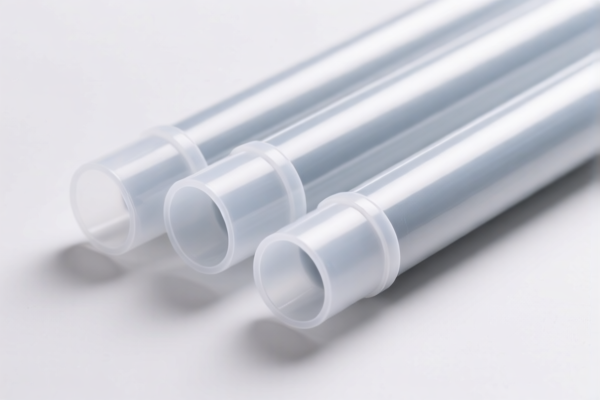
plastic tubes for construction
CN → US| HS编码 | 关税税率 | 原产国 | 目的国 | 文档 |
|---|---|---|---|---|
| 3917290090 | 38.1% | CN | US | 官方文档 |
| 3917230000 | 38.1% | CN | US | 官方文档 |
| 3916200020 | 40.8% | CN | US | 官方文档 |
| 3916200010 | 40.8% | CN | US | 官方文档 |
| 3926909987 | 22.8% | CN | US | 官方文档 |
商品图片



AI分析
🔧 Plastic Tubes for Construction
🌐 HS Code Reference & Customs Clearance Guide | 2026 Latest Tariff Analysis | Professional Compliance Strategy
📌 I. Product Definition & Classification: What Exactly Are "Plastic Tubes for Construction"?
Plastic tubes used in construction are critical components for plumbing, electrical conduit, drainage, and structural supports. In international trade, their classification depends heavily on material type, form (profill/extruded vs. simple tubes), and specific application.
The data provided highlights five distinct HS Codes based on subtle differences in physical characteristics and regulatory interpretations:
⚠️ Key Distinction Points:
- Profiled vs. Simple Tubes:3916covers "profiles" (complex shapes like window frames), while3917covers "tubes, hoses, and pipes" (simpler cylindrical forms).
- Material Specificity: Some codes specify Polyethylene/Polypropylene, while others are generic "other plastics."
- Purpose: All listed codes explicitly mention "for construction," but the form dictates the chapter.
📦 II. HS Code Classification Details (2026 Latest Tariff Reference)
| HS Code | Product Description | Application/Scenario | Key Characteristics |
|---|---|---|---|
3917.29.00.90 |
Plastic tubes, fittings, and joints; Other | General construction plastic piping (non-specific type) | Generic plastic tube; no specific polymer stated; matches general "tube" form. |
3917.23.00.00 |
Plastic tubes, fittings, and joints; Polyethylene | Plumbing, gas lines, water supply | Specifically Polyethylene (PE); rigid or flexible tubes for building utilities. |
3916.20.00.20 |
Plastic Profiles and Shapes for Construction; Polyethylene | Window frames, door profiles, railings | Profile (not simple tube); complex cross-sections for structural/building envelopes. |
3916.20.00.10 |
Plastic Profiles and Shapes for Construction; Other | Complex plastic building components | Profile with complex shape; used in construction but not specifically polyethylene. |
3926.90.99.87 |
Other Articles of Plastics; Other | Miscellaneous plastic construction accessories | Catch-all/Other; simple plastic tubes that don’t fit specific profile/tube definitions. |
🔍 Critical Warning:
-3916vs.3917: This is the most common classification error.
- If the product is a simple hollow cylinder (pipe/tube) → Likely3917.
- If the product is a complex shape (e.g., window frame profile, decorative molding) → Likely3916.
- Material Matters:3917.23is strictly for Polyethylene. If your tube is PVC, ABS, or PP, it must fall under3917.29or other subheadings, not3917.23.
💰 III. 2026 Latest Tariff Rate Breakdown (Including Surcharges & Policy Add-ons)
✅ Applicable Country: United States (US)
✅ Origin: China (CN)
✅ Effective Time: Post-2025 Policy Framework (Section 301 + IEEPA)
🎯 1. 3917.29.00.90 & 3917.23.00.00 —— General/PE Plastic Tubes
| Item | Detail |
|---|---|
| Base Tariff | 3.1% |
| Section 301 Surcharge | +25.0% |
| IEEPA Surcharge (Section 122) | +10.0% |
| Total Effective Rate | 38.1% |
| Calculation Basis | CIF Value × 38.1% |
| De Minimis Exemption | ❌ Not Eligible (High tariff threshold excludes $800 exemption) |
| Legal Reference | USITC:3917.23.00.00 → FOOTNOTE:301-Section → IEEPA:122 |
📌 Explanation:
- These are standard construction tubes. The 38.1% rate is punitive due to the combination of base MFN rate, Section 301 retaliatory tariff, and IEEPA national security tariffs.
- Cost Impact: For every $10,000 of goods, you pay $3,810 in duties.
🎯 2. 3916.20.00.20 & 3916.20.00.10 —— Plastic Profiles (Window/Door/Railing)
| Item | Detail |
|---|---|
| Base Tariff | 5.8% |
| Section 301 Surcharge | +25.0% |
| IEEPA Surcharge (Section 122) | +10.0% |
| Total Effective Rate | 40.8% |
| Calculation Basis | CIF Value × 40.8% |
| De Minimis Exemption | ❌ Not Eligible |
| Legal Reference | USITC:3916.20.00.20 → FOOTNOTE:301-Section → IEEPA:122 |
📌 Explanation:
- Profiles are considered more "industrial/structural" and thus have a higher base duty (5.8% vs 3.1%).
- Highest Tax Burden: At 40.8%, this is the most expensive classification. Misclassifying a simple tube as a "profile" to avoid scrutiny could lead to penalties, but misclassifying a profile as a tube saves only 2.7% while risking compliance audits.
🎯 3. 3926.90.99.87 —— Other Plastic Articles (Catch-all)
| Item | Detail |
|---|---|
| Base Tariff | 5.3% |
| Section 301 Surcharge | +7.5% |
| IEEPA Surcharge (Section 122) | +10.0% |
| Total Effective Rate | 22.8% |
| Calculation Basis | CIF Value × 22.8% |
| De Minimis Exemption | ❌ Not Eligible (Likely) |
| Legal Reference | USITC:3926.90.99.87 → FOOTNOTE:301-Lower Tier → IEEPA:122 |
📌 Explanation:
- Best Case Scenario: If your plastic tube is a simple accessory or doesn't fit neatly into Chapter 3916/3917 definitions, it might fall here.
- Significant Savings: 22.8% is 15.3 percentage points lower than the profile category and 15.3 points lower than the main tube categories.
- Risk: This is a "residual" category. Customs may argue it should be in 3917. Only use if the product truly lacks specific form/material designation in higher categories.
🛠️ IV. Customs Clearance Practical Advice (Avoiding Pitfalls)
✅ 1. Required Documentation Checklist
| Document | Must Provide? | Notes |
|---|---|---|
| ✅ Product Specifications | ✔️ | Must specify: Material (PE/PVC/ABS), Diameter, Wall Thickness, Pressure Rating. |
| ✅ Cross-Section Drawings | ✔️ | Crucial: To prove it is a "Tube" (Chapter 3917) vs. "Profile" (Chapter 3916). Simple circles = 3917; Complex shapes = 3916. |
| ✅ Commercial Invoice | ✔️ | Clearly state "Plastic Tubes for Construction Use." Avoid vague terms like "Plastic Parts." |
| ✅ Certificate of Origin | ✔️ | Required for tariff calculation. |
| ✅ Usage Statement | ✔️ | Confirm end-use is construction (plumbing/electrical) to support HS code selection. |
✅ 2. Classification Strategy & Cost Optimization
🔥 "Shape Determines Chapter, Material Determines Subheading!"
| Scenario | Correct HS Code | Total Tax | Strategy |
|---|---|---|---|
| Simple Pipe (PE/PVC) | 3917.23.00.00 or 3917.29.00.90 |
38.1% | Declare exact material. If PE, use .23; if others, use .29. |
| Complex Window Frame | 3916.20.00.20 or 3916.20.00.10 |
40.8% | Must declare as "Profile." Do not try to hide complexity. |
| Simple Plastic Accessory/Tube | 3926.90.99.87 |
22.8% | Opportunity: If the product is a small-diameter, non-pressurized, or accessory tube that doesn't fit standard "pipe" definitions, consider this lower-tax category. |
✅ 3. Common Errors & Pitfalls
❌ Error 1: Calling a window frame "Plastic Tube"
👉 Result: Customs will classify it as 3917 (lower tax) but may flag it for misdeclaration if drawings show complex profiles. Alternatively, if they classify it correctly as 3916, you pay 40.8%.
👉 Advice: Be honest about the shape. Use "Profile" if it's not a simple circle.
❌ Error 2: Misidentifying Material (e.g., saying PVC when it's PE)
👉 Result: If you claim 3917.23 (PE) but it's PVC, you might face penalties. Use 3917.29 (Other) if unsure.
❌ Error 3: Ignoring IEEPA Section 122
👉 Result: Even if you find a lower base tariff, the +10% IEEPA surcharge applies to most Chinese plastic goods. Always factor this in.
🌍 V. Global Market Comparison (2026)
| Region | Recommended HS | Est. Total Duty (China Origin) | Notes |
|---|---|---|---|
| 🇺🇸 USA | 3917.29.00.90 |
38.1% | Highest due to Section 301 + IEEPA. |
| 🇺🇸 USA (Optimized) | 3926.90.99.87 |
22.8% | Only if product qualifies as "Other Plastic Article." |
| 🇨🇳 China | 3917.29.00.00 |
~5-8% | Much lower base rates. |
| 🇪🇺 EU | 3917.29.00.00 |
~5-7% | No Section 301 surcharge. |
| 🇬🇧 UK | 3917.29.00.00 |
~5-7% | Post-Brexit rules apply. |
📌 Conclusion:
- The US market is highly penalized for plastic construction materials.
- Cost Saving Opportunity: If your product is a simple, non-structural plastic tube, investigate if it can be classified under3926.90.99.87to save ~15% in duties. This requires strong technical justification that it does not fit the specific "pipe/tube/fitting" definitions of Chapter 3917.
📌 VI. Final Recommendations
- Audit Your Product Shape: Does it have a simple circular cross-section? If yes, it's likely
3917. If it has slots, grooves, or complex geometry, it's3916. - Verify Material: Is it Polyethylene? Use
3917.23. Is it something else? Use3917.29. - Consider the "Other" Category: If your tube is small, flexible, or used as an accessory rather than a primary conduit, consult a customs broker about
3926.90.99.87for potential tax savings. - Pre-Ruling: Given the high stakes (22.8% vs 40.8%), consider applying for an IRS Binding Ruling or using a professional customs broker to confirm the HS Code before shipment.
🎯 Remember:
🔹 "Shape = Chapter 3916, Material = Subheading, Simplicity = Potential Savings."
🔹 "In the US, Plastic Pipes Cost 38%, Profiles Cost 40%, but 'Others' may cost only 22%."
🔹 "Don't let a 2% base difference cost you 15% in total duty. Classify correctly, or optimize wisely."
📣 Immediate Action:
📞 Contact a Certified Customs Broker with product drawings.
📄 Request a Pre-Classification Analysis to determine if3926applies.
🚀 Secure Your Supply Chain by understanding the true landed cost of plastic construction materials.
✨ Professional Customs Compliance Starts with Precise Classification!
💼 Every Percentage Point Matters in Global Trade.
用户评价
关于 HS 编码归类
协调制度(HS)是由世界海关组织(WCO)制定的国际贸易商品分类标准。全球 200 多个国家采用 HS 系统作为海关关税、贸易统计和进出口监管的基础。
每个 HS 编码遵循以下层级结构:
- 章(2 位)——商品大类(例如:第 84 章:机器和机械设备)
- 品目(4 位)——章内的更具体分类
- 子目(6 位)——国际通用细分,所有 WCO 成员国统一使用
- 本国细分(8-10 位)——各国自行扩展的细分编码,如美国 HTSUS 10 位编码
正确的 HS 编码归类对于顺利通关、准确缴纳关税和遵守贸易法规至关重要。错误归类可能导致海关延误、多缴关税或罚款。
从CN进口到US时,适用的关税税率可能包括:
- 最惠国(MFN)税率——适用于 WTO 成员国的标准关税税率
- 普通税率——适用于无贸易协定国家
- 贸易救济关税——附加关税,如 301 条款(反倾销)、232 条款(国家安全)或反补贴税
本页内容仅供参考。如需正式归类,请咨询当地海关或持牌报关代理。