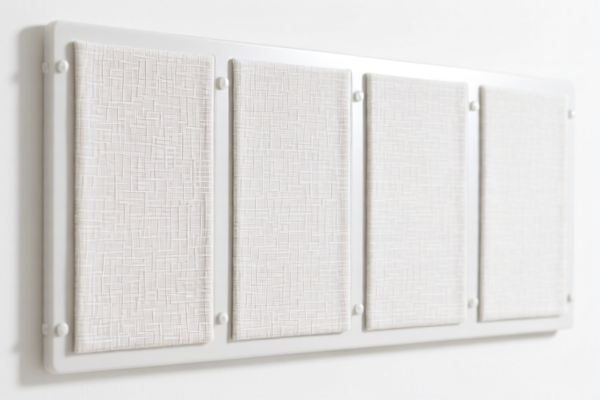
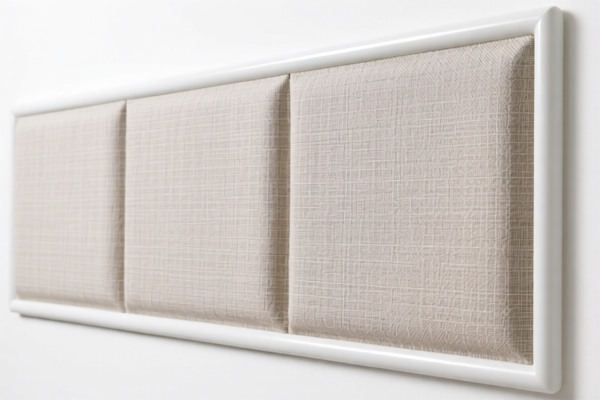
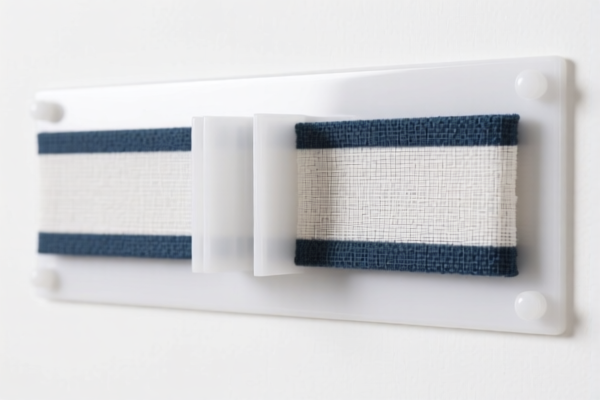
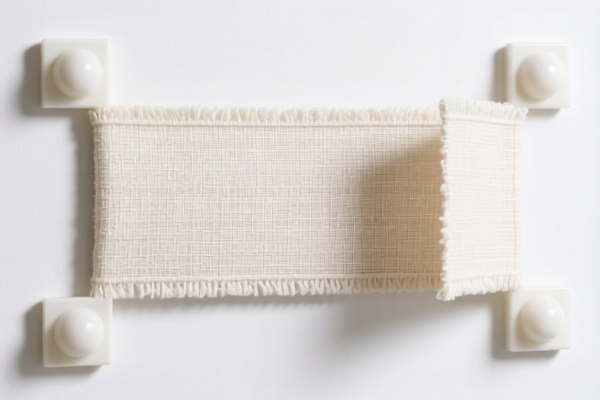
plastic wall decor panel textile
CN → US| HS编码 | 关税税率 | 原产国 | 目的国 | 文档 |
|---|---|---|---|---|
| 3921904010 | 39.2% | CN | US | 官方文档 |
| 6815190000 | 35.0% | CN | US | 官方文档 |
| 3921905010 | 39.8% | CN | US | 官方文档 |
| 3926909989 | 22.8% | CN | US | 官方文档 |
| 3921904010 | 39.2% | CN | US | 官方文档 |
商品图片
AI分析
🏠 Plastic Wall Decor Panel (Textile-Reinforced)
🌐 HS Code Classification & Customs Clearance Guide | 2026 Latest Tariff Analysis | Professional Compliance Strategy
📌 1. Product Definition & Classification Logic: Is it Plastic or Composite?
This product, described as "plastic wall decor panel textile" (纺织增强塑料装饰板), sits in a grey area between Chapter 39 (Plastics) and Chapter 68 (Articles of Stone or Other Mineral Substances). The core dispute lies in whether the "textile reinforcement" changes the essential character of the plastic sheeting.
Key Classification Dilemmas:
- Plastic Board Logic (Chapter 39): If the plastic is the primary material and the textile is merely a reinforcing mesh inside or on the plastic, it remains a "plate/sheet."
- Composite/Mineral Logic (Chapter 68): If the textile is a carbon fiber or specialized mineral composite that gives the panel its structural integrity, it may fall under Chapter 68.
- Miscellaneous Plastic Article (Chapter 39/84): If it's considered a finished decorative item rather than a raw material, it might fall under "Other articles of plastics."
⚠️ Critical Distinction:
- Reinforced Plastic Sheet: Textile is an additive/layer → Chapter 39
- Carbon/Mineral Composite Panel: Textile is a structural carbon/mineral fiber → Chapter 68
- Finished Decor: Plastic sheets used for decoration → Chapter 39/84
📦 2. HS Code Classification Details (2026 Latest Tariff Data)
Based on the provided data, here are the 4 most likely HS Codes, their rationales, and associated tax rates.
| HS Code | Product Description & Rationale | Total Tax Rate | Tax Breakdown |
|---|---|---|---|
| 3921.90.40.10 | Textile-Reinforced Plastic Decorative Panels. Classified as plastic plates/sheets. The textile reinforcement is treated as a variant of plastic board construction. | 39.2% | Base: 4.2% Section 301: 25.0% Section 122: 10.0% |
| 6815.19.00.00 | Carbon/Mineral Composite Panels. Inferred as composite articles due to textile reinforcement (assuming carbon/mineral fibers). Falls under Chapter 68 (Other articles of stone/minerals). | 35.0% | Base: 0.0% Section 301: 25.0% Section 122: 10.0% |
| 3921.90.50.10 | Laminated Plastic Panels. Classified as plastic plates where textile serves as a laminate layer. Logic follows the structure of laminated plastic boards. | 39.8% | Base: 4.8% Section 301: 25.0% Section 122: 10.0% |
| 3926.90.99.89 | Other Plastic Decorative Articles. Classified as "Plastic wall decor" sheets. Treated as finished plastic articles for interior decoration rather than raw boards. | 22.8% | Base: 5.3% Section 301: 7.5% Section 122: 10.0% |
🔍 Key Takeaway:
- Cheapest Option:3926.90.99.89at 22.8% (if classified as finished decorative items).
- Most Common for Boards:3921.90.40.10or3921.90.50.10at ~39% (if classified as reinforced plastic sheets).
- Composite Argument:6815.19.00.00at 35.0% (requires proving the textile is carbon/mineral-based and defines the product's character).
💰 3. 2026 Tariff Rate详解 (Detailed Tax Structure)
✅ Applicable Country: United States (US)
✅ Origin: China (CN)
✅ Effective Date: Post-2025 Trade Policy Adjustments
🎯 1. 3921.90.40.10 & 3921.90.50.10 (Reinforced Plastic Sheets)
| Item | Detail |
|---|---|
| Base Tariff | 4.2% - 4.8% (General Rate) |
| Section 301 Tariff | +25.0% (High tariff on Chinese plastics/composites) |
| Section 122 Tariff | +10.0% (Additional levy on certain manufactured goods) |
| Total Rate | 39.2% - 39.8% |
| Calculation | CIF Value × Total Rate |
| De Minimis Exemption | ❌ Not Eligible (Goods over $800 are subject to full duty assessment; these codes do not qualify for low-value exemption waivers) |
| Legal Basis | USITC:3921.90.40.10 → Section 301: Footnote 9903.88.01 → Section 122: 19 USC 1677j |
📌 Explanation:
- The 25% Section 301 tariff is the dominant cost driver for Chinese-origin plastic composites.
- The 10% Section 122 tariff adds further burden on specific plastic articles.
- Total impact: Nearly 40% of the product value is tax. This makes low-margin decorative panels highly uncompetitive without duty mitigation strategies.
🎯 2. 6815.19.00.00 (Carbon/Mineral Composites)
| Item | Detail |
|---|---|
| Base Tariff | 0.0% |
| Section 301 Tariff | +25.0% |
| Section 122 Tariff | +10.0% |
| Total Rate | 35.0% |
| Calculation | CIF Value × 35% |
| De Minimis Exemption | ❌ Not Eligible |
| Legal Basis | USITC:6815.19.00.00 → Section 301 |
📌 Explanation:
- Although the base tariff is 0%, the Section 301 and 122 tariffs still apply.
- Savings: ~5% cheaper than Chapter 39 classifications.
- Risk: Requires strong technical documentation to prove the "textile" is actually carbon/mineral fiber, not just standard polyester/nylon. Customs may challenge this if the textile is generic.
🎯 3. 3926.90.99.89 (Other Plastic Articles)
| Item | Detail |
|---|---|
| Base Tariff | 5.3% |
| Section 301 Tariff | +7.5% (Lower than 25% for some miscellaneous plastic goods) |
| Section 122 Tariff | +10.0% |
| Total Rate | 22.8% |
| Calculation | CIF Value × 22.8% |
| De Minimis Exemption | ❌ Not Eligible |
| Legal Basis | USITC:3926.90.99.89 → Section 301 |
📌 Explanation:
- Lowest Total Tax in the provided dataset.
- Strategy: Declare as "Finished Decorative Plastic Panels" rather than "Reinforced Plastic Sheets."
- Requirement: The product must be in a finished state suitable for wall decoration, not just raw laminated sheets.
🛠️ 4. Customs Clearance Practical Advice (Avoiding Pitfalls)
✅ 1. Essential Documentation Checklist
| Document | Requirement | Purpose |
|---|---|---|
| Product Specification Sheet | Must detail material composition (e.g., "PVC base with polyester mesh") | Determines Chapter 39 vs 68 |
| Technical Drawing | Show layer structure (Plastic-Textile-Plastic) | Proves lamination or composite nature |
| Commercial Invoice | Clear description: "Plastic Wall Decor Panel, Textile-Reinforced" | Avoids ambiguity |
| Material Safety Data Sheet (MSDS) | If chemical processing is involved | Required for plastic imports |
| Certificate of Origin | Form A or General CO | Verifies Chinese origin (triggers 301/122) |
✅ 2. Declaration Strategy (Crucial for Tax Optimization)
🔥 "Finish it, Don't Just Laminate It!"
| Scenario | Recommended HS Code | Tax Rate | Reasoning |
|---|---|---|---|
| Raw Laminated Sheets (Sold to be cut/install later) | 3921.90.40.10 / 3921.90.50.10 |
39.2% - 39.8% | Classified as plastic plates/sheets. High tax. |
| Finished Decor Panels (Pre-cut, ready to hang) | 3926.90.99.89 |
22.8% | Classified as "Other plastic articles." Lowest tax. |
| Carbon Fiber Panels (High-tech composite) | 6815.19.00.00 |
35.0% | Requires proof of carbon/mineral content. Mid-range tax. |
📌 Warning:
- Do not declare finished decorative panels as "Plastic Sheets" (3921) unless they are sold in bulk rolls/sheets.
- If you declare3926.90.99.89, ensure the product is finished (e.g., printed, cut, edged). If it's just a raw sheet, customs may downgrade it to3921, leading to back taxes and penalties.
✅ 3. Special Cases & Mitigation
| Situation | Advice |
|---|---|
| OEM Custom Panels | Provide customer design files to prove "finished decorative" status. |
| Mixed Material | If textile is >50% by weight, argue for Chapter 68 (6815.19.00.00) to save ~5% vs Chapter 39 sheets. |
| De Minimis ($800) | ❌ Not Applicable. These HS codes are not eligible for Section 321 (de minimis) exemption. All duties apply. |
| Supply Chain Diversification | Consider manufacturing in Vietnam/Mexico to avoid Section 301 (25%) and Section 122 (10%) tariffs. |
🌍 5. Global Market Comparison (2026)
| Country | Recommended HS Code | Tariff (China Origin) | Key Certification | Note |
|---|---|---|---|---|
| 🇺🇸 USA | 3926.90.99.89 |
22.8% | FCC/UL (if electrical) | Highest duty burden globally for this product. |
| 🇨🇳 China | 3926.90.99.89 |
5% - 9% | CCC | No Section 301/122. Low cost. |
| 🇪🇺 EU | 3926.90.99.89 |
0% - 4% | CE/REACH | No major anti-dumping tariffs. |
| 🇦🇺 Australia | 3926.90.99.89 |
5% | RCM | Moderate duty. |
| 🇯🇵 Japan | 3926.90.99.89 |
0% - 5% | PSE | Low duty, strict safety standards. |
📌 Conclusion:
- USA is the most expensive market due to Section 301 and 122 tariffs.
- Tax Savings Potential: Switching from3921(39%) to3926(22.8%) saves ~16% on tax.
- Strategic Move: Ensure product is declared as finished decorative items to qualify for the lower3926rate.
📌 6. Common Errors & Pitfalls (Lessons Learned)
❌ Error 1: Declaring finished wall panels as "Plastic Sheets" (3921)
👉 Consequence: Tax jumps from 22.8% to 39.2% → 16% extra cost.
❌ Error 2: Claiming "Carbon Fiber" for standard textile-reinforced plastic
👉 Consequence: Customs audit → Rejected 6815 → Back taxes + penalties.
❌ Error 3: Ignoring Section 122 Tariff
👉 Consequence: Underpayment by 10% → Audit and interest.
❌ Error 4: Assuming De Minimis Exemption Applies
👉 Consequence: Package seized → Full duty + storage fees.
✅ Correct Action:
"Wall Decor Panel, PVC Base, Polyester Reinforced, Pre-Cut, Ready for Installation, Model XYZ."
🎯 7. Conclusion: Professional Declaration, Cost Optimization!
🎯 Key Takeaways:
🔹 "Finished vs. Raw" is key: Declare as
3926.90.99.89(Finished) for 22.8% tax. Avoid3921(Raw) for 39% tax.
🔹 "Carbon Claim" is risky: Only use6815.19.00.00if you have proof of carbon/mineral content.
🔹 "No De Minimis": Section 301 and 122 tariffs apply to all values. No $800 exemption.
🔹 "Total Tax Impact": Expect 22.8% - 39.8% in total duties. Plan your margin accordingly.
📌 Pro Tip:
If your product is exported to the US, consider:
1. Pre-cutting & Finishing in China to qualify for 3926.90.99.89 (22.8%).
2. Advanced Ruling: File an ISF (Importer Security Filing) and request an Advance Ruling from CBP to confirm HS Code.
3. Supply Chain: Evaluate manufacturing in Vietnam or Mexico to avoid Section 301 (25%) + Section 122 (10%) = 35%+ extra tariff.
📣 Immediate Action:
📞 Consult a Customs Broker
📄 Prepare Technical Specs & Finished Product Photos
🚀 Optimize Declaration to3926.90.99.89for Maximum Savings
✨ Precision in Classification, Profit in Logistics!
💼 Don't let 16% tax erode your margin. Declare Correctly.
用户评价
关于 HS 编码归类
协调制度(HS)是由世界海关组织(WCO)制定的国际贸易商品分类标准。全球 200 多个国家采用 HS 系统作为海关关税、贸易统计和进出口监管的基础。
每个 HS 编码遵循以下层级结构:
- 章(2 位)——商品大类(例如:第 84 章:机器和机械设备)
- 品目(4 位)——章内的更具体分类
- 子目(6 位)——国际通用细分,所有 WCO 成员国统一使用
- 本国细分(8-10 位)——各国自行扩展的细分编码,如美国 HTSUS 10 位编码
正确的 HS 编码归类对于顺利通关、准确缴纳关税和遵守贸易法规至关重要。错误归类可能导致海关延误、多缴关税或罚款。
从CN进口到US时,适用的关税税率可能包括:
- 最惠国(MFN)税率——适用于 WTO 成员国的标准关税税率
- 普通税率——适用于无贸易协定国家
- 贸易救济关税——附加关税,如 301 条款(反倾销)、232 条款(国家安全)或反补贴税
本页内容仅供参考。如需正式归类,请咨询当地海关或持牌报关代理。