pole
CN → US| HS编码 | 关税税率 | 原产国 | 目的国 | 文档 |
|---|---|---|---|---|
| 7326908630 | 87.9% | CN | US | 官方文档 |
| 7326908688 | 87.9% | CN | US | 官方文档 |
| 9403999015 | 85.0% | CN | US | 官方文档 |
商品图片
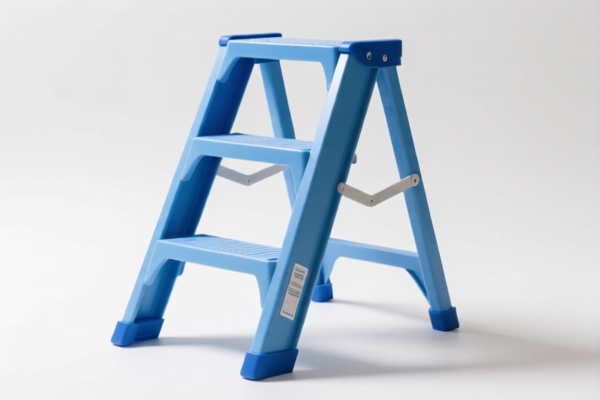
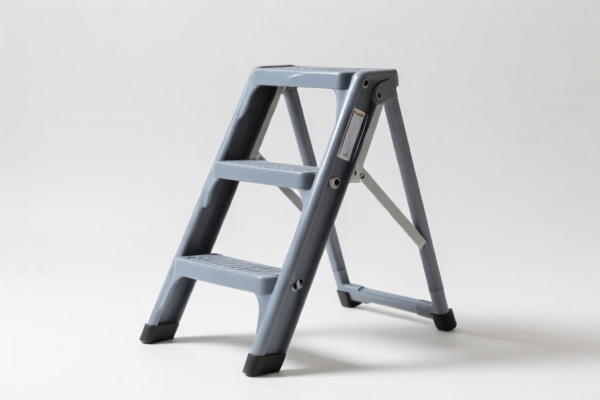
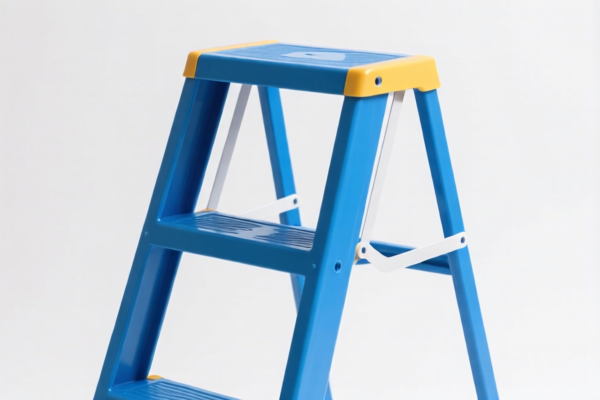
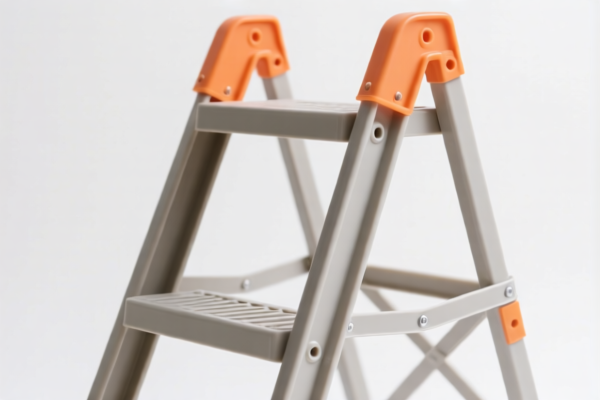
AI分析
🏗️ Support Rods / Poles (Structural Supports)
🌐 HS Code Reference & Customs Clearance Guide | 2026 Latest Tariff Analysis | Professional Clearance Strategy
📌 I. Product Definition & Classification: What Exactly is a "Pole"?
In international trade, "Support Rods" or "Poles" are versatile structural components. Their classification depends heavily on their material, end-use, and specific design. Based on the provided data, these items fall into three distinct categories, each carrying significantly different tax implications.
⚠️ Critical Distinction:
- If the pole is a generic structural support for industrial or general use → Chapter 73 (Iron/Steel Articles)
- If the pole is a specific part of furniture (e.g., a children’s playpen) → Chapter 94 (Furniture Parts)
- Misclassification Risk: Declaring a furniture part as a generic steel rod (or vice versa) can lead to significant duty errors or customs delays.
📦 II. HS Code Classification Details (2026 Latest Tariff Authority)
| HS Code | Product Description | Applicable Scenario | Total Tax Rate (China Origin) |
|---|---|---|---|
7326.90.86.30 |
Support rods classified as iron/steel hangers and similar supports | Industrial brackets, structural supports, generic hanging rods | 87.9% |
7326.90.86.88 |
Support rods classified as other articles of iron or steel | Generic steel poles not specifically designed as hangers; miscellaneous steel structures | 87.9% |
9403.99.90.15 |
Support rods classified as parts of furniture (Children’s Fencing Parts) | Specifically used as components for children’s playpens, safety gates, or similar furniture structures | 85.0% |
🔍 Key Insight:
- Both7326.90.86.30and7326.90.86.88attract the highest tax burden (87.9%) due to Section 301 and Section 232 duties. -9403.99.90.15offers a 2.9% lower total rate (85.0%), but only if the item is strictly identified as a part of furniture (specifically children’s fencing). - Do not misclassify a generic steel pole as a furniture part to save 2.9%. Customs requires strict proof of end-use.
💰 III. 2026 Latest Tariff Rate Breakdown (Detailed Policy Analysis)
✅ Applicable Country: United States (US)
✅ Origin: China (CN)
✅ Effective Date: 2025/2026 (Current Trade Policies)
🎯 1. 7326.90.86.30 & 7326.90.86.88 —— Iron/Steel Supports (Generic)
These codes fall under Section 73 (Articles of Iron or Steel). They are subject to a complex layering of tariffs.
| Component | Rate | Source/Policy |
|---|---|---|
| Base Duty | 2.9% | Standard Most Favored Nation (MFN) Rate |
| Section 301 Duty (Add-on) | 25.0% | US Trade Act Section 301 (Retaliatory Tariffs) |
| Section 232 Duty (Steel/Aluminum) | 50.0% | IEEPA Executive Order (Steel/Aluminum Products) |
| Total Effective Tax Rate | 87.9% | Sum of all applicable duties |
📌 Explanation:
- The 50% steel/aluminum surcharge is particularly harsh on iron/steel products, regardless of whether they are structural or decorative. - The 25% Section 301 duty applies to most Chinese-origin industrial goods. - Combined Impact: For every $1,000 CIF value, you pay $879 in duties. This is a very high cost that must be factored into pricing.
🎯 2. 9403.99.90.15 —— Parts of Furniture (Children’s Fencing)
This code falls under Chapter 94 (Furniture; Furnishings; Mattresses, Mattress Supports, etc.).
| Component | Rate | Source/Policy |
|---|---|---|
| Base Duty | 0.0% | MFN Rate for Furniture Parts (often duty-free or low) |
| Section 301 Duty (Add-on) | 25.0% | US Trade Act Section 301 |
| Section 232 Duty (Steel/Aluminum) | 50.0% | IEEPA Executive Order (Note: Some furniture parts may be exempt from 232 if not strictly "steel/aluminum" in raw form, but data indicates 50% is applied here for steel components) |
| Total Effective Tax Rate | 85.0% | Sum of all applicable duties |
📌 Explanation:
- The Base Duty is 0%, which is the key advantage. - However, it still faces the 25% Section 301 and 50% Section 232 duties on steel components. - Savings: Compared to the generic steel codes (7326...), this saves 2.9% in base duties, resulting in an 85.0% total vs. 87.9%. - Eligibility: Must be explicitly a part of a furniture item (e.g., a pole for a playpen). It cannot be used for general construction or standalone industrial poles.
🛠️ IV. Customs Clearance Practical Advice (Battle-Tested Tips)
✅ 1. Documentation Checklist (Non-Negotiable)
| Document | Required | Purpose |
|---|---|---|
| Product Specification Sheet | ✔️ | Must detail material (Iron/Steel), dimensions, and exact end-use. |
| Structural Diagram | ✔️ | Critical for 7326 codes to prove it’s a "support" or "hanger." |
| Commercial Invoice | ✔️ | Must clearly state: "Support Rod for [Specific Use]" or "Part for Children’s Fence." |
| Proof of End-Use | ✔️ | For 9403.99.90.15, you must provide evidence that the rod is part of a children’s fencing system. |
| Packing List | ✔️ | Ensure packaging indicates the item’s function to avoid customs confusion. |
✅ 2. Classification Strategy & Warnings
🔥 "Define the End-Use, Avoid the Penalty!"
| Scenario | Correct HS Code | Risk of Misclassification |
|---|---|---|
| Generic Steel Pole (e.g., for shelving, industrial rack) | 7326.90.86.30 or 86.88 |
High Cost (87.9%). No workaround. |
| Rod for Children’s Playpen | 9403.99.90.15 |
Lower Cost (85.0%). Requires proof of furniture association. |
| Rod for Outdoor Garden Use | 7326.90.86.88 |
High Cost (87.9%). Likely classified as "Other Steel Articles." |
⚠️ Red Flag:
- Do not label a generic steel rod as "Furniture Part" to save 2.9%. If customs inspects and finds no furniture context, you will face penalties, back taxes, and potential seizure. - Conversely, do not label a structural industrial bracket as "Furniture Part" if it’s clearly for heavy-duty industrial use.
✅ 3. Special Cases & Optimization
| Situation | Recommendation |
|---|---|
| OEM Custom Poles | Provide design specs showing the pole’s integration into a larger system (e.g., a playpen frame). |
| Mixed Shipment | If shipping both industrial supports and furniture parts, declare separately. Do not bundle under one HS Code. |
| Steel vs. Non-Steel | If the pole is made of plastic or aluminum, the 50% Section 232 steel duty may not apply (check Section 232 exemptions for aluminum). This could drastically reduce the 87.9% rate. |
🌍 V. Global Market Comparison (2026)
| Market | Recommended HS Code | Estimated Duty (China Origin) | Notes |
|---|---|---|---|
| 🇺🇸 USA | 7326.90.86.88 |
87.9% | High barriers due to 301/232 duties. |
| 🇺🇸 USA | 9403.99.90.15 |
85.0% | Slightly lower if strictly furniture parts. |
| 🇨🇳 China | 7326.90.86.30 |
~2.9% + VAT | Export from China has low duties. |
| 🇪🇺 EU | Varies | Varies | EU applies standard tariffs but no Section 301/232. Likely much lower than US. |
📌 Conclusion:
- The US market is the most expensive for Chinese-made steel poles due to layered tariffs. - Furniture parts (9403) offer a slight edge (2.9% savings), but only if the end-use is clearly defined. - Consider supply chain diversification (e.g., Vietnam, Mexico) if volume is high, as these countries may benefit from trade agreements or lower political tariffs.
📌 VI. Common Mistakes & Pitfalls (Learn from Others' Errors)
❌ Mistake 1: Using vague descriptions like "Metal Pole" on the invoice.
👉 Consequence: Customs may classify it under the highest duty rate or request additional documentation, causing delays.
❌ Mistake 2: Claiming "Furniture Part" for a standalone structural rod.
👉 Consequence: Customs rejection, fines, and potential blacklisting of the importer.
❌ Mistake 3: Ignoring the Section 232 Steel/Aluminum duty.
👉 Consequence: Under-declaring duties leads to back taxes + interest + penalties.
✅ Correct Approach:
"Iron Steel Support Rod, Model XYZ, Used for [Specific Application], Manufactured in China."
🎯 VII. Conclusion: Precision is Profit
🎯 Remember:
🔹 "Steel Poles = High Duty (87.9%).
🔹 "Furniture Parts = Slightly Lower (85.0%)".
🔹 "Proof of End-Use = Your Best Defense".**
📌 Pro Tip:
If your support rods are made of aluminum or plastic, investigate if they are exempt from the 50% Section 232 steel duty. This could drop your total tax rate significantly below 87.9%.
📣 Immediate Action:
📞 Consult with a licensed customs broker for Advance Ruling if your product’s end-use is ambiguous.
🚀 Ensure your commercial invoice and technical specs align perfectly with your chosen HS Code.
✨ Clear Classification, Clear Profits!
💼 Every percentage point of duty saved is pure profit.
用户评价
关于 HS 编码归类
协调制度(HS)是由世界海关组织(WCO)制定的国际贸易商品分类标准。全球 200 多个国家采用 HS 系统作为海关关税、贸易统计和进出口监管的基础。
每个 HS 编码遵循以下层级结构:
- 章(2 位)——商品大类(例如:第 84 章:机器和机械设备)
- 品目(4 位)——章内的更具体分类
- 子目(6 位)——国际通用细分,所有 WCO 成员国统一使用
- 本国细分(8-10 位)——各国自行扩展的细分编码,如美国 HTSUS 10 位编码
正确的 HS 编码归类对于顺利通关、准确缴纳关税和遵守贸易法规至关重要。错误归类可能导致海关延误、多缴关税或罚款。
从CN进口到US时,适用的关税税率可能包括:
- 最惠国(MFN)税率——适用于 WTO 成员国的标准关税税率
- 普通税率——适用于无贸易协定国家
- 贸易救济关税——附加关税,如 301 条款(反倾销)、232 条款(国家安全)或反补贴税
本页内容仅供参考。如需正式归类,请咨询当地海关或持牌报关代理。