polypropylene primary forms
CN → US商品图片

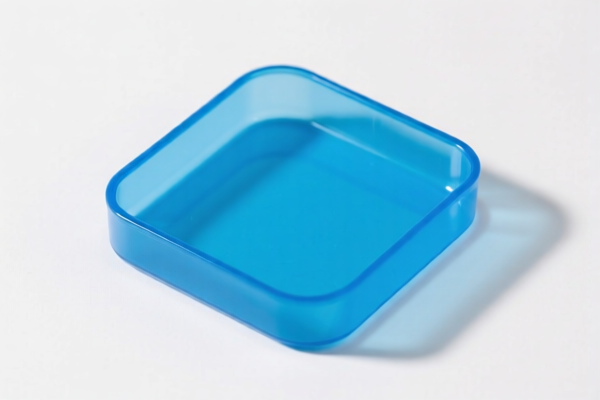

AI分析
🧪 Polypropylene Primary Forms (PP Resin/Granules)
🌐 HS Code Reference & Customs Clearance Guide | 2026 Latest Tariff Analysis | Professional-Level Clearance Strategy
📌 I. Product Definition and Classification: What Are "Polypropylene Primary Forms"?
Polypropylene (PP) is one of the most widely produced thermoplastics in the world. In international trade, "Primary Forms" refers to raw materials in their initial state after polymerization, before being processed into final consumer or industrial products (like buckets, car parts, or fibers).
These forms typically include: * Granules/Particles (Pellets): The most common form for injection molding and extrusion. * Powder: Used for specific coating or rotational molding applications. * Lumps/Bulk: Less common in trade, but still considered a primary form. * Liquid/Slurry: Pre-polymerized forms, rarely exported directly due to handling complexities.
⚠️ Key Distinction:
- If the PP is reinforced with glass fibers, carbon fibers, or other additives beyond standard stabilizers (UV, anti-oxidant), it may be classified differently under Chapter 39 subheadings for composite plastics.
- Recycled PP granules are not "primary forms" in the chemical sense and often fall under 3907.60 (Polymers of propylene, in primary forms) but with different regulatory scrutiny regarding waste/recycling status.
- Fiber-grade PP (for textiles) is still classified under 3902.10 if in primary form (pellets), but once spun into yarn, it moves to Chapter 54 or 55.
📦 II. HS Code Classification Details (2026 Latest Tariff Reference)
The core classification for Polypropylene in primary forms is under HS Chapter 39: Plastics and Articles Thereof.
| HS Code | Product Description | Applicable Scenario | Key Characteristics |
|---|---|---|---|
| 3902.10.10 | Polypropylene, in primary forms | General purpose PP resin, homopolymer | Standard granules for molding |
| 3902.10.20 | Polypropylene, in primary forms | Copolymer PP (block or random) | Enhanced impact resistance, transparent grades |
| 3902.10.90 | Other polymers of propylene | Specialty PP, high-melt PP, metallocene PP | Niche industrial applications |
| 3907.60.00 | Polyacetals, other polyethers, and epoxies? No, wait: Polymers of propylene, in primary forms (if recycled or specific origin rules apply) | Recycled PP pellets or specific trade zones | Often subject to stricter "waste" vs. "raw material" definitions |
🔍 Important Note:
- Do NOT confuse with 3907 (Polyacetals, other polyethers, and epoxies). 3902 is strictly for polyolefins like Polyethylene (PE) and Polypropylene (PP).
- 3902.10 is the global 6-digit code for "Polypropylene, in primary forms."
- The last 2-4 digits (e.g., 10, 20, 90) vary by country (e.g., US HTS, EU CN, China HS).
💰 III. 2026 Latest Tariff Rate Breakdown (Including Surtaxes & Policy Add-ons)
✅ Applicable Country: United States (US)
✅ Origin: China (CN)
✅ Effective Date: November 10, 2025 (and subsequent imports)
🎯 1. 3902.10.10.00 / 3902.10.20.00 — Polypropylene, Primary Forms (General Purpose & Copolymer)
| Item | Content |
|---|---|
| Base Tariff Rate | 0% (ad valorem) — PP is generally duty-free under US FTAs and most MFN rates. |
| USITC Surtax (Section 301) | +25% (from USITC Footnote 9903.88.01) |
| IEEPA Surtax | +10% (for China/HK origin, effective Nov 10, 2025) |
| Total Tariff Rate | 35% |
| Tax Calculation | CIF Value × 35% |
| De Minimis Exemption? | ❌ Not Eligible (deny_de_minimis) — Chemical products are excluded from the $800 de minimis rule for Section 301 goods. |
| Legal Basis Path | IEEPA:9903.01.25 → USITC:3902.10.10.00 → FOOTNOTE:9903.88.01 |
📌 Explanation:
- Although PP is a basic chemical, China-origin PP resin is subject to the full 35% surtax (25% Section 301 + 10% IEEPA).
- This significantly impacts cost competitiveness for US manufacturers sourcing PP from China.
🎯 2. 3902.10.90.00 — Other PP Polymers (Specialty)
| Item | Content |
|---|---|
| Base Tariff Rate | 0% |
| USITC Surtax (Section 301) | +25% |
| IEEPA Surtax | +10% |
| Total Tariff Rate | 35% |
| Tax Calculation | CIF Value × 35% |
| De Minimis Exemption? | ❌ Not Eligible |
| Legal Basis Path | IEEPA:9903.01.24 → USITC:3902.10.90.00 → FOOTNOTE:9903.88.01 |
📌 Note:
- Even high-value specialty PP (e.g., for medical devices or automotive) does not escape the surtax if originating from China.
🛠️ IV. Customs Clearance Practical Advice (Battle-Tested Pitfall Guide)
✅ 1. Required Documentation Checklist (Missing Any = Delay)
| Document | Must Provide | Notes |
|---|---|---|
| ✅ Product Specification Sheet | ✔️ | Must state: PP Type (Homopolymer/Copolymer), Melt Flow Index (MFI), Density, Color, Additives. |
| ✅ Certificate of Origin (CO) | ✔️ | Critical for proving non-China origin to avoid the 35% surtax. |
| ✅ Bill of Lading/Air Waybill | ✔️ | Ensure description matches "Polypropylene Resin, Primary Forms, HS 3902.10". |
| ✅ Safety Data Sheet (SDS) | ✔️ | Required for chemical safety compliance; must confirm non-hazardous status. |
| ✅ Commercial Invoice | ✔️ | Clearly separate value of PP resin from packaging/freight. |
| ✅ Manufacturer’s Declaration | ✔️ | Confirming no prohibited additives (e.g., certain flame retardants) if required by end-use. |
✅ 2. Declaration Tips (Critical Keywords)
🔥 “Correct HS, Correct Origin, Avoid 35% Tax!”
| Scenario | Correct Declaration | Incorrect Declaration |
|---|---|---|
| General PP Pellets (China) | Polypropylene Resin, Primary Forms, HS 3902.10.10 |
“Plastic Granules” → May be misclassified as waste or higher tariff item |
| PP Copolymer (China) | Polypropylene Copolymer, Primary Forms, HS 3902.10.20 |
“Plastic Compound” → May trigger 3907 or 3915 classification |
| PP Pellets (Vietnam/Thailand) | Polypropylene, Primary Forms, HTS 3902.10, Origin: VN |
Same as above → 0% Surcharge if valid CO provided |
| Recycled PP Granules (China) | Recycled Polypropylene, Primary Forms, HS 3907.60 |
Same as above → 35% Surcharge applies if China-origin |
✅ 3. Special Circumstances Handling
| Situation | Handling Advice |
|---|---|
| Additives Present | If PP contains >20% other materials (e.g., glass fiber), it may no longer be "primary form" of PP alone. Re-classify under 3916 (Monofilament, rods, etc.) or 3907 if composite. |
| Color Masterbatch | If PP is pre-colored with high pigment load, it may still be 3902.10, but ensure the invoice clearly states "PP Resin with Masterbatch" to avoid misclassification as "Plastic Articles" (3926). |
| Drop Shipping | If goods are shipped from China to US but transited through Vietnam, origin is still China unless substantial transformation occurs. Surcharge applies. |
| FDA Food Contact | If PP is for food packaging, provide FDA compliance statement. Does not affect HS code but may require additional regulatory documents. |
🌍 V. Global Major Market Comparison (2026 Latest)
| Country/Region | Recommended HS Code | Tariff (China Origin) | Certification Requirements | Notes |
|---|---|---|---|---|
| 🇺🇸 USA | 3902.10.10 |
35% (25% + 10%) | FDA (if food contact) | High surtax makes China-origin PP expensive |
| 🇨🇳 China | 3902.10.10 |
0% | CCC (if certain articles) | Domestic consumption, low duty |
| 🇪🇺 EU | 3902.10.10 |
0% (Most FTA) | REACH Compliance | No Section 301 equivalent, but REACH registration required |
| 🇦🇺 Australia | 3902.10.10 |
0% (ChAFTA) | AICIS Registration | Low duty if from China under FTA |
| 🇯🇵 Japan | 3902.10.10 |
0% (JTEPA) | PMDA (if medical) | Favorable FTA terms with China |
📌 Conclusion:
- USA is the only major market with significant additional tariffs on China-origin PP.
- EU, Australia, and Japan offer 0% tariff under Free Trade Agreements (FTAs) with China, making them more competitive for China-origin PP than the US.
- For US imports, consider sourcing from Vietnam, Thailand, or India to avoid the 35% surtax, provided you have valid Certificate of Origin.
📌 VI. Common Mistakes & Pitfalls (Lessons Learned)
❌ Mistake 1: Declaring "Plastic Pellets" without specifying "Polypropylene"
👉 Result: Customs may classify under 3901 (Polyethylene) or 3915 (Waste/Scrap), leading to misclassification penalties or higher tariffs.
❌ Mistake 2: Ignoring the Origin Labeling for Surtax Purpose
👉 Result: Even if goods are shipped from Vietnam, if they are China-origin PP, the 35% surtax applies. Substantial Transformation is required to change origin (e.g., converting PP into molded parts).
❌ Mistake 3: Confusing "Primary Forms" with "Finished Articles"
👉 Result: Declaring PP pellets as "Plastic Containers" (3923) → Tariff Jump from 0% to 3.7% (plus surtaxes), plus potential duty evasion charges.
❌ Mistake 4: Omitting Additive Information
👉 Result: If PP contains prohibited flame retardants, it may be blocked by CBP or EPA, causing delays and destruction.
✅ Correct Declaration Example:
“Polypropylene Resin, Homopolymer, Primary Forms, MFI 25, White Pellets, HS 3902.10.10.00, Origin: China”
🎯 VII. Conclusion: Precision Declaration for Cost Efficiency
🎯 Remember the Golden Rule:
🔹 “Primary Form = 3902.10, China Origin = 35% Surcharge in US.”
🔹 “Valid CO from Non-China Origin = 0% Surcharge.”
🔹 “Recycled PP = 3907.60, Same Surcharge Applies if China-origin.”
📌 Pro Tip:
If you are importing PP into the US and want to avoid the 35% surtax, consider:
1. Sourcing from Vietnam/Thailand/India with verifiable Country of Origin.
2. Applying for a Duty Drawback if you later export finished goods made from China-origin PP (though complex, it can recover some duties).
3. Consulting a Customs Broker for a Pre-Ruling if you are unsure about the origin of blended resins.
📣 Immediate Action:
📞 Engage a licensed customs broker + Provide precise SDS + Verify Certificate of Origin
🚀 Minimize tariff burden, ensure compliance, and protect your supply chain!
✨ Professional Customs Clearance Starts with Accurate Classification!
💼 Every percentage point in tariff is a point in profit!
用户评价
关于 HS 编码归类
协调制度(HS)是由世界海关组织(WCO)制定的国际贸易商品分类标准。全球 200 多个国家采用 HS 系统作为海关关税、贸易统计和进出口监管的基础。
每个 HS 编码遵循以下层级结构:
- 章(2 位)——商品大类(例如:第 84 章:机器和机械设备)
- 品目(4 位)——章内的更具体分类
- 子目(6 位)——国际通用细分,所有 WCO 成员国统一使用
- 本国细分(8-10 位)——各国自行扩展的细分编码,如美国 HTSUS 10 位编码
正确的 HS 编码归类对于顺利通关、准确缴纳关税和遵守贸易法规至关重要。错误归类可能导致海关延误、多缴关税或罚款。
从CN进口到US时,适用的关税税率可能包括:
- 最惠国(MFN)税率——适用于 WTO 成员国的标准关税税率
- 普通税率——适用于无贸易协定国家
- 贸易救济关税——附加关税,如 301 条款(反倾销)、232 条款(国家安全)或反补贴税
本页内容仅供参考。如需正式归类,请咨询当地海关或持牌报关代理。