polypropylene stretch molding compound
CN → US| HS编码 | 关税税率 | 原产国 | 目的国 | 文档 |
|---|---|---|---|---|
| 3902100000 | 41.5% | CN | US | 官方文档 |
| 3902300000 | 41.5% | CN | US | 官方文档 |
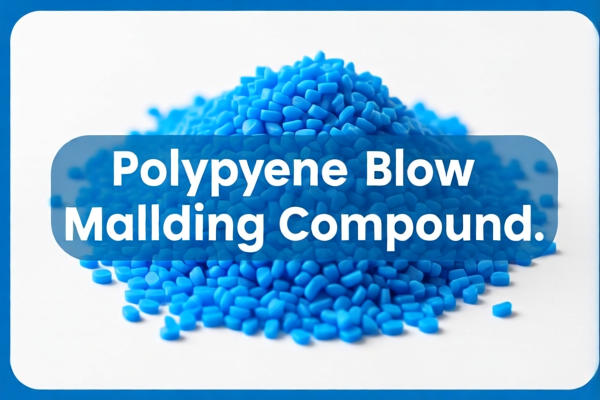
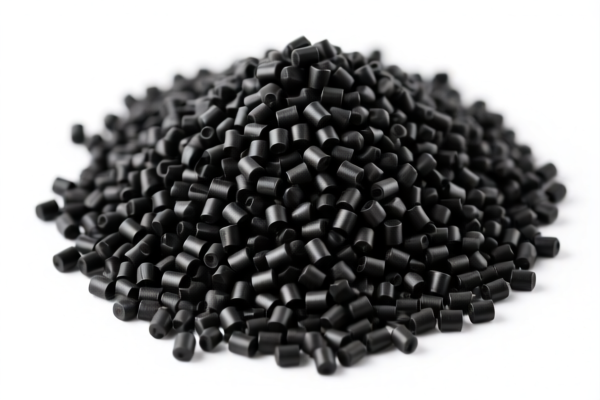
商品图片
AI分析
🧪 Polypropylene Stretch Molding Compound (Propylene-Based Polymers)
🌐 HS Code Classification & Customs Clearance Guide | 2026 Tariff Analysis | Strategic Import Strategy
📌 I. Product Definition & Classification: What is "Polypropylene Stretch Molding Compound"?
Polypropylene (PP) is one of the most widely used thermoplastics in global manufacturing. The term "Stretch Molding Compound" typically refers to a specific grade or formulation of polypropylene designed for high-stretch applications (such as stretch films, fibers, or thermoforming). In international trade, the classification depends strictly on the chemical structure and polymerization process, not just the physical form or intended use.
According to the provided data, there are two primary HS Code categories for polypropylene in primary forms:
- Homopolymer (Pure Polypropylene): If the material is primarily composed of propylene monomers without other significant co-monomers.
- Copolymer: If the material is a blend or graft of propylene with other olefins (e.g., ethylene), commonly used to enhance impact resistance or clarity.
⚠️ Critical Distinction:
- "Homopolymer" (3902.10.00.00): Applies to standard Polypropylene where propylene is the main monomer. High tax burden due to trade policies.
- "Copolymer" (3902.30.00.00): Applies if the product is explicitly defined as a copolymer (e.g., block copolymer, random copolymer). Zero tariff advantage!📌 Key Insight:
Many "Stretch Molding Compounds" are technically homopolymers modified with additives for stretching properties. However, if the base resin is a copolymer (often used for better optical properties in stretch films), it may qualify for the 0% rate. Verification of the technical data sheet (TDS) is essential.
📦 II. HS Code Classification Details (Based on Provided Data)
| HS Code | Product Description | Tax Details | Total Tax |
|---|---|---|---|
3902.10.00.00 |
Polypropylene (Homopolymer) | Base: 6.5%, Additional: 25.0% | 31.5% |
3902.30.00.00 |
Propylene Copolymers | Base: 0.0%, Additional: 0.0% | 0.0% |
🔍 Analysis:
-3902.10.00.00: This is the default for most standard PP grades. The 31.5% total tax is significant and impacts cost structures heavily.
-3902.30.00.00: This code offers a 0% tax rate. It applies specifically to copolymers. If your "Stretch Molding Compound" is a copolymer (e.g., PP-EPDM, or PP-ethylene random copolymer), you must provide documentation proving the copolymer structure.
💰 III. 2026 Tariff Rate Breakdown (Detailed)
🎯 1. 3902.10.00.00 – Polypropylene (Homopolymer)
| Item | Content |
|---|---|
| Base Tariff | 6.5% (Ad Valorem) |
| Additional Tariff (Section 301) | 25.0% |
| Total Tariff | 31.5% |
| Calculation Basis | CIF Value × 31.5% |
| De Minimis Exemption | ❌ Not Applicable (High value threshold) |
📌 Explanation:
- The 6.5% is the standard Most Favored Nation (MFN) rate for PP homopolymers.
- The 25% additional tariff is a punitive trade measure.
- Result: A very high barrier to entry for standard PP imports. Cost savings strategies are critical.
🎯 2. 3902.30.00.00 – Propylene Copolymers
| Item | Content |
|---|---|
| Base Tariff | 0.0% |
| Additional Tariff | 0.0% |
| Total Tariff | 0.0% |
| Calculation Basis | CIF Value × 0% |
| De Minimis Exemption | ✅ N/A (Tax is zero) |
📌 Explanation:
- This category has no tariff.
- Opportunity: If your product can be legally classified as a copolymer, you save 31.5% on duties. This is a major competitive advantage.
🛠️ IV. Customs Clearance Practical Advice
✅ 1. Documentation Checklist
| Document | Requirement | Purpose |
|---|---|---|
| Technical Data Sheet (TDS) | ✔️ Mandatory | Proves whether the product is a Homopolymer or Copolymer. Must specify monomer ratios and polymerization type. |
| Bill of Materials (BOM) | ✔️ Mandatory | Shows raw materials and additives. Additives alone do not change the HS code, but the base resin type does. |
| Commercial Invoice | ✔️ Mandatory | Clearly state: "Polypropylene Copolymer (Homopolymer)" or "Polypropylene Homopolymer" as per TDS. |
| Certificate of Origin | ✔️ Mandatory | If applicable, to check for FTA benefits (though base rates apply here). |
| Product Photos | ✔️ Recommended | Show granules, packaging, and labels. |
✅ 2. Classification Strategy (The "Copolymer Loophole")
🔥 Golden Rule:
"If it's a copolymer, it's 0%. If it's a homopolymer, it's 31.5%. Prove the structure!"
| Scenario | Recommended HS Code | Action |
|---|---|---|
| Product is PP Homopolymer | 3902.10.00.00 |
Accept 31.5% tax. Optimize logistics to reduce CIF value. |
| Product is PP Copolymer | 3902.30.00.00 |
Submit TDS proving copolymer structure. Claim 0% tax. |
| Product is Blended PP | 3902.10.00.00 |
Usually classified as homopolymer if PP is the primary component. |
| Product is PP Compound/Compound with Fillers | Check Subheading | If it contains >20% fillers/additives, it may move to 3902.90, but the provided data only covers 10 and 30. |
✅ 3. Common Mistakes to Avoid
❌ Mistake 1: Assuming all "Stretch PP" is the same.
👉 Risk: If you declare "Stretch Molding Compound" as 3902.30.00.00 but it's actually a homopolymer, you face severe penalties, back taxes, and shipment holds.
❌ Mistake 2: Ignoring the "Copolymer" definition.
👉 Risk: Many importers assume "Copolymer" means "Mixed with other plastics." In reality, it refers to the chemical structure (propylene + ethylene monomers). Not all blends are copolymers.
❌ Mistake 3: Under-declaring CIF Value.
👉 Risk: Tariff is calculated on CIF. Undervaluation leads to audits and fines.
🌍 V. Global Market Comparison (2026)
| Region | HS Code | Tariff Rate | Notes |
|---|---|---|---|
| 🇺🇸 USA | 3902.10.00.00 |
31.5% | High tariff. Consider sourcing from non-China origins if possible. |
| 🇺🇸 USA | 3902.30.00.00 |
0.0% | Best Option for PP copolymers. |
| 🇨🇳 China | 3902.10.00.00 |
Varies | Import duty into China may differ. |
| 🇪🇺 EU | 3902.10.00 |
0-6.5% | Check EU Common Customs Tariff. |
| 🇯🇵 Japan | 3902.10.00 |
0-5% | Lower tariffs generally. |
📌 Conclusion:
- The USA is the most sensitive to PP tariffs due to the 31.5% rate on homopolymers.
- Strategic Tip: If your supplier can provide a Copolymer grade that meets your stretching requirements, you can save 31.5% in duties.
📌 VI. Final Recommendation
- Verify Chemical Structure: Obtain a TDS from your supplier. Look for terms like "Random Copolymer," "Block Copolymer," or "Ethylene-Propylene."
- If Homopolymer: Budget for 31.5% duty. Explore supply chain optimizations (e.g., lower FOB prices, freight savings).
- If Copolymer: Clearly document the copolymer nature in commercial invoices and customs declarations. Claim 0% duty.
- Pre-Import Ruling: For high-volume shipments, consider applying for a Customs Ruling to confirm the HS code classification before shipment.
🎯 Final Advice:
"Don't guess the HS Code. Prove the chemistry. A 31.5% difference is worth a detailed technical review!"
📣 Need Help?
- Contact a licensed customs broker.
- Provide the Technical Data Sheet for accurate classification.
- Consider supply chain diversification if tariffs impact your margin.
✨ Smart Classification = Smart Savings!
💼 Your Bottom Line Matters.
用户评价
关于 HS 编码归类
协调制度(HS)是由世界海关组织(WCO)制定的国际贸易商品分类标准。全球 200 多个国家采用 HS 系统作为海关关税、贸易统计和进出口监管的基础。
每个 HS 编码遵循以下层级结构:
- 章(2 位)——商品大类(例如:第 84 章:机器和机械设备)
- 品目(4 位)——章内的更具体分类
- 子目(6 位)——国际通用细分,所有 WCO 成员国统一使用
- 本国细分(8-10 位)——各国自行扩展的细分编码,如美国 HTSUS 10 位编码
正确的 HS 编码归类对于顺利通关、准确缴纳关税和遵守贸易法规至关重要。错误归类可能导致海关延误、多缴关税或罚款。
从CN进口到US时,适用的关税税率可能包括:
- 最惠国(MFN)税率——适用于 WTO 成员国的标准关税税率
- 普通税率——适用于无贸易协定国家
- 贸易救济关税——附加关税,如 301 条款(反倾销)、232 条款(国家安全)或反补贴税
本页内容仅供参考。如需正式归类,请咨询当地海关或持牌报关代理。