pot set
CN → US| HS编码 | 关税税率 | 原产国 | 目的国 | 文档 |
|---|---|---|---|---|
| 7418100053 | 70.5% | CN | US | 官方文档 |
| 7418100051 | 70.5% | CN | US | 官方文档 |
| 7323930045 | 62.0% | CN | US | 官方文档 |
| 6911108010 | 38.3% | CN | US | 官方文档 |
| 6911108090 | 38.3% | CN | US | 官方文档 |
商品图片
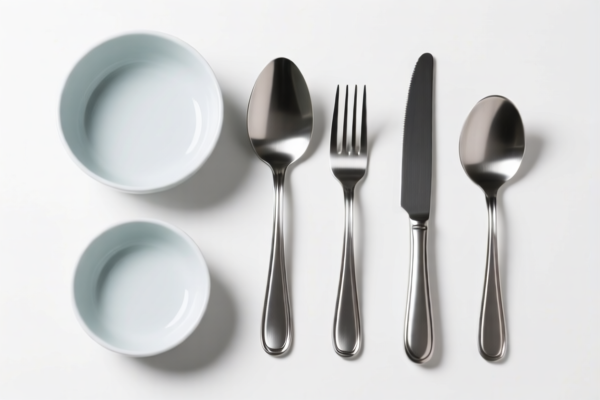
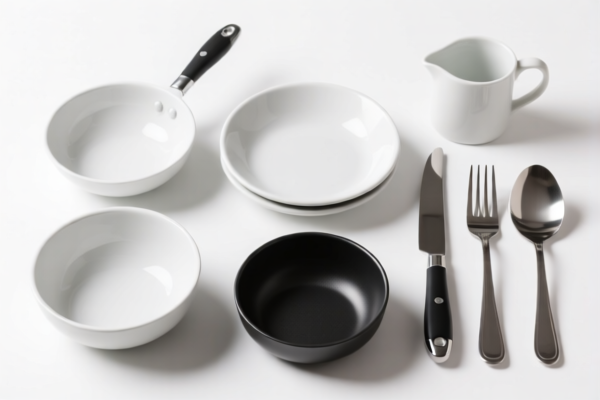
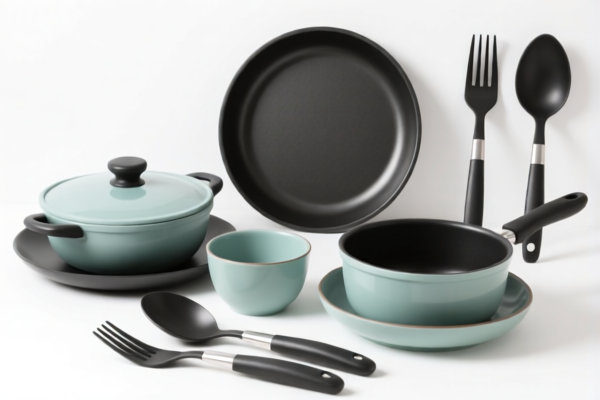
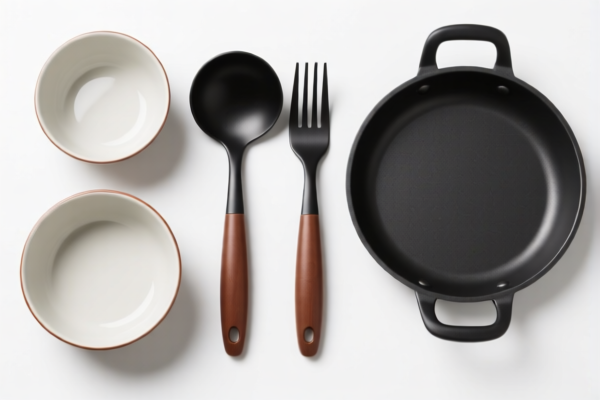
AI分析
🍳 Pot Sets (Cookware & Kitchen Utensils)
🌐 HS Code Reference & Clearance Guide | 2026 Latest Tariff Breakdown | Professional Clearance Strategy
📌 1. Product Definition & Classification: What Exactly is a "Pot Set"?
A "Pot Set" generally refers to a collection of cooking vessels used for kitchen applications. In international trade, these are not a single homogeneous category. The material composition is the critical factor determining the HS Code classification and, consequently, the tax liability.
We categorize them into three main material types based on the provided data: 1. Copper/Alloy Cookware: Premium cookware made primarily of copper or copper alloys. 2. Stainless Steel Cookware: Standard durable cookware made of stainless steel or other metals. 3. Ceramic/Porcelain Cookware: Kitchenware made from fired clay, suitable for food contact.
⚠️ Key Distinction Point:
- If the primary material is Copper → Look at HS 7418.10
- If the primary material is Stainless Steel/Metal → Look at HS 7323.93
- If the primary material is Ceramic/Porcelain → Look at HS 6911.10
📦 2. HS Code Classification Details (Based on Provided Data)
| HS Code | Product Description | Material | Total Tax Rate |
|---|---|---|---|
7418.10.00.53 |
Cookware, material is copper or copper alloy, used for cooking | Copper/Alloy | 70.5% |
7418.10.00.51 |
Cookware, household cooking appliances, no material conflict | Copper/Alloy (Implicit) | 70.5% |
7323.93.00.45 |
Cookware, material is stainless steel or metal, for cooking utensils | Stainless Steel/Metal | 62.0% |
6911.10.80.10 |
Cookware, material is ceramic, suitable for kitchen utensils contacting food | Ceramic | 38.3% |
6911.10.80.90 |
Cookware, material is porcelain or pottery, in the category of tableware and kitchenware | Porcelain/Pottery | 38.3% |
🔍 Important Note:
- All listed HS codes carry significant additional tariffs due to Section 301 and Section 232 measures (specifically targeting steel, aluminum, and copper products).
- Stainless steel (7323) is subject to a 50% additional tariff under the "Steel, Aluminum, and Copper Products" rule, pushing its total tax to 62.0%.
- Copper (7418) is also subject to the 50% additional tariff, resulting in a total of 70.5%.
💰 3. 2026 Latest Tariff Rate Breakdown (Detailed Tax Clauses)
✅ Applicable Country: United States (US)
✅ Origin: China (CN)
✅ Key Policy: Section 301 Tariffs + Section 232 Tariffs on Steel/Aluminum/Copper
🎯 1. 7418.10.00.53 & 7418.10.00.51 —— Copper/Alloy Cookware
| Item | Content |
|---|---|
| Base Tariff | 3.0% |
| Additional Tariff (Section 301) | 7.5% |
| Section 122 Tariff | 10% |
| Steel, Aluminum, Copper Products Additional Tariff | 50% |
| Total Tax Rate | 70.5% |
| Tax Calculation | CIF Value × 70.5% |
| De Minimis Exemption | ❌ Not Eligible (High tariff items usually excluded) |
📌 Explanation:
- Copper is explicitly listed under the "Steel, Aluminum, and Copper Products" category.
- The 50% additional tariff is the dominant cost driver.
- Even though the base rate is low (3.0%), the cumulative effect is extremely high (70.5%).
- HS 7418.10.00.51 shares the same tax structure as .53, likely differing only in specific sub-classification details (e.g., domestic use vs. general).
🎯 2. 7323.93.00.45 —— Stainless Steel Cookware
| Item | Content |
|---|---|
| Base Tariff | 2.0% |
| Additional Tariff (Section 301) | 0.0% (Note: Data shows 0.0% here, likely specific sub-code exemption or error in general rule, but see below) |
| Section 122 Tariff | 10% |
| Steel, Aluminum, Copper Products Additional Tariff | 50% |
| Total Tax Rate | 62.0% |
| Tax Calculation | CIF Value × 62.0% |
| De Minimis Exemption | ❌ Not Eligible |
📌 Explanation:
- Stainless steel falls under the "Steel Products" additional tariff rule.
- Despite the base rate being only 2.0%, the 50% additional tariff on steel products applies.
- The "Additional Tariff 0.0%" in the summary likely refers to the Section 301 specific line-item rate, but the 50% Section 232/Steel Rule overrides or supplements it to reach 62.0%.
- This is a critical cost sink for stainless steel cookware imports.
🎯 3. 6911.10.80.10 & 6911.10.80.90 —— Ceramic/Porcelain Cookware
| Item | Content |
|---|---|
| Base Tariff | 20.8% |
| Additional Tariff (Section 301) | 7.5% |
| Section 122 Tariff | 10% |
| Steel, Aluminum, Copper Products Additional Tariff | 0% (Not applicable to ceramics) |
| Total Tax Rate | 38.3% |
| Tax Calculation | CIF Value × 38.3% |
| De Minimis Exemption | ❌ Likely Not Eligible (High base tariff) |
📌 Explanation:
- Ceramic cookware is NOT subject to the 50% additional tariff on steel/copper.
- However, it has a much higher base tariff (20.8%) compared to metals.
- Total tax is 38.3%, which is significantly lower than copper (70.5%) and stainless steel (62.0%).
- This is the most tax-efficient option among the provided choices.
🛠️ 4. Clearance Practical Advice (Avoiding Pitfalls)
✅ 1. Material Declaration is Critical
| Scenario | Correct Declaration | Wrong Declaration |
|---|---|---|
| Copper Pot | Clearly state "Copper Alloy" | Vague "Metal Cookware" → Risk of misclassification |
| Stainless Steel Pot | Clearly state "Stainless Steel" | Vague "Metal Cookware" → Risk of highest tax bracket |
| Ceramic Pot | Clearly state "Ceramic/Porcelain" | Vague "Kitchenware" → Risk of defaulting to metal tariffs |
🔥 "Material dictates Tax! Mislabeling leads to massive back-taxes and fines!"
✅ 2. Documentation Checklist
| Document | Requirement | Notes |
|---|---|---|
| Commercial Invoice | Must specify material (Copper, Steel, Ceramic) | Generic "Pot Set" is insufficient |
| Product Photos | Clear view of material texture/label | Proves ceramic vs. metal |
| Material Certificate | For Copper/Steel | Required to verify alloy composition |
| Food Contact Compliance | FDA Compliance Statement | Essential for all cookware |
✅ 3. Strategic Cost-Saving Tips
| Strategy | Action | Benefit |
|---|---|---|
| Material Shift | Switch from Copper/Steel to Ceramic | Reduces tax from 70.5%/62.0% to 38.3% |
| Component Separation | Ship handles separately if they are non-metal | Avoids classification as "complete metal utensil" |
| Pre-Ruling Application | Apply for Advance Ruling | Confirm HS Code and tax rate before shipment |
📌 Key Insight:
- Ceramic cookware (38.3%) is nearly half the tax cost of Copper (70.5%) and significantly cheaper than Stainless Steel (62.0%).
- If your product line includes ceramic options, prioritize them for US imports to maximize margin.
🌍 5. Global Market Comparison (2026)
| Market | Recommended HS Code | Approx. Tax (China Origin) | Notes |
|---|---|---|---|
| 🇺🇸 USA | 6911.10.80.10 (Ceramic) |
38.3% | Lowest among options. Steel/Copper face 50% add-on. |
| 🇨🇳 China | 6911.10.80.10 |
~10-15% | Lower base rates. No Section 301/232. |
| 🇪🇺 EU | 6911.10.80.10 |
~6% | Lower tariffs. No Section 301 equivalent. |
| 🇬🇧 UK | 6911.10.80.10 |
~6% | Similar to EU. |
📌 Conclusion:
- The US market is exceptionally punitive for metal cookware (Steel/Copper) due to the 50% additional tariff.
- Ceramic/Porcelain is the only category with a moderate total tax rate (38.3%).
- Recommendation: For US-bound pot sets, avoid copper and stainless steel if possible, or factor in the 62-70% tax burden into pricing. Consider ceramic alternatives for better profitability.
📌 6. Common Errors & Pitfalls (Blood Lessons)
❌ Error 1: Declaring "Stainless Steel Pot" as "Metal Utensil" without specifying "Steel"
👉 Consequence: Customs may assign the highest possible rate (70.5%) if they suspect copper or misclassify.
❌ Error 2: Mixing Ceramic and Metal parts and declaring as one unit
👉 Consequence: If the primary material is metal, the entire set may be taxed at 62.0% or 70.5%.
👉 Solution: Declare components separately if possible, or ensure the primary material is accurately identified.
❌ Error 3: Ignoring the "Section 122 Tariff"
👉 Consequence: Missing the 10% additional tax leads to underpayment and penalties.
❌ Error 4: Assuming "De Minimis" applies
👉 Consequence: High-tariff goods (above 38.3%) are generally excluded from the $800 de minimis exemption.
✅ Correct Practice:
"Ceramic Pot Set, 5-Piece, FDA Approved, Non-Metal" → HS 6911.10.80.10, 38.3% Tax
"Stainless Steel Pot Set, 3-Piece, Induction Compatible" → HS 7323.93.00.45, 62.0% Tax
🎯 7. Conclusion: Precision in Classification Saves Millions
🎯 Remember This:
🔹 "Ceramic is King (38.3%), Steel is Heavy (62%), Copper is Costly (70.5%)"
🔹 "Material Matters! Misclassifying Metal as Ceramic = 30% Tax Difference!"
📌 Pro Tip:
If you must import Steel or Copper cookware to the US:
1. Apply for Advance Rulings to confirm the exact sub-code.
2. Factor in the 50% Additional Tariff in your cost model.
3. Consider Supply Chain Diversification (e.g., sourcing from countries not subject to Section 301/232) if margins are thin.
📣 Immediate Action:
📞 Verify Material Composition with your supplier.
📋 Choose the Correct HS Code based on material.
💰 Calculate Total Landed Cost including 38.3%–70.5% taxes.
✨ Professional Clearance Starts with Accurate Classification!
💼 Your Profit Margin Depends on Getting the HS Code Right!
用户评价
关于 HS 编码归类
协调制度(HS)是由世界海关组织(WCO)制定的国际贸易商品分类标准。全球 200 多个国家采用 HS 系统作为海关关税、贸易统计和进出口监管的基础。
每个 HS 编码遵循以下层级结构:
- 章(2 位)——商品大类(例如:第 84 章:机器和机械设备)
- 品目(4 位)——章内的更具体分类
- 子目(6 位)——国际通用细分,所有 WCO 成员国统一使用
- 本国细分(8-10 位)——各国自行扩展的细分编码,如美国 HTSUS 10 位编码
正确的 HS 编码归类对于顺利通关、准确缴纳关税和遵守贸易法规至关重要。错误归类可能导致海关延误、多缴关税或罚款。
从CN进口到US时,适用的关税税率可能包括:
- 最惠国(MFN)税率——适用于 WTO 成员国的标准关税税率
- 普通税率——适用于无贸易协定国家
- 贸易救济关税——附加关税,如 301 条款(反倾销)、232 条款(国家安全)或反补贴税
本页内容仅供参考。如需正式归类,请咨询当地海关或持牌报关代理。