power failure sensor
CN → US| HS编码 | 关税税率 | 原产国 | 目的国 | 文档 |
|---|---|---|---|---|
| 9032896085 | 36.7% | CN | US | 官方文档 |
| 9032896075 | 36.7% | CN | US | 官方文档 |
| 8535908020 | 37.7% | CN | US | 官方文档 |
| 8535908040 | 37.7% | CN | US | 官方文档 |
商品图片
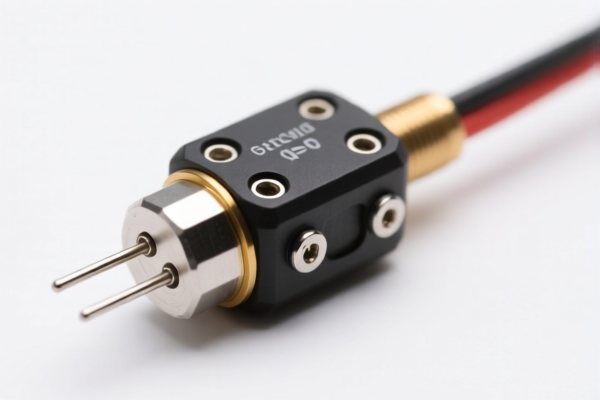
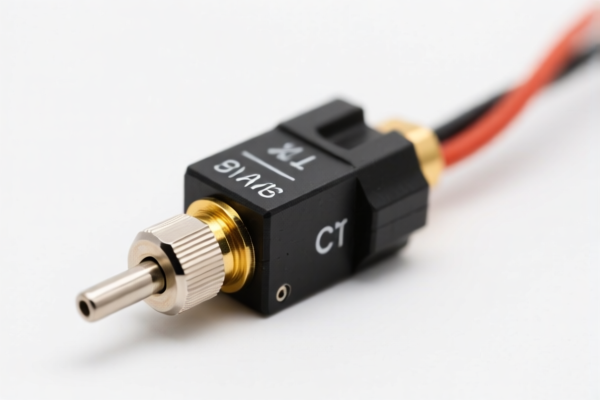
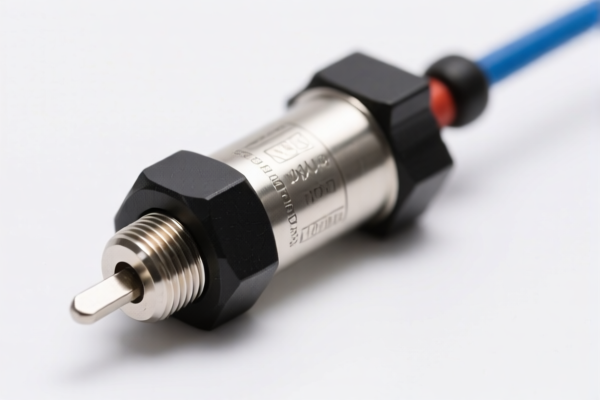
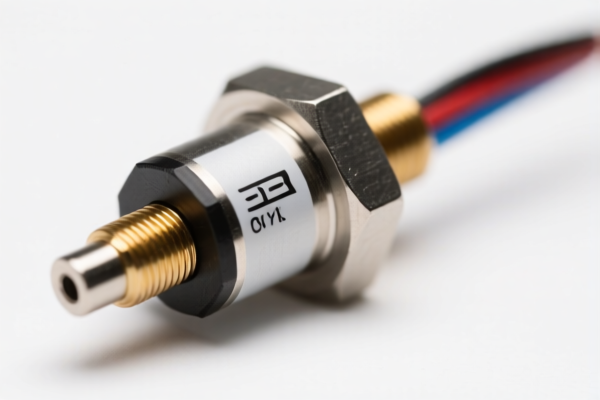
AI分析
🔌 Power Failure Sensor (Electrical Apparatus & Control Systems)
🌐 HS Code Reference & Customs Clearance Guide | 2026 Latest Tariff Analysis | Professional Clearance Strategy
📌 1. Product Definition & Classification: Do You Really Understand "Power Failure Sensors"?
A Power Failure Sensor (often integrated into control systems, industrial automation, or smart grid monitoring) is an electrical apparatus used to detect loss of power supply, trigger alarms, or initiate backup procedures. In international trade, these devices fall under two main categories based on their function:
Category A: Electrical Connection/Switching Components
If the device is primarily a connector, terminal, splice, or coupling used to make connections in high-voltage (>1,000V) circuits for protection or switching purposes, it belongs to Chapter 85.
Category B: Automatic Regulating/Controlling Instruments
If the device is an instrument or apparatus designed to automatically regulate or control electrical parameters (including monitoring voltage/power status) for process control or system management, it belongs to Chapter 90.
⚠️ Key Distinction Point:
- If the product is a passive hardware component (terminal/coupling) for >1,000V circuits → HS Code 8535.90.80.x
- If the product is an active electronic instrument (sensor/monitor/controller) for regulating/control purposes → HS Code 9032.89.60.x
📦 2. HS Code Classification Details (2026 Latest Tariff Authoritative Comparison)
| HS Code | Product Description | Applicable Scenario | Function Type |
|---|---|---|---|
8535.90.80.20 |
Electrical apparatus for switching/protecting circuits (>1,000V): Terminals, splices, couplings | High-voltage cable connections, junction box fittings, industrial power distribution hardware | ✅ Passive Connector |
8535.90.80.40 |
Electrical apparatus for switching/protecting circuits (>1,000V): Other connectors | Specialized high-voltage plugs, sockets, or couplings not classified elsewhere | ✅ Passive Connector |
9032.89.60.85 |
Automatic regulating/controlling instruments: Other instruments and apparatus | General power monitoring sensors, voltage loggers, non-specific control units | ✅ Active Control |
9032.89.60.75 |
Automatic regulating/controlling instruments: Process control instruments | Industrial automation power failure detectors, PLC input modules, specialized process monitors | ✅ Active Process Control |
🔍 Critical Reminder:
- High Voltage (>1,000V) Context: The description explicitly mentions "voltage exceeding 1,000 V." This is a crucial classifier. If your sensor operates at <1,000V, it might belong elsewhere (e.g., 8537 or 9031). Ensure the voltage rating matches the code. - Active vs. Passive: If the device has a microchip, display, or relay output to respond to power loss, it is an Instrument (Ch 90). If it is just a metal terminal block for connecting wires in a high-vault system, it is Apparatus/Connector (Ch 85).
💰 3. 2026 Latest Tariff Rate Details (Including Surcharges)
✅ Applicable Country: United States (US)
✅ Country of Origin: China (CN)
✅ Effective Date: Current Status (Based on provided data)
🎯 1. 8535.90.80.20 — Terminals, Electrical Splices, and Couplings (>1,000V)
| Item | Content |
|---|---|
| Base Duty Rate | 0.0% |
| Section 301 Surcharge | 0.0% |
| IEEPA Surcharge | 0.0% |
| Total Tax Rate | 0.0% |
| Tax Calculation | CIF Value × 0.0% = $0 |
| De Minimis Eligibility | ✅ Yes (Usually eligible if value < $800, subject to specific product exclusions) |
| Legal Basis Path | HTSUS: 8535.90.80.20 |
📌 Explanation:
- This code currently enjoys a zero tariff rate for Chinese imports. - Unlike many electronics, high-voltage passive connectors/splices are not heavily targeted by current trade restrictions. - Advantage: Low clearance cost, fast release.
🎯 2. 8535.90.80.40 — Other Connectors (>1,000V)
| Item | Content |
|---|---|
| Base Duty Rate | 0.0% |
| Section 301 Surcharge | 0.0% |
| IEEPA Surcharge | 0.0% |
| Total Tax Rate | 0.0% |
| Tax Calculation | CIF Value × 0.0% = $0 |
| De Minimis Eligibility | ✅ Yes (Generally eligible) |
| Legal Basis Path | HTSUS: 8535.90.80.40 |
📌 Note:
- Same zero-tariff status as above. - Ensures competitiveness for high-voltage accessory markets.
🎯 3. 9032.89.60.85 — Other Automatic Regulating/Controlling Instruments
| Item | Content |
|---|---|
| Base Duty Rate | 0.0% |
| Section 301 Surcharge | 0.0% |
| IEEPA Surcharge | 0.0% |
| Total Tax Rate | 0.0% |
| Tax Calculation | CIF Value × 0.0% = $0 |
| De Minimis Eligibility | ✅ Yes (Subject to standard rules) |
| Legal Basis Path | HTSUS: 9032.89.60.85 |
📌 Explanation:
- Despite being an "electronic instrument," this specific subheading currently has 0% duty. - This is favorable compared to other tech products (like displays or semiconductors) that face 25%+ tariffs.
🎯 4. 9032.89.60.75 — Process Control Instruments and Apparatus
| Item | Content |
|---|---|
| Base Duty Rate | 0.0% |
| Section 301 Surcharge | 0.0% |
| IEEPA Surcharge | 0.0% |
| Total Tax Rate | 0.0% |
| Tax Calculation | CIF Value × 0.0% = $0 |
| De Minimis Eligibility | ✅ Yes (Subject to standard rules) |
| Legal Basis Path | HTSUS: 9032.89.60.75 |
📌 Important:
- Even for industrial process control sensors, the rate remains 0%. - No additional surcharges apply for Chinese origin under current data.
🛠️ 4. Customs Clearance Practical Advice (Real-World Pitfall Avoidance)
✅ 1. Required Documentation Checklist (No exceptions)
| Document | Required | Explanation |
|---|---|---|
| ✅ Product Specification Sheet | ✔️ | Must clearly state Voltage Rating (>1,000V for Ch 85, or control function for Ch 90) |
| ✅ Circuit Diagram/Schematic | ✔️ | Critical to prove if it’s a "sensor/instrument" (Ch 90) or just a "connector" (Ch 85) |
| ✅ Product Photos | ✔️ | Show labels, connectors, and any digital displays/interfaces |
| ✅ Commercial Invoice | ✔️ | Description must match HS code: e.g., "Power Failure Sensor Unit" vs. "High Voltage Terminal Block" |
| ✅ Packing List | ✔️ | Detail items to avoid misdeclaration of accessories |
| ✅ Origin Certificate | ✔️ | Confirm China origin (though 0% tariff applies, documentation is still needed) |
✅ 2. Declaration Tips (Key Mantras)
🔥 "Voltage Defines Chapter, Function Defines Subcode!"
| Scenario | Correct Declaration | Wrong Practice |
|---|---|---|
| High-Voltage Connector/Terminal | "Electrical Terminal, >1,000V, Part No. XYZ" → 8535.90.80.20/40 | Calling it "Sensor" → Risk of misclassification |
| Active Power Monitor/Sensor | "Power Failure Detection Instrument, Model ABC" → 9032.89.60.75/85 | Calling it "Cable Accessory" → Risk of penalty |
| Voltage ≤ 1,000V | Do NOT use 8535.90.x → Check 8536 or 8537 | Using 8535 codes for low-voltage items |
| Bundle with Software | Declare hardware only, mention software separately | Mixing hardware/software values confusingly |
✅ 3. Special Case Handling
| Situation | Handling Advice |
|---|---|
| Integrated Sensor + Display | If it has a screen showing power status, lean towards 9032 (Instrument). Provide proof of active regulation/control. |
| Simple Relay Module | If it’s just a relay that triggers a warning, confirm if it’s "Regulating/Controlling." Often still 9032. |
| Pure Mechanical Switch | If it’s a simple switch with no electronic component, it may fall under 8536 (<1,000V) or 8535 (>1,000V). Verify voltage. |
| Kit with Connectors + Sensors | Declare separately. Connectors under 8535, Sensors under 9032. Do not combine into one line unless identical value. |
🌍 5. Global Market Clearance Comparison (2026 Latest)
| Country/Region | Recommended HS Code | Duty Rate | Certification | Notes |
|---|---|---|---|---|
| 🇺🇸 USA | 8535.90.80.xx or 9032.89.60.xx |
0% | UL/CE/NEMA (Recommended) | Zero tariff advantage; ensure voltage rating is explicit. |
| 🇨🇳 China | 8535.90.xx or 9032.89.xx |
0-13% | CCC (if applicable) | Import duties vary; 0% for many electrical parts. |
| 🇪🇺 EU | 8536.90 or 9032.89 |
0-2.7% | CE + RoHS | Low duties; strict EMC directives for Ch 90 items. |
| 🇬🇧 UK | 8535.90 or 9032.89 |
0-2.5% | UKCA | Post-Brexit rules apply; ensure UKCA marking. |
| 🇦🇺 Australia | 8535.90 or 9032.89 |
5-10% | RCM | RCM mandatory for electrical safety. |
📌 Conclusion:
- USA is the most tariff-friendly market for these specific codes with 0% duty. - However, technical accuracy is paramount. Misclassifying a low-voltage item as high-voltage (>1,000V) is a major compliance risk.
📌 6. Common Errors & Pitfall Guide (Lessons Learned)
❌ Error 1: Declaring a 240V power sensor as >1,000V to fit 8535.90.80.20
👉 Consequence: Customs rejection, fines, and potential seizure. Voltage rating MUST match physical specs.
❌ Error 2: Calling a "Process Controller" a "Connector" to save time
👉 Consequence: If the device has a chip/relay output, it’s an instrument. Misdeclaration leads to 0% vs. 0% (no tax difference here, but compliance history is damaged).
❌ Error 3: Ignoring the "Exceeding 1,000V" clause in 8535
👉 Consequence: If voltage is exactly 1,000V or less, it falls under 8536.90 or 8537.10, which may have different (potentially higher or lower) duties depending on the specific HTS.
❌ Error 4: Not specifying "Power Failure" function in Ch 90 items
👉 Consequence: Customs may classify it under a generic "Other" code with higher scrutiny. Be specific: "Power Monitoring Instrument."
✅ Correct Practice:
"High Voltage Power Failure Sensor Unit, Model XYZ, Rated 1500V AC, for Industrial Automation, UL Certified" → 9032.89.60.75
"High Voltage Cable Terminal Block, Part No. ABC, Rated 2000V, Non-Electronic" → 8535.90.80.20
🎯 7. Conclusion: Precision Classification for Cost Efficiency
🎯 Remember the Mantra:
🔹 "Voltage >1000V? Check 8535. Active Control? Check 9032. Zero Duty? Verify Function!"
🔹 "HS Code is King, Voltage is Queen, Function is the Crown."
📌 Pro Tip:
If your power failure sensor is OEM customized or part of a larger system, consider Advance Ruling (Pre-classification) with US Customs. Even with 0% duty, ensuring the correct code prevents future audits.
📣 Immediate Action:
📞 Contact a licensed customs broker + Provide voltage ratings + Submit product specs for pre-clearance
🚀 Let your power sensors pass through customs smoothly, legally, and efficiently!
✨ Professional clearance starts with accurate classification!
💼 Your supply chain efficiency depends on it!
用户评价
关于 HS 编码归类
协调制度(HS)是由世界海关组织(WCO)制定的国际贸易商品分类标准。全球 200 多个国家采用 HS 系统作为海关关税、贸易统计和进出口监管的基础。
每个 HS 编码遵循以下层级结构:
- 章(2 位)——商品大类(例如:第 84 章:机器和机械设备)
- 品目(4 位)——章内的更具体分类
- 子目(6 位)——国际通用细分,所有 WCO 成员国统一使用
- 本国细分(8-10 位)——各国自行扩展的细分编码,如美国 HTSUS 10 位编码
正确的 HS 编码归类对于顺利通关、准确缴纳关税和遵守贸易法规至关重要。错误归类可能导致海关延误、多缴关税或罚款。
从CN进口到US时,适用的关税税率可能包括:
- 最惠国(MFN)税率——适用于 WTO 成员国的标准关税税率
- 普通税率——适用于无贸易协定国家
- 贸易救济关税——附加关税,如 301 条款(反倾销)、232 条款(国家安全)或反补贴税
本页内容仅供参考。如需正式归类,请咨询当地海关或持牌报关代理。