processed wood
CN → US| HS编码 | 关税税率 | 原产国 | 目的国 | 文档 |
|---|---|---|---|---|
| 4409299100 | 35.0% | CN | US | 官方文档 |
| 4410110060 | 35.0% | CN | US | 官方文档 |
商品图片
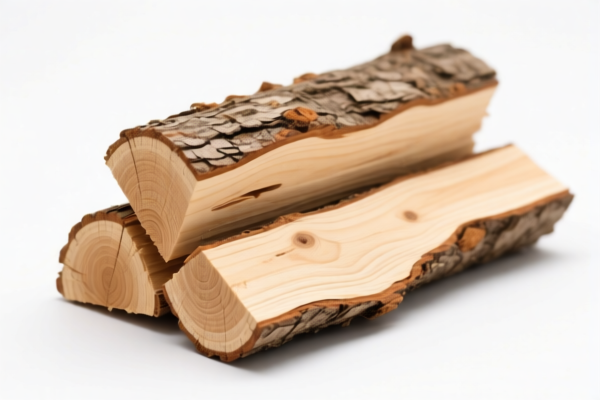
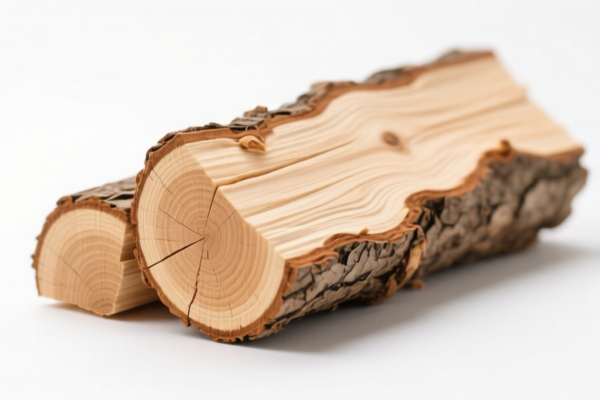
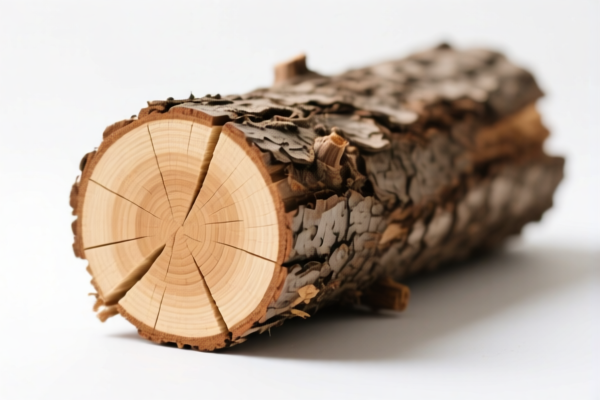

AI分析
🪵 Processed Wood (Engineered & Shaped)
🌐 HS Code Reference & Customs Clearance Guide | 2026 Latest Tariff Analysis | Professional Entry Strategy
📌 One, Product Definition & Classification: Do You Truly Understand "Processed Wood"?
In international trade, "Processed Wood" is not a single product but a category encompassing engineered boards (agglomerated wood) and continuously shaped solid wood. The critical distinction lies in the manufacturing process:
1. Engineered Boards (Particle Board, OSB, Waferboard):
Wood fibers, flakes, or wafers are bonded together with resins or organic binding substances under heat and pressure. These are not solid wood but composites.
2. Continuously Shaped Wood (Tongued, Grooved, Rebated):
Solid wood (coniferous or non-coniferous) that has been mechanically profiled along its edges, ends, or faces. This includes parquet flooring strips, moldings, and joinery components.
⚠️ Key Classification Point:
- If the product is agglomerated (glued wood chips/strands) →归入 Chapter 44, Heading 44.10 (Particle Board/OSB).
- If the product is solid wood that has been profiled/shaped (tongued/grooved) →归入 Chapter 44, Heading 44.09.
📦 Two, HS Code Classification Details (2026 Latest Tariff Authority Cross-Reference)
| HS Code | Product Description | Application Scenario | Material Type |
|---|---|---|---|
4410.11.00.60 |
Particle board, oriented strand board (OSB) and similar board...: Of wood: Particle board: Other | Standard particle board for furniture, cabinets, construction; OSB for sheathing | Agglomerated wood fibers/strands |
4409.29.91.00 |
Wood... continuously shaped...: Nonconiferous: Other: Other: Other | Non-coniferous (hardwood) strips, tongue-and-groove panels, parquet strips, molded wood profiles | Solid non-coniferous wood |
🔍 Crucial Distinction:
-4410.11.00.60applies to agglomerated wood (particle board/OSB). Even if it looks like a board, if it's made from bonded chips, it belongs here.
-4409.29.91.00applies to solid non-coniferous wood that has been mechanically shaped (e.g., grooved, tongued). If it’s solid hardwood that has been profiled, it belongs here.
- Do not mix: Solid wood shaped wood cannot be classified as particle board, and vice versa.
💰 Three, 2026 Latest Tariff Rate Details (Including Additional Duties)
✅ Applicable Country: United States (US)
✅ Origin: China (CN)
✅ Effective Time: Current as of latest USITC listings (2025-2026)
🎯 1. 4410.11.00.60 —— Particle Board, Oriented Strand Board (OSB), etc.
| Item | Content |
|---|---|
| Base Duty Rate | 0.0% (ad valorem) |
| Section 301 Additional Duty | +25.0% |
| Total Duty Rate | 25.0% |
| Tax Calculation | CIF Value × 25% |
| De Minimis Exemption | ❌ Not Applicable (Section 301 duties apply regardless of value) |
| Legal Basis Path | HTSUS:4410.11.00.60 → Section 301 Footnote 9903.88.01 |
📌 Explanation:
- Particle boards and OSBs are major construction and furniture materials.
- The 25% additional duty is a Section 301 tariff imposed on Chinese-origin engineered wood products.
- This rate is significant and must be factored into cost models for furniture exports to the US.
🎯 2. 4409.29.91.00 —— Continuously Shaped Non-Coniferous Wood
| Item | Content |
|---|---|
| Base Duty Rate | 0.0% (ad valorem) |
| Section 301 Additional Duty | +25.0% |
| Total Duty Rate | 25.0% |
| Tax Calculation | CIF Value × 25% |
| De Minimis Exemption | ❌ Not Applicable |
| Legal Basis Path | HTSUS:4409.29.91.00 → Section 301 Footnote 9903.88.01 |
📌 Note:
- Non-coniferous (hardwood) profiles, such as oak or maple tongued-and-grooved strips for flooring or paneling, are subject to the same 25% additional duty.
- Even if the base rate is 0%, the 25% surcharge makes the total landed cost high.
🛠️ Four, Customs Clearance Practical Advice (Battle-Tested Pitfall Guide)
✅ 1. Document Checklist (Essential)
| Document | Required | Description |
|---|---|---|
| ✅ Product Specification Sheet | ✔️ | Clearly state: "Particle Board" vs. "Shaped Solid Wood"; dimensions, density, formaldehyde emission levels |
| ✅ Material Composition Proof | ✔️ | For 4410: Provide resin type, wood species origin. For 4409: Confirm non-coniferous species (e.g., Oak, Maple, not Pine) |
| ✅ Product Photos | ✔️ | Show cross-section (to prove agglomeration for particle board) or edge profile (to prove shaping for solid wood) |
| ✅ Commercial Invoice | ✔️ | Use precise HS code descriptions; avoid generic "Wood" |
| ✅ Packing List | ✔️ | Indicate gross/net weight; ensure consistency with invoice |
| ✅ Certificate of Origin (CO) | ✔️ | Mandatory for proving Chinese origin (triggering Section 301) |
✅ 2. Declaration Tips (Key Mantras)
🔥 “Shape vs. Bond: Identify the Process, Avoid the Penalty!”
| Scenario | Correct Declaration | Wrong Practice |
|---|---|---|
| Furniture-grade Particle Board | 4410.11.00.60 - "Particle board of wood, agglomerated with resins" |
Misdeclare as "Solid Wood" → Risk of classification error penalty |
| OSB Sheathing | 4410.11.00.60 - "Oriented strand board" |
Misdeclare as "Plastic boards" or "Non-wood" → Customs hold |
| Hardwood Tongued-and-Groove Strips | 4409.29.91.00 - "Continuously shaped non-coniferous wood" |
Misdeclare as "Unworked wood" → Underpayment of duties |
| Coniferous Shaped Wood (e.g., Pine molding) | 4409.19.00.60 or similar |
Misdeclare as non-coniferous → Classification Error |
✅ 3. Special Situations Handling
| Situation | Handling Advice |
|---|---|
| Mixed Containers | If a container has both particle board and shaped wood, declare separately. Do not lump into one HS code. |
| Formaldehyde Emissions | US Customs may require CARB (California Air Resources Board) or EPA TSCA Title VI compliance docs. Ensure your EPA/CARB certificates are ready. |
| Origin Transshipment | If wood is processed in Vietnam/Malaysia from Chinese raw materials, ensure substantial transformation is documented. Otherwise, US Customs may still attribute origin to China and apply 25% duty. |
| Sample Imports | No de minimis exemption for Section 301 goods. Even samples incur 25% duty. Factor this into R&D budgets. |
🌍 Five, Global Market Comparison (2026 Latest)
| Country/Region | Recommended HS Code | Tariff (China Origin) | Certification Requirements | Notes |
|---|---|---|---|---|
| 🇺🇸 USA | 4410.11.00.60 / 4409.29.91.00 |
25% (Additional) | CARB Phase 2 / EPA TSCA Title VI | High tariff burden; strict formaldehyde limits |
| 🇨🇳 China | 4410.11.00.60 / 4409.29.91.00 |
5% - 10% (Import) | GB 18580 (Formaldehyde) | Domestic market focuses on emission standards |
| 🇪🇺 EU | 4410.31.00 / 4409.29 |
0% - 6% (General) | E1/E2 Formaldehyde Standards | No Section 301; focus on REACH and Ecodesign |
| 🇦🇺 Australia | 4410.31.00 / 4409.29 |
5% | AS/NZS 2685 (VOC) | Moderate duties; clear labeling required |
📌 Conclusion:
- The US market is the most challenging due to the 25% additional duty.
- Formaldehyde compliance (EPA/CARB) is as critical as HS classification. Non-compliance leads to detention and destruction.
📌 Six, Common Errors & Pitfall Guide (Lessons Learned)
❌ Error 1: Declaring "Wood Boards" generically
👉 Consequence: Customs assigns highest default duty or delays inspection → 10-30 day delay
❌ Error 2: Confusing "Particle Board" with "Solid Wood"
👉 Consequence: Misclassification penalty + potential fraud allegations → Fines up to 100% of duty value
❌ Error 3: Ignoring Formaldehyde Certificates
👉 Consequence: CBP holds cargo for EPA/CARB check → Demurrage fees + potential return
❌ Error 4: Using "Wood Products" without specifying "Processed" or "Shaped"
👉 Consequence: Duty assessment error → Underpayment penalty
✅ Correct Approach:
"Particle Board, 18mm, E0 Grade, Formaldehyde Compliant, Made of Eucalyptus Chips with Urea-Formaldehyde Resin, Model PB-18E0"
🎯 Seven, Conclusion: Precision in Classification, Profit in Clearance!
🎯 Remember the Mantra:
🔹 "Agglomerated = 4410, Shaped Solid = 4409. Both carry 25% US Duty. Formaldehyde Certs are Mandatory."
🔹 "HS Code is King, Tariff is Queen, Compliance is the Crown."
📌 Pro Tip:
If your wood products are originating from Vietnam, Malaysia, or Thailand with sufficient local processing, apply for preferential treatment or verify if Section 301 duties can be excluded.
Recommend obtaining an Advance Ruling from US CBP if you are unsure about the agglomeration vs. shaping distinction.
📣 Immediate Action:
📞 Engage a licensed customs broker + Provide technical datasheets + Submit EPA/CARB compliance docs
🚀 Ensure your "Processed Wood" clears customs efficiently, legally, and profitably!
✨ Professional clearance begins with accurate classification!
💼 Every percentage point of duty impacts your bottom line!
用户评价
关于 HS 编码归类
协调制度(HS)是由世界海关组织(WCO)制定的国际贸易商品分类标准。全球 200 多个国家采用 HS 系统作为海关关税、贸易统计和进出口监管的基础。
每个 HS 编码遵循以下层级结构:
- 章(2 位)——商品大类(例如:第 84 章:机器和机械设备)
- 品目(4 位)——章内的更具体分类
- 子目(6 位)——国际通用细分,所有 WCO 成员国统一使用
- 本国细分(8-10 位)——各国自行扩展的细分编码,如美国 HTSUS 10 位编码
正确的 HS 编码归类对于顺利通关、准确缴纳关税和遵守贸易法规至关重要。错误归类可能导致海关延误、多缴关税或罚款。
从CN进口到US时,适用的关税税率可能包括:
- 最惠国(MFN)税率——适用于 WTO 成员国的标准关税税率
- 普通税率——适用于无贸易协定国家
- 贸易救济关税——附加关税,如 301 条款(反倾销)、232 条款(国家安全)或反补贴税
本页内容仅供参考。如需正式归类,请咨询当地海关或持牌报关代理。