ptfe granules filled
CN → US| HS编码 | 关税税率 | 原产国 | 目的国 | 文档 |
|---|---|---|---|---|
| 3914002000 | 35.0% | CN | US | 官方文档 |
| 3914006000 | 38.9% | CN | US | 官方文档 |
| 3904610010 | 40.8% | CN | US | 官方文档 |
| 3926909989 | 22.8% | CN | US | 官方文档 |
| 3904610090 | 40.8% | CN | US | 官方文档 |
商品图片
AI分析
🧪 PTFE Granules Filled (Polytetrafluoroethylene)
🌐 HS Code Reference & Customs Clearance Guide | 2026 Latest Tariff Analysis | Professional-Level Clearance Strategy
📌 I. Product Definition & Classification: Do You Truly Understand “Filled PTFE Granules”?
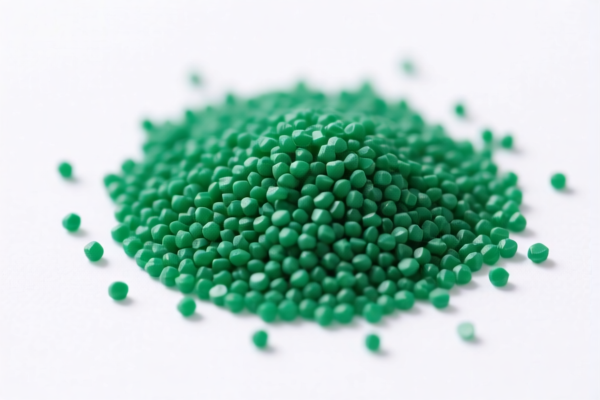
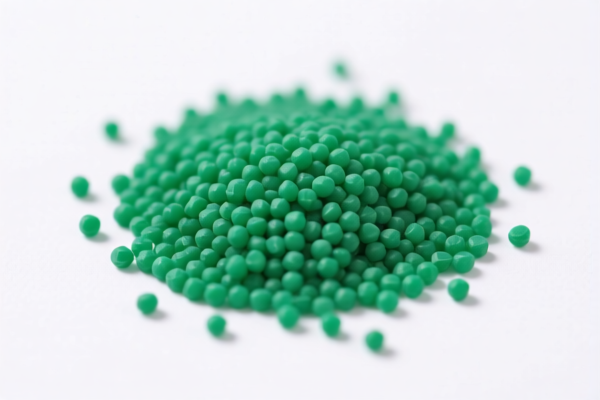
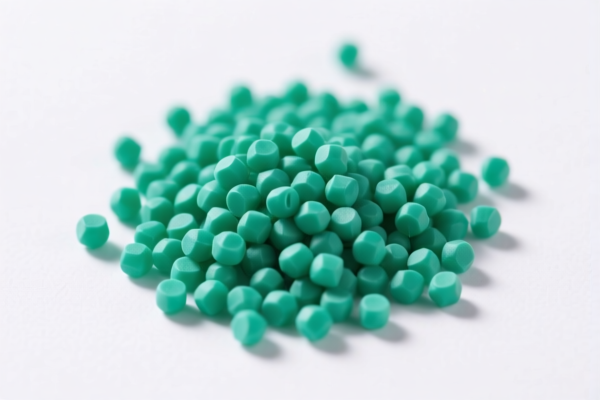
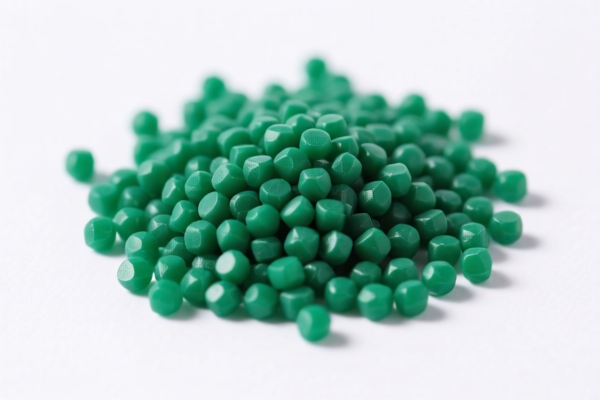
PTFE Granules Filled refer to polytetrafluoroethylene (PTFE) raw materials that have been compounded with fillers (such as glass fiber, carbon, graphite, bronze, or ceramic powders) to enhance mechanical properties like wear resistance, thermal conductivity, or compressive strength. In international trade, these are classified based on their physical form (granules/powder) and chemical composition (primary form of polymers).
⚠️ Key Distinction Point:
- If the product is in its primary form (granules, pellets, powder) intended for further processing (e.g., compression molding, extrusion) → Classified under Chapter 39 (Plastics).
- If the product is a finished article (e.g., gaskets, seals, bearings) → Classified under Chapter 39 (Articles of Plastics) or Chapter 84/89 depending on function.
- This guide focuses on the RAW MATERIAL/GRANULES form as per the provided data.
📦 II. HS Code Classification Details (2026 Latest Tariff Authority Comparison)
| HS Code | Product Description | Application Scenario | Tax Rate (Total) | Key Determinants |
|---|---|---|---|---|
3914.00.20.00 |
PTFE Granules, Primary Form of Polymer | Raw material for molding/extrusion | 35.0% | Basic: 0%, Additional: 25% (Section 301), 10% (Section 122) |
3914.00.60.00 |
PTFE Granules, Ion Exchange Resins/Other Polymers | Specialty functional materials | 38.9% | Basic: 3.9%, Additional: 25%, 10% |
3904.61.00.10 |
PTFE Granules, Specified Material & Physical Form | Standard PTFE granules meeting specific criteria | 40.8% | Basic: 5.8%, Additional: 25%, 10% |
3926.90.99.89 |
PTFE Granules, Categorized as Plastic Articles/Raw Material | General plastic raw material classification | 22.8% | Basic: 5.3%, Additional: 7.5%, 10% |
3904.61.00.90 |
PTFE Granules, Other Material Requirements | Non-standard or mixed material granules | 40.8% | Basic: 5.8%, Additional: 25%, 10% |
🔍 Key Reminder:
- Chapter 39 (3901-3914) generally covers primary forms of plastics (granules, powders, liquids).
- Chapter 3926 covers articles of plastics, but may sometimes capture raw materials if misclassified or if specific national interpretations apply (hence the lower 22.8% rate for3926.90.99.89).
- Fillers do not automatically change the chapter unless they constitute the essential character of a finished article. For granules, the polymer base (PTFE) dictates the classification.
💰 III. 2026 Latest Tariff Rate Breakdown (Including Surtaxes & Policy Add-ons)
✅ Applicable Country: United States (US)
✅ Origin: China (CN)
✅ Effective Date: From November 10, 2025 (including subsequent imports)
🎯 1. 3914.00.20.00 — PTFE Granules (Primary Polymer Form)
| Item | Content |
|---|---|
| Base Rate | 0% (ad valorem) |
| Section 301 Surtax | +25% (USITC Footnote 9903.88.01 equivalent for plastics) |
| Section 122 Surtax | +10% (IEEPA/USITC specific provision for China) |
| Total Rate | 35.0% |
| Tax Calculation | CIF Value × 35.0% |
| De Minimis Exemption | ❌ Not Eligible (deny_de_minimis) |
| Legal Basis Path | USITC:3914.00.20.00 → SECTION_301 → SECTION_122 |
📌 Explanation:
- This is the standard classification for PTFE primary forms.
- The 0% base rate is offset by heavy surtaxes, resulting in a 35% total duty.
- High cost alert: This is a common classification for bulk PTFE resins.
🎯 2. 3914.00.60.00 — PTFE Granules (Ion Exchange/Other Polymers)
| Item | Content |
|---|---|
| Base Rate | 3.9% |
| Section 301 Surtax | +25% |
| Section 122 Surtax | +10% |
| Total Rate | 38.9% |
| Tax Calculation | CIF Value × 38.9% |
| De Minimis Exemption | ❌ Not Eligible |
| Legal Basis Path | USITC:3914.00.60.00 → SECTION_301 → SECTION_122 |
📌 Note:
- Higher base rate due to specific subheading for "other" primary forms or ion-exchange variants.
- Suitable for specialty functional PTFEs with added chemical properties.
🎯 3. 3904.61.00.10 — PTFE Granules (Specified Material/Physical Form)
| Item | Content |
|---|---|
| Base Rate | 5.8% |
| Section 301 Surtax | +25% |
| Section 122 Surtax | +10% |
| Total Rate | 40.8% |
| Tax Calculation | CIF Value × 40.8% |
| De Minimis Exemption | ❌ Not Eligible |
| Legal Basis Path | USITC:3904.61.00.10 → SECTION_301 → SECTION_122 |
📌 Critical Warning:
- This is the highest standard rate in the dataset.
- Apply only when PTFE granules strictly meet the specific material and physical form criteria outlined in the subheading (e.g., specific molecular weight, particle size distribution, or additive content).
- Misclassification risk: If you do not meet the specific criteria, you may face penalties for incorrect classification.
🎯 4. 3926.90.99.89 — PTFE Granules (Plastic Articles/Raw Material)
| Item | Content |
|---|---|
| Base Rate | 5.3% |
| Section 301 Surtax | +7.5% (Note: Lower surtax compared to Chapter 3914/3904) |
| Section 122 Surtax | +10% |
| Total Rate | 22.8% |
| Tax Calculation | CIF Value × 22.8% |
| De Minimis Exemption | ❌ Not Eligible |
| Legal Basis Path | USITC:3926.90.99.89 → SECTION_301 (reduced rate) → SECTION_122 |
📌 Strategic Insight:
- This is the lowest tax rate (22.8%) in the provided data.
- However, Chapter 3926 is typically for "Articles of Plastics". Classifying raw granules here is aggressive and may require strong justification that the product is treated as a "finished plastic item" in its form (e.g., pre-molded pellets ready for immediate use without further polymerization).
- Risk: High risk of customs reclassification and back-taxes if deemed "primary form" rather than "article". Use only with professional legal backing.
🎯 5. 3904.61.00.90 — PTFE Granules (Other Material Requirements)
| Item | Content |
|---|---|
| Base Rate | 5.8% |
| Section 301 Surtax | +25% |
| Section 122 Surtax | +10% |
| Total Rate | 40.8% |
| Tax Calculation | CIF Value × 40.8% |
| De Minimis Exemption | ❌ Not Eligible |
| Legal Basis Path | USITC:3904.61.00.90 → SECTION_301 → SECTION_122 |
📌 Note:
- Similar to3904.61.00.10but for "other" cases not meeting the specific criteria of .10.
- Also carries the 40.8% highest rate.
🛠️ IV. Customs Clearance Practical Advice (Battle-Tested Pitfall Guide)
✅ 1. Required Document Checklist (No Exceptions)
| Document | Mandatory | Explanation |
|---|---|---|
| ✅ Product Specification Sheet | ✔️ | Must detail polymer type (PTFE), filler types (%), particle size, bulk density. |
| ✅ Material Safety Data Sheet (MSDS) | ✔️ | Required for chemical handling; confirms no hazardous additives. |
| ✅ Commercial Invoice | ✔️ | Clearly state "PTFE Granules, Primary Form of Polymer, Filled" and HS Code. |
| ✅ Packing List | ✔️ | Show net/gross weight, packaging type (bags, drums). |
| ✅ Certificate of Origin (CO) | ✔️ | If claiming preferential treatment (not applicable here due to US-China surtaxes). |
| ✅ Third-Party Test Report | ✔️ | Confirm polymer composition and filler content to support HS classification. |
| ✅ Import License/Permits | ❓ | Check if PTFE falls under any specific regulatory controls (usually none for generic PTFE). |
✅ 2. Declaration Tips (Key Mnemonics)
🔥 “Raw Granules, Chapter 39; Filler %, Base Rate Key!”
| Scenario | Correct Declaration | Wrong Practice |
|---|---|---|
| Standard PTFE Granules | 3914.00.20.00 (35.0%) |
Misclassify as 3904 → 40.8% or 3926 → 22.8% (risk) |
| Specialty Ion-Exchange PTFE | 3914.00.60.00 (38.9%) |
Underdeclare as general PTFE → Audit risk |
| Pre-molded PTFE Parts | 3926.90.99.89 (22.8%) |
Declare granules as parts → Major Misclassification |
| Mixed Plastic Granules | Check base polymer | Declare as pure PTFE → Fraud Risk |
✅ 3. Special Handling Cases
| Situation | Handling Advice |
|---|---|
| OEM Custom Filled PTFE | Provide filler ratio documentation (e.g., "PTFE + 15% Glass Fiber"). Justify HS Code based on polymer base. |
| High-Filler Content (>30%) | Customs may argue it’s an "article" or "composite". Consult a broker for 3926 vs 3914 debate. |
| Import for Military/Defense | May require ITAR/EAR compliance. Ensure no export-controlled formulations. |
| Duty Avoidance Strategy | Consider supply chain diversification (e.g., origin from Vietnam/Malaysia) if PTFE is compounded abroad. |
🌍 V. Global Main Market Clearance Comparison (2026 Latest)
| Country/Region | Recommended HS Code | Tariff (China Origin) | Certification | Notes |
|---|---|---|---|---|
| 🇺🇸 USA | 3914.00.20.00 |
35.0% (incl. surtaxes) | None specific | High surtaxes apply. 3926 risky. |
| 🇨🇳 China | 3914.00.20.00 |
5% (Import Duty) | RoHS (if electronic) | No surtaxes. Low cost. |
| 🇪🇺 EU | 3904.61.00 |
6.5% (General) | REACH Registration | No Section 301/122 equivalents. |
| 🇬🇧 UK | 3904.61.00 |
6.5% | UKCA Marking | Post-Brexit alignment with EU. |
| 🇯🇵 Japan | 3904.61.00 |
5.5% | JIS Certification | Stable tariff environment. |
📌 Conclusion:
- USA is the most challenging market due to 35-40% effective duties.
- EU/UK/JP have stable, moderate tariffs (~5-6.5%) with no punitive surtaxes.
- Recommendation: If US market is primary, consider foreign trade zones (FTZ) or tariff engineering (e.g., importing PTFE resin separately and compounding domestically in the US).
📌 VI. Common Mistakes & Pitfall Guide (Blood-Teaching Lessons)
❌ Mistake 1: Classifying filled PTFE granules as finished PTFE seals/gaskets
👉 Consequence: Incorrect HS Code, potential 0% vs 35% discrepancy → Back taxes + penalties!
❌ Mistake 2: Ignoring filler content in declaration
👉 Consequence: Customs may reclassify as "composite material" or "other plastics" → Delays + audits.
❌ Mistake 3: Using 3926.90.99.89 (22.8%) without justification
👉 Consequence: Customs argues "granules are primary form, not articles" → Reclassification to 3914/3904 + 40.8% tax.
❌ Mistake 4: Not disclosing Section 122/301 applicability
👉 Consequence: Automated system flags missing surtaxes → Hold in customs warehouse.
✅ Correct Practice:
"PTFE Granules, Filled with Glass Fiber, Primary Form, for Molding, Model XYZ, MSDS Attached, HS: 3914.00.20.00"
🎯 VII. Conclusion: Professional Declaration, Save Time, Reduce Costs!
🎯 Remember Mnemonics:
🔹 "Granules are Primary, Chapter 39; Fillers don’t Change Chapter, Just Rate!"
🔹 "HS Code Decides Tax, 35% is Standard, 40% is Peak, 22% is Risky!"
🔹 "De Minimis Doesn’t Apply, Plan Your Supply Chain Right!"
📌 Pro Tip:
If your PTFE granules are originating from Vietnam, Thailand, or Malaysia, you may exempt IEEPA/Section 301 surtaxes, reducing the rate to 0-6.5%.
Recommendation: Apply for Advance Ruling (CBP Ruling) before shipment to lock in HS Code and duty rate.
📣 Take Action Now:
📞 Contact a licensed customs broker + Provide Product Spec Sheet + Apply for CBP Ruling
🚀 Let your PTFE granules clear smoothly, exit tariffs strategically, maximize profits!
✨ Professional clearance starts with precise classification!
💼 Every cent of your cost deserves precise calculation!
用户评价
关于 HS 编码归类
协调制度(HS)是由世界海关组织(WCO)制定的国际贸易商品分类标准。全球 200 多个国家采用 HS 系统作为海关关税、贸易统计和进出口监管的基础。
每个 HS 编码遵循以下层级结构:
- 章(2 位)——商品大类(例如:第 84 章:机器和机械设备)
- 品目(4 位)——章内的更具体分类
- 子目(6 位)——国际通用细分,所有 WCO 成员国统一使用
- 本国细分(8-10 位)——各国自行扩展的细分编码,如美国 HTSUS 10 位编码
正确的 HS 编码归类对于顺利通关、准确缴纳关税和遵守贸易法规至关重要。错误归类可能导致海关延误、多缴关税或罚款。
从CN进口到US时,适用的关税税率可能包括:
- 最惠国(MFN)税率——适用于 WTO 成员国的标准关税税率
- 普通税率——适用于无贸易协定国家
- 贸易救济关税——附加关税,如 301 条款(反倾销)、232 条款(国家安全)或反补贴税
本页内容仅供参考。如需正式归类,请咨询当地海关或持牌报关代理。