pvc drainage pipe
CN → US| HS编码 | 关税税率 | 原产国 | 目的国 | 文档 |
|---|---|---|---|---|
| 3917400050 | 40.3% | CN | US | 官方文档 |
| 3917400020 | 40.3% | CN | US | 官方文档 |
| 3917230000 | 38.1% | CN | US | 官方文档 |
| 3917320010 | 38.1% | CN | US | 官方文档 |
| 3926909987 | 22.8% | CN | US | 官方文档 |
商品图片
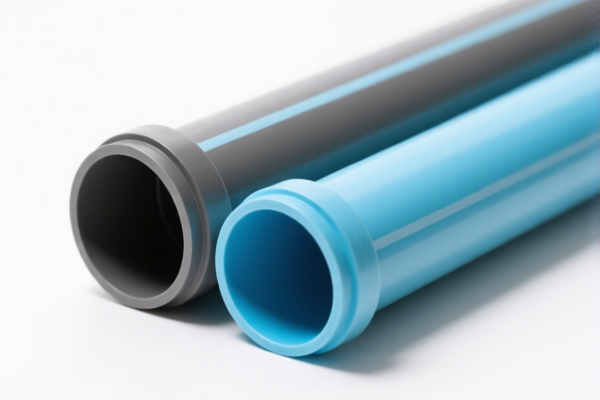
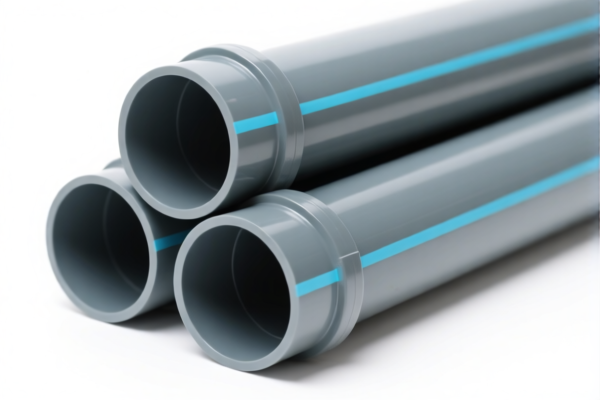
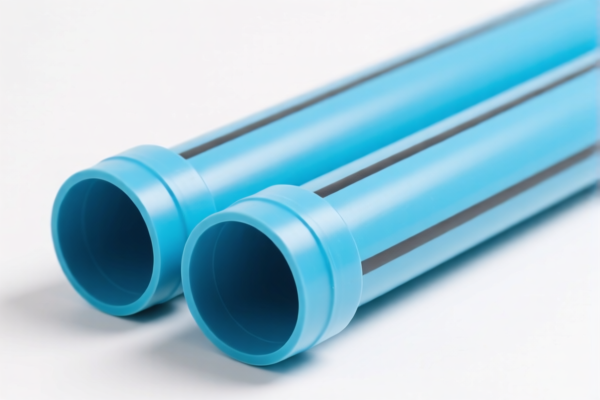

AI分析
🚰 PVC Drainage Pipes & Fittings (Plumbing for DWV Systems)
🌐 HS Code Reference & Customs Clearance Guide | 2026 Latest Tariff Analysis | Professional Entry Strategy 📌 I. Product Definition & Classification: What Exactly Are You Importing?
PVC (Polyvinyl Chloride) products for plumbing are not a single entity. In international trade, they are strictly categorized by form (Pipe vs. Fitting) and specific application/function (Pressure-rated vs. Non-Pressure/DWV). Misclassifying these can lead to massive tariff discrepancies (e.g., a 40.3% rate vs. a 22.8% rate).
1. Pipes (Tubing): Rigid cylindrical vessels used for conveying fluids. 2. Fittings (Connectors/Adapters): Components used to join, change direction, or provide access to pipes (e.g., elbows, tees, couplings).
⚠️ Critical Distinction:
- Fittings (Joints) for Drain/Waste/Vent (DWV) systems are generally taxed LOWER than pipes because they are viewed as "accessories" or distinct articles.
- Pipes are often subject to higher "Base + Section 301 + 122" combined duties.
- Material Definition: Must be explicitly "Chlorinated Polymer" (PVC).
📦 II. HS Code Classification Matrix (2026 Latest Tariff Authority)
| HS Code | Product Description | Application/Scenario | Key Identification Feature |
|---|---|---|---|
3917.40.00.50 |
PVC Drainage Pipe Fittings (Joints) | DWV Systems (Drain/Waste/Vent) | Fittings only. Non-pressure rated. Used for connecting pipes. |
3917.40.00.20 |
PVC Drainage Pipe Fittings (Joints) | DWV Systems (Drain/Waste/Vent) | Fittings only. Same as above, but potentially flagged for stricter scrutiny or different sub-category logic. |
3917.23.00.00 |
PVC Pipes (Chlorinated Polymer) | General Plumbing/Piping Systems | Pipe Form. Hard pipes made of chlorinated polymer. |
3917.32.00.10 |
PVC Pipes (Polyvinyl Chloride) | General Plumbing/Piping Systems | Pipe Form. Hard pipes made of PVC. Specific material match. |
3926.90.99.87 |
PVC Pipes/Articles (Misc. Plastic) | Hard Pipes/Plastic Articles | Catch-all/Miscellaneous. For hard pipes that don't fit the specific "pipes" headings, or plastic articles. Often lower tariff. |
🔍 Key Insight:
- Fittings (3917.40) vs. Pipes (3917.23/.32): The HS Code structure separates "Pipes and Tubes" from "Joints/Fittings".
- Tax Implication: Fittings often have a lower base duty (5.3%) compared to some pipe classifications (3.1% base, but higher combined due to 301/122 nuances).
- Note:3926.90.99.87is a "residual" category. If your PVC pipe doesn't perfectly match the specific definitions of 3917.23 or 3917.32, it may fall here, but this is less common for standard plumbing PVC.
💰 III. 2026 Latest Tariff Rate Breakdown (USA Import)
✅ Applicable Country: United States (US)
✅ Origin: China (CN)
✅ Effective Date: Current Trade Policies (Section 301 + Section 122)
🎯 1. Fittings: 3917.40.00.50 (Recommended for Joints)
Best for: Elbows, Tees, Couplings, Unions for DWV.
| Item | Detail |
|---|---|
| Base Duty | 5.3% |
| Section 301 (Trade War) | 0.0% (Note: Some sub-codes may vary, but this specific entry shows 0.0%) |
| Section 122 (Short Supply/Defense) | 10.0% |
| Total Effective Rate | 15.3% |
| De Minimis Status | ❌ Not Exempt (Section 301/122 goods generally not eligible for $800 de minimis) |
| Legal Path | IEEPA:9903.01.25 (if applicable) → USITC:3917.40.00.50 → FOOTNOTE:122 |
📌 Explanation:
- This is the most cost-effective classification for fittings.
- The 15.3% total is significantly lower than pipe imports.
- Crucial: Ensure the product is purely "Fittings" and not bundled with pipes in a way that confuses customs.
🎯 2. Fittings: 3917.40.00.20
Best for: DWV Fittings (Alternative Sub-category)
| Item | Detail |
|---|---|
| Base Duty | 5.3% |
| Section 301 (Trade War) | 25.0% |
| Section 122 | 10.0% |
| Total Effective Rate | 40.3% |
| De Minimis Status | ❌ Not Exempt |
| Legal Path | IEEPA:9903.01.25 → USITC:3917.40.00.20 → FOOTNOTE:122 |
📌 Explanation:
- High Risk! This code attracts the full 25% Section 301 tariff.
- Why the difference?3917.40.00.20may be classified under a different trade policy footnote or specific exclusion list than.50.
- Strategy: Always verify if.50is applicable before using.20. If the product description matches.50perfectly, avoid.20to save 25% in duties.
🎯 3. Pipes: 3917.23.00.00
Best for: Rigid PVC Pipes (Chlorinated Polymer)
| Item | Detail |
|---|---|
| Base Duty | 3.1% |
| Section 301 (Trade War) | 25.0% |
| Section 122 | 10.0% |
| Total Effective Rate | 38.1% |
| De Minimis Status | ❌ Not Exempt |
| Legal Path | IEEPA:9903.01.25 → USITC:3917.23.00.00 → FOOTNOTE:122 |
📌 Explanation:
- Pipes are taxed at 38.1%.
- Base duty is lower (3.1% vs 5.3%), but the 25% Section 301 tariff destroys the advantage.
🎯 4. Pipes: 3917.32.00.10
Best for: Rigid PVC Pipes (Specific PVC Definition)
| Item | Detail |
|---|---|
| Base Duty | 3.1% |
| Section 301 (Trade War) | 25.0% |
| Section 122 | 10.0% |
| Total Effective Rate | 38.1% |
| De Minimis Status | ❌ Not Exempt |
| Legal Path | IEEPA:9903.01.25 → USITC:3917.32.00.10 → FOOTNOTE:122 |
📌 Explanation:
- Same high tariff as.23. Ensure the material is accurately described as "PVC" (Polyvinyl Chloride). If it's a blend, it might fall elsewhere, but for standard plumbing, it's 38.1%.
🎯 5. Misc/Alternative: 3926.90.99.87
Best for: Hard PVC Pipes/Articles (If not meeting 3917 defs)
| Item | Detail |
|---|---|
| Base Duty | 5.3% |
| Section 301 (Trade War) | 7.5% |
| Section 122 | 10.0% |
| Total Effective Rate | 22.8% |
| De Minimis Status | ❌ Not Exempt |
| Legal Path | IEEPA:9903.01.25 → USITC:3926.90.99.87 → FOOTNOTE:122 |
📌 Explanation:
- Surprisingly Low! Only 22.8%.
- WARNING: This code is for "Other articles of plastics." Using it for standard PVC drainage pipes may be challenged by CBP if they clearly fall under Chapter 39.17 (Plastics pipes and tubes).
- Strategy: Only use if the product is non-standard, non-pipe plastic articles, or if you have a strong legal basis for exclusion from 3917. Do not use this for standard DWV pipes to avoid misclassification penalties.
🛠️ IV. Customs Clearance Best Practices (Avoiding Pitfalls)
✅ 1. Documentation Checklist (Non-Negotiable)
| Document | Requirement | Purpose |
|---|---|---|
| Commercial Invoice | Must clearly state "PVC Fittings" or "PVC Pipes" | Determines HS Code eligibility |
| Product Photos | Show shape (Pipe vs. Fitting) and material mark "PVC" | Proves form and material |
| Specification Sheet | Diameter, wall thickness, pressure rating (DWV vs. Pressure) | DWV is non-pressure, which affects classification |
| Material Declaration | "100% Polyvinyl Chloride (PVC)" | Prevents misclassification as other plastics |
| Country of Origin | Must be clearly marked "Made in China" | Triggers Section 301/122 tariffs |
✅ 2. Declaration Strategy (Key Tips)
🔥 "Fittings Over Pipes, DWV Over Pressure, Specific Code Over Generic!"
| Scenario | Recommended HS Code | Why? |
|---|---|---|
| Selling Joints/Elbows | 3917.40.00.50 |
Lowest rate (15.3%). Clearly a "Fitting". |
| Selling Joints (Risky) | 3917.40.00.20 |
Avoid unless .50 is rejected. Rate is 40.3%. |
| Selling Pipes | 3917.23.00.00 or .32 |
Standard pipes. Rate is 38.1%. |
| Non-Standard Plastic Parts | 3926.90.99.87 |
Only if not a "pipe" or "tube". Rate is 22.8%. |
⚠️ Critical Warning:
- Do NOT bundle pipes and fittings in one line item. Declare them separately!
- Do NOT call pipes "Fittings" to get the 15.3% rate. CBP will inspect, find pipes, and issue a penalty.
- Do NOT use3926.90.99.87for standard pipes unless you are certain they don't fit Chapter 39.17 definitions. CBP is aggressive on this.
✅ 3. Special Scenarios
| Scenario | Handling Advice |
|---|---|
| Mixed Container | Separate lines for Pipes and Fittings on the Bill of Lading and Invoice. |
| White vs. Grey PVC | Both are PVC. Ensure description says "Polyvinyl Chloride". Color doesn't change HS code. |
| Schedule B vs. HTS | Ensure HTSUS code (10-digit) is used for US import, not just Schedule B (10-digit) for export. |
| Section 122 | The 10% tariff applies to "Articles of China" under certain defense/shortage provisions. It is additive. |
🌍 V. Global Market Comparison (2026)
| Region | Recommended HS Code | Estimated Duty (China Origin) | Notes |
|---|---|---|---|
| 🇺🇸 USA | 3917.40.00.50 (Fittings) |
15.3% | Best rate for fittings. Pipes ~38%. |
| 🇺🇸 USA | 3917.40.00.20 (Fittings) |
40.3% | High risk. Avoid if .50 applies. |
| 🇪🇺 EU | 3917.21.00 / .40 |
~2.5% - 4.5% | No Section 301. Much lower duties. |
| 🇨🇳 China | 3917.21.00 / .40 |
~2.5% - 5% | Import into China is cheaper. |
| 🇬🇧 UK | 3917.21.00 / .40 |
~3% - 5% | Post-Brexit tariffs apply. |
📌 Conclusion:
- The US market is the most expensive for Chinese PVC products due to Section 301 and Section 122 tariffs.
- Fittings (3917.40.00.50) offer the best tariff advantage (15.3%) compared to pipes (38.1%).
- Strategy: If possible, export more fittings and fewer pipes to optimize duty costs, provided demand supports it.
📌 VI. Common Errors & Pitfalls (Learn from Mistakes)
❌ Error 1: Declaring Pipes as "Plastic Fittings" to get 15.3%
👉 Result: CBP inspection reveals pipes. Penalties + Back Duties + Potential Fraud Charges.
❌ Error 2: Using 3926.90.99.87 for Standard PVC Pipes
👉 Result: CBP reclassifies to 3917.23 or .32. Additional 15% duty + Penalty.
❌ Error 3: Ignoring Section 122 Tariff
👉 Result: Underpaying duties by 10%. Audit and interest charges.
❌ Error 4: Vague Description "PVC Stuff"
👉 Result: CBP assigns worst-case scenario or holds shipment. Delays and Storage Fees.
✅ Correct Declaration Example:
"PVC DWV Pipe Fittings, 4-inch, Schedule 40, Gray, 100% Polyvinyl Chloride, Not for Pressure Use, HS 3917.40.00.50"
🎯 VII. Conclusion: Smart Classification Saves Money!
🎯 Key Takeaway:
🔹 Fittings are cheaper than Pipes. Use
3917.40.00.50(15.3%) whenever possible.
🔹 Pipes are expensive. Budget for 38.1% if importing standard pipes.
🔹 Be Specific. "DWV" (Drain/Waste/Vent) confirms non-pressure, aiding correct classification.
🔹 Avoid Misclassification. The 25% Section 301 tariff is real. Don't try to sneak pipes into fitting codes.
📌 Pro Tip:
If you are importing large volumes, consider Advance Rulings from CBP to lock in the HS Code classification before shipment. This provides legal certainty and prevents surprise bills.
📣 Immediate Action:
📞 Consult a licensed customs broker.
📄 Prepare precise product specs (DWV vs. Pressure).
📦 Separate Pipes and Fittings on documentation.
🚀 Optimize your HS Code, save 23% in duties, and clear US customs smoothly!
✨ Professional Customs Clearance Starts with Accurate Classification!
💼 Every percent of duty saved is pure profit!
用户评价
关于 HS 编码归类
协调制度(HS)是由世界海关组织(WCO)制定的国际贸易商品分类标准。全球 200 多个国家采用 HS 系统作为海关关税、贸易统计和进出口监管的基础。
每个 HS 编码遵循以下层级结构:
- 章(2 位)——商品大类(例如:第 84 章:机器和机械设备)
- 品目(4 位)——章内的更具体分类
- 子目(6 位)——国际通用细分,所有 WCO 成员国统一使用
- 本国细分(8-10 位)——各国自行扩展的细分编码,如美国 HTSUS 10 位编码
正确的 HS 编码归类对于顺利通关、准确缴纳关税和遵守贸易法规至关重要。错误归类可能导致海关延误、多缴关税或罚款。
从CN进口到US时,适用的关税税率可能包括:
- 最惠国(MFN)税率——适用于 WTO 成员国的标准关税税率
- 普通税率——适用于无贸易协定国家
- 贸易救济关税——附加关税,如 301 条款(反倾销)、232 条款(国家安全)或反补贴税
本页内容仅供参考。如需正式归类,请咨询当地海关或持牌报关代理。