pvc winding pipe
CN → US| HS编码 | 关税税率 | 原产国 | 目的国 | 文档 |
|---|---|---|---|---|
| 3917320010 | 38.1% | CN | US | 官方文档 |
| 3917230000 | 38.1% | CN | US | 官方文档 |
| 3926909987 | 22.8% | CN | US | 官方文档 |
| 3926909989 | 22.8% | CN | US | 官方文档 |
| 3917320010 | 38.1% | CN | US | 官方文档 |
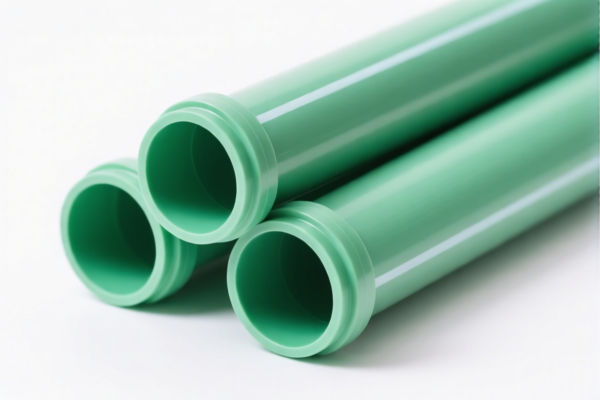
商品图片


AI分析
🧵 PVC Winding Pipe (Polyvinyl Chloride Tubing)
🌐 HS Code Reference & Customs Clearance Guide | 2026 Latest Tariff Analysis | Professional Clearance Strategy
📌 1. Product Definition: What Exactly is a "PVC Winding Pipe"?
PVC Winding Pipe (often referred to as Spiral Pipe, Coiled Tubing, or Flexible PVC Hose) is a flexible plastic conduit used for cable management, fluid transport, or mechanical protection. Its defining characteristic is the helical/wound structure (unlike smooth extruded pipes), which provides flexibility and expandability.
In international trade classification, the key distinction lies in whether it is classified strictly as a "Pipe/Tube" under Chapter 39.03 (Articles of Plastics) or as a "Part of an Article" under Chapter 39.26 (Other Plastic Articles).
⚠️ Critical Distinction Point:
- If the product is primarily defined by its material (PVC/Chlorinated Polyvinyl Chloride) and form (tube/pipe), it generally falls under Heading 39.17.
- If the specific sub-category for PVC pipes is contested or if it is considered a "general purpose" plastic fitting/accessory not specifically named, it may fall under the "Catch-all" provision in Heading 39.26.
- Note: The term "Winding Pipe" implies a manufactured article. While flexible, it is technically a "tube" of plastics.
📦 2. HS Code Classification Details (2026 Latest Tariff Concordance)
Based on the provided data, here are the specific HS Codes and their rationales:
| HS Code | Product Description | Rationale / Matching Criteria | Total Tax Rate |
|---|---|---|---|
3917.32.00.10 |
PVC Pipe, Material: PVC, Form: Pipe | Matches classification requirements. Specifically targets pipes of polyvinyl chloride (PVC). | 38.1% |
3917.23.00.00 |
PVC Pipe, Material: Vinyl Polymer, Form: Pipe | Matches classification. "Vinyl polymer" is the scientific term for PVC. This is a direct material match. | 38.1% |
3926.90.99.87 |
PVC Pipe, Plastic Material, Form: Pipe | Classified under the "Other塑料制品" (Other Plastic Articles) catch-all category. Used if specific PVC pipe codes are deemed inapplicable. | 22.8% |
3926.90.99.89 |
PVC Pipe, Plastic Material, Form: Pipe | Fits the definition of "Other Plastic Articles." A generic fallback for plastic articles not specified elsewhere. | 22.8% |
3917.32.00.10 |
PVC Winding Pipe, Material: PVC, Form: Pipe | Direct match for "Winding Pipe" under the PVC pipe category. Confirms form and material compliance. | 38.1% |
🔍 Key Observation:
- Codes3917.32.00.10and3917.23.00.00are Primary Matches for PVC pipes. They attract a 38.1% total tax rate.
- Codes3926.90.99.87and3926.90.99.89are Alternative/Catch-all Matches. They attract a lower 22.8% total tax rate but may be subject to stricter scrutiny regarding the "Specific vs. General" classification principle.
- Code3917.32.00.10is explicitly linked to the term "PVC Winding Pipe" in the data, making it the most descriptive match for the specific product name.
💰 3. Detailed Tariff Breakdown (Including Additional Taxes)
✅ Applicable Country: United States (US)
✅ Origin: China (CN)
✅ Effective Date: Post-2025 (Current Trade Environment)
🎯 1. Primary Classification: 3917.32.00.10 / 3917.23.00.00 (PVC Pipes)
| Item | Detail |
|---|---|
| Base Tariff | 3.1% |
| Section 301/Additional Tariff | 25.0% |
| Section 122 Tariff | 10.0% |
| Total Tariff Rate | 38.1% |
| Tax Calculation | CIF Value × 38.1% |
| De Minimis Eligibility | ❌ Not Eligible (High tariff risk) |
| Legal Basis Path | Section 301: 9903.88.01 → Section 122: 9903.01.24 → USITC: 3917.32.00.10 |
📌 Explanation:
- Base Tariff (3.1%): Standard most-favored-nation (MFN) rate for plastic pipes.
- Section 301 Tariff (25.0%): Standard additional duty on many Chinese plastic articles.
- Section 122 Tariff (10.0%): Additional duty targeting specific Chinese imports under executive orders.
- Total: 38.1%. This is a high-duty classification.
🎯 2. Alternative Classification: 3926.90.99.87 / 3926.90.99.89 (Other Plastic Articles)
| Item | Detail |
|---|---|
| Base Tariff | 5.3% |
| Section 301/Additional Tariff | 7.5% |
| Section 122 Tariff | 10.0% |
| Total Tariff Rate | 22.8% |
| Tax Calculation | CIF Value × 22.8% |
| De Minimis Eligibility | ❌ Not Eligible (High tariff risk) |
| Legal Basis Path | Section 301: 9903.01.25 → Section 122: 9903.01.24 → USITC: 3926.90.99.87 |
📌 Explanation:
- Base Tariff (5.3%): Higher base rate for general plastic articles compared to specific pipes.
- Section 301 Tariff (7.5%): Lower additional duty compared to the 3917 category.
- Section 122 Tariff (10.0%): Same 10% additional duty applies.
- Total: 22.8%. This is a moderate-duty classification, 15.3% lower than the primary PVC pipe classification.
- ⚠️ Risk: Customs may challenge this classification, arguing that PVC pipes are specifically covered under 3917, not the general "other" category. Misclassification can lead to penalties.
🛠️ 4. Customs Clearance Practical Advice (Pitfall Avoidance Guide)
✅ 1. Essential Documentation Checklist
| Document | Required | Notes |
|---|---|---|
| ✅ Product Specification Sheet | ✔️ | Must specify: Material (PVC), Shape (Winding/Spiral/Flexible), Inner/Outer Diameter, Wall Thickness. |
| ✅ Product Photos | ✔️ | Clear images showing the spiral/wound structure. Label must show "PVC" and "Flexible Pipe". |
| ✅ Commercial Invoice | ✔️ | Accurate description: "PVC Winding Pipe, 10mm ID, Flexible, for Cable Management". Avoid vague terms like "Plastic Tube". |
| ✅ Packing List | ✔️ | Weight and dimensions of coils/rolls. |
| ✅ Certificate of Origin (CO) | ✔️ | Mandatory for proving Chinese origin to apply Section 301/122 duties correctly. |
✅ 2. Declaration Tips (Key Mnemonic)
🔥 "Material First, Form Second, Code Specific, Tax Minimized!"
| Scenario | Correct Declaration | Incorrect Practice |
|---|---|---|
| Clear PVC Material | Declare as "Polyvinyl Chloride (PVC) Pipe" → Use 3917.32.00.10 |
Declaring as generic "Plastic Pipe" → Risk of audit. |
| Flexible/Spiral Form | Emphasize "Winding/Spiral Structure" in description | Calling it just "Tube" without structure detail → Ambiguity. |
| Cost Optimization Strategy | Consider 3926 if legally defensible |
Blindly using 3917 if 3926 is more appropriate (but risky). |
| Vague Terms | NEVER use "Plastic Winding Stuff" | Use precise technical names. |
✅ 3. Special Case Handling
| Situation | Handling Suggestion |
|---|---|
| OEM/Private Label | Provide customer order + design specs to prove material composition. |
| Mixed Packages (PVC + Other Plastic) | Declare separately. Do not mix PVC pipes with non-PVC plastic parts to avoid complex valuation. |
| Duty Mitigation | If 3926 (22.8%) is deemed legally risky, consider supply chain diversification (e.g., sourcing from Vietnam/Malaysia if possible) to avoid Section 301/122 duties. |
| Pre-Immigration Ruling | Strongly Recommended: Apply for an Advance Ruling from US CBP to lock in 3917 or 3926 classification before shipment. |
🌍 5. Global Market Comparison (2026 Latest)
| Country/Region | Recommended HS Code | Estimated Tariff (China Origin) | Certification Requirements | Notes |
|---|---|---|---|---|
| 🇺🇸 USA | 3917.32.00.10 |
38.1% | FTC Labeling, Lead-free compliance | High duty due to Section 301/122. |
| 🇺🇸 USA | 3926.90.99.87 |
22.8% | FTC Labeling, Lead-free compliance | Lower duty, but higher classification risk. |
| 🇨🇳 China | 3917.32.00.10 |
6.5% | CCC (if applicable) | Domestic trade, lower duties. |
| 🇪🇺 EU | 3917.23.00.00 |
0% - 2% | REACH, RoHS | Generally low duty for plastic pipes. |
| 🇦🇺 Australia | 3917.32.00.00 |
5% | ACCC Standards | No Section 301/122 equivalent. |
📌 Conclusion:
- The USA is the only market with significant Section 301/122 additional tariffs (38.1% or 22.8%).
- China-origin PVC Winding Pipes face high tariff barriers in the US.
- Recommendation: For US imports, evaluate if the cost savings from using3926(22.8%) outweigh the legal risk, or consider Third-Country Sourcing to mitigate Section 301/122 duties.
📌 6. Common Errors & Pitfall Guide (Lessons Learned)
❌ Error 1: Declaring as "Plastic Tube" without specifying PVC.
👉 Consequence: Customs may reclassify, leading to higher base duties or penalties for misdeclaration.
❌ Error 2: Using 3926 (22.8%) for obvious PVC pipes to save tax.
👉 Consequence: Customs audit → Reclassification to 3917 (38.1%) + Back Taxes + Fines.
❌ Error 3: Missing Section 122 Tariff awareness.
👉 Consequence: Underpayment of 10%. 38.1% is the true cost, not just 3.1% or 25%.
❌ Error 4: Vague Product Description ("Winding Pipe").
👉 Consequence: Delays in clearance, requests for additional information, potential detention of goods.
✅ Correct Approach:
"PVC Winding Pipe, Flexible, Polyvinyl Chloride, 10mm ID, Coiled, Model XYZ, Origin: China"
🎯 7. Conclusion: Precision in Classification, Profit in Clearance
🎯 Remember the Mnemonic:
🔹 "PVC Pipe = 3917 (38.1%) | Other Plastic = 3926 (22.8%) | Section 122 = 10% Extra!"
🔹 "HS Code Determines Destiny, 15.3% Diff is Huge, Declaration Must be Precise!"
📌 Pro Tip:
If your PVC Winding Pipes are originating from Vietnam, Mexico, Thailand, or Malaysia, you may avoid Section 301/122 tariffs entirely, reducing the total tariff to the Base Rate Only (e.g., 3.1% or 5.3%).
Recommendation: Apply for a Pre-Clearance Ruling to confirm the HS Code and Evaluate Third-Country Sourcing to optimize costs.
📣 Immediate Action:
📞 Contact Professional Customs Broker + Provide Product Photos + Apply for HS Code Pre-Ruling
🚀 Ensure Your PVC Winding Pipes Clear Customs Smoothly, Efficiently, and Profitably!
✨ Professional Clearance Starts with Accurate Classification!
💼 Every Cent of Cost Deserves Precise Calculation!
用户评价
关于 HS 编码归类
协调制度(HS)是由世界海关组织(WCO)制定的国际贸易商品分类标准。全球 200 多个国家采用 HS 系统作为海关关税、贸易统计和进出口监管的基础。
每个 HS 编码遵循以下层级结构:
- 章(2 位)——商品大类(例如:第 84 章:机器和机械设备)
- 品目(4 位)——章内的更具体分类
- 子目(6 位)——国际通用细分,所有 WCO 成员国统一使用
- 本国细分(8-10 位)——各国自行扩展的细分编码,如美国 HTSUS 10 位编码
正确的 HS 编码归类对于顺利通关、准确缴纳关税和遵守贸易法规至关重要。错误归类可能导致海关延误、多缴关税或罚款。
从CN进口到US时,适用的关税税率可能包括:
- 最惠国(MFN)税率——适用于 WTO 成员国的标准关税税率
- 普通税率——适用于无贸易协定国家
- 贸易救济关税——附加关税,如 301 条款(反倾销)、232 条款(国家安全)或反补贴税
本页内容仅供参考。如需正式归类,请咨询当地海关或持牌报关代理。