quartz clock movement
CN → US| HS编码 | 关税税率 | 原产国 | 目的国 | 文档 |
|---|---|---|---|---|
| 9105295000 | 0.0% | CN | US | 官方文档 |
| 9105294000 | 0.0% | CN | US | 官方文档 |
| 8543908885 | 85.0% | CN | US | 官方文档 |
| 9114903000 | 0.0% | CN | US | 官方文档 |
商品图片
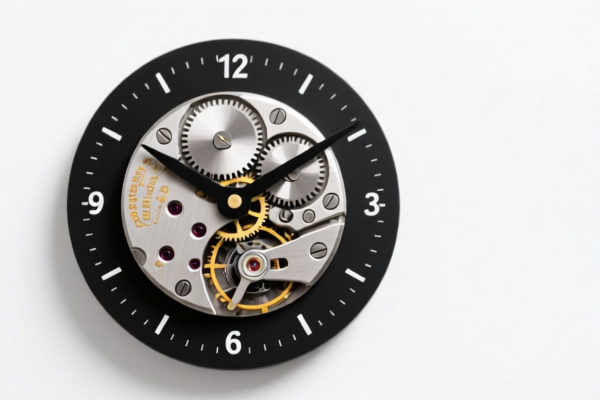

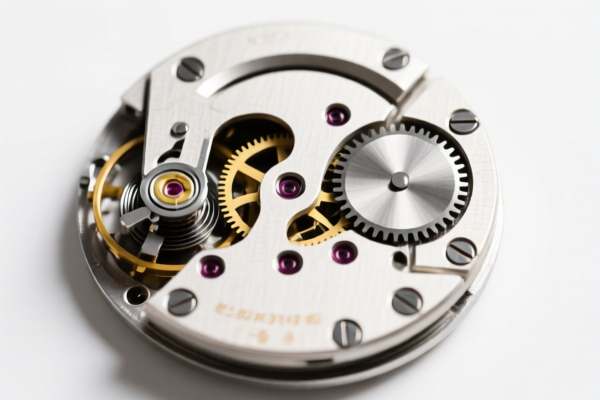
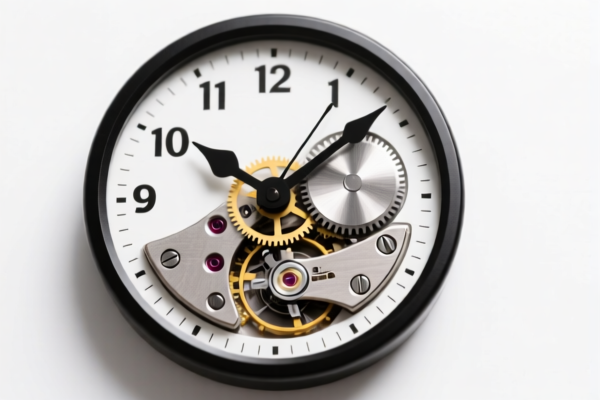
AI分析
⏰ Quartz Clock Movements (The Heart of Timekeeping)
🌐 HS Code Reference & Customs Clearance Guide | 2026 Latest Tariff Analysis | Professional Compliance Strategy
📌 Part I: Product Definition & Classification: Do You Truly Understand "Quartz Movements"?
A Quartz Clock Movement is the internal mechanical/electronic engine that drives a clock. It converts electrical energy into precise mechanical motion. In international trade, classification depends heavily on form (finished good vs. component) and function (part of a clock vs. generic electrical part).
Key Distinctions:
- Finished Clock (Wall Clock): If the movement is installed in a casing with hands/dial, it is a Timepiece (HS 91).
- Movement Component: If sold separately as a replacement part or kit, it is classified as a Part of Timepieces (HS 91) OR an Electrical Machine Part (HS 85) depending on specificity and integration.
⚠️ Critical Classification Point:
- If it is a complete wall clock (casing + movement + hands) → HS 9105.29.40.00
- If it is a generic electrical part/component not specifically identifiable as a clock part alone → HS 8543.90.88.85
- If it is a bare movement module intended for clock assembly → HS 9114.90.30.00
📦 Part II: HS Code Classification Details (2026 Official Tariff Cross-Reference)
| HS Code | Product Description | Application Scenario | Component Status |
|---|---|---|---|
9105.29.40.00 |
Wall clocks (Other than pocket watches or similar watches) | Finished wall clocks, decorative wall clocks, ready-to-hang timepieces | ✅ Finished Good |
8543.90.88.85 |
Electrical machines and apparatus, having individual functions, n.e.s. in Ch. 85 | Generic electrical components, plastic/metal housing parts, non-specific clock parts | ✅ Generic Part |
9114.90.30.00 |
Parts of clocks and watches (Other than cases, crystals, dials, hands) | Bare quartz movements, gears, batteries (if sold with), clock assembly kits | ✅ Specific Part |
🔍 Key Reminder:
- Finished Wall Clocks cannot be split into "movement + casing" for lower tariffs; they must be declared as 9105.
- Bare Movements are preferred under 9114 because they are specifically "parts of clocks." Using 8543 is risky if the item is exclusively for clocks.
- 8543.90.88.85 is often used for mixed-material components (plastic/metal) that don’t fit neatly into "clock parts" but are clearly electrical in nature.
💰 Part III: 2026 Latest Tariff Rate Breakdown (Including Duties & Surcharges)
✅ Applicable Country: United States (US)
✅ Origin: China (CN)
✅ Effective Date: From 2025/2026 (subject to ongoing Section 301 and IEEPA updates)
🎯 1. 9105.29.40.00 —— Wall Clocks (Finished Goods)
| Item | Details |
|---|---|
| Base Duty | 15¢ each + 6.4% (Ad Valorem) |
| Section 301 Surcharge | 0.0% (Note: Verify current list; historically some clocks were exempt or low, but check latest updates) |
| Section 122 Surcharge | +10.0% (New Trade Policy Surcharge) |
| Total Effective Rate | 6.4% + 15¢/unit + 10% surcharge |
| Calculation | (CIF Value × 6.4%) + ($0.15 × Units) + (CIF Value × 10%) |
| De Minimis Eligibility | ❌ No (Not eligible for $800 de minimis if duty > 0%) |
| Legal Basis | HTSUS:9105.29.40.00 → Section 122: 10% |
📌 Explanation:
- This is the most common code for imported wall clocks.
- The 15¢ per unit is a specific duty added to the ad valorem rate.
- The +10% Section 122 tariff is a significant cost driver introduced recently, impacting most Chinese-origin consumer goods.
🎯 2. 8543.90.88.85 —— Electrical Parts (Generic)
| Item | Details |
|---|---|
| Base Duty | 0.0% |
| Section 301 Surcharge | +25.0% |
| Steel/Aluminum/Copper Surcharge | +50.0% (If product contains significant metals, verify material composition) |
| Section 122 Surcharge | +10.0% |
| Total Effective Rate | Up to 85.0% (25% + 10% + potential 50% for metals) |
| Calculation | CIF Value × 85.0% (worst-case scenario) |
| De Minimis Eligibility | ❌ No |
| Legal Basis | HTSUS:8543.90.88.85 → Section 301: 9903.88.01 → Section 122 |
📌 Explanation:
- Extremely High Risk: If your quartz movement is classified here instead of under Chapter 91, you face 85% duty.
- This code is used when the item is not clearly a clock part but an "electrical machine part."
- Avoid this code unless the product is a complex, multi-function electrical component not primarily for timekeeping.
🎯 3. 9114.90.30.00 —— Parts of Clocks (Movements Only)
| Item | Details |
|---|---|
| Base Duty | 6% + 2.3¢/jewel + 0.2¢/other part |
| Section 301 Surcharge | 0.0% (Historically low for clock parts) |
| Section 122 Surcharge | +10.0% |
| Total Effective Rate | 6% + specific duties + 10% |
| Calculation | (CIF × 6%) + ($0.023 × Jewels) + ($0.002 × Other Parts) + (CIF × 10%) |
| De Minimis Eligibility | ❌ No |
| Legal Basis | HTSUS:9114.90.30.00 → Section 122: 10% |
📌 Explanation:
- Best for Bare Movements: If you import only the quartz movement (no casing, no dial), this is the most accurate code.
- The 2.3¢ per jewel applies if the movement contains jeweled bearings.
- The 10% Section 122 still applies, but the base rate is lower than finished clocks.
- Verify Jewel Count: Incorrectly declaring jewels can lead to penalties.
🛠️ Part IV: Customs Clearance Practical Advice (Pitfall Avoidance Guide)
✅ 1. Required Documentation Checklist (Non-Negotiable)
| Document | Mandatory? | Notes |
|---|---|---|
| ✅ Product Specification Sheet | ✔️ | Must clearly state: "Quartz Movement," "Voltage," "Battery Type," "Dimensions" |
| ✅ Photos (Internal/External) | ✔️ | Show the movement board, gears, and any branding |
| ✅ Bill of Lading/Packing List | ✔️ | Must match invoice description exactly |
| ✅ Commercial Invoice | ✔️ | Describe as "Quartz Clock Movement Module" or "Wall Clock" depending on HS Code |
| ✅ Certificate of Origin (CO) | ✔️ | If applicable for preferential treatment (though limited for CN origin in US) |
| ✅ Material Declaration | ✔️ | Critical for 8543.90.88.85 to avoid +50% metal surcharge |
✅ 2. Declaration Strategy (Key Mantras)
🔥 "Finished Clock = 9105 | Bare Movement = 9114 | Generic Part = 8543 (Avoid!)"
| Scenario | Correct HS Code | Incorrect Code | Risk |
|---|---|---|---|
| Complete Wall Clock (with case, hands, battery) | 9105.29.40.00 |
9114.90.30.00 |
Misclassification: Duty underpaid → Penalty |
| Bare Quartz Movement (no case, no hands) | 9114.90.30.00 |
8543.90.88.85 |
Catastrophic: 85% vs ~16% duty |
| Mixed Kit (Movement + Case + Hands, sold separately but shipped together) | 9105.29.40.00 |
Split into parts | GAA (General Rule of Interpretation 3): Assembled item governs |
| Replacement Movement (Sold for repair) | 9114.90.30.00 |
9105.29.40.00 |
Minor: Higher duty but acceptable |
✅ 3. Special Cases Handling
| Scenario | Recommendation |
|---|---|
| Smart Clocks (with WiFi/App) | May fall under 8517.62 (Communication Apparatus). Check if "quartz movement" is secondary to digital function. |
| Movement with Battery Included | Declare battery separately if required by USITC rules (Hazmat filing for Lithium). |
| Bulk Import vs. Retail Units | Bulk shipments of movements still require per-unit jewel count declaration for 9114.90.30.00. |
| Section 301 Exemptions | Historically, some clock parts were exempt. Check current HTSUS exclusions list before declaring. |
🌍 Part V: Global Market Comparison (2026 Update)
| Country/Region | Recommended HS Code | Estimated Duty (China Origin) | Key Requirements |
|---|---|---|---|
| 🇺🇸 USA | 9105.29.40.00 (Clock) / 9114.90.30.00 (Part) |
16% + 15¢/unit (Clock) 16% + 2.3¢/jewel (Part) |
Section 122 (10%) applies. No De Minimis. |
| 🇨🇳 China (Export) | 9105.29 / 9114.90 |
0% (Export Duty) | Standard export declaration. |
| 🇪🇺 EU | 9105.11 / 9114.20 |
0% - 4.5% (Most clock parts duty-free) | CE Marking for electrical parts. VAT applies. |
| 🇬🇧 UK | 9105.11 / 9114.20 |
0% - 4.5% | Post-Brexit rules apply. |
| 🇯🇵 Japan | 9105.99 / 9114.90 |
0% - 3.2% | JIS Certification may be required. |
📌 Conclusion:
- USA is the most expensive market due to Section 122 (10%) and potential Section 301.
- EU/UK/Japan are more favorable for quartz clock parts, with low or zero base duties.
- Never use8543.90.88.85for pure quartz movements in the US market unless explicitly advised by a customs broker for a non-standard electrical device.
📌 Part VI: Common Mistakes & Pitfalls (Lessons Learned)
❌ Mistake 1: Declaring a Complete Wall Clock as "Parts" (9114)
👉 Consequence: Customs may reject because a complete clock is not a "part." Even if accepted, you may be charged higher duties or face audits.
👉 Correct: Use 9105.29.40.00.
❌ Mistake 2: Declaring a Bare Movement as 8543.90.88.85
👉 Consequence: You pay 85% duty instead of ~16%. This is a massive cost overrun.
👉 Correct: Use 9114.90.30.00 for specific clock parts.
❌ Mistake 3: Ignoring the 15¢ per unit duty on finished clocks
👉 Consequence: Underpayment on low-value items. For 10,000 clocks, that’s $1,500 extra.
👉 Correct: Factor this into your landed cost calculation.
❌ Mistake 4: Failing to declare Jewel Count for 9114.90.30.00
👉 Consequence: If the movement has jewels (e.g., 5 jewels), you owe $0.115 per unit. Undeclared → Penalty.
👉 Correct: Check technical specs for jewel count.
🎯 Part VII: Conclusion: Precision in Classification Saves Money!
🎯 Remember the Mantras:
🔹 "Finished Clock = 9105 (6.4% + 15¢ + 10%) | Bare Movement = 9114 (6% + 2.3¢/jewel + 10%) | Avoid 8543 (85%!)"
🔹 "HS Code Determines Profit Margin. A 70% duty difference can destroy your business!"
📌 Pro Tip:
- If you import both finished clocks and bare movements, use separate SKUs and clear product descriptions.
- Request a Binding Tariff Information (BTI) or US CBP Ruling if your product is ambiguous (e.g., a "smart" clock).
- Always verify Section 122 applicability as US trade policy changes frequently.
📣 Immediate Action:
📞 Consult a licensed customs broker
📄 Prepare detailed technical specs (jewel count, voltage, material composition)
🚀 Optimize your supply chain to account for 16-26% landed duties in the US market
✨ Professional Customs Compliance Starts with Accurate Classification!
💼 Your Bottom Line Depends on It!
用户评价
关于 HS 编码归类
协调制度(HS)是由世界海关组织(WCO)制定的国际贸易商品分类标准。全球 200 多个国家采用 HS 系统作为海关关税、贸易统计和进出口监管的基础。
每个 HS 编码遵循以下层级结构:
- 章(2 位)——商品大类(例如:第 84 章:机器和机械设备)
- 品目(4 位)——章内的更具体分类
- 子目(6 位)——国际通用细分,所有 WCO 成员国统一使用
- 本国细分(8-10 位)——各国自行扩展的细分编码,如美国 HTSUS 10 位编码
正确的 HS 编码归类对于顺利通关、准确缴纳关税和遵守贸易法规至关重要。错误归类可能导致海关延误、多缴关税或罚款。
从CN进口到US时,适用的关税税率可能包括:
- 最惠国(MFN)税率——适用于 WTO 成员国的标准关税税率
- 普通税率——适用于无贸易协定国家
- 贸易救济关税——附加关税,如 301 条款(反倾销)、232 条款(国家安全)或反补贴税
本页内容仅供参考。如需正式归类,请咨询当地海关或持牌报关代理。