refractory castable phosphate bonded
CN → US| HS编码 | 关税税率 | 原产国 | 目的国 | 文档 |
|---|---|---|---|---|
| 3824999361 | 40.0% | CN | US | 官方文档 |
| 3824993990 | 35.0% | CN | US | 官方文档 |
| 3824405000 | 40.0% | CN | US | 官方文档 |
| 3824500050 | 35.0% | CN | US | 官方文档 |
商品图片
AI分析
🧱 Refractory Castable: Phosphate Bonded Systems
🌐 HS Code Reference & Customs Clearance Guide | 2026 Latest Tariff Analysis | Professional Clearance Strategy
📌 Part I: Product Definition & Classification: What Exactly is "Phosphate Bonded Refractory Castable"?
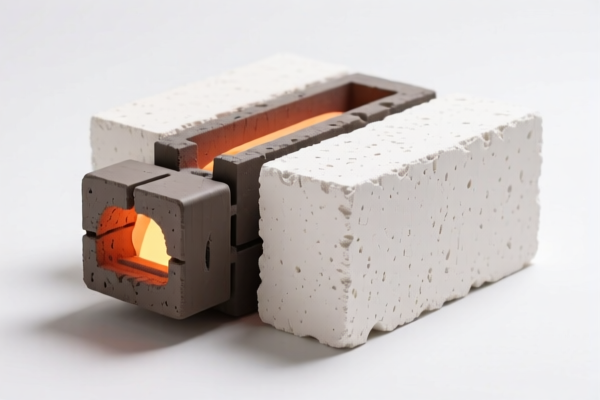
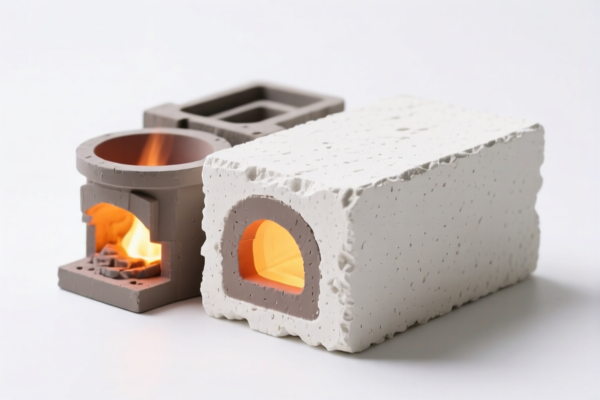
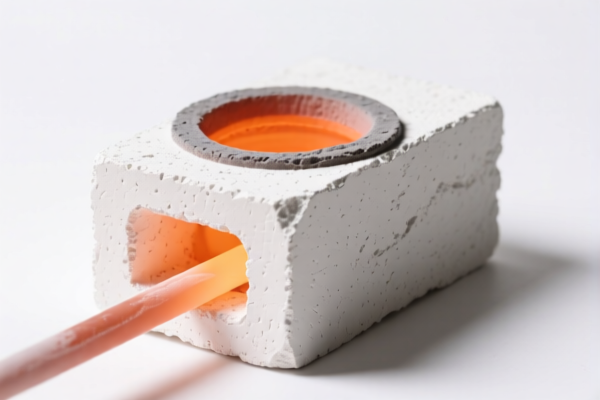
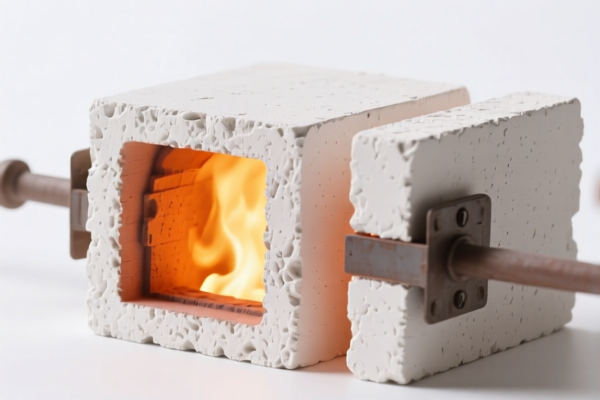
Refractory castables are unshaped refractory materials mixed with water for placement by casting. Phosphate-bonded systems are a high-performance class where the binder reacts with alumina to form aluminum phosphate bonds, offering superior performance at high temperatures and in corrosive environments compared to traditional cement-bonded castables.
In international trade, these products are not a single HS Code but are classified based on their primary chemical nature and intended industrial application. The key differentiator is whether the product is viewed as a generic chemical mixture, a specific chemical product of the chemical industry, or a construction/repair additive.
⚠️ Key Classification Distinction:
- If the product is primarily defined by its chemical composition (phosphates + chemical additives) → 3824.99.93.61
- If the product is defined as an inorganic compound mixture → 3824.99.39.90
- If the product is marketed as a repair material for concrete/cement structures → 3824.40.50.00
- If the product is marketed as a general chemical product/preparation for industrial use → 3824.50.00.50
📦 Part II: HS Code Classification Details (2026 Latest Tariff Authority Comparison)
| HS Code | Product Description | Application Scenario | Primary Attribute |
|---|---|---|---|
3824.99.93.61 |
High-temperature phosphate binder, matching phosphorous chemical substances & preparations | Specialized chemical binders, custom refractory mixes | 🧪 Chemical Substances |
3824.99.39.90 |
High-temperature phosphate binder, matching inorganic compound mixtures | General inorganic refractory mixtures | ⚗️ Inorganic Mixtures |
3824.40.50.00 |
Refractory Repair Material (Phosphate), matching additives for cement mortar/concrete | Repair of kiln linings, concrete structures, industrial floors | 🏗️ Construction/Additive |
3824.50.00.50 |
Refractory Repair Material (Phosphate), matching chemical products/preparations for chemical industry | General industrial chemical preparations, non-specific repair | 🧫 Chemical Preparation |
🔍 Critical Note:
- HS 3824 generally covers "Prepared binders for foundry molds or cores; chemical products and preparations of the chemical or allied industries... not elsewhere specified or included."
- Refractory castables often fall here because they are pre-mixed dry preparations.
- Misclassification Risk: Do not classify as simple "Cement" (3820) if phosphate is the primary binder. Do not classify as simple "Oxides" (2818/2825) if it is a pre-mixed castable.
💰 Part III: 2026 Latest Tariff Rate Breakdown (Including Surcharges & Policy Add-ons)
✅ Applicable Country: United States (US)
✅ Country of Origin: China (CN)
✅ Effective Date: Post-November 2025 (Includes subsequent imports)
🎯 1. 3824.99.93.61 —— High-Temperature Phosphate Binder (Chemical Substances)
| Item | Content |
|---|---|
| Base Tariff | 5.0% (Ad valorem) |
| Section 301 Surcharge | +25.0% |
| 122 Section Surcharge | +10.0% |
| Total Tax Rate | 40.0% |
| Tax Calculation | CIF Value × 40% |
| De Minimis Eligibility | ❌ Not Eligible (Denied) |
| Legal Pathway | Base: 5% → 301: 25% → 122: 10% |
📌 Explanation:
- Base (5%): Standard MFN rate for miscellaneous chemical preparations.
- Section 301 (25%): Standard US-China trade war tariff on most chemical/refractory goods from China.
- 122 Section (10%): Additional punitive tariff under specific trade enforcement provisions.
- Total 40%: This is a high-cost entry category. Buyers must factor this into landed costs.
🎯 2. 3824.99.39.90 —— High-Temperature Phosphate Binder (Inorganic Mixtures)
| Item | Content |
|---|---|
| Base Tariff | 0.0% (Ad valorem) |
| Section 301 Surcharge | +25.0% |
| 122 Section Surcharge | +10.0% |
| Total Tax Rate | 35.0% |
| Tax Calculation | CIF Value × 35% |
| De Minimis Eligibility | ❌ Not Eligible (Denied) |
| Legal Pathway | Base: 0% → 301: 25% → 122: 10% |
📌 Explanation:
- Base (0%): Some inorganic mixtures enjoy a lower base rate.
- Surcharges: Still subject to the full 35% total burden (25% + 10%).
- Advantage: 5% lower than3824.99.93.61due to the 0% base, but still heavily taxed.
🎯 3. 3824.40.50.00 —— Refractory Repair Material (Phosphate) / Concrete Additive
| Item | Content |
|---|---|
| Base Tariff | 5.0% (Ad valorem) |
| Section 301 Surcharge | +25.0% |
| 122 Section Surcharge | +10.0% |
| Total Tax Rate | 40.0% |
| Tax Calculation | CIF Value × 40% |
| De Minimis Eligibility | ❌ Not Eligible (Denied) |
| Legal Pathway | Base: 5% → 301: 25% → 122: 10% |
📌 Explanation:
- Classified under "Prepared binders... for molds or cores" or similar construction chemical subheadings.
- Despite being a "repair material," it is treated as a chemical preparation in many contexts, leading to the 40% total rate.
🎯 4. 3824.50.00.50 —— Refractory Repair Material (Phosphate) / Chemical Industry Preparation
| Item | Content |
|---|---|
| Base Tariff | 0.0% (Ad valorem) |
| Section 301 Surcharge | +25.0% |
| 122 Section Surcharge | +10.0% |
| Total Tax Rate | 35.0% |
| Tax Calculation | CIF Value × 35% |
| De Minimis Eligibility | ❌ Not Eligible (Denied) |
| Legal Pathway | Base: 0% → 301: 25% → 122: 10% |
📌 Explanation:
- This code captures "chemical products and preparations" not specified elsewhere.
- Like Code 2, it benefits from a 0% base tariff, resulting in a 35% total rate.
- Often used for general-purpose phosphate-based refractory mortars.
🛠️ Part IV: Customs Clearance Practical Advice (Real-World Pitfall Guide)
✅ 1. Documentation Checklist (Essential)
| Document | Mandatory? | Explanation |
|---|---|---|
| ✅ Product Specification Sheet | ✔️ | Must specify: Phosphate content, binder type, operating temperature, chemical composition. |
| ✅ Formula/MSDS | ✔️ | Critical for proving it is a "prepared mixture" (3824) and not a raw material. |
| ✅ Product Photos | ✔️ | Show packaging, labeling, and physical form (powder/granules). |
| ✅ Commercial Invoice | ✔️ | Must clearly state: "Refractory Castable, Phosphate Bonded." Avoid vague terms like "Construction Material." |
| ✅ Certificate of Origin | ✔️ | To confirm Chinese origin for tariff calculation. |
| ✅ Packing List | ✔️ | Detail net/gross weight to ensure accurate duty calculation. |
✅ 2. Declaration Tactics (Key Mnemonic)
🔥 "Binders are Chemicals, Repairs are Prep; Base Rate Matters, Surcharges Apply!"
| Scenario | Correct Declaration | Incorrect Action |
|---|---|---|
| Pure Phosphate Binder Powder | 3824.99.93.61 (40%) or 3824.99.39.90 (35%) |
Misdeclare as "Cement" → High Risk |
| Pre-mixed Repair Mortar for Kilns | 3824.50.00.50 (35%) |
Misdeclare as "Construction Equipment" → Delay |
| General Chemical Refractory Mix | 3824.50.00.50 (35%) |
Use vague "Other Chemicals" → Audit Risk |
| Cement-Based Refractory (Non-Phosphate) | NOT 3824 (Check 3820/25) | Force into 3824 → Wrong Classification |
📌 Crucial Tip:
- Phosphate is the key identifier. If the product uses Cement as the primary binder, it may fall under different headings (e.g., 3820.10.50.00 or 2523.30.00.00), which have different tariff profiles.
- Do not split shipments: If you ship a binder and an aggregate separately, they may be taxed individually, potentially increasing total duties or triggering separate inspections.
✅ 3. Special Circumstances Handling
| Situation | Handling Advice |
|---|---|
| OEM Custom Mix | Provide client order + formula. Proves it's a "prepared preparation" (3824). |
| High Alumina Content | Ensure it's not misclassified as pure Alumina (2818). The binding agent determines the classification for castables. |
| Liquid vs. Dry | Liquid phosphate binders are definitely 3824. Dry castables are also 3824 if pre-mixed. |
| Origin Non-China | If from Vietnam/Mexico, IEEPA Exemptions may apply, reducing the 10% 122 Section tariff. Check for eligibility! |
🌍 Part V: Global Market Comparison (2026 Latest)
| Country/Region | Recommended HS Code | Tariff (China Origin) | Certification Req. | Notes |
|---|---|---|---|---|
| 🇺🇸 USA | 3824.99.39.90 or 3824.50.00.50 |
35.0% (Base 0%) | SDS, Safety Data Sheet | Highest cost due to 301+122 tariffs. |
| 🇺🇸 USA | 3824.99.93.61 |
40.0% (Base 5%) | SDS, Safety Data Sheet | Higher base rate, same surcharges. |
| 🇨🇳 China | 3824.50.00.50 |
5% - 10% (Import) | N/A | Lower duty for re-export or domestic use. |
| 🇪🇺 EU | 3824.50.00 |
6.5% - 12% | REACH, CLP | No Section 301 equivalent, but strict chemical regs. |
| 🇦🇺 Australia | 3824.50.00 |
5% | GHS | Moderate duty, standard import checks. |
📌 Conclusion:
- The US market is the most expensive for Chinese phosphate refractories due to the 35-40% total tariff burden.
- EU and Australia have lower tariffs but stricter chemical safety regulations (REACH/CLP).
- Strategy: For US exports, consider supply chain diversification (e.g., sourcing from ASEAN countries) to avoid the 122 Section tariff if possible.
📌 Part VI: Common Errors & Pitfall Guide (Lessons Learned)
❌ Error 1: Classifying as "Cement" (302/3820) because it looks like construction material.
👉 Result: Customs audit, reclassification to 3824, back taxes + penalties. Phosphate binders are chemically distinct from Portland cement.
❌ Error 2: Ignoring the 122 Section 10% Surcharge.
👉 Result: Underpayment of duty by 10%. This is a punitive tariff that applies to most Chinese chemical goods.
❌ Error 3: Mixing "Base Rate" logic.
👉 Result: Assuming 0% base means 0% total. Remember: 0% Base + 25% + 10% = 35% Total.
✅ Correct Approach:
"Refractory Castable, Phosphate Bonded, High Temperature, Pre-mixed Dry Powder, for Industrial Kiln Lining, Model XYZ, SDS Provided"
🎯 Part VII: Conclusion: Precision in Classification Saves Money!
🎯 Key Takeaway:
🔹 "Phosphate = Chemical Preparation (3824)"
🔹 "China Origin = 301 + 122 Surcharges"
🔹 "Base Rate Matters: 0% vs 5% changes Total from 35% to 40%"🔹 "Don't guess the HS Code; verify the binder chemistry!"
📌 Pro Tip:
If your phosphate castables are not of Chinese origin, check for IEEPA Exemptions. If exempt, the 10% 122 Section tariff may be waived, lowering the total cost significantly.
📣 Immediate Action:
📞 Consult a licensed customs broker before shipment.
📄 Ensure SDS (Safety Data Sheet) explicitly lists phosphate chemistry.
🚀 Accurate classification = Predictable costs = Smooth clearance!
✨ Professional Clearance, Starting with Precise Classification!
💼 Your Cost Efficiency Depends on the Last Digit of the HS Code!
用户评价
关于 HS 编码归类
协调制度(HS)是由世界海关组织(WCO)制定的国际贸易商品分类标准。全球 200 多个国家采用 HS 系统作为海关关税、贸易统计和进出口监管的基础。
每个 HS 编码遵循以下层级结构:
- 章(2 位)——商品大类(例如:第 84 章:机器和机械设备)
- 品目(4 位)——章内的更具体分类
- 子目(6 位)——国际通用细分,所有 WCO 成员国统一使用
- 本国细分(8-10 位)——各国自行扩展的细分编码,如美国 HTSUS 10 位编码
正确的 HS 编码归类对于顺利通关、准确缴纳关税和遵守贸易法规至关重要。错误归类可能导致海关延误、多缴关税或罚款。
从CN进口到US时,适用的关税税率可能包括:
- 最惠国(MFN)税率——适用于 WTO 成员国的标准关税税率
- 普通税率——适用于无贸易协定国家
- 贸易救济关税——附加关税,如 301 条款(反倾销)、232 条款(国家安全)或反补贴税
本页内容仅供参考。如需正式归类,请咨询当地海关或持牌报关代理。