商品图片

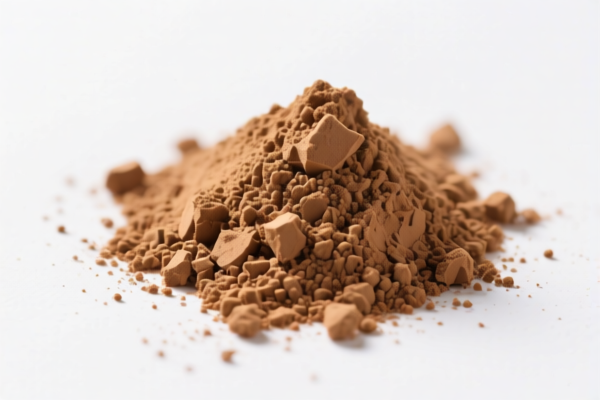
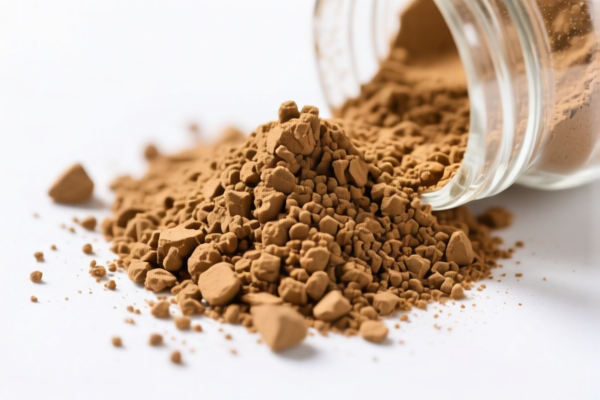

AI分析
🧪 Rosin Phenol Resins: The Chemical Powerhouse
🌐 HS Code Classification & Customs Clearance Guide | 2026 Tax Regime | Industrial Applications Decoded
📌 I. Product Definition: What Exactly is "Rosin Phenol"?
Rosin Phenol (often referred to as Rosin-Phenol Resins or Phenolic Rosins) is a complex class of synthetic organic compounds produced by the polymerization of rosin (a natural resin derived from pine trees) with phenol and formaldehyde.
It is NOT a simple mixture. It is a chemically modified resin where the natural fatty acids and abietic acid structures of rosin are reacted with phenolic resins to create a material with: * Enhanced Adhesion: To metals and plastics. * Improved Solubility: In organic solvents (compared to pure phenolic resins). * Color Stability: Better than natural rosin.
In international trade, it is primarily classified under two headings depending on its chemical nature and end-use:
1. As a Specific Organic Compound: 2919.90 (Other organic compounds containing oxygen).
2. As a Chemical Preparation: 3801.90 (Other chemical products and preparations).
⚠️ Critical Distinction:
- If the product is a pure, defined chemical entity (e.g., a specific polymer with a defined structure) → HS 2919.90
- If the product is a mixture, solution, or formulation (e.g., dissolved in solvent, blended with fillers) → HS 3801.90
📦 II. HS Code Classification Details (2026 Authoritative Reference)
| HS Code | Product Description | Applicability | Chemical Nature |
|---|---|---|---|
2919.90 |
Other organic compounds containing oxygen, not elsewhere specified or included Including phenolic resins derived from rosin and phenol, used in adhesives, coatings, and resins. |
Pure rosin-phenol polymers; defined chemical structures. | ✅ Pure Compound |
3801.90 |
Other chemical products and preparations not elsewhere specified or included Including rosin phenol resins used in industrial applications such as inks, varnishes, and rubber compounding. |
Mixtures, solutions, dispersions, or blends for direct industrial use. | ❌ Mixture/Preparation |
🔍 Key Clarification:
- HS 2919.90 is used for the raw chemical resin itself.
- HS 3801.90 is used when the resin is formulated (e.g., dissolved in alcohol for varnishes, or mixed with other additives for rubber).
- Do not misclassify: A pure rosin-phenol resin sold as a solid bead or powder should not be declared under 3801.90 if it meets the criteria for 2919.90. Conversely, a pre-mixed adhesive cannot be declared under 2919.90.
💰 III. 2026 Tax Rate Details (Detailed Breakdown)
✅ Country of Destination: To be determined by importer
✅ Origin: To be determined by manufacturer
✅ Status: ⚠️ TAX INFORMATION UNAVAILABLE
| HS Code | Tax Status | Explanation |
|---|---|---|
2919.90 |
❌ Failed to retrieve tax informationtotal_tax: Error |
The system failed to retrieve the specific tariff rate for this subheading. This may be due to: 1. Country-specific variations (MFN vs. Preferential). 2. Dynamic trade policy changes (e.g., Section 301, Anti-dumping duties). 3. Incomplete product description for precise rate matching. |
3801.90 |
❌ Failed to retrieve tax informationtotal_tax: Error |
Same as above. "Chemical preparations" often have variable rates based on exact formulation and origin. |
📌 Interpretation:
- "Failed to retrieve tax information" does NOT mean "0% tax." It means no automatic rate could be calculated.
- Risk: Assuming 0% tax is dangerous. Many countries impose high tariffs on chemical preparations (3801.90) and specialized resins (2919.90) to protect domestic industries.
- Action Required: You MUST consult a licensed customs broker or check the official tariff database of the destination country. Do not rely on AI-generated tax estimates for this category.
🛠️ IV. Customs Clearance Practical Advice (Pitfall Avoidance Guide)
✅ 1. Required Documentation Checklist
| Document | Required? | Notes |
|---|---|---|
| ✅ Product Specification Sheet | ✔️ | Must clearly state: - Chemical composition (e.g., "% Rosin-derived," "% Phenolic") - Molecular weight range - Form (powder, liquid, solid) |
| ✅ Safety Data Sheet (SDS) | ✔️ | Must comply with GHS standards. Highlight hazardous components. |
| ✅ Certificate of Analysis (COA) | ✔️ | Proves purity and chemical identity. Critical for HS 2919.90. |
| ✅ Bill of Lading / Invoice | ✔️ | Description must match HS code: - For 2919.90: "Rosin Phenol Resin (Pure)" - For 3801.90: "Rosin Phenol Adhesive Preparation" |
| ✅ Intended Use Declaration | ✔️ | Explain if used in adhesives, varnishes, rubber, etc. Helps customs verify HS 3801.90 if applicable. |
✅ 2. Classification Strategy (Key Mnemonic)
🔥 “Pure Compound = 2919, Mixture = 3801, Never Guess!”
| Scenario | Correct HS Code | Risk if Wrong |
|---|---|---|
| Solid resin beads, pure chemical structure | 2919.90 |
Misclassifying as 3801.90 may trigger higher tariffs or scrutiny. |
| Liquid resin dissolved in solvent, ready-to-use adhesive | 3801.90 |
Misclassifying as 2919.90 is a factual error; goods are not "pure compounds." |
| Resin blended with fillers (e.g., silica, dyes) | 3801.90 |
Cannot be classified under Chapter 29 (Chemical Products) as a pure compound. |
| Rosin alone (unmodified) | 1301.90 |
Do NOT confuse with Rosin Phenol. Different HS code entirely. |
✅ 3. Special Handling Tips
| Situation | Recommendation |
|---|---|
| OEM Custom Formulations | Provide detailed formula breakdown. Customs may require lab tests to prove it’s a "preparation" (3801.90) vs. "compound" (2919.90). |
| Reactive Chemicals | Ensure proper hazard labeling. Rosin-phenol resins may be classified as hazardous depending on residual monomers (phenol/formaldehyde). |
| High-Value Shipments | Consider applying for an Advance Ruling before shipment. This locks in the HS code and avoids disputes at customs. |
| Anti-Dumping Duties | Check if your country of origin is subject to anti-dumping duties on "Phenolic Resins" or "Chemical Preparations." This is common in US/EU trade with certain Asian countries. |
🌍 V. Global Market Comparison (2026)
| Country/Region | Likely HS Code | Estimated Risk Level | Notes |
|---|---|---|---|
| 🇺🇸 USA | 2919.90 or 3801.90 |
⚠️ High | Section 301 tariffs may apply. Check for anti-dumping. |
| 🇪🇺 EU | 2919.90 or 3801.90 |
⚠️ Medium | Requires REACH compliance documentation. |
| 🇨🇳 China | 2919.90 or 3801.90 |
Low | Standard MFN rates apply, but verify local chemical regulations. |
| 🇮🇳 India | 2919.90 or 3801.90 |
⚠️ High | Additional customs duties and IGST apply. |
| 🇦🇺 Australia | 2919.90 or 3801.90 |
Low | Standard tariffs, but check for biosecurity if derived from natural rosin. |
📌 Conclusion:
- USA and India are the most complex markets for chemical imports due to layered duties.
- EU requires strict environmental compliance (REACH).
- Always verify if your specific rosin-phenol product falls under any "chemical weapons precursors" or "controlled substances" lists (e.g., if high in formaldehyde residuals).
📌 VI. Common Mistakes & Pitfalls (Lessons Learned)
❌ Mistake 1: Declaring "Rosin Phenol" under 1302.19 (Natural Rosin)
👉 Consequence: Classification error. Rosin phenol is a synthetic derivative, not natural rosin. May lead to fines.
❌ Mistake 2: Assuming 3801.90 is always "miscellaneous" and low-tariff
👉 Consequence: Many countries impose high tariffs on chemical preparations to protect local chemical industries. The "failed to retrieve" error hides this risk.
❌ Mistake 3: Ignoring the physical state
👉 Consequence: A liquid product declared as a solid resin will be flagged. Ensure invoice matches physical form.
❌ Mistake 4: No SDS or COA
👉 Consequence: Customs may hold the shipment for lab testing, causing delays and storage fees.
✅ Correct Practice:
“Rosin-Phenol Resin, Solid, 95% Purity, for Adhesive Manufacturing, MSDS Attached, REACH Compliant (if EU)”
🎯 VII. Conclusion: Precision in Chemical Classification
🎯 Key Takeaway:
🔹 “Pure Compound = 2919, Mixture = 3801, Tax Unknown = Verify!”
🔹 “Do not assume 0% tax. Chemicals are high-risk categories.”
📌 Pro Tip:
If you are importing large volumes, apply for a Binding Tariff Information (BTI) or Advance Ruling in your destination country. This provides legal certainty on the HS code and applicable duties.
📣 Immediate Action:
📞 Contact your customs broker with the Chemical Abstracts Service (CAS) Number of your product.
📄 Provide the SDS and Certificate of Analysis.
🚀 Avoid clearance delays by classifying correctly from day one!
✨ Chemical Precision, Seamless Clearance!
💼 Your Chemical Supply Chain Starts with Accurate HS Codes!
用户评价
关于 HS 编码归类
协调制度(HS)是由世界海关组织(WCO)制定的国际贸易商品分类标准。全球 200 多个国家采用 HS 系统作为海关关税、贸易统计和进出口监管的基础。
每个 HS 编码遵循以下层级结构:
- 章(2 位)——商品大类(例如:第 84 章:机器和机械设备)
- 品目(4 位)——章内的更具体分类
- 子目(6 位)——国际通用细分,所有 WCO 成员国统一使用
- 本国细分(8-10 位)——各国自行扩展的细分编码,如美国 HTSUS 10 位编码
正确的 HS 编码归类对于顺利通关、准确缴纳关税和遵守贸易法规至关重要。错误归类可能导致海关延误、多缴关税或罚款。
从CN进口到US时,适用的关税税率可能包括:
- 最惠国(MFN)税率——适用于 WTO 成员国的标准关税税率
- 普通税率——适用于无贸易协定国家
- 贸易救济关税——附加关税,如 301 条款(反倾销)、232 条款(国家安全)或反补贴税
本页内容仅供参考。如需正式归类,请咨询当地海关或持牌报关代理。