rough cork
CN → US| HS编码 | 关税税率 | 原产国 | 目的国 | 文档 |
|---|---|---|---|---|
| 4501100000 | 35.0% | CN | US | 官方文档 |
| 4501902000 | 35.0% | CN | US | 官方文档 |
商品图片
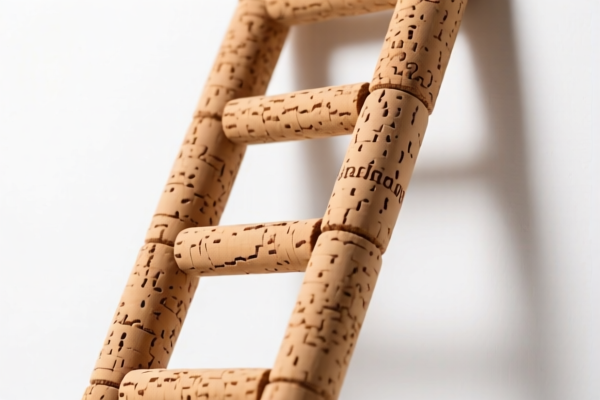
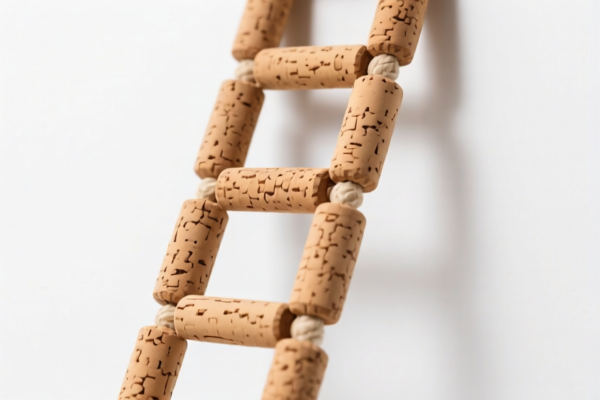

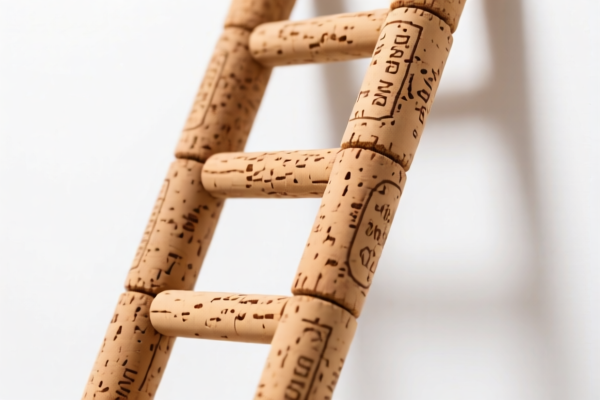
AI分析
🌳 Rough Cork (Natural Cork, Raw or Simply Prepared)
🌐 HS Code Reference & Clearance Guide | 2026 Latest Tariff Analysis | Professional Entry Strategy
📌 Part I: Product Definition & Classification: Do You Really Know "Rough Cork"?
Cork, the bark of the Quercus suber ( cork oak), is a sustainable, renewable, and highly elastic natural material. In international trade, it is primarily divided based on its processing state:
Natural Cork, Raw or Simply Prepared: The outer bark stripped from the tree, roughly shaped, or simply cut/squared, without being crushed, granulated, or ground into powder. This is the "Rough Cork" most importers deal with before secondary processing. Waste Cork / Crushed & Ground Cork: The by-products, scraps, or cork that has been mechanically processed into granules, powder, or dust for use in insulation, flooring, or composite materials.
⚠️ Key Distinction:
- If the cork is in block/log form, simply cut to size or rough-squared, but not crushed/granulated → Classified under 4501.10.00.00.
- If the cork is scraps, waste, or finely ground/crushed → Classified under 4501.90.20.00.
📦 Part II: HS Code Classification Details (2026 Latest Tariff Authority Comparison)
| HS Code | Product Description | Applicable Scenario | Processing State |
|---|---|---|---|
4501.10.00.00 |
Natural cork, raw or simply prepared | Cork blocks, logs, or rough-squared blocks ready for further manufacturing (e.g., wine stoppers, tiles) | ✅ Raw/Simplely Prepared (Not Crushed) |
4501.90.20.00 |
Other: Waste cork | Cork scraps, by-products from cutting, crushed cork, or cork used for insulation/granules | ✅ Waste/Crushed/Granulated |
🔍 Important Reminder:
- Processing Level is Key: If the cork has been ground into powder or crushed into small granules, it cannot be classified as "raw" even if it came from natural cork. It must fall under waste/crushed (4501.90.20.00).
- Waste Definition: Any cork not meeting the "simply prepared" standard for direct use in high-end products is typically considered waste.
- Do Not Split Declaration: A shipment containing both raw blocks and waste cork should be declared separately or aggregated correctly based on value/weight, but ideally, separate HS codes should be used for accuracy.
💰 Part III: 2026 Latest Tariff Rate Details (Including Additional Taxes)
✅ Applicable Country: United States (US)
✅ Origin: China (CN)
✅ Effective Date: 2025 November 10 onwards (for subsequent imports)
🎯 1. 4501.10.00.00 —— Natural Cork, Raw or Simply Prepared
| Item | Content |
|---|---|
| Base Duty Rate | 0.0% (Ad Valorem) |
| Additional Duty (Section 301) | +25.0% |
| Total Tax Rate | 25.0% |
| Tax Calculation | CIF Value × 25% |
| De Minimis Exemption Eligible? | ❌ No (Section 301 duties do not benefit from de minimis exemptions) |
| Legal Basis Path | HTSUS:4501.10.00.00 → Section 301 Footnote |
📌 Explanation:
- Although the base duty for raw cork is 0%, the 25% Section 301 additional tariff applies to Chinese-origin cork products.
- This is a significant cost driver. Importers must account for this 25% burden in their landed cost calculations.
🎯 2. 4501.90.20.00 —— Other: Waste Cork
| Item | Content |
|---|---|
| Base Duty Rate | 0.0% (Ad Valorem) |
| Additional Duty (Section 301) | +25.0% |
| Total Tax Rate | 25.0% |
| Tax Calculation | CIF Value × 25% |
| De Minimis Exemption Eligible? | ❌ No (Section 301 duties do not benefit from de minimis exemptions) |
| Legal Basis Path | HTSUS:4501.90.20.00 → Section 301 Footnote |
📌 Note:
- Identical tax treatment to raw cork.
- Whether you are importing high-quality raw blocks or low-value waste cork, the 25% additional tariff applies uniformly for Chinese origin.
- No preferential treatment for waste materials under current trade rules.
🛠️ Part IV: Customs Clearance Practical Advice (Battle-Tested Pitfall Guide)
✅ 1. Documentation Checklist (Mandatory)
| Document | Required | Explanation |
|---|---|---|
| ✅ Product Specification Sheet | ✔️ | Must detail: origin, species (Quercus suber), processing method (raw/crushed), and intended use. |
| ✅ Commercial Invoice | ✔️ | Must clearly state HS Code, unit price, and CIF value. Avoid vague terms like "natural material." |
| ✅ Packing List | ✔️ | Detail weight and volume. Separate raw blocks from waste if possible for accurate classification. |
| ✅ Certificate of Origin (CO) | ✔️ | Proof of Chinese origin triggers the 25% tariff. If from Portugal/Morocco, different rules may apply (check FTAs). |
| ✅ Phytosanitary Certificate | ✔️ | Crucial for cork. Many countries require it to prove freedom from pests and fungi, especially for raw natural products. |
| ✅ Bill of Lading / Air Waybill | ✔️ | Standard shipping documents. |
✅ 2. Declaration Tips (Key Mantras)
🔥 "Be Specific, Don't Vague, Raw vs Waste Matters!"
| Scenario | Correct Declaration | Incorrect Practice |
|---|---|---|
| Raw Cork Blocks | 4501.10.00.00 - "Natural Cork, Raw, Quercus suber, Unsliced" |
Vague term "Cork" → Risk of reclassification & penalty |
| Cork Scraps/Waste | 4501.90.20.00 - "Waste Cork, Granulated" |
Declaring as "Raw" → Audit trigger |
| Mixed Shipment | Split into two line items: one for 4501.10.00.00 and one for 4501.90.20.00 |
Blending into one generic line → High risk of error |
| Origin Declaration | Explicitly state "Made in China" | Hidden origin → Severe penalties and duty evasion charges |
✅ 3. Special Case Handling
| Scenario | Handling Advice |
|---|---|
| Cork from Non-China Origin (e.g., Portugal, Spain) | Check for Free Trade Agreements (FTAs). EU-origin cork may have 0% tariff. Do not assume 25% if not Chinese. |
| Processed Cork (e.g., Stoppers) | If the cork has been punched into stoppers, it may fall under 4503.90 or 4415, which have different rates. Do not declare processed stoppers as "raw cork." |
| Phytosanitary Issues | Raw cork is susceptible to pests. Ensure fumigation certificate or heat treatment proof is included to avoid quarantine delays. |
| De Minimis Claims (Section 321) | Cannot be used for Section 301 duties. Even if the value is under $800, the 25% tax still applies if declared as a commercial shipment. For personal packages, rules may vary, but commercial imports must pay. |
🌍 Part V: Global Market Clearance Comparison (2026 Latest)
| Country/Region | Recommended HS Code | Duty Rate (China Origin) | Certification Requirements | Notes |
|---|---|---|---|---|
| 🇺🇸 USA | 4501.10.00.00 or 4501.90.20.00 |
25% (Additional) + 0% Base = 25% Total | Phytosanitary Certificate | High cost due to Section 301. |
| 🇨🇳 China | 4501.10.00.00 |
~2.5% - 5% | N/A (Import) | Lower duty, but domestic production is high. |
| 🇪🇺 EU | 4501.10.00 |
0% (Most EU countries) | Phytosanitary Certificate | Zero duty for many origins. Check EU tariff schedules. |
| 🇬🇧 UK | 4501.10.00 |
0% - 2.5% | Phytosanitary Certificate | Post-Brexit rules may vary slightly. |
| 🇨🇦 Canada | 4501.10.00 |
0% (MFN) | Phytosanitary Certificate | Generally lower tariffs than US. |
📌 Conclusion:
- USA is the most expensive market for Chinese cork due to the 25% additional tariff.
- EU and Canada are more favorable, often with 0% base duty.
- Origin is Critical: Sourcing cork from Portugal, Spain, or Morocco can significantly reduce or eliminate tariffs for the US and EU markets.
📌 Part VI: Common Mistakes & Pitfall Guide (Lessons Learned)
❌ Mistake 1: Declaring "Processed Cork Products" (e.g., stoppers) as "Raw Cork"
👉 Consequence: Wrong HS Code → Audit, fines, and back taxes.
👉 Correction: Use correct HS for manufactured goods (e.g., 4503.90).
❌ Mistake 2: Ignoring Phytosanitary Requirements
👉 Consequence: Quarantine detention, destruction of goods, or return shipping.
👉 Correction: Always include a Phytosanitary Certificate for raw natural products.
❌ Mistake 3: Blending Raw and Waste Cork in One Declaration
👉 Consequence: Customs may classify the entire shipment under the more scrutinized or complex code, leading to delays.
👉 Correction: Separate declarations for raw blocks and waste/crushed cork.
✅ Correct Practice:
"Natural Cork, Raw, Quercus suber, Rough Squared Blocks, Origin: Portugal/China, Phytosanitary Certificate Attached"
🎯 Part VII: Conclusion: Professional Classification, Cost Savings, Smooth Clearance!
🎯 Remember the Mantras:
🔹 "Raw is 4501.10, Waste is 4501.90.20"
🔹 "China Origin = 25% Extra Tax in the US"
🔹 "Phytosanitary is a Must for Natural Cork"
🔹 "Check Origin! Portugal Cork = 0% in US/EU"
📌 Tips:
If your cork is sourced from Portugal, Spain, or Morocco, verify if it qualifies for preferential tariff rates (often 0%) in the US and EU. This can save you 25% on every shipment.
Recommend pre-clearance consultation with a licensed customs broker to confirm HS Code classification, especially for mixed shipments.
📣 Act Now:
📞 Contact a professional customs broker + Provide Product Photos + Verify Origin
🚀 Let your cork clear smoothly, reduce costs, and maximize profit!
✨ Professional Clearance Starts with Accurate Classification!
💼 Every Dollar Saved on Duty is Pure Profit!
用户评价
关于 HS 编码归类
协调制度(HS)是由世界海关组织(WCO)制定的国际贸易商品分类标准。全球 200 多个国家采用 HS 系统作为海关关税、贸易统计和进出口监管的基础。
每个 HS 编码遵循以下层级结构:
- 章(2 位)——商品大类(例如:第 84 章:机器和机械设备)
- 品目(4 位)——章内的更具体分类
- 子目(6 位)——国际通用细分,所有 WCO 成员国统一使用
- 本国细分(8-10 位)——各国自行扩展的细分编码,如美国 HTSUS 10 位编码
正确的 HS 编码归类对于顺利通关、准确缴纳关税和遵守贸易法规至关重要。错误归类可能导致海关延误、多缴关税或罚款。
从CN进口到US时,适用的关税税率可能包括:
- 最惠国(MFN)税率——适用于 WTO 成员国的标准关税税率
- 普通税率——适用于无贸易协定国家
- 贸易救济关税——附加关税,如 301 条款(反倾销)、232 条款(国家安全)或反补贴税
本页内容仅供参考。如需正式归类,请咨询当地海关或持牌报关代理。