salad container
CN → US| HS编码 | 关税税率 | 原产国 | 目的国 | 文档 |
|---|---|---|---|---|
| 3926909989 | 22.8% | CN | US | 官方文档 |
| 3926901000 | 20.9% | CN | US | 官方文档 |
| 4819100020 | 35.0% | CN | US | 官方文档 |
| 4819200020 | 35.0% | CN | US | 官方文档 |
| 3923102000 | 35.0% | CN | US | 官方文档 |
| 3923109000 | 38.0% | CN | US | 官方文档 |
| 7013492090 | 40.0% | CN | US | 官方文档 |
| 7013493000 | 28.8% | CN | US | 官方文档 |
商品图片
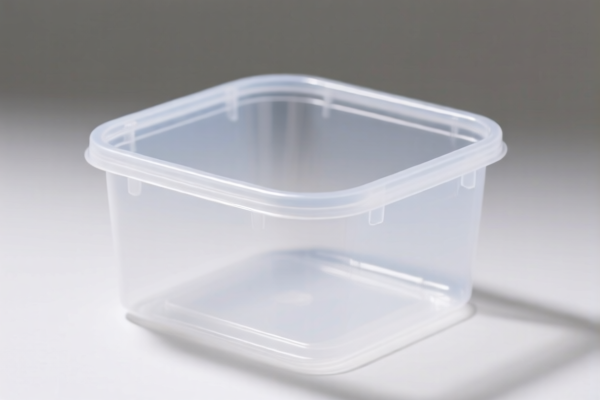
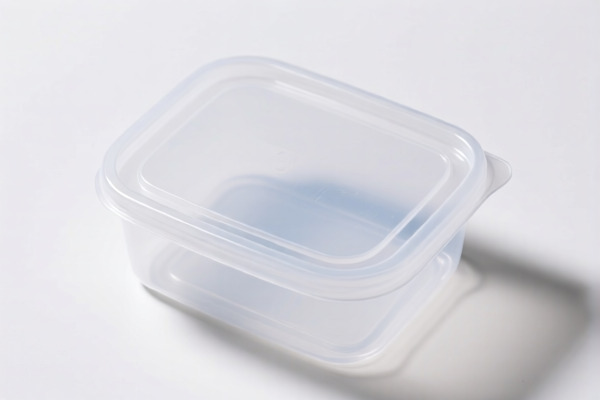
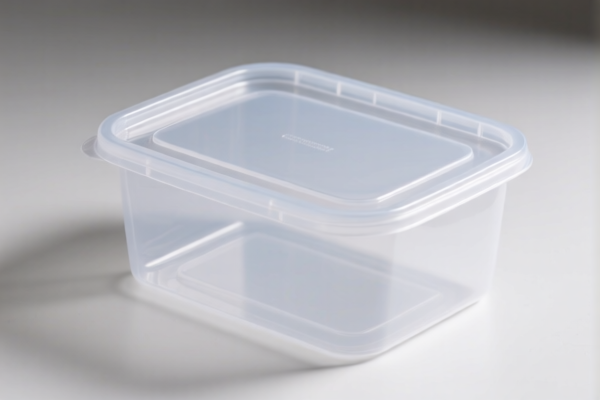
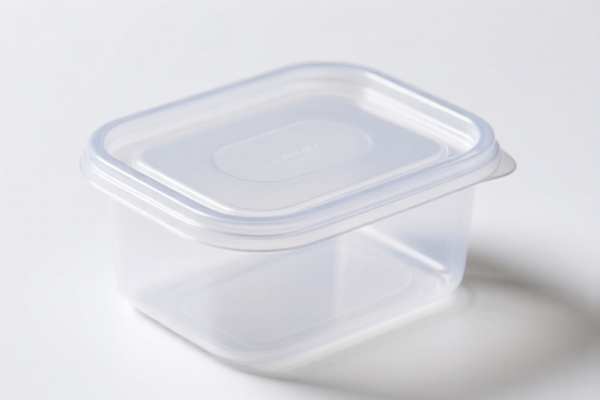
AI分析
🥗 Salad Containers (Food Packaging & Storage)
🌐 HS Code Reference & Customs Clearance Guide | 2024/2025 Latest Tariff Analysis | Professional Clearance Strategy
📌 I. Product Definition & Classification: Do You Really Understand "Salad Containers"?
Salad containers are specialized packaging used for the conveyance, storage, and presentation of food, particularly salads, fresh produce, and prepared meals. In international trade, they are primarily classified under two main material categories: Plastics and Paper/Paperboard. The classification depends entirely on the material composition and whether they are corrugated or non-corrugated.
Plastic Salad Containers: Rigid or semi-rigid plastic trays, clamshells, or bowls.
Paper/Paperboard Salad Containers: Folded cartons or boxes made from paperboard, often used for takeout or bulk storage.
⚠️ Key Distinction Point:
- If made of plastic → Classified under Chapter 39 (Plastics);
- If made of paper/paperboard → Classified under Chapter 48 (Paper);
- Corrugated vs. Non-Corrugated: For paper items, the presence of fluting (corrugation) significantly affects the HS Code and tax rate.
📦 II. HS Code Classification Details (2024/2025 Latest Tariff Authority Comparison)
Based on the provided , here are the specific HS Codes and descriptions for Salad Containers:
| HS Code | Product Description | Material | Key Features | Tax Rate (Total) |
|---|---|---|---|---|
3923.10.20.00 |
Articles of plastics; boxes, cases, crates; Specially shaped/fitted for semiconductor wafers, masks, or reticles | Plastic | Specialized industrial use (Note: Described as "Specially shaped...") | 25.0% |
3923.10.90.00 |
Articles of plastics; boxes, cases, crates; Other | Plastic | General plastic packing containers (Most common for generic plastic salad trays) | 28.0% |
4819.10.00.20 |
Cartons, boxes, cases of paper/paperboard; Cartons of corrugated paper | Corrugated Paper | Sanitary food & beverage containers, corrugated | 25.0% |
4819.20.00.20 |
Cartons, boxes, cases of paper/paperboard; Folding cartons, boxes, cases, of non-corrugated paper | Non-Corrugated Paper | Sanitary food & beverage containers, foldable cartons | 25.0% |
3926.90.99.89 |
Other articles of plastics; Other | Plastic | Miscellaneous plastic articles not specified elsewhere | 12.8% |
3926.90.10.00 |
Other articles of plastics; Buckets and pails | Plastic | Rigid plastic buckets/pails | 0.0% |
🔍 Important Note:
-3923.10.20.00is specifically described in the data as being for semiconductor wafers/masks. While the description says "Articles for conveyance... of plastics," the specific sub-description suggests specialized industrial use. However, if the salad container is just a standard plastic box,3923.10.90.00("Other") is the more accurate classification for general food packaging.
-4819.10.00.20and4819.20.00.20explicitly mention "Sanitary food and beverage containers," making them highly relevant for salad containers made of paper. The key difference is corrugated vs. non-corrugated.
-3926.90.99.89and3926.90.10.00are less likely for standard salad containers unless they are specifically "buckets/pails" or miscellaneous plastic items not fitting in Chapter 39's packing categories.
💰 III. 2024/2025 Latest Tariff Rate Breakdown (Including Additional Duties)
✅ Applicable Country: United States (US)
✅ Country of Origin: China (CN)
✅ Effective Time: Ongoing (Based on current trade policies)
🎯 1. 3923.10.90.00 – Plastic Packaging Containers (Other)
| Item | Content |
|---|---|
| Base Tariff | 3.0% (ad valorem) |
| Additional Tariff (Section 301) | +25.0% |
| Total Tax Rate | 28.0% |
| Tax Calculation | CIF Value × 28.0% |
| De Minimis Exemption | ❌ Not Eligible (High value goods usually exceed de minimis thresholds) |
| Legal Basis | USITC Heading 3923.10 + Section 301 Footnotes |
📌 Explanation:
- Most standard plastic salad containers (clamshells, tubs) fall under this "Other" category if they are not specially shaped for semiconductors.
- The 25% additional tariff is a significant cost factor for Chinese-origin plastic packaging.
🎯 2. 4819.10.00.20 – Corrugated Paper Containers (Food & Beverage)
| Item | Content |
|---|---|
| Base Tariff | 0.0% |
| Additional Tariff (Section 301) | +25.0% |
| Total Tax Rate | 25.0% |
| Tax Calculation | CIF Value × 25.0% |
| De Minimis Exemption | ❌ Not Eligible |
| Legal Basis | USITC Heading 4819.10 + Section 301 Footnotes |
📌 Explanation:
- If the salad container is made of corrugated paperboard (e.g., takeout boxes with fluting), it falls here.
- Despite a 0% base rate, the 25% additional tariff applies, resulting in a 25% total tax.
🎯 3. 4819.20.00.20 – Non-Corrugated Paper Containers (Food & Beverage)
| Item | Content |
|---|---|
| Base Tariff | 0.0% |
| Additional Tariff (Section 301) | +25.0% |
| Total Tax Rate | 25.0% |
| Tax Calculation | CIF Value × 25.0% |
| De Minimis Exemption | ❌ Not Eligible |
| Legal Basis | USITC Heading 4819.20 + Section 301 Footnotes |
📌 Explanation:
- If the salad container is made of folding carton (non-corrugated, like a standard cereal box or salad box), it falls here.
- Similar to corrugated paper, the 25% additional tariff applies.
🎯 4. 3926.90.99.89 – Other Plastic Articles
| Item | Content |
|---|---|
| Base Tariff | 5.3% |
| Additional Tariff | +7.5% |
| Total Tax Rate | 12.8% |
| Tax Calculation | CIF Value × 12.8% |
| De Minimis Exemption | ❌ Not Eligible |
📌 Note: This rate is lower but only applies if the item does not fit the specific "boxes, cases, crates" definition of Chapter 39. For most "salad containers," Chapter 39.23 is more appropriate.
🎯 5. 3926.90.10.00 – Buckets and Pails (Plastic)
| Item | Content |
|---|---|
| Base Tariff | 0.0% |
| Additional Tariff | 0.0% |
| Total Tax Rate | 0.0% |
| Tax Calculation | CIF Value × 0.0% |
| De Minimis Exemption | ✅ May Be Eligible (if value is low enough) |
📌 Note: Only applies if the container is specifically a "bucket" or "pail" (large, rigid, with handles). Unlikely for standard salad containers.
🛠️ IV. Customs Clearance Practical Advice (Battle-Tested Pitfall Avoidance)
✅ 1. Required Documentation Checklist (Non-Negotiable)
| Document | Must Provide | Description |
|---|---|---|
| ✅ Product Specifications | ✔️ | Material composition (Plastic/Paper), dimensions, capacity, usage (food-grade) |
| ✅ Material Safety Certificates | ✔️ | FDA Compliance for food contact (if plastic), FSC for paper |
| ✅ Product Photos (Labeled) | ✔️ | Clear images of the container, showing any labels or markings |
| ✅ Commercial Invoice | ✔️ | Clearly state "Salad Container, [Material], [Usage]" |
| ✅ Packing List | ✔️ | Detail the number of units per carton, total weight |
| ✅ Country of Origin Certificate | ✔️ | If claiming preferential rates (though Section 301 usually negates this for China) |
✅ 2. Declaration Tips (Key Mantras)
🔥 “Material First, Usage Clear, Corrugation Specified, Tax Minimized!”
| Scenario | Correct Declaration | Error to Avoid |
|---|---|---|
| Plastic Salad Container | 3923.10.90.00 |
Misdeclaring as 3926.90... → Risk of misclassification penalty |
| Paper Salad Box (Foldable) | 4819.20.00.20 |
Confusing with corrugated → Wrong tax basis |
| Corrugated Salad Box | 4819.10.00.20 |
Failing to specify "corrugated" → Delay in inspection |
| Plastic Bucket (Large) | 3926.90.10.00 |
Misdeclaring as packing container → Higher tax (28% vs 0%) |
✅ 3. Special Case Handling
| Scenario | Handling Advice |
|---|---|
| Food-Grade Plastic | Must provide FDA compliance certificates. Lack of documentation may lead to detention. |
| Mixed Materials | If the container has a plastic lid and paper base, classify based on the essential character or the dominant material. |
| Specially Shaped | If the container is custom-molded for a specific salad brand, ensure it’s not mistaken for semiconductor packaging (3923.10.20.00). |
| De Minimis (Section 321) | For shipments under $800 (US), check if the item qualifies for duty-free entry under Section 321. However, Section 301 additional duties may still apply depending on current regulations. Consult a customs broker for the latest updates. |
🌍 V. Global Market Comparison (2024/2025)
| Country/Region | Recommended HS Code | Tariff (China Origin) | Certification Required | Notes |
|---|---|---|---|---|
| 🇺🇸 United States | 3923.10.90.00 / 4819.20.00.20 |
25-28% | FDA, Prop 65 (if CA) | High additional tariffs due to Section 301 |
| 🇨🇳 China | 3923.10 / 4819 |
5-10% | Food Safety Standard | Lower tariffs, but strict food safety regulations |
| 🇪🇺 European Union | 3923.10 / 4819 |
0-6.5% | FDA/EU Food Contact Regulations | No additional tariffs, but strict environmental regulations (plastic bans) |
| 🇬🇧 United Kingdom | 3923.10 / 4819 |
0-6.5% | UK Food Standards Agency | Post-Brexit rules apply |
📌 Conclusion:
- The US market has the highest tariffs for plastic and paper packaging from China due to Section 301.
- Diversification to Vietnam, Thailand, or Mexico may help avoid additional tariffs, but check for rules of origin.
- Paper containers have slightly lower base rates but still face 25% additional tariffs.
📌 VI. Common Mistakes & Pitfall Guide (Lessons Learned)
❌ Mistake 1: Declaring plastic salad containers as "general plastic articles" (3926.90...)
👉 Consequence: Incorrect classification, potential penalties, and higher tax audits.
❌ Mistake 2: Failing to specify "corrugated" for paper containers
👉 Consequence: Customs may delay the shipment for clarification, causing storage fees.
❌ Mistake 3: Ignoring FDA compliance for plastic containers
👉 Consequence: Goods detained or destroyed at US border due to food safety concerns.
❌ Mistake 4: Assuming de minimis exemption applies to all shipments
👉 Consequence: Additional tariffs may still be collected on shipments under $800 if Section 301 rules apply.
✅ Correct Practice:
"Plastic Salad Container, 500ml, PP Material, FDA Compliant, Model XYZ, for Food Packaging"
🎯 VII. Conclusion: Precise Classification, Efficient Clearance, Cost Optimization!
🎯 Remember the Mantra:
🔹 "Material Defines Code, Usage Clarifies Risk, Tariffs Add Up, Documentation Saves Days!"
🔹 "HS Code is King, Tax Rate is Queen, Declaration is the Sword, Compliance is the Shield!"
📌 Pro Tip:
If your salad containers are plastic, consider if they can be classified as "Buckets/Pails" (3926.90.10.00) for a 0% tax rate, but only if they meet the physical definition (rigid, with handles, large capacity). For standard clamshells or tubs, expect 28%.
For paper containers, ensure your supplier provides clear material specifications to avoid misclassification.
📣 Immediate Action:
📞 Contact a Customs Broker + Provide Product Images + Request HS Code Pre-Ruling
🚀 Ensure smooth customs clearance, efficient export, and profit maximization!
✨ Professional Clearance Starts with Accurate Classification!
💼 Every Cent of Cost Should Be Precisely Calculated!
用户评价
关于 HS 编码归类
协调制度(HS)是由世界海关组织(WCO)制定的国际贸易商品分类标准。全球 200 多个国家采用 HS 系统作为海关关税、贸易统计和进出口监管的基础。
每个 HS 编码遵循以下层级结构:
- 章(2 位)——商品大类(例如:第 84 章:机器和机械设备)
- 品目(4 位)——章内的更具体分类
- 子目(6 位)——国际通用细分,所有 WCO 成员国统一使用
- 本国细分(8-10 位)——各国自行扩展的细分编码,如美国 HTSUS 10 位编码
正确的 HS 编码归类对于顺利通关、准确缴纳关税和遵守贸易法规至关重要。错误归类可能导致海关延误、多缴关税或罚款。
从CN进口到US时,适用的关税税率可能包括:
- 最惠国(MFN)税率——适用于 WTO 成员国的标准关税税率
- 普通税率——适用于无贸易协定国家
- 贸易救济关税——附加关税,如 301 条款(反倾销)、232 条款(国家安全)或反补贴税
本页内容仅供参考。如需正式归类,请咨询当地海关或持牌报关代理。