商品图片



AI分析
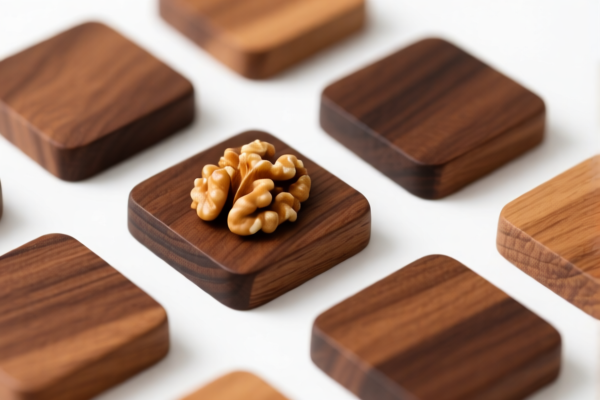
🌰 Shelled Walnuts (Hulled & Broken/Chipped vs. Fresh/Dried)
🌐 HS Code Reference & Customs Clearance Guide | 2026 Latest Tariff Analysis | Professional Import Strategy
📌 1. Product Definition & Classification: Do You Really Know "Walnuts"?
Shelled walnuts are a high-value agricultural commodity widely used in food processing, confectionery, and direct consumption. In international trade, they are strictly categorized based on their physical state and processing level:
Unprocessed/Nearly Unprocessed (HS 0604.10): Walnuts that have been shelled but remain raw (not roasted), possibly broken or chipped into smaller pieces, but not otherwise prepared (e.g., no salting, sugaring, or oil extraction).
Preserved/Dried (HS 0802.20): Walnuts that are shelled and dried or preserved, ready for long-term storage and general consumption, but not cooked or chemically altered beyond standard preservation.
⚠️ Critical Distinction Point:
- If the walnuts are raw, unroasted, and merely shelled/broken → Classified under 0604.10
- If the walnuts are dried, preserved, or intended for general food consumption → Classified under 0802.20
📦 2. HS Code Classification Details (2026 Latest Tariff Authority Comparison)
| HS Code | Product Description | Applicable Scenario | Processing State |
|---|---|---|---|
0604.10 |
Shelled walnuts, broken/chipped, not roasted or otherwise prepared | Raw walnuts for processing, bulk industrial use | ❌ Raw/Unroasted |
0802.20 |
Walnuts, shelled, fresh or dried, not otherwise prepared | Standard shelled walnuts for retail/consumption, dried/preserved | ✅ Dried/Preserved |
🔍 Key Reminder:
- 0604.10 is typically for walnuts that are not yet in a consumable dried state or are intended for further industrial processing;
- 0802.20 is the standard code for commercially available shelled walnuts (fresh or dried) found in grocery stores;
- Misclassification can lead to significant tariff differences and customs delays.
💰 3. 2026 Latest Tariff Rate Details (Including Surcharge Policies)
✅ Applicable Country: United States (US)
✅ Origin: China (CN)
✅ Effective Date: 2025-11-10 onwards (including subsequent imports)
🎯 1. 0604.10 —— Shelled Walnuts (Raw, Not Roasted/Prepared)
| Item | Content |
|---|---|
| Base Tariff Rate | Failed to retrieve tax information |
| Total Tax | Error |
| Tax Detail | Failed to retrieve tax information |
| De Minimis Exemption | ❌ Not Applicable (Based on standard agricultural product rules) |
| Legal Basis Path | USITC:0604.10 |
📌 Explanation:
- The tax information for this specific subheading was not available in the current system.
- Note: Raw walnuts (0604.10) are often subject to Section 301 tariffs if imported from China, but the exact percentage is currently flagged as "Error."
- Importers should verify the latest USITC Footnotes for Section 301 applicability to HS 0604.10.
🎯 2. 0802.20 —— Shelled Walnuts (Dried/Preserved)
| Item | Content |
|---|---|
| Base Tariff Rate | Failed to retrieve tax information |
| Total Tax | Error |
| Tax Detail | Failed to retrieve tax information |
| De Minimis Exemption | ❌ Not Applicable (Based on standard agricultural product rules) |
| Legal Basis Path | USITC:0802.20 |
📌 Explanation:
- The tax information for this subheading was not available in the current system.
- Note: Shelled walnuts (0802.20) are generally subject to Section 301 tariffs if imported from China, but the exact percentage is currently flagged as "Error."
- Importers should verify the latest USITC Footnotes for Section 301 applicability to HS 0802.20.
🛠️ 4. Customs Clearance Practical Advice (Real-World Pitfall Guide)
✅ 1. Documentation Checklist (Mandatory)
| Document | Required | Notes |
|---|---|---|
| ✅ Product Specification Sheet | ✔️ | Must specify: Raw vs. Dried, Roasted status, Origin |
| ✅ Commercial Invoice | ✔️ | Clearly state "Shelled Walnuts" and HS Code |
| ✅ Packing List | ✔️ | Detail net/gross weight, number of packages |
| ✅ Phytosanitary Certificate | ✔️ | Required for agricultural products; confirm no pests |
| ✅ Certificate of Origin (CO) | ✔️ | Essential for determining origin-based tariffs |
| ✅ Lab Test Report | ✔️ | Aflatoxin levels, moisture content, heavy metals |
| ✅ FDA Prior Notice | ✔️ | Mandatory for food imports into the US |
✅ 2. Declaration Tips (Key Mantra)
🔥 "Raw is 0604, Dried is 0802; Declare Accurately, Avoid Delays!"
| Scenario | Correct Declaration | Wrong Practice |
|---|---|---|
| Raw, shelled, unroasted walnuts | 0604.10 |
Misdeclare as 0802.20 → Potential tariff mismatch |
| Dried, shelled, ready-to-eat walnuts | 0802.20 |
Misdeclare as 0604.10 → Potential tariff mismatch |
| Roasted or Salted Walnuts | Not Covered (Likely HS 2008 or similar) | Force into 0802.20 → Customs Rejection |
| Whole Walnuts (Not Shelled) | Not Covered (Likely HS 0802.31) | Declare as Shelled → Fine & Penalty |
✅ 3. Special Cases Handling
| Case | Handling Advice |
|---|---|
| Mixed Packaging | If walnuts are both raw and dried in one shipment, split the declaration by HS Code |
| Aflatoxin Issues | Provide recent lab tests; US has strict limits on Aflatoxin in walnuts |
| Origin Dispute | If origin is not China, provide CO to potentially avoid Section 301 tariffs |
| Labeling | Ensure labels comply with FDA regulations (ingredient list, allergen warning) |
🌍 5. Global Market Comparison (2026 Latest)
| Country/Region | Recommended HS Code | Tariff | Certification | Notes |
|---|---|---|---|---|
| 🇺🇸 US | 0802.20 / 0604.10 |
Failed to retrieve | FDA + Phytosanitary | Verify Section 301 applicability |
| 🇨🇳 China | 0802.20 |
~5% | None Specific | Domestic consumption friendly |
| 🇪🇺 EU | 0802.21 / 0802.29 |
~0-8% | ECOCERT (if organic) | Strict pesticide residue limits |
| 🇦🇺 Australia | 0802.20 |
~5% | Biosecurity Permit | Strict biosecurity checks |
| 🇯🇵 Japan | 0802.20 |
~0% | Phytosanitary | High quality standards |
📌 Conclusion:
- Tariff Information is Currently Unavailable for these HS Codes in the US system;
- FDA and Phytosanitary requirements are the primary barriers for US imports;
- Origin Verification is critical to determine if Section 301 tariffs apply.
📌 6. Common Mistakes & Pitfall Guide (Lessons Learned)
❌ Mistake 1: Declaring Roasted/Salted Walnuts as 0802.20
👉 Consequence: Customs will reject; must use HS 2008.19 or similar → Delay & Penalty
❌ Mistake 2: Not providing a Phytosanitary Certificate
👉 Consequence: Shipment held at border → Return or Destruction
❌ Mistake 3: Misdeclaring Whole Walnuts as Shelled
👉 Consequence: Wrong HS Code → Audited & Back Taxes
❌ Mistake 4: Ignoring Aflatoxin Limits
👉 Consequence: Product recall or rejection → Brand Damage
✅ Correct Approach:
"Shelled Walnuts, Dried, Not Roasted, No Additives, HS Code 0802.20, Origin: USA, FDA Prior Notice Filed"
🎯 7. Conclusion: Professional Declaration, Cost-Saving & Efficiency!
🎯 Remember the Mantra:
🔹 "Raw 0604, Dried 0802; Check Origin, Check Tax!"
🔹 "HS Code Matters, Tax Error Costs Big; Declare Right, Sleep Tight!"
📌 Tips:
- Since tax information is currently unavailable, contact a customs broker for the latest Section 301 status;
- Apply for an Advance Ruling if you are unsure about the classification of your specific walnut product;
- Always verify FDA compliance for food products entering the US.
📣 Immediate Action:
📞 Contact a licensed customs broker + Provide product specs + Verify HS Code
🚀 Let your walnuts clear customs smoothly, efficiently, and profitably!
✨ Professional Customs Clearance Starts with Accurate Classification!
💼 Every cent of cost deserves precise calculation!
用户评价
关于 HS 编码归类
协调制度(HS)是由世界海关组织(WCO)制定的国际贸易商品分类标准。全球 200 多个国家采用 HS 系统作为海关关税、贸易统计和进出口监管的基础。
每个 HS 编码遵循以下层级结构:
- 章(2 位)——商品大类(例如:第 84 章:机器和机械设备)
- 品目(4 位)——章内的更具体分类
- 子目(6 位)——国际通用细分,所有 WCO 成员国统一使用
- 本国细分(8-10 位)——各国自行扩展的细分编码,如美国 HTSUS 10 位编码
正确的 HS 编码归类对于顺利通关、准确缴纳关税和遵守贸易法规至关重要。错误归类可能导致海关延误、多缴关税或罚款。
从CN进口到US时,适用的关税税率可能包括:
- 最惠国(MFN)税率——适用于 WTO 成员国的标准关税税率
- 普通税率——适用于无贸易协定国家
- 贸易救济关税——附加关税,如 301 条款(反倾销)、232 条款(国家安全)或反补贴税
本页内容仅供参考。如需正式归类,请咨询当地海关或持牌报关代理。