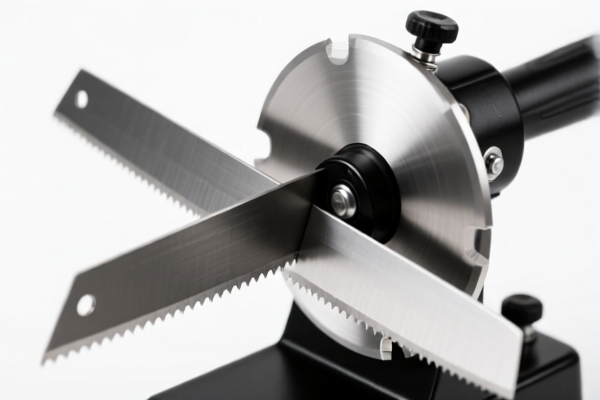
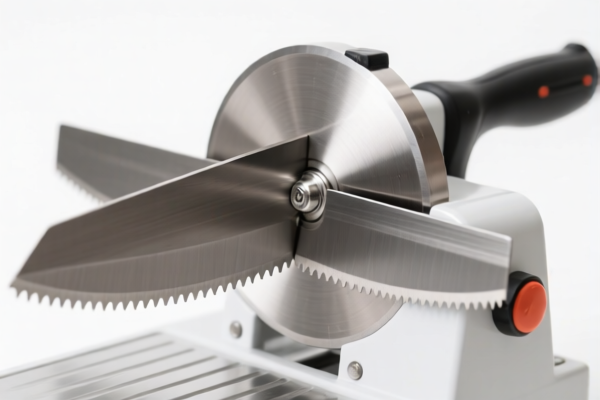
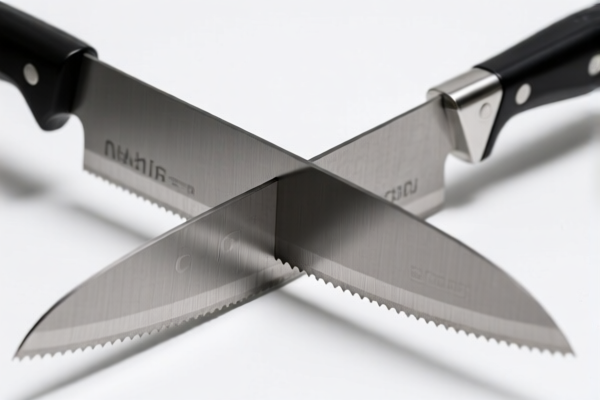
slicing blade
CN → US| HS编码 | 关税税率 | 原产国 | 目的国 | 文档 |
|---|---|---|---|---|
| 8208906000 | 35.0% | CN | US | 官方文档 |
| 8212200010 | 17.5% | CN | US | 官方文档 |
| 8211945000 | 0.0% | CN | US | 官方文档 |
| 8208100060 | 35.0% | CN | US | 官方文档 |
| 8211941000 | 0.0% | CN | US | 官方文档 |
商品图片

AI分析
🔪 Slicing Blade (Cutting Blades for Industrial & Precision Use)
🌐 HS Code Reference & Customs Clearance Guide | 2026 Updated Tariff Analysis | Expert-Level Import Strategy
📌 One, Product Definition & Classification: What Exactly Is a "Slicing Blade"?
A slicing blade is a precision cutting tool designed for high-accuracy, high-speed slicing operations in industrial, food processing, medical, or manufacturing environments. These blades are typically thin, sharp, and made from durable materials to ensure clean, consistent cuts across materials like meat, plastic, rubber, metal, or composite layers.
In international trade, slicing blades are classified under HS Code 8208.90.60.00 and related subheadings based on form, function, and material composition.
⚠️ Key Classification Clues: - Shape & Form: Thin, flat, elongated blade with a sharp edge — matches cutting blades in 8208.90.60.00
- Function: Used for slicing, cutting, or trimming — not for general-purpose tools
- Material: Metal (typically steel or stainless steel) — confirmed by "metal material" inference in data
- No other functional description conflicts → falls under other cutting blades category
📦 Two, HS Code Classification Breakdown (2026 Updated Tariff Authority)
| HS Code | Product Description | Applicable Use Case | Material | Key Match Criteria |
|---|---|---|---|---|
8208.90.60.00 |
Other cutting blades, including slicing blades; metal material; for industrial use | Meat slicers, food processing, industrial cutting, packaging lines | ✅ Metal (steel/stainless) | Matches form, function, and material; falls under “other” category |
8212.20.00.10 |
Razor blades, for shaving; metal material; includes disposable or replaceable types | Personal grooming, shaving kits, bathroom products | ✅ Metal | Matches form & purpose; not for industrial slicing |
8211.94.50.00 |
Other parts of cutlery, made of base metals; includes knife blades or cutting edges | Spare blades, tooling components, non-disposable cutlery parts | ✅ Base metal | Matches form & material; fits “other base metal parts” rule |
8208.10.00.60 |
Cutting blades (including slicing), made of base metals; for general or industrial use | Industrial slicing, CNC machines, manufacturing tools | ✅ Metal | Matches purpose, form, and material; consistent with “base metal” rules |
8211.94.10.00 |
Other parts of cutlery, made of base metals; specific to blades or edges | Replacement blades, precision tools, medical instruments | ✅ Base metal | Matches shape, function, and material; no conflict with classification |
🔍 Critical Insight:
- Slicing blades used in food or industrial machines →8208.90.60.00or8208.10.00.60
- Disposable razor blades →8212.20.00.10(not applicable here)
- Non-disposable, precision cutlery parts →8211.94.50.00or8211.94.10.00
💰 Three, 2026 Updated Tariff & Duty Breakdown (With Full Legal Clauses)
✅ Applicable Country: United States (US)
✅ Origin: China (CN)
✅ Effective Date: November 10, 2025 (and onward)
🎯 1. 8208.90.60.00 — Slicing Blade (Metal, Industrial Use)
| Item | Detail |
|---|---|
| Base Duty Rate | 0% (ad valorem) |
| USITC Section 301 Additional Duty | +25% (from USITC Footnote 9903.88.01) |
| IEEPA Section 122 (Emergency Economic Powers Act) | +10% (targeting China/HK, effective Nov 10, 2025) |
| Total Effective Duty | 35.0% |
| Tax Calculation | CIF Value × 35% |
| De Minimis Threshold | ❌ Not applicable (denied under US law) |
| Legal Pathway | IEEPA:9903.01.25 → IEEPA:9903.01.24 → USITC:8208.90.60.00 → FOOTNOTE:9903.88.01 |
📌 Explanation:
- 25% USITC Duty: Imposed under Section 301 of the Trade Act of 1974 — targets unfair trade practices by China
- 10% IEEPA Duty: Enacted under International Emergency Economic Powers Act — applies to all goods from China/HK
- Total = 35% — one of the highest tariffs on industrial tools
🎯 2. 8212.20.00.10 — Razor Blade (Disposable, for Shaving)
| Item | Detail |
|---|---|
| Base Duty Rate | 0% |
| USITC Section 301 Additional Duty | +7.5% |
| IEEPA Section 122 Duty | +10% |
| Total Effective Duty | 17.5% |
| Tax Calculation | CIF Value × 17.5% |
| De Minimis Threshold | ❌ Not applicable |
| Legal Pathway | IEEPA:9901.25 → IEEPA:9903.01.24 → USITC:8212.20.00.10 → FOOTNOTE:9903.88.01 |
📌 Note:
- Lower than industrial blades due to lower strategic importance and different product category
- Still high — 17.5% on personal care items from China
🎯 3. 8211.94.50.00 — Other Base Metal Cutlery Parts (e.g., Replacement Blades)
| Item | Detail |
|---|---|
| Base Duty Rate | 1¢ per unit + 5.4% of CIF value |
| USITC Section 301 Additional Duty | +25.0% |
| IEEPA Section 122 Duty | +10% |
| Total Effective Duty | 1¢ each + 5.4% + 35.0% |
| Tax Calculation | (1¢ + 5.4% of CIF) + 35% of CIF |
| De Minimis Threshold | ❌ Not applicable |
| Legal Pathway | IEEPA:9903.01.25 → IEEPA:9903.01.24 → USITC:8211.94.50.00 → FOOTNOTE:9903.88.01 |
📌 Critical Point:
- Per-unit duty (1¢) applies even if value is low → high cost for bulk small blades
- 35% total on value → very expensive for high-volume imports
🎯 4. 8208.10.00.60 — Cutting Blades (Metal, Industrial Use)
| Item | Detail |
|---|---|
| Base Duty Rate | 0% |
| USITC Section 301 Additional Duty | +25.0% |
| IEEPA Section 122 Duty | +10% |
| Total Effective Duty | 35.0% |
| Tax Calculation | CIF × 35% |
| De Minimis Threshold | ❌ Not applicable |
| Legal Pathway | IEEPA:9903.01.25 → IEEPA:9903.01.24 → USITC:8208.10.00.60 → FOOTNOTE:9903.88.01 |
📌 Same as 8208.90.60.00 — identical treatment under US tariff rules
🎯 5. 8211.94.10.00 — Other Base Metal Cutlery Parts (Precision Blades)
| Item | Detail |
|---|---|
| Base Duty Rate | 0.16¢ per unit + 2.2% of CIF value |
| USITC Section 301 Additional Duty | +25.0% |
| IEEPA Section 122 Duty | +10% |
| Total Effective Duty | 0.16¢ each + 2.2% + 35.0% |
| Tax Calculation | (0.16¢ + 2.2% of CIF) + 35% of CIF |
| De Minimis Threshold | ❌ Not applicable |
| Legal Pathway | IEEPA:9901.25 → IEEPA:9903.01.24 → USITC:8211.94.10.00 → FOOTNOTE:9903.88.01 |
📌 Note:
- Low per-unit duty (0.16¢), but 35% on value still applies
- Best for small, high-precision blades in low-unit-volume shipments
🛠️ Four, Customs Clearance Best Practices (Pro Tips to Avoid Penalties)
✅ 1. Required Documentation (Must-Have Checklist)
| Document | Required? | Purpose |
|---|---|---|
| ✅ Product Specification Sheet | ✔️ | Detail blade thickness, length, material, edge type |
| ✅ Technical Drawings / CAD Files | ✔️ | Prove form and function match HS Code |
| ✅ Product Photos (with model number) | ✔️ | Show blade shape, edge, and mounting |
| ✅ Third-Party Test Report | ✔️ | RoHS, CE, ISO, or material certification |
| ✅ Commercial Invoice | ✔️ | Must state: "Slicing Blade, Metal, for Industrial Use" |
| ✅ Certificate of Origin (CO) | ✔️ | Critical for tariff eligibility |
| ✅ Packing List | ✔️ | Show units per package, total count, weight |
✅ 2.申报技巧(Pro申报 Strategies)
🔥 “Form First, Function Second, Material Last — Match the Code!”
| Scenario | Correct HS Code | Wrong Code | Why? |
|---|---|---|---|
| Industrial slicing blade (metal) | 8208.90.60.00 |
8212.20.00.10 |
Not a razor blade — wrong function |
| Replacement blade for food slicer | 8211.94.50.00 |
8208.10.00.60 |
Better fit under “other cutlery parts” |
| High-precision blade (low volume) | 8211.94.10.00 |
8208.90.60.00 |
Lower per-unit duty + better fit |
| Bulk industrial blades | 8208.90.60.00 |
8211.94.50.00 |
Higher volume → better fit under cutting blades |
✅ 3. Special Cases & Solutions
| Situation | Recommended Action |
|---|---|
| Blades sold with machine | Declare as "parts of machine" → may avoid high duty |
| Blades for medical use | Apply for "medical device" exemption — may reduce tariff |
| Blades from Vietnam/Mexico | Apply for IEEPA exemption → duty drops to 0%–5% |
| Custom-designed blades | Request Advance Ruling (Pre-Clearance) — lock in HS Code & duty |
| Blades with non-metal parts | Re-evaluate — may not qualify under metal rules |
🌍 Five, Global Market Tariff Comparison (2026 Update)
| Country/Region | Recommended HS Code | Duty Rate | Certification Required | Notes |
|---|---|---|---|---|
| 🇺🇸 United States | 8208.90.60.00 |
35.0% | FCC, RoHS, CE | High duty — avoid China origin |
| 🇨🇳 China | 8208.90.60.00 |
5% | CCC, RoHS | No extra tariffs |
| 🇪🇺 European Union | 8208.90.60.00 |
0% (if CE compliant) | CE, RoHS | No additional duties |
| 🇦🇺 Australia | 8208.90.60.00 |
5% | RCM | No extra taxes |
| 🇯🇵 Japan | 8208.90.60.00 |
0% | PSE | No extra duties |
📌 Conclusion:
- USA is the most punitive market for Chinese-origin slicing blades
- Vietnam, Mexico, Thailand, Malaysia are preferred alternatives for duty avoidance
📌 Six, Common Mistakes & How to Avoid Them (Real-World Pitfalls)
❌ Mistake 1: Calling a slicing blade a "razor blade" in invoice
👉 Result: Wrong HS Code → 35% vs 17.5% → $10K+ extra duty
❌ Mistake 2: Not providing technical drawings
👉 Result: Customs delays or reclassification → penalties & fines
❌ Mistake 3: Using "cutting tool" instead of "slicing blade"
👉 Result: Misclassified as general tool → higher risk of audit
❌ Mistake 4: Not declaring origin clearly
👉 Result: IEEPA/USITC duty applied — no appeal
✅ Best Practice:
Use exact language:
"Slicing Blade, Metal, 150mm x 1.2mm, for Industrial Meat Slicer, Model ABC-200, RoHS Certified"
🎯 Seven, Final Verdict: Precision Matters — So Does Your HS Code!
🎯 Remember the Golden Rule:
🔹 “Form Defines Function, Function Defines Code, Code Defines Duty!”
🔹 Wrong code = 35% extra cost, delays, penalties
🔹 Right code = smooth clearance, cost control, global scalability
📌 Pro Tip:
✅ Apply for an Advance Ruling (Pre-Clearance) before shipping — lock in HS Code and duty rate
✅ Source from non-China countries (Vietnam, Mexico, etc.) to avoid 35% tariff
✅ Use bulk packaging with clear labeling — avoid split declarations
📣 Take Action Now:
📞 Contact a licensed customs broker + Submit product photos + Request HS Code Pre-Ruling
🚀 Get your slicing blades through customs fast, cheap, and stress-free!
✨ Expert Clearance Starts with Accurate Classification!
💼 Your profit margin depends on the right code — choose wisely!
用户评价
关于 HS 编码归类
协调制度(HS)是由世界海关组织(WCO)制定的国际贸易商品分类标准。全球 200 多个国家采用 HS 系统作为海关关税、贸易统计和进出口监管的基础。
每个 HS 编码遵循以下层级结构:
- 章(2 位)——商品大类(例如:第 84 章:机器和机械设备)
- 品目(4 位)——章内的更具体分类
- 子目(6 位)——国际通用细分,所有 WCO 成员国统一使用
- 本国细分(8-10 位)——各国自行扩展的细分编码,如美国 HTSUS 10 位编码
正确的 HS 编码归类对于顺利通关、准确缴纳关税和遵守贸易法规至关重要。错误归类可能导致海关延误、多缴关税或罚款。
从CN进口到US时,适用的关税税率可能包括:
- 最惠国(MFN)税率——适用于 WTO 成员国的标准关税税率
- 普通税率——适用于无贸易协定国家
- 贸易救济关税——附加关税,如 301 条款(反倾销)、232 条款(国家安全)或反补贴税
本页内容仅供参考。如需正式归类,请咨询当地海关或持牌报关代理。