small dish
CN → US| HS编码 | 关税税率 | 原产国 | 目的国 | 文档 |
|---|---|---|---|---|
| 3924102000 | 24.0% | CN | US | 官方文档 |
| 6912003510 | 19.8% | CN | US | 官方文档 |
| 6911103510 | 43.5% | CN | US | 官方文档 |
| 3924104000 | 13.4% | CN | US | 官方文档 |
| 6911108010 | 38.3% | CN | US | 官方文档 |
| 6912004810 | 19.8% | CN | US | 官方文档 |
商品图片
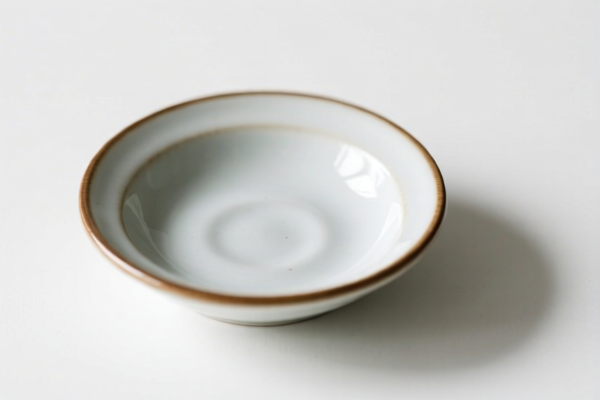
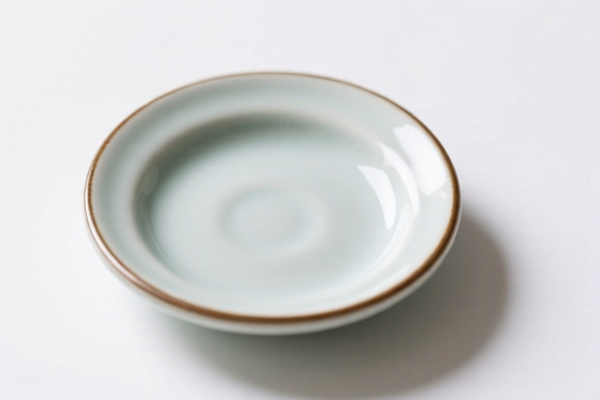
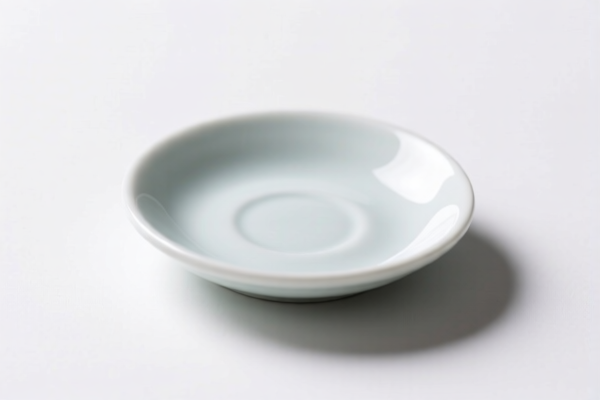
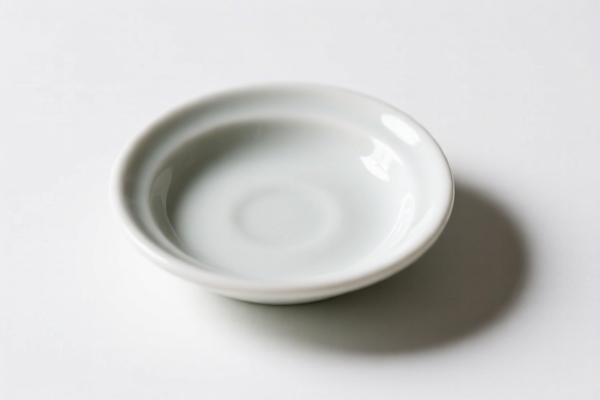
AI分析
🍽️ Small Dishes (Small Plates/Saucers)
🌐 HS Code Reference & Customs Clearance Guide | 2026 Latest Tariff Analysis | Professional Strategy for US Imports from China
📌 Part 1: Product Definition and Classification: Do You Really Understand "Small Dishes"?
Small dishes (often referred to as saucers, appetizer plates, or side plates) are ubiquitous in tableware. However, in international trade, material and specific usage dictate the HS Code classification. Misclassification can lead to massive duty discrepancies (from 13.4% to 43.5%).
Key Classification Dimensions: 1. Material: Plastic vs. Ceramic/Porcelain. 2. Specific Heading: "Dishes and other household articles" (3924) vs. "Tableware, kitchenware..." (6911/6912). 3. Origin: China (CN) – Subject to Section 301 and IEEPA tariffs.
⚠️ Critical Distinction Point:
- If it is Plastic and specifically listed as "dishes/plates" → HS 3924.10
- If it is Ceramic (Non-Porcelain) → HS 6912
- If it is Porcelain → HS 6911
- Note: "Porcelain" and "Ceramic" are legally distinct in US Customs (HTSUS). Porcelain is finer, whiter, and more translucent.
📦 Part 2: HS Code Classification Details (2026 Latest Tariff Authority)
Based on the provided data, here are the specific HS Codes for "Small Dishes" imported from China to the US:
| HS Code | Product Description | Material | Key Characteristic |
|---|---|---|---|
3924.10.20.00 |
Small dish, plastic material | Plastic | Classified under "Dishes and other household articles" (Plate/Bowl category) |
3924.10.40.00 |
Small dish, plastic material | Plastic | Classified under "Other tableware and kitchenware" |
6912.00.35.10 |
Small dish, ceramic/non-porcelain material | Ceramic | Non-porcelain clay products |
6912.00.48.10 |
Small dish, ceramic material | Ceramic | Classified under "Tableware and kitchenware" (Ceramic) |
6911.10.35.10 |
Small dish, porcelain material | Porcelain | Fine ceramic, white/translucent |
6911.10.80.10 |
Small dish, ceramic/porcelain material | Porcelain/Ceramic | Broad category for porcelain tableware |
🔍 Important Note:
- Plastic vs. Ceramic: Plastic dishes generally attract lower base tariffs but are still subject to additional duties. Porcelain attracts the highest base tariffs due to historical trade protections for certain ceramics. - "Small Dish" Definition: Ensure the item is indeed a "small dish" (saucer/appetizer plate). If it is a main dinner plate, the subheadings may differ (e.g., 6911.10.50).
💰 Part 3: 2026 Latest Tariff Rate Breakdown (Including Additional Taxes)
✅ Applicable Country: United States (US)
✅ Origin: China (CN)
✅ Effective Date: Current rates applicable for 2026 imports
✅ Tax Structure: Base Tariff + Section 301 (Add-on) + IEEPA (122 Clause)
🎯 1. Plastic Small Dishes (HS 3924 Series)
A. 3924.10.20.00 (Plastic Dishes/Plates)
| Item | Content |
|---|---|
| Base Tariff | 6.5% |
| Section 301 Add-on | 7.5% |
| 122 Clause (IEEPA) | 10% |
| Total Tax Rate | 24.0% |
| Calculation | CIF Value × 24.0% |
| De Minimis Exemption | ❌ Not Eligible (Value must be declared fully) |
📌 Explanation:
- This is the most common classification for standard plastic saucers/appetizer plates. - The 24% total rate is significant. While lower than porcelain, it is not negligible. - Legal Path:HTSUS 3924.10.20→USITC Footnote: Section 301 List 4→IEEPA 122.
B. 3924.10.40.00 (Other Plastic Tableware)
| Item | Content |
|---|---|
| Base Tariff | 3.4% |
| Section 301 Add-on | 0.0% |
| 122 Clause (IEEPA) | 10% |
| Total Tax Rate | 13.4% |
| Calculation | CIF Value × 13.4% |
| De Minimis Exemption | ❌ Not Eligible |
📌 Strategic Note:
- This code has a lower base tariff (3.4%) and NO Section 301 tax (0%), only the 122 Clause. - Total Rate: 13.4% is nearly half of the previous plastic code. - Action: Check if your plastic small dish fits the definition of "Other tableware" (40) rather than "Dishes/Plates" (20). If the design is non-standard (e.g., shaped uniquely), this code might be applicable, saving you 10.6%.
🎯 2. Ceramic/Non-Porcelain Small Dishes (HS 6912 Series)
A. 6912.00.35.10 (Ceramic Non-Porcelain Small Dish)
| Item | Content |
|---|---|
| Base Tariff | 9.8% |
| Section 301 Add-on | 0.0% |
| 122 Clause (IEEPA) | 10% |
| Total Tax Rate | 19.8% |
| Calculation | CIF Value × 19.8% |
| De Minimis Exemption | ❌ Not Eligible |
📌 Explanation:
- "Ceramic" here refers to non-porcelain clay products (often stoneware or earthenware). - No Section 301 tax applies to this specific subheading. - Total Rate: 19.8% is competitive compared to plastic "Dishes" (24.0%).
B. 6912.00.48.10 (Ceramic Tableware/Kitchenware)
| Item | Content |
|---|---|
| Base Tariff | 9.8% |
| Section 301 Add-on | 0.0% |
| 122 Clause (IEEPA) | 10% |
| Total Tax Rate | 19.8% |
| Calculation | CIF Value × 19.8% |
| De Minimis Exemption | ❌ Not Eligible |
📌 Note: Same tax rate as above. The distinction lies in the specific product description ("Tableware" vs. "Small Dish"). Ensure your invoice matches the code description.
🎯 3. Porcelain Small Dishes (HS 6911 Series) – ⚠️ HIGH TARIFF
A. 6911.10.35.10 (Porcelain Small Dish)
| Item | Content |
|---|---|
| Base Tariff | 26.0% |
| Section 301 Add-on | 7.5% |
| 122 Clause (IEEPA) | 10% |
| Total Tax Rate | 43.5% |
| Calculation | CIF Value × 43.5% |
| De Minimis Exemption | ❌ Not Eligible |
📌 Critical Warning:
- This is the highest tax bracket in the list. - If your product is true porcelain (fine, translucent), you face a 43.5% duty. - Risk: High. Many importers mistakenly classify porcelain as ceramic to save tax. Customs may reject this if the product exhibits porcelain characteristics.
B. 6911.10.80.10 (Ceramic/Porcelain Tableware)
| Item | Content |
|---|---|
| Base Tariff | 20.8% |
| Section 301 Add-on | 7.5% |
| 122 Clause (IEEPA) | 10% |
| Total Tax Rate | 38.3% |
| Calculation | CIF Value × 38.3% |
| De Minimis Exemption | ❌ Not Eligible |
📌 Comparison:
- Slightly lower (38.3%) than35.10(43.5%), but still very high. - Only use this if the product is specifically categorized under "Other" tableware and not a specific "Small Dish" subheading.
🛠️ Part 4: Customs Clearance Practical Advice (Real-World Pitfalls)
✅ 1. Documentation Checklist (Must-Have)
| Document | Required? | Purpose |
|---|---|---|
| Product Photos | ✔️ | Must show material, shape, and scale to distinguish Plastic vs. Ceramic vs. Porcelain. |
| Material Certificate | ✔️ | Crucial for proving "Plastic" vs. "Ceramic" vs. "Porcelain." |
| Invoice | ✔️ | Must clearly state "Plastic Small Dish" or "Porcelain Saucer" – do not use vague terms like "Tableware." |
| Packing List | ✔️ | Detailed breakdown of items. |
| FCC Declaration (Plastic) | ❌ Not usually for food contact | If electronic components exist (e.g., LED plate), FCC may apply. For standard plastic, no FCC needed. |
| FDA Registration (Food Contact) | ✔️ | All plastics and ceramics contacting food must be FDA compliant. Provide lab reports. |
✅ 2. Classification Strategy & Tax Optimization
🔥 "Material Defines Duty: Plastic 13-24%, Ceramic 20%, Porcelain 38-43%!"
| Scenario | Recommended HS Code | Total Tax | Strategy |
|---|---|---|---|
| Plastic, Standard Plate | 3924.10.20.00 |
24.0% | Standard classification. High tax but safe. |
| Plastic, Non-Standard Shape | 3924.10.40.00 |
13.4% | SAVE MONEY: Argue it's "Other" tableware. No Section 301 tax. |
| Stoneware/Earthenware | 6912.00.35.10 |
19.8% | BEST VALUE: Lower base tax, no Section 301. |
| True Porcelain | 6911.10.35.10 |
43.5% | HIGH COST: Consider redesigning as "Ceramic" (non-porcelain) if legally possible. |
📌 Pro Tip:
- Plastic vs. Ceramic Tax Gap: 13.4% (Plastic, Code 40) vs. 19.8% (Ceramic).
- Porcelain Penalty: 43.5% is nearly double the plastic rate.
- Action: If your product is borderline (e.g., high-fire ceramic that looks like porcelain), consult a customs broker to see if6912(Ceramic) is defensible over6911(Porcelain). Do not misdeclare. Misclassification can lead to audits and back taxes.
✅ 3. Special Situations
| Situation | Handling Advice |
|---|---|
| Set of Dishes | If sold as a set (e.g., 6 small dishes + 1 bowl), classify by the principal component. If mostly plastic, use plastic HS. |
| Gift Sets | Same as above. Ensure the invoice describes the set accurately. |
| Sample Shipments | Still subject to tariffs. No de minimis exemption for Chinese goods under $800 if subject to Section 301/IEEPA. Declare properly. |
| Re-export/Transshipment | If shipped via Vietnam/Mexico, ensure substantial transformation occurs. Direct shipment from China to US will always incur these taxes. |
🌍 Part 5: Global Market Comparison (2026)
| Country/Region | Recommended HS Code | Tax Rate (China Origin) | Notes |
|---|---|---|---|
| 🇺🇸 USA | 3924.10.20.00 / 6912.00.35.10 |
13.4% – 43.5% | High due to Section 301 & IEEPA 122. |
| 🇨🇳 China | Same HS Codes | 0% - 5% | Import duty is low; focus on domestic VAT. |
| 🇪🇺 EU | 3924.10 / 6912.00 |
0% - 6% | Generally lower tariffs than US. No Section 301. |
| 🇬🇧 UK | Same HS Codes | 0% - 5% | Post-Brexit, many Chinese goods face standard MFN rates. |
📌 Conclusion:
- The US is the most expensive market for Chinese tableware due to political tariffs.
- Plastic3924.10.40.00(13.4%) is the most tax-efficient option for plastic goods.
- Ceramic6912.00.35.10(19.8%) is the most tax-efficient for non-porcelain clay goods.
- Porcelain is a "Tax Trap" – avoid if possible or price accordingly.
📌 Part 6: Common Mistakes & Pitfalls (Lessons Learned)
❌ Mistake 1: Labeling Porcelain as "Ceramic" to save tax.
👉 Consequence: Customs may inspect and reclassify. Penalties + Back Taxes + Delay.
✅ Fix: Use accurate material descriptions. If it's translucent and fine, it's Porcelain.
❌ Mistake 2: Ignoring the "122 Clause" (IEEPA).
👉 Consequence: Underpaying tax by 10%.
✅ Fix: Always add 10% to your duty calculation for all Chinese goods unless exempted.
❌ Mistake 3: Using "Tableware" generally.
👉 Consequence: Customs may choose the highest duty code.
✅ Fix: Be specific: "Plastic Small Dish" or "Porcelain Saucer."
❌ Mistake 4: Assuming De Minimis ($800) applies.
👉 Consequence: Package seized or taxed.
✅ Fix: No de minimis exemption for Chinese goods subject to Section 301/IEEPA, even for small shipments.
🎯 Part 7: Conclusion: Smart Classification, Lower Costs!
🎯 Remember the Golden Rules:
🔹 "Plastic Code 40 (13.4%) beats Plastic Code 20 (24%)."
🔹 "Ceramic Code 35 (19.8%) beats Porcelain Code 35 (43.5%)."
🔹 "Always account for the 10% IEEPA tax."
📌 Pro Tip:
- If you are importing plastic small dishes, try to qualify for 3924.10.40.00 to save 10.6% in duties.
- If you are importing clay dishes, ensure they are non-porcelain to qualify for 6912.00.35.10 (19.8%).
📣 Immediate Action:
📞 Consult a Customs Broker: Verify if your specific product fits the lower-tax subheadings (
3924.10.40.00or6912.00.35.10).
📄 Prepare Material Certificates: Essential for defending classification.
🚀 Optimize Supply Chain: Consider sourcing non-porcelain ceramics or specific plastic designs to minimize duty.
✨ Professional Clearance Starts with Precise Classification!
💼 Your Every Cent of Duty Matters!
用户评价
关于 HS 编码归类
协调制度(HS)是由世界海关组织(WCO)制定的国际贸易商品分类标准。全球 200 多个国家采用 HS 系统作为海关关税、贸易统计和进出口监管的基础。
每个 HS 编码遵循以下层级结构:
- 章(2 位)——商品大类(例如:第 84 章:机器和机械设备)
- 品目(4 位)——章内的更具体分类
- 子目(6 位)——国际通用细分,所有 WCO 成员国统一使用
- 本国细分(8-10 位)——各国自行扩展的细分编码,如美国 HTSUS 10 位编码
正确的 HS 编码归类对于顺利通关、准确缴纳关税和遵守贸易法规至关重要。错误归类可能导致海关延误、多缴关税或罚款。
从CN进口到US时,适用的关税税率可能包括:
- 最惠国(MFN)税率——适用于 WTO 成员国的标准关税税率
- 普通税率——适用于无贸易协定国家
- 贸易救济关税——附加关税,如 301 条款(反倾销)、232 条款(国家安全)或反补贴税
本页内容仅供参考。如需正式归类,请咨询当地海关或持牌报关代理。