smoke sensor
CN → US| HS编码 | 关税税率 | 原产国 | 目的国 | 文档 |
|---|---|---|---|---|
| 8531100025 | 36.3% | CN | US | 官方文档 |
| 8543709860 | 37.6% | CN | US | 官方文档 |
| 8543706000 | 35.0% | CN | US | 官方文档 |
商品图片
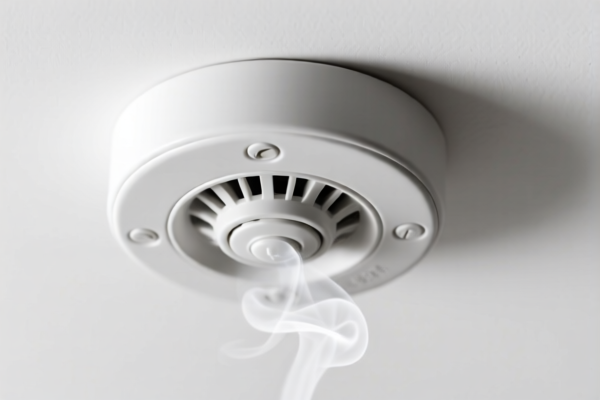
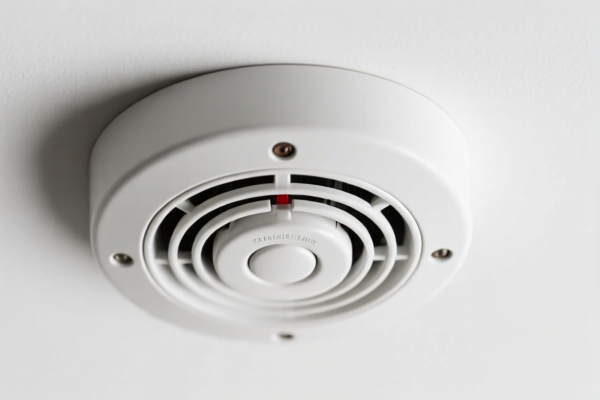
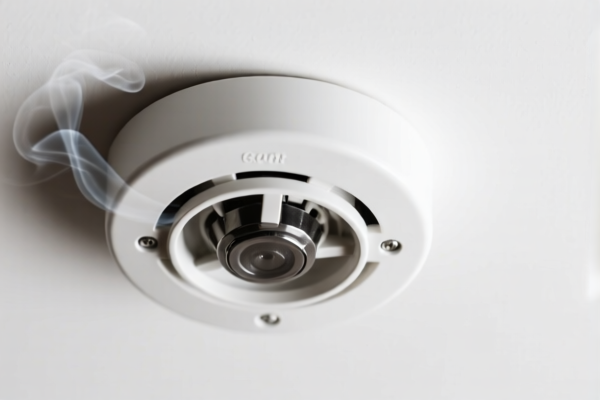
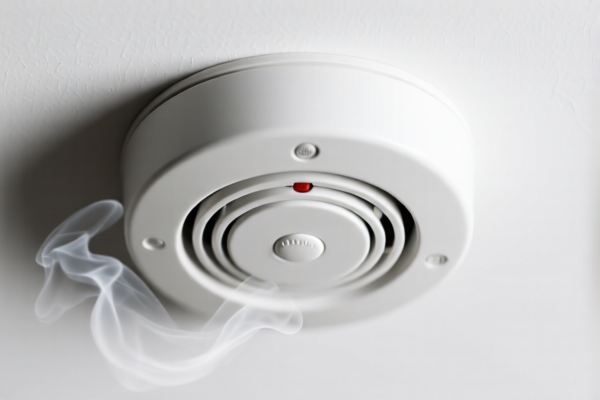
AI分析
🚨 Smoke Sensors & Detectors | Industrial Safety & Home Alert Systems
🌐 HS Code Reference & Customs Clearance Guide | 2026 Latest Tariff Analysis | Professional Level Clearance Strategy
📌 I. Product Definition & Classification: Do You Really Understand "Smoke Sensors"?
Smoke sensors, also known as smoke detectors, are critical safety devices designed to detect smoke, an indicator of combustion or fire. In international trade, their classification depends heavily on their functionality, power source, and integration status. They are generally categorized into:
Stand-alone Smoke Alarms: Battery-powered or hardwired units that provide visual (flashing light) or audible (siren) signals upon detection. Integrated Detection Modules/Systems: Devices designed to connect to larger networks, building management systems, or specialized instruments for monitoring purposes.
⚠️ Key Distinction Point:
- If it is a self-contained alarm providing visual/auditory warning → Often classified under 8531 (Electrical sound or visual signaling apparatus).
- If it is a testing/detection instrument or a networked device with independent analytical functions → Often classified under 8543 (Electrical machines and apparatus having individual functions).
📦 II. HS Code Classification Details (2026 Latest Tariff Authority Comparison)
| HS Code | Product Description | Application Scenario | Classification Logic |
|---|---|---|---|
8531.10.00.25 |
Electrical sound or visual signaling apparatus: Smoke alarms (other) | Stand-alone home/office smoke detectors with sirens/lights | ✅ Matches "Visual/Audio Signal" function; no material conflict |
8543.70.60.00 |
Electrical machines and apparatus having individual functions: Other machines and apparatus | Networked detection devices, testing instruments, or specialized monitoring units | ✅ Matches "Connection to Instruments/Network" function; specific detection apparatus |
8543.70.98.60 |
Electrical machines and apparatus having individual functions: Other | Stand-alone devices with independent detection functions not specifically listed elsewhere | ✅ "Other" fallback for independent detection apparatus without specific sub-heading |
🔍 Important Reminder:
- Battery-powered standalone alarms with simple siren/light functions often lean towards 8531 because their primary function is signaling.
- Networked, multi-sensor, or testing equipment (which may include smoke detection as part of a broader instrument function) often lean towards 8543.
- Avoid misclassifying complex detection systems as simple "parts" or "accessories"; if they have an independent function, they are "machines/apparatus."
💰 III. 2026 Latest Tariff Rate Details (Including Surtaxes, Policy Add-ons)
✅ Applicable Country: United States (US)
✅ Origin: China (CN)
✅ Effective Time: From November 10, 2025 (including subsequent imports)
🎯 1. 8531.10.00.25 —— Smoke Alarms (Electrical Signaling Apparatus)
| Item | Content |
|---|---|
| Base Tariff Rate | 1.3% (ad valorem) |
| USITC Surtax | +25% (from USITC Footnote 9903.88.01 / Section 301) |
| IEEPA Surtax | +10% (for China/HK products, from November 10, 2025) |
| Total Tariff Rate | 36.3% |
| Tax Calculation | CIF Value × 36.3% |
| De Minimis Exemption | ❌ Not Eligible (deny_de_minimis) |
| Legal Basis Path | IEEPA:9903.01.25 → IEEPA:9903.01.24 → USITC:8531.10.00.25 → FOOTNOTE:9903.88.01 |
📌 Explanation:
- The 25% USITC surtax comes from the "Additional Duties" under Section 301 of the Trade Act;
- The 10% IEEPA surtax is the additional duty on China under the International Emergency Economic Powers Act;
- Total 36.3% is considered a high tariff. Early prediction is essential!
🎯 2. 8543.70.60.00 —— Networked/Instrument-Connected Detection Devices
| Item | Content |
|---|---|
| Base Tariff Rate | 0.0% (ad valorem) |
| USITC Surtax | +25% |
| IEEPA Surtax | +10% |
| Total Tariff Rate | 35.0% |
| Tax Calculation | CIF Value × 35.0% |
| De Minimis Exemption | ❌ Not Eligible (deny_de_minimis) |
| Legal Basis Path | IEEPA:9903.01.25 → IEEPA:9903.01.24 → USITC:8543.70.60.00 → FOOTNOTE:9903.88.01 |
📌 Note:
- This classification is suitable for devices designed to connect to instruments or networks for specialized detection purposes.
- Although the base rate is lower (0% vs 1.3%), the total effective rate (35.0%) is slightly lower than the smoke alarm category (36.3%).
- Strategic Advantage: If your device is networked or part of a larger instrument system, this code may offer a marginal cost benefit.
🎯 3. 8543.70.98.60 —— Other Independent Detection Apparatus
| Item | Content |
|---|---|
| Base Tariff Rate | 2.6% (ad valorem) |
| USITC Surtax | +25% |
| IEEPA Surtax | +10% |
| Total Tariff Rate | 37.6% |
| Tax Calculation | CIF Value × 37.6% |
| De Minimis Exemption | ❌ Not Eligible (deny_de_minimis) |
| Legal Basis Path | IEEPA:9903.01.25 → IEEPA:9903.01.24 → USITC:8543.70.98.60 → FOOTNOTE:9903.88.01 |
📌 Note:
- This is a "catch-all" category for independent detection devices not listed elsewhere.
- It has the highest total tariff (37.6%) among the three options.
- Use this only if the device clearly has an independent function but doesn't fit the "networked" (8543.70.60) or "signaling" (8531.10) definitions precisely.
🛠️ IV. Customs Clearance Practical Advice (Real-World Pitfall Prevention Guide)
✅ 1. Document Checklist (Missing Items Cannot Be Cleared)
| Document | Required | Description |
|---|---|---|
| ✅ Product Specifications | ✔️ | Include detection range, response time, power supply type (battery/hardwired), connectivity (Wi-Fi/Zigbee). |
| ✅ Circuit Diagram | ✔️ | Crucial for determining if it is a simple alarm (8531) or a complex instrument (8543). |
| ✅ Product Photos (with Label) | ✔️ | Clear view of model, brand, input/output parameters, and any network ports. |
| ✅ Third-Party Test Reports | ✔️ | UL, FCC, CE, or NFPA compliance reports are often requested for safety devices. |
| ✅ Commercial Invoice | ✔️ | Explicitly state "Smoke Sensor/Detector" and clarify if it is for home use or industrial/networked use. |
| ✅ Certificate of Origin (CO) | ✔️ | If non-China origin, can apply for preferential rates (not applicable here due to high surtaxes). |
| ✅ Packing List | ✔️ | Show relationship between main unit and accessories to avoid split declaration. |
✅ 2. Declaration Tips (Key Mantra)
🔥 “Networked is 8543, Simple Alarm is 8531, Name Must Be Precise!”
| Scenario | Correct Declaration | Wrong Practice |
|---|---|---|
| Smart Smoke Detector (Wi-Fi/Zigbee, connects to hub) | 8543.70.60.00 |
Misclassified as 8531 → Potential audit |
| Simple Battery Smoke Alarm (Siren + Light only) | 8531.10.00.25 |
Misclassified as 8543 → Slightly higher base rate but same total tax, risk of mismatch |
| Industrial Smoke Detection Module (Part of a larger panel) | Check with integrator | Do not declare as standalone if it's a component |
| Testing Equipment for smoke sensors | 8543.70.60.00 |
Misclassified as 8531 |
✅ 3. Special Situations Handling
| Situation | Handling Advice |
|---|---|
| OEM Custom Detectors | Provide customer orders + design drawings to avoid "non-standard" classification issues. |
| Multi-Sensor Devices (Smoke + CO + Temp) | If the primary function is smoke detection, 8531.10.00.25 or 8543.70.60.00 may still apply. If it's a complex environmental monitor, lean towards 8543. |
| Devices for Medical Equipment | If used in medical settings, provide proof of specific use to avoid being categorized as general consumer goods. |
| Military/Aerospace Use | May qualify for "special purpose" declaration, potentially lowering risk, but needs prior communication. |
🌍 V. Global Market Customs Clearance Comparison (2026 Latest)
| Country/Region | Recommended HS Code | Tariff | Certification Requirements | Notes |
|---|---|---|---|---|
| 🇺🇸 USA | 8543.70.60.00 |
35.0% (CN origin) | FCC + UL/ETL | Highest tariff region; strategic code selection matters. |
| 🇨🇳 China | 8531.10.00.25 / 8543.70.98.60 |
1.3%~2.6% | CCC + RoHS | No additional surtaxes; low import cost. |
| 🇪🇺 EU | 8531.10.00.25 / 8543.70.60.00 |
0%~4% (if CE) | CE + RoHS | No additional surtaxes; strict safety standards. |
| 🇦🇺 Australia | 8531.10.00.25 |
5% | RCM | No additional surtaxes. |
| 🇯🇵 Japan | 8531.10.00.25 |
0%~3% | PSE/JIS | No additional surtaxes. |
📌 Conclusion:
- The US is the only major market with high additional surtaxes (25% + 10%).
- Chinese-origin smoke sensors face very high clearance costs in the US.
- Strategic code selection between8531and8543can save up to 2.6% in total tariff (35.0% vs 37.6%).
📌 VI. Common Mistakes & Pitfall Prevention (Blood & Tears Lessons)
❌ Mistake 1: Declaring a Smart/Networked Smoke Detector as 8531 (Simple Alarm)
👉 Consequence: Customs may reclassify it as 8543.70.60.00 due to network capability, leading to disputes or delays.
👉 Correct: Highlight "Network Connectivity" and "Instrument Interface" in description for 8543.70.60.00.
❌ Mistake 2: Declaring a Standalone Alarm as 8543 (Complex Apparatus)
👉 Consequence: While total tax is higher (37.6% vs 36.3%), more importantly, it may be seen as misclassification if the device lacks independent analytical functions beyond signaling.
👉 Correct: Use 8531.10.00.25 for simple siren/light devices.
❌ Mistake 3: Vague Description "Smoke Sensor" without function details
👉 Consequence: Customs unable to determine if it is signaling (8531) or detection apparatus (8543) → Delayed release or additional exams.
👉 Correct: Provide clear function: "Networked Smoke Detector with API integration" or "Battery-powered Audible Alarm".
✅ Correct Practice:
"Smart Smoke Detector, Wi-Fi Enabled, Connects to Home Security System, Model XYZ, FCC & UL Certified, 120V/AC or Battery Backup"
→ Leans towards8543.70.60.00due to network/instrument connection."Battery Operated Smoke Alarm with Siren and LED Flash, Model ABC, UL Certified"
→ Leans towards8531.10.00.25due to signaling function.
🎯 VII. Conclusion: Professional Declaration, Time-Saving, Cost-Reducing!
🎯 Remember the Mantra:
🔹 "Networked = 8543, Simple = 8531, Name Must Be Precise!"
🔹 "HS Code Determines Life & Death, Tariff Differs by 2.6%, Declaration Error Costs Thousands!"
📌 Pro Tip:
If your smoke sensors are originally from Vietnam, Mexico, Thailand, or Malaysia, you may apply for IEEPA Exemption, reducing the tariff to 0%~5%.
Recommend applying for an Advance Ruling (Pre-classification) to avoid clearance risks.
📣 Act Immediately:
📞 Contact Professional Customs Broker + Provide Product Specs + Apply for HS Code Advance Ruling
🚀 Ensure Your Smoke Sensors Clear Smoothly, Efficiently Overseas, and Maximize Profits!
✨ Professional Clearance Starts with Accurate Classification!
💼 Every Cent of Your Cost Deserves Precision!
用户评价
关于 HS 编码归类
协调制度(HS)是由世界海关组织(WCO)制定的国际贸易商品分类标准。全球 200 多个国家采用 HS 系统作为海关关税、贸易统计和进出口监管的基础。
每个 HS 编码遵循以下层级结构:
- 章(2 位)——商品大类(例如:第 84 章:机器和机械设备)
- 品目(4 位)——章内的更具体分类
- 子目(6 位)——国际通用细分,所有 WCO 成员国统一使用
- 本国细分(8-10 位)——各国自行扩展的细分编码,如美国 HTSUS 10 位编码
正确的 HS 编码归类对于顺利通关、准确缴纳关税和遵守贸易法规至关重要。错误归类可能导致海关延误、多缴关税或罚款。
从CN进口到US时,适用的关税税率可能包括:
- 最惠国(MFN)税率——适用于 WTO 成员国的标准关税税率
- 普通税率——适用于无贸易协定国家
- 贸易救济关税——附加关税,如 301 条款(反倾销)、232 条款(国家安全)或反补贴税
本页内容仅供参考。如需正式归类,请咨询当地海关或持牌报关代理。