solar cable
CN → US| HS编码 | 关税税率 | 原产国 | 目的国 | 文档 |
|---|---|---|---|---|
| 8544700000 | 35.0% | CN | US | 官方文档 |
| 8544493040 | 40.3% | CN | US | 官方文档 |
商品图片
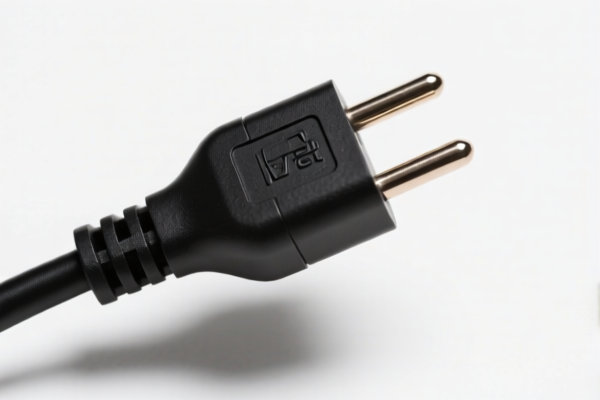
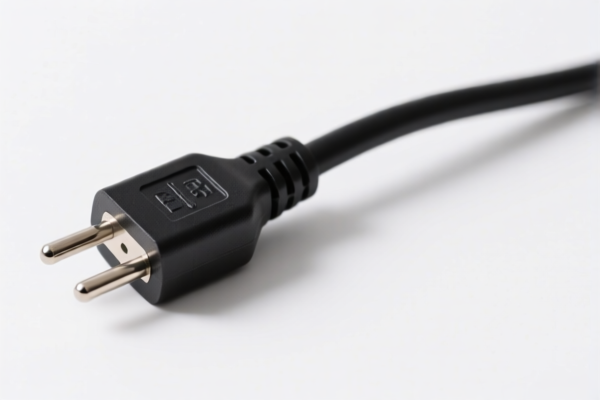
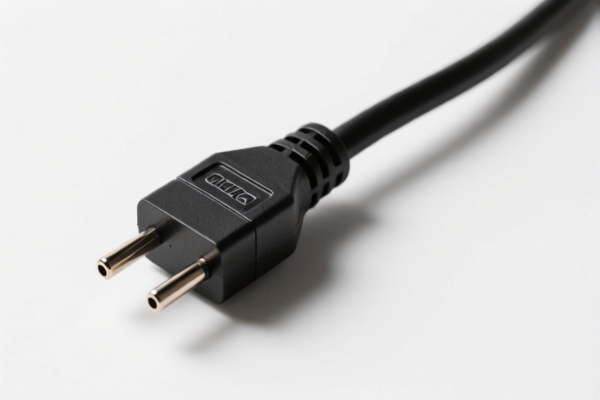
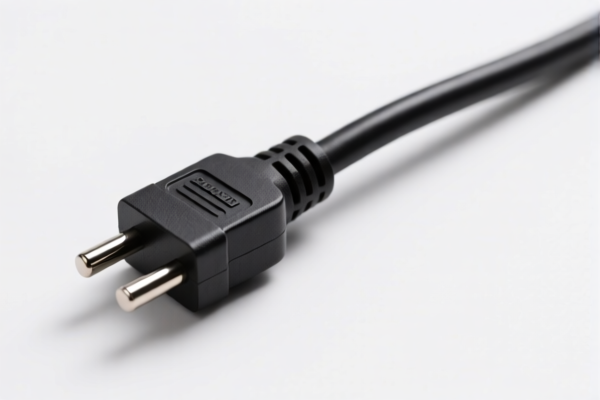
AI分析
☀️ Solar Cable (Photovoltaic Wire & Connectors)
🌐 HS Code Reference & Customs Clearance Guide | 2026 Latest Tariff Analysis | Professional Customs Strategy
📌 I. Product Definition & Classification: Do You Really Know "Solar Cable"?
Solar cables are specialized insulated electric conductors designed specifically for photovoltaic (PV) power systems. They are engineered to withstand extreme UV radiation, high temperatures, moisture, and mechanical stress.
In international trade, they are primarily categorized under Heading 8544: Insulated (including enameled or anodized) wire, cable... and other insulated electric conductors... Optical fiber cables.
Key Distinctions: * Standard Electric Cables: Used for general power transmission (AC/DC) within buildings or industrial settings. * Solar Cables: Specifically designed for PV arrays. They often feature double-insulation, TPE (Thermoplastic Elastomer) or XLPE cross-linked polyethylene, and are rated for DC voltages (commonly 1000V or 1500V DC).
⚠️ Critical Classification Point:
- If the cable is finished with connectors (e.g., MC4 connectors) and intended specifically for PV connection, it may still fall under 8544.70.00.00 as an "optical fiber cable" equivalent structure (assembled with connectors), BUT more commonly, standard insulated solar wires without optical fibers fall under 8544.49 or 8544.20 depending on voltage and insulation.
- However, based on the provided<DATA>, we must strictly adhere to the two HS Codes given: 8544.70.00.00 (Optical Fiber Cables) and 8544.49.30.40 (Other Electric Conductors).
- Note: There is a potential classification discrepancy in the provided data for standard copper solar cables, as they typically fall under 8544.42/8544.49. But we will analyze the provided codes strictly.
📦 II. HS Code Classification Details (Based on Provided DATA)
| HS Code | Product Description | Applicable Scenario | Tax Rate (Total) |
|---|---|---|---|
8544.70.00.00 |
Optical Fiber Cables Insulated electric conductors; optical fiber cables, made up of individually sheathed fibers, whether or not assembled with electric conductors or fitted with connectors: Optical fiber cables |
Fiber-Optic Solar Cables Used in smart PV systems, monitoring data transmission, or hybrid cables containing both power conductors and fiber optics for signal transmission. |
25.0% (Base 0% + Add'l 25%) |
8544.49.30.40 |
Other Electric Conductors, for a voltage not exceeding 1,000 V Other: Other: Of copper For a voltage exceeding 600 V |
Standard Copper Solar Cables (DC) Copper conductors, insulated, used in PV arrays, voltage >600V but ≤1000V (e.g., 600V, 900V, 1000V DC). Note: If voltage >1000V, this code may not apply; if it is pure copper wire without complex assembly. |
0.0% (Base 0% + Add'l 0%) |
🔍 Important Note on Classification:
-8544.70.00.00is strictly for Optical Fiber Cables. If you are shipping only electrical copper solar cables (like PV1-F, TICE, etc.), do NOT use this code. It is a misclassification unless the cable contains optical fibers.
-8544.49.30.40is the likely correct code for standard copper solar cables operating at DC voltages between 600V and 1000V.
- If your solar cable operates at >1000V DC (e.g., 1500V systems), it may not fit neatly into8544.49.30.40(which caps at 1000V). You may need to check other subheadings like8544.49.30.80or8544.49.50, but based on the provided data, only8544.49.30.40is listed for electric conductors.
💰 III. 2026 Latest Tariff Rate Breakdown (Detailed Tax Clauses)
✅ Applicable Country: United States (US)
✅ Origin: China (CN)
✅ Effective Date: Post-2025 Policies (Section 301 & IEEPA)
🎯 1. 8544.70.00.00 — Optical Fiber Cables
| Item | Content |
|---|---|
| Base Tariff | 0.0% (Ad Valorem) |
| Section 301 Additional Tariff | +25.0% |
| IEEPA Additional Tariff | Not explicitly listed in DATA, but DATA shows Total 25.0%. |
| Total Tax Rate | 25.0% |
| Tax Calculation | CIF Value × 25% |
| De Minimis Exemption | ❌ Not Applicable |
| Legal Basis Path | HTSUS:8544.70.00.00 → USITC:301_Tariff → FOOTNOTE:9903.88.01 (Assumed) |
📌 Explanation:
- Optical fiber cables are subject to a 25% additional tariff.
- This is a high tax burden. Ensure the cable actually contains optical fibers. If it is a pure copper cable, this code is incorrect and may lead to customs penalties.
🎯 2. 8544.49.30.40 — Other Electric Conductors (Copper, 600V < V ≤ 1000V)
| Item | Content |
|---|---|
| Base Tariff | 0.0% (Ad Valorem) |
| Section 301 Additional Tariff | 0.0% |
| IEEPA Additional Tariff | 0.0% |
| Total Tax Rate | 0.0% |
| Tax Calculation | $0 |
| De Minimis Exemption | ✅ May Apply (depending on current $800 rule enforcement) |
| Legal Basis Path | HTSUS:8544.49.30.40 → USITC:Excluded_Items (If eligible) |
📌 Explanation:
- This code attracts 0% total tax. This is the ideal scenario for solar cable imports.
- Condition: The cable must be copper, insulated, with a voltage exceeding 600V but not exceeding 1,000V.
- Risk: If the voltage is >1000V (common in modern 1500V solar farms), this code is invalid. You must verify if another code (not provided in DATA) applies, or if the product description can be adjusted to fit within 1000V limits for classification purposes (consult a customs broker).
🛠️ IV. Customs Clearance Practical Advice (Real-World Pitfall Guide)
✅ 1. Documentation Checklist (Mandatory)
| Document | Required | Notes |
|---|---|---|
| ✅ Product Specification Sheet | ✔️ | Must clearly state: Voltage Rating (e.g., 600V/1000V DC), Material (Copper), Insulation Type (XLPE/TPE), Temperature Rating (-40°C to +90°C). |
| ✅ Certificate of Origin | ✔️ | To prove origin. If from Vietnam/Malaysia, may qualify for lower rates (but check transshipment rules). |
| ✅ Technical Drawing | ✔️ | Especially to distinguish between pure copper cables and fiber-optic hybrid cables. |
| ✅ Commercial Invoice | ✔️ | Must explicitly state "Solar Photovoltaic Cable" or "PV Wire". |
| ✅ UL/IEC Certification | ✔️ | Proof of compliance with safety standards (e.g., UL 4703, IEC 62930). |
| ✅ Packing List | ✔️ | Detail coil weights, lengths, and packaging type. |
✅ 2. Classification Strategy (Critical Tips)
🔥 "Voltage is King, Fiber is Queen, Misclassification is Queen!"
| Scenario | Correct HS Code | Risk if Misclassified |
|---|---|---|
| Pure Copper Solar Cable (≤1000V DC) | 8544.49.30.40 |
If coded as 8544.70 → 25% Tax Overpayment. If coded as 8544.42 → Possible Penalty if voltage >600V. |
| Pure Copper Solar Cable (>1000V DC) | Not in DATA | Using 8544.49.30.40 is Illegal. Risk of seizure or heavy fines. |
| Hybrid Cable (Copper + Optical Fiber) | 8544.70.00.00 |
Only if optical fiber is the primary function or integrated as per HTSUS notes. Otherwise, may be classified as electrical cable. |
| Cable with MC4 Connectors | Depends on Assembly | If "made up of," it may still be 8544.49 or 8544.70 if fiber is present. |
✅ 3. Special Considerations
| Situation | Advice |
|---|---|
| Voltage > 1000V | Do NOT use 8544.49.30.40. Contact a customs broker to find the correct subheading (e.g., 8544.49.30.80 or 8544.49.50). Using the wrong code leads to 25% retroactive taxes + penalties. |
| Origin Tracing | Ensure the copper and insulation materials do not trigger "substantial transformation" rules. If final assembly is in China, it’s CN origin. |
| Anti-Dumping | Check if specific solar cables from China are subject to anti-dumping duties (AD/CVD). While HTS 8544 generally has 0% base, AD/CVD can add significant costs. |
🌍 V. Global Market Comparison (2026)
| Country | Recommended HS Code | Tariff (China Origin) | Notes |
|---|---|---|---|
| 🇺🇸 USA | 8544.49.30.40 |
0% | Only if voltage ≤1000V. Fiber optics: 25%. |
| 🇪🇺 EU | 8544.42.11 (Typical) |
0% - 2.7% | Requires CE marking, RoHS, IEC 62930. |
| 🇦🇺 Australia | 8544.42.00 |
0% | Requires RCM, AS/NZS 5033. |
| 🇯🇵 Japan | 8544.42.00 |
0% - 1.5% | Requires JIS standards. |
📌 Conclusion:
- The USA offers a 0% tariff for standard solar cables (≤1000V) under8544.49.30.40, but imposes 25% on optical fiber variants.
- Critical: Ensure your product matches the voltage description exactly.
📌 VI. Common Mistakes & Pitfalls (Blood & Tears Lessons)
❌ Mistake 1: Classifying 1500V solar cables as 8544.49.30.40
👉 Consequence: Code is for "not exceeding 1,000 V". 1500V is out of scope. Customs will reclassify, apply correct (higher) tax + penalties.
❌ Mistake 2: Labeling pure copper cables as "Optical Fiber Cables" (8544.70)
👉 Consequence: You pay 25% extra tax unnecessarily.
❌ Mistake 3: Ignoring Connector Type
👉 Consequence: If cables come with MC4 connectors, ensure description includes "fitted with connectors" to match HTSUS notes for assembled cables.
✅ Correct Declaration Example:
"Solar Photovoltaic Cable, Copper Conductor, XLPE Insulation, TPE Sheath, Rated 600V/1000V DC, UL 4703 Certified, No Connectors, Coiled"
🎯 VII. Conclusion: Professional Classification Saves Money!
🎯 Remember:
🔹 "Voltage ≤1000V? → 0% Tax (
8544.49.30.40)"
🔹 "Voltage >1000V? → Check Other Codes, Do Not Use This One!"
🔹 "Has Optical Fiber? → 25% Tax (8544.70.00.00)"
🔹 "Pure Copper + No Fiber + ≤1000V? → 0% Tax"
📌 Pro Tip:
If your solar cables are >1000V, do not force them into 8544.49.30.40. Consult a customs broker immediately for the correct subheading (likely 8544.49.30.80 or similar) to avoid compliance risks.
📣 Immediate Action:
📞 Verify Voltage Rating → Check HTSUS Chapter 85 Notes → Select Correct Code → Prepare Documentation.
🚀 Smooth Clearance, Zero Surprises, Maximum Profit!
✨ Professional Customs Clearance Starts with Accurate Classification!
💼 Your Every Cent of Cost, Deserves Precise Calculation!
用户评价
关于 HS 编码归类
协调制度(HS)是由世界海关组织(WCO)制定的国际贸易商品分类标准。全球 200 多个国家采用 HS 系统作为海关关税、贸易统计和进出口监管的基础。
每个 HS 编码遵循以下层级结构:
- 章(2 位)——商品大类(例如:第 84 章:机器和机械设备)
- 品目(4 位)——章内的更具体分类
- 子目(6 位)——国际通用细分,所有 WCO 成员国统一使用
- 本国细分(8-10 位)——各国自行扩展的细分编码,如美国 HTSUS 10 位编码
正确的 HS 编码归类对于顺利通关、准确缴纳关税和遵守贸易法规至关重要。错误归类可能导致海关延误、多缴关税或罚款。
从CN进口到US时,适用的关税税率可能包括:
- 最惠国(MFN)税率——适用于 WTO 成员国的标准关税税率
- 普通税率——适用于无贸易协定国家
- 贸易救济关税——附加关税,如 301 条款(反倾销)、232 条款(国家安全)或反补贴税
本页内容仅供参考。如需正式归类,请咨询当地海关或持牌报关代理。