solar module
CN → US| HS编码 | 关税税率 | 原产国 | 目的国 | 文档 |
|---|---|---|---|---|
| 8541430010 | 60.0% | CN | US | 官方文档 |
| 8541430080 | 60.0% | CN | US | 官方文档 |
商品图片
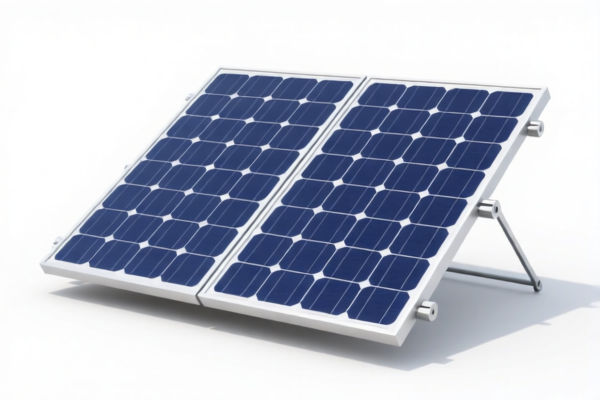
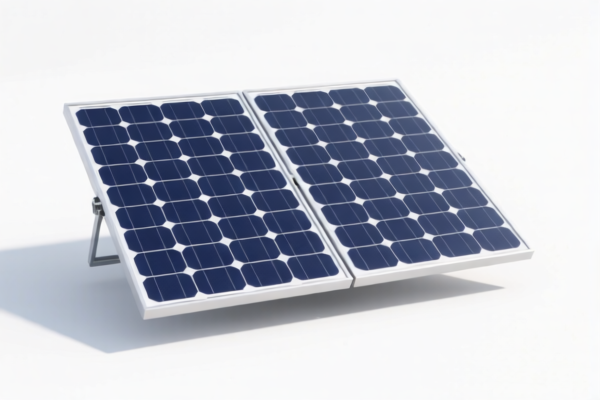
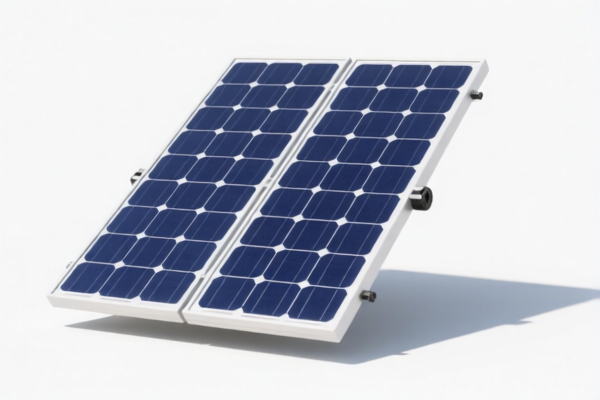
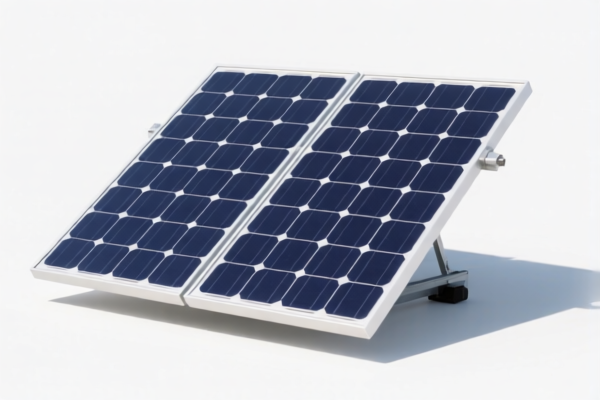
AI分析
☀️ Solar Module (Photovoltaic Cells/Modules/Panel)
🌐 HS Code Reference & Clearance Guide | 2026 Latest Tariff Analysis | Professional Clearance Strategy
📌 I. Product Definition & Classification: Do You Really Understand "Solar Modules"?
Solar modules are the core components of photovoltaic power generation systems, converting sunlight directly into electricity. In international trade, the classification depends strictly on whether the crystalline silicon cells are assembled into modules or panels, and the specific type of silicon used.
Crystalline Silicon Photovoltaic Cells Assembled in Modules/Panels:
Standard silicon-based solar panels where the cells are interconnected and encased. These are subject to specific statistical notes and high tariffs.
Other Photovoltaic Cells Assembled in Modules/Panels:
Includes non-crystalline silicon or other types of PV cells that do not fall under the specific "Crystalline Silicon" statistical note 10.
⚠️ Key Distinction Point:
- If the product is Crystalline Silicon PV cells assembled in modules/panels → Falls under8541.43.00.10(Specific Note 10).
- If the product is Other PV cells (e.g., Thin-Film, Non-Crystalline) assembled in modules/panels → Falls under8541.43.00.80.
- Raw Cells: If cells are not assembled into modules/panels, they may fall under different subheadings (not covered in this specific data set).
📦 II. HS Code Classification Details (2026 Latest Tariff Authority Comparison)
| HS Code | Product Description | Applicable Scenario | Tariff Rate (US/CN Origin) |
|---|---|---|---|
8541.43.00.10 |
Crystalline silicon photovoltaic cells of a kind described in statistical note 10, assembled in modules or made up into panels | Standard Silicon Solar Panels (Mono/Poly), Solar Rooftop Systems, Solar Farms | 50.0% |
8541.43.00.80 |
Other photovoltaic cells assembled in modules or made up into panels | Thin-Film Modules, CIGS, CdTe, or other non-stat-note-10 silicon PV panels | 50.0% |
🔍 Key Reminder:
- Both categories listed above carry a 50% Total Tax Rate.
- This includes 0% Basic Tariff + 50% Additional Tariff.
- Note 10 Definition: Refers to crystalline silicon PV cells of a kind used in solar modules/panels. Misclassification as "parts" or other electronic components can lead to severe penalties.
💰 III. 2026 Latest Tariff Rate Detailed Explanation (Including Surtaxes, Policy Add-ons)
✅ Applicable Country: United States (US)
✅ Origin: China (CN)
✅ Effective Time: 2025 November 10 onwards (including subsequent imports)
🎯 1. 8541.43.00.10 —— Crystalline Silicon PV Modules/Panels (Statistical Note 10)
| Item | Content |
|---|---|
| Basic Tariff Rate | 0% (ad valorem) |
| USITC Additional Tariff | +50.0% (Trade remedy tariffs on solar products) |
| IEEPA Additional Tariff | Included in the 50% total (specifically targeted at Chinese origin) |
| Total Tax Rate | 50.0% |
| Tax Calculation | CIF Value × 50% |
| De Minimis Exemption Eligibility | ❌ Not Eligible (deny_de_minimis) |
| Legal Basis Path | USITC:8541.43.00.10 → Trade Remedy: Solar Products → IEEPA:9903.01.24 (China-specific) |
📌 Explanation:
- The 50% rate is driven by Section 201 tariffs and/or Section 301 measures specifically targeting Chinese solar products to protect domestic US manufacturing.
- No De Minimis Exemption: Unlike textiles or general consumer goods, solar modules from China cannot use the $800 de minimis exemption for small shipments. Every shipment is subject to full customs entry and tax calculation.
- High Risk: This is one of the highest tariff rates for energy-related imports.
🎯 2. 8541.43.00.80 —— Other PV Modules/Panels (Non-Crystalline Silicon Note 10)
| Item | Content |
|---|---|
| Basic Tariff Rate | 0% |
| USITC Additional Tariff | +50.0% |
| IEEPA Additional Tariff | Included in the 50% total |
| Total Tax Rate | 50.0% |
| Tax Calculation | CIF Value × 50% |
| De Minimis Exemption Eligibility | ❌ Not Eligible (deny_de_minimis) |
| Legal Basis Path | USITC:8541.43.00.80 → Trade Remedy: Solar Products → IEEPA:9903.01.24 |
📌 Note:
- Even if the solar module is not crystalline silicon (e.g., thin-film), if it is assembled from cells of Chinese origin, it is still subject to the 50% tariff.
- The distinction between.10and.80is primarily for statistical purposes and specific technical definitions, but the tariff outcome is identical under current US policy against Chinese solar goods.
🛠️ IV. Clearance Practical Suggestions (Battle-Tested Pitfall Avoidance Guide)
✅ 1. Documentation Checklist (All Required)
| Document | Mandatory? | Description |
|---|---|---|
| ✅ Product Specification Sheet | ✔️ | Must specify: Technology (Mono/Poly/Thin-Film), Wattage, Dimensions, Efficiency, Certificate Type. |
| ✅ Commercial Invoice | ✔️ | Must clearly state: "Solar Module/Panel," HS Code, Country of Origin (China), CIF Value. |
| ✅ Packing List | ✔️ | Detail weight, dimensions, number of units. Ensure packaging matches invoice. |
| ✅ Certificate of Origin (CO) | ✔️ | Critical. Must prove origin. If claiming exemption (e.g., via SE Asia transshipment), extreme caution required due to anti-circumvention rules. |
| ✅ UL/IEC Test Reports | ✔️ | UL 1703 or UL 61730 certification is often required for US market access, even if not strictly a customs document, it supports product legitimacy. |
| ✅ Bill of Lading (B/L) | ✔️ | Consistent with invoice and packing list. |
✅ 2. Declaration Techniques (Key Mantras)
🔥 “Accurate Origin, Correct HS, No De Minimis, Full Disclosure!”
| Scenario | Correct Declaration Method | Wrong Practice |
|---|---|---|
| Standard Silicon Solar Panels | 8541.43.00.10 |
Misclassifying as "Electrical Parts" (e.g., 8536/8543) → Penalty for fraud. |
| Thin-Film Solar Panels | 8541.43.00.80 |
Misclassifying as "Solar Cells not assembled" → Delay + Audit. |
| Samples/Small Shipments | Still declare full value | Using De Minimis ($800) → Illegal for Chinese Solar Goods. |
| Components (Wiring, Mounts) | Separate HS Codes (e.g., 7610 for aluminum mounts) | Bundling mounts/parts with modules to lower tax → Smuggling Risk. |
✅ 3. Special Case Handling
| Situation | Handling Advice |
|---|---|
| Transshipment via Vietnam/Thailand/Malaysia | High Risk. US CBP strictly investigates "Circumvention." If cells are Chinese but assembled elsewhere, 50% tariff still applies. Provide full supply chain proof. |
| Dual-Use (Solar + Storage) | If the module is part of a complete battery system, the system might have different HS. However, the module itself remains taxable at 50%. Separate invoice is recommended. |
| Damaged Goods | Notify CBP immediately. Duty may be abated on damaged portion, but documentation of damage is required. |
| Pre-Ruling Request | Highly Recommended. Submit a Binding Ruling Request to CBP to confirm HS Code and origin eligibility before shipment. |
🌍 V. Global Market Clearance Comparison (2026 Latest)
| Country/Region | Recommended HS Code | Tariff (China Origin) | Certification Requirements | Notes |
|---|---|---|---|---|
| 🇺🇸 USA | 8541.43.00.10 / .80 |
50.0% | UL, FCC (if inverter included) | Highest Tariff. Strict Origin Control. |
| 🇨🇳 China | 8541.43.00 |
0% - 5% (Import Duty) | CCC (for domestic) | Domestic consumption has lower barriers. |
| 🇪🇺 EU | 8541.43.00 |
0% (Most Favored Nation) | CE, RoHS, REACH | No major anti-dumping currently on modules, but check for future trade defense. |
| 🇦🇺 Australia | 8541.43.00 |
5% | SAA, C-Tick | Moderate tariff, no major trade war. |
| 🇮🇳 India | 8541.43.00 |
40% - 70% (BCD + Basic) | BIS Certification | Very High Tariffs to protect local manufacturing. |
📌 Conclusion:
- The US market is the most challenging for Chinese solar modules due to the 50% flat tariff and anti-circumvention enforcement.
- EU and Australia offer much more favorable access, but local certification (CE, SAA) is strict.
- India is also highly protected with high duties.
📌 VI. Common Mistakes & Pitfall Guide (Blood & Tears Lessons)
❌ Mistake 1: Using De Minimis ($800) for Small Solar Panel Shipments from China
👉 Consequence: Seizure, Penalty, and Possible Ban on future imports. Solar modules from China are explicitly excluded from de minimis treatment.
❌ Mistake 2: Misclassifying as "Solar Cells" (Unassembled)
👉 Consequence: If modules are assembled, they are not "cells." Misclassification leads to Underpayment of Duty + Back Taxes + Interest.
❌ Mistake 3: Ignoring Origin Markings
👉 Consequence: If the module says "Made in China" on the frame, but you declare "Made in Vietnam," CBP will conduct a traceability audit. If Chinese cells are found, 50% tariff applies.
❌ Mistake 4: Bundling Modules with Inverters/Batteries in One HS Code
👉 Consequence: Each component has a different tax rate. Bundling inflates the value of the module or hides the true nature. Declare separately.
✅ Correct Approach:
"Crystalline Silicon Photovoltaic Module, Assembled in Panels, 400W, Mono PERC, Made in China, Model XYZ, UL 1703 Certified"
🎯 VII. Conclusion: Professional Declaration, Save Cost, Ensure Compliance!
🎯 Remember the Mantras:
🔹 "50% Tariff is Real, De Minimis is Banned, Origin is Key!"
🔹 "HS Code 8541.43.00.10/80, 50% Tax, No Loopholes!"
🔹 "Check Supply Chain, Avoid Circumvention Claims!"
📌 Tips:
- If your solar modules use Chinese cells but are assembled in Southeast Asia, be aware of the Substantial Transformation Rule. However, recent US rulings have tightened this, often still applying Chinese tariffs if Chinese content is dominant.
- Strongly Recommend: Apply for a Pre-Ruling (CBP Ruling Letter) before shipping large volumes to the US.
- Consider Duty Drawback programs if modules are later re-exported or destroyed due to compliance issues.
📣 Immediate Action:
📞 Consult with a Licensed Customs Broker specializing in Energy Products.
📄 Verify Country of Origin documentation meticulously.
🚀 Ensure UL/IEC Certifications are up-to-date for US/EU market entry.
✨ Professional Clearance Starts with Accurate Classification!
💼 Every Percent of Tax Saved is Pure Profit!
用户评价
关于 HS 编码归类
协调制度(HS)是由世界海关组织(WCO)制定的国际贸易商品分类标准。全球 200 多个国家采用 HS 系统作为海关关税、贸易统计和进出口监管的基础。
每个 HS 编码遵循以下层级结构:
- 章(2 位)——商品大类(例如:第 84 章:机器和机械设备)
- 品目(4 位)——章内的更具体分类
- 子目(6 位)——国际通用细分,所有 WCO 成员国统一使用
- 本国细分(8-10 位)——各国自行扩展的细分编码,如美国 HTSUS 10 位编码
正确的 HS 编码归类对于顺利通关、准确缴纳关税和遵守贸易法规至关重要。错误归类可能导致海关延误、多缴关税或罚款。
从CN进口到US时,适用的关税税率可能包括:
- 最惠国(MFN)税率——适用于 WTO 成员国的标准关税税率
- 普通税率——适用于无贸易协定国家
- 贸易救济关税——附加关税,如 301 条款(反倾销)、232 条款(国家安全)或反补贴税
本页内容仅供参考。如需正式归类,请咨询当地海关或持牌报关代理。