strontium tungstate catalyst
CN → US| HS编码 | 关税税率 | 原产国 | 目的国 | 文档 |
|---|---|---|---|---|
| 2825909000 | 38.7% | CN | US | 官方文档 |
| 3815905000 | 40.0% | CN | US | 官方文档 |
| 2841800050 | 40.5% | CN | US | 官方文档 |
| 3815901000 | 41.5% | CN | US | 官方文档 |
| 2825903000 | 40.5% | CN | US | 官方文档 |
商品图片
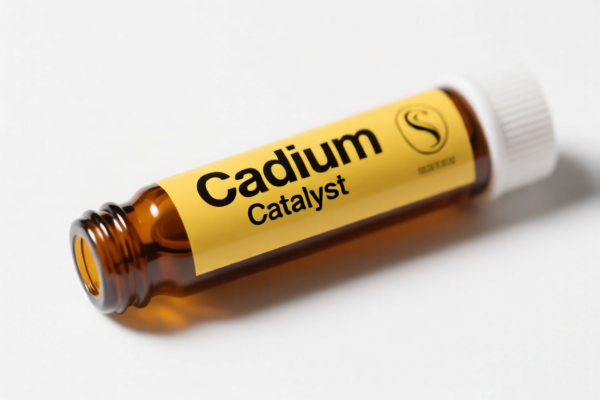
AI分析
⚗️ Strontium Tungstate Catalyst (SrWO₄)
🌐 HS Code Classification & Customs Clearance Guide | 2026 Latest Tariff Analysis | Expert Strategy for Chemical Imports
📌 I. Product Definition & Chemical Nature: What is Strontium Tungstate Catalyst?
Strontium Tungstate (SrWO₄) is an inorganic compound primarily used as a catalyst, phosphor host, or ceramic material. In the context of chemical trade, its classification hinges on two key attributes: 1. Material Composition: It is a metal oxide/salt combination (Strontium + Tungstate). 2. Functional Purpose: It is explicitly designated as a "Catalyst".
In international trade, function often dictates classification. While chemically it resembles a tungstate salt, its stated use as a "Catalyst" pulls it toward Chapter 38 (Miscellaneous Chemical Products), specifically Heading 3815 (Catalysts). However, ambiguity arises because some tungstates are classified as inorganic chemicals (Chapter 28). This document analyzes the five most likely HS Codes provided in the system, explaining the rationale for each based on material vs. function conflicts.
📦 II. HS Code Classification Details (2026 Latest Tariff Reference)
The following table details the five potential HS Codes for Strontium Tungstate Catalyst, including the matching logic, tax implications, and legal basis.
| HS Code | Product Description | Matching Logic & Rationale | Total Tax Rate (US/CN Origin) |
|---|---|---|---|
| 3815.90.50.00 | Other Reaction Initiators, Accelerators & Catalysts | Best Fit for Function. The product is explicitly named a "Catalyst." Heading 3815 covers catalysts and reaction promoters. Since SrWO₄ is not a standard catalyst listed in subheading 3815.10/20/30, it falls under "Other." ✅ No Material Conflict: Functional classification overrides material composition for catalysts. |
40.0% (Base 5% + Sec 301 25% + 122(d) 10%) |
| 3815.90.10.00 | Other Catalysts | Function-Based Fit. Similar to above, but potentially a different sub-classification for "other catalysts." The system notes a match based on the presence of "Tungsten" and "Catalyst" function. ⚠️ Higher Base Rate: The base tariff is higher (6.5%), leading to a higher total tax. |
41.5% (Base 6.5% + Sec 301 25% + 122(d) 10%) |
| 2841.80.00.50 | Other Salts of Tungstic Acid | Material-Based Fit (Tungstate). If customs views the product primarily as a tungstate salt rather than a catalyst, it falls under Chapter 28 (Inorganic Chemicals). Subheading 2841 covers salts of tungstic acid. ❌ Potential Conflict: If the product is only used as a catalyst, this misclassification risk exists. However, if it has dual use, this is a strong alternative. |
40.5% (Base 5.5% + Sec 301 25% + 122(d) 10%) |
| 2825.90.30.00 | Other Tungsten Oxides | Material-Based Fit (Oxide). Classifies SrWO₄ as a tungsten oxide derivative. The system infers "inorganic metal oxide" from the chemical composition. ⚠️ Risk: SrWO₄ is a salt, not a simple oxide. This classification is technically less accurate chemically but may be accepted if documentation emphasizes "Tungsten Oxide" content. |
40.5% (Base 5.5% + Sec 301 25% + 122(d) 10%) |
| 2825.90.90.00 | Other Metal Oxides | Broad Material Fit. Classifies SrWO₄ as a generic "metal oxide." Since Titanium Oxide (SrTiO₃ is titanate, but SrWO₄ is tungstate; the system summary mentions "Titanium Oxide" which may be a data error or a confusion with Strontium Titanate). ⚠️ Critical Error Check: If the product is Strontium Tungstate, classifying it under "Titanium Oxide" codes is incorrect. However, if the system summary implies a "Metal Oxide" category broadly, this is the fallback for "Other Metal Oxides." |
38.7% (Base 3.7% + Sec 301 25% + 122(d) 10%) |
🔍 Key Distinction:
- Chapter 38 (3815): Prioritizes Function (Catalyst).
- Chapter 28 (2841/2825): Prioritizes Material (Tungstate/Oxide).
- Best Practice: If the product is exclusively used as a catalyst, 3815 is generally more defensible under GRI 1 (Terms of Heading). If it has general chemical uses, 2841 (Tungstate) is more chemically precise.
💰 III. 2026 Latest Tariff Rate Breakdown (Detailed Policy Analysis)
✅ Applicable Country: United States (US)
✅ Origin: China (CN)
✅ Effective Date: Post-2025 (Current 122(d) and Sec 301 tariffs apply)
🎯 1. The "Section 301" Tariff (25%)
All five HS Codes listed above are subject to a +25% additional duty under Section 301 of the Trade Act of 1974. This is a non-negotiable surcharge for most Chinese-origin goods in these categories.
🎯 2. The "122(d)" Tariff (10%)
Under recent executive actions (often referred to as "122(d)" or similar IEEPA provisions), an additional +10% tariff is applied to specific chemical and industrial goods from China. This applies uniformly across all five HS Codes in this dataset.
🎯 3. Base Tariff Variation (The Differentiator)
| HS Code Group | Base Tariff | Total Calculation | Total Effective Rate |
|---|---|---|---|
| 3815.90.90.10 | 6.5% | 6.5% + 25% + 10% | 41.5% |
| 2841.80.00.50 | 5.5% | 5.5% + 25% + 10% | 40.5% |
| 2825.90.30.00 | 5.5% | 5.5% + 25% + 10% | 40.5% |
| 3815.90.50.00 | 5.0% | 5.0% + 25% + 10% | 40.0% |
| 2825.90.90.00 | 3.7% | 3.7% + 25% + 10% | 38.7% |
📌 Tax Optimization Insight:
- Lowest Rate:2825.90.90.00(38.7%) – But risky if the product is chemically a tungstate, not a generic metal oxide.
- Highest Rate:3815.90.10.00(41.5%) – Due to higher base rate.
- Balanced Choice:3815.90.50.00(40.0%) – Strongest functional justification as a "Catalyst."
- Material Precision:2841.80.00.50(40.5%) – Most chemically accurate for "Strontium Tungstate."
🛠️ IV. Customs Clearance Operational Advice (Risk Mitigation)
✅ 1. Documentation Requirements (Must-Haves)
| Document | Required? | Purpose |
|---|---|---|
| Product Specification Sheet | ✅ Yes | Must state CAS Number, Purity, and Intended Use (e.g., "Catalyst for X process"). |
| Certificate of Analysis (COA) | ✅ Yes | Proves chemical composition (SrWO₄) and absence of other regulated metals. |
| Safety Data Sheet (SDS) | ✅ Yes | Confirms non-hazardous status and handling requirements. |
| End-Use Declaration | ✅ Yes | Explicitly states: "This product is used as a catalyst in [specific industrial process]." |
| Commercial Invoice | ✅ Yes | Description must match HS Code justification (e.g., "SrWO₄ Catalyst" vs. "Strontium Tungstate Salt"). |
✅ 2. Declaration Strategy (Critical Tips)
🔥 "Function First, Material Second!"
| Scenario | Recommended HS Code | Why? | Risk if Wrong |
|---|---|---|---|
| Pure Catalyst | 3815.90.50.00 |
GRI 1 favors function. Chemicals used primarily as catalysts go to Ch 38. | Misclassified as Ch 28 → Potential audit, but rate similar. |
| Dual-Use (Catalyst + Pigment) | 2841.80.00.50 |
If used in ceramics/phosphors, Ch 28 is safer. | Misclassified as Ch 38 → May be rejected if no catalyst evidence. |
| Unclear Purpose | 2825.90.90.00 |
Fallback "Other Metal Oxide." | Low risk of reclassification, but higher audit probability. |
✅ 3. Common Pitfalls to Avoid
❌ Error 1: Labeling as "Strontium Tungstate" in Ch 28 but claiming "Catalyst" use.
👉 Fix: Choose 3815 if catalyst is the primary use. Choose 2841 if chemical identity is primary.
❌ Error 2: Ignoring the "122(d)" 10% surcharge.
👉 Fix: All these items are subject to the additional 10%. Do not quote CIF + Sec 301 only.
❌ Error 3: Using "Titanium Oxide" codes (2825.90.90.00) for Tungsten compounds.
👉 Fix: While 2825.90.90.00 has the lowest rate (38.7%), ensure the chemical name does not explicitly say "Titanium" if it is Tungsten. Use CAS Number to clarify.
🌍 V. Global Market Comparison (2026 Snapshot)
| Country/Region | Preferred HS Code | Base Tariff | Additional Duties (China) | Total Est. Rate |
|---|---|---|---|---|
| 🇺🇸 USA | 3815.90.50.00 |
5.0% | Sec 301 (25%) + 122(d) (10%) | 40.0% |
| 🇪🇺 EU | 3815.90.00 |
6.5% | None (WTO MFN) | 6.5% |
| 🇨🇳 China | 2925.80.00 |
0.0% | N/A (Import into China) | 0.0% |
| 🇮🇳 India | 3815.10.00 |
0.0% | Anti-Dumping (Check Specifics) | Varies |
📌 Conclusion:
- The US market is the most expensive due to layered tariffs (Base + Sec 301 + 122(d)).
- EU and India are significantly more cost-effective if supply chains can be rerouted or if anti-dumping duties do not apply.
- Strategic Recommendation: For US imports, consider Advance Rulings to lock in3815.90.50.00or2841.80.00.50to avoid post-clearance adjustments.
📌 VI. Final Clearance Checklist
- Verify Chemical Identity: Is it Strontium Tungstate (SrWO₄) or Strontium Titanate (SrTiO₃)?
- If Tungstate →
2841.80.00.50(Material) or3815.90.50.00(Function). - If Titanate →
2825.90.90.00(if oxide) or3815(if catalyst).
- If Tungstate →
- Confirm Primary Use: Catalyst? →
3815. General Chemical? →2841. - Calculate Total Landed Cost: Include Base Tariff + 25% Sec 301 + 10% 122(d).
- Prepare SDS & COA: Essential for FDA/CBP clearance if chemical purity is questioned.
🎯 VII. Expert Recommendation
🔹 "For 'Strontium Tungstate Catalyst', the safest and most defensible classification is
3815.90.50.00(40.0% Total Tax)."
🔹 Why? It aligns with the product name ("Catalyst") and avoids the chemical inaccuracy of classifying a tungstate as a "titanium oxide" or generic "other oxide."
🔹 Alternative: If the catalyst use is secondary to its use as a chemical raw material, use2841.80.00.50(40.5% Total Tax) for better chemical accuracy.
📣 Immediate Action:
📞 Submit an Advance Ruling Request to US CBP with your SDS and End-Use Statement.
📄 Attach Proof of Catalyst Functionality (e.g., supplier datasheet highlighting catalytic properties).
💡 Avoid "De Minimis" Loopholes: These are large-volume chemical shipments; Section 301 and 122(d) ALWAYS apply.
✨ Precision in Classification = Precision in Profit.
💼 Don't let a 1.5% tax rate difference or a misclassification audit eat your margins!
用户评价
关于 HS 编码归类
协调制度(HS)是由世界海关组织(WCO)制定的国际贸易商品分类标准。全球 200 多个国家采用 HS 系统作为海关关税、贸易统计和进出口监管的基础。
每个 HS 编码遵循以下层级结构:
- 章(2 位)——商品大类(例如:第 84 章:机器和机械设备)
- 品目(4 位)——章内的更具体分类
- 子目(6 位)——国际通用细分,所有 WCO 成员国统一使用
- 本国细分(8-10 位)——各国自行扩展的细分编码,如美国 HTSUS 10 位编码
正确的 HS 编码归类对于顺利通关、准确缴纳关税和遵守贸易法规至关重要。错误归类可能导致海关延误、多缴关税或罚款。
从CN进口到US时,适用的关税税率可能包括:
- 最惠国(MFN)税率——适用于 WTO 成员国的标准关税税率
- 普通税率——适用于无贸易协定国家
- 贸易救济关税——附加关税,如 301 条款(反倾销)、232 条款(国家安全)或反补贴税
本页内容仅供参考。如需正式归类,请咨询当地海关或持牌报关代理。