tea concentrated extract
CN → US| HS编码 | 关税税率 | 原产国 | 目的国 | 文档 |
|---|---|---|---|---|
| 1302199140 | 17.5% | CN | US | 官方文档 |
| 1302199120 | 17.5% | CN | US | 官方文档 |
| 2106909987 | 16.4% | CN | US | 官方文档 |
| 2106909973 | 16.4% | CN | US | 官方文档 |
商品图片
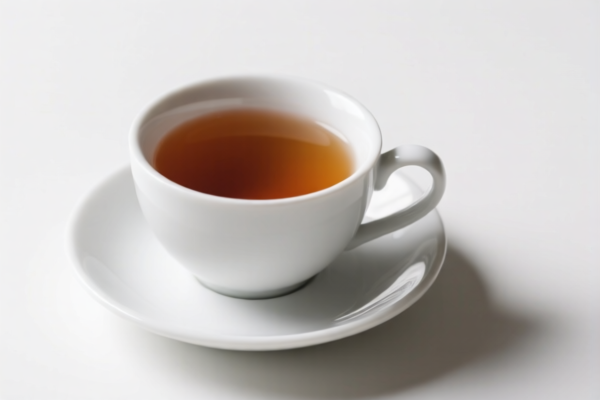
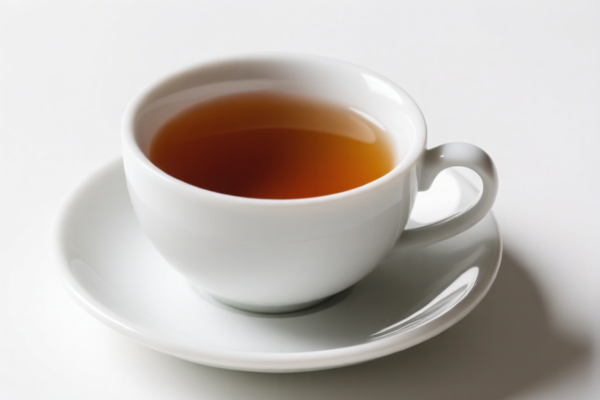
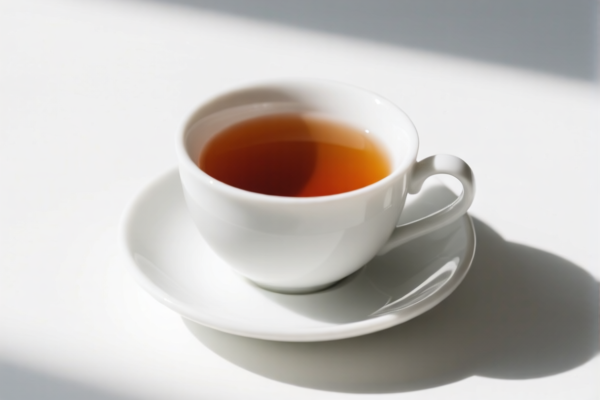
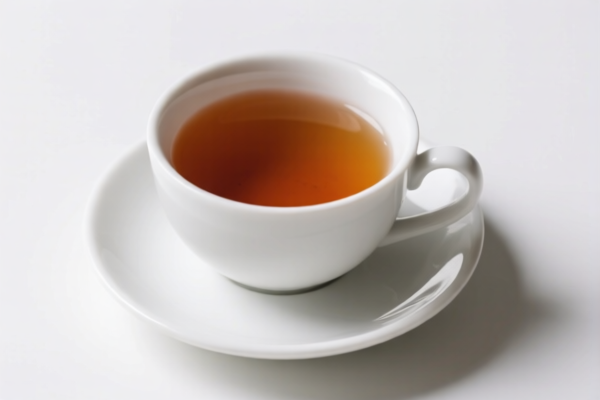
AI分析
🍵 Tea Concentrated Extract (Vegetable Sap/Extract)
🌐 HS Code Reference & Customs Clearance Guide | 2026 Latest Tariff Analysis | Professional Strategy
📌 1. Product Definition & Classification: What Exactly Is "Tea Concentrated Extract"?
In international trade, "Tea Concentrated Extract" falls under Chapter 13 (Vegetable Saps and Extracts), not Chapter 09 (Tea). This is a critical distinction often misunderstood by importers.
Why Chapter 13?
According to the Harmonized System (HS) Explanatory Notes, extracts obtained by removing water from vegetable products (like tea) via evaporation, concentration, or drying are classified as vegetable extracts (Chapter 13), not as the raw material itself (Chapter 09).
⚠️ Key Distinction Point:
- If it is dried tea leaves (solid, loose or in bags) → Chapter 09 (Tea).
- If it is concentrated liquid/solid extract (powder, paste, or liquid form derived from tea) → Chapter 13 (Vegetable Extracts).
📦 2. HS Code Classification Details (Based on Provided DATA)
Note: The provided
<DATA>does not contain a specific HS code for "Tea" or "Tea Extract" in Chapter 13.
However, the provided data contains two highly relevant categories under HS 1302.19 (Vegetable Saps and Extracts; Other).
Crucially, neither entry explicitly says "Tea." But in practice, generic vegetable extracts (including tea, unless specified as a special commodity like Cashew Nut Shell Liquid) often fall under the "Other" subheading.Based strictly on the provided
<DATA>, the closest applicable classification for a generic vegetable extract like tea (if not specified as a special extract) would be the "Other" category.Let's analyze the provided options: 1.
1302.19.91.40- Vegetable saps and extracts: Other: Other: Other (Generic) 2.1302.19.91.20- Vegetable saps and extracts: Other: Other: Cashew nut shell liquid (Specific to Cashew) 3.2106.90.99.87- Food preparations: Herbal teas and herbal infusions comprising mixed herbs (This is for beverages, not extracts) 4.2106.90.99.73- Food preparations: Preparations for the manufacture of beverages: Other (This could be a competitor if it's used primarily as a flavoring/additive rather than a pure extract)
Deduction for "Tea Concentrated Extract": - HS 1302.19.91.20 is explicitly for Cashew Nut Shell Liquid. ❌ Exclude. - HS 2106.90.99.87 is for "Herbal teas and herbal infusions" (ready-to-drink or infusion form). While tea is a "herbal" in a broad sense, concentrated extract is typically Chapter 13. If it is sold as a beverage preparation (e.g., instant tea drink mix), it might fall here, but pure extract is usually 1302. - HS 2106.90.99.73 is for "Preparations for the manufacture of beverages". If the tea extract is an ingredient for making tea drinks, this could apply, but Chapter 13 is more direct for the extract itself. - HS 1302.19.91.40 is "Vegetable saps and extracts: Other: Other: Other". This is the most likely correct classification for a generic vegetable extract like tea, assuming it is not specifically listed elsewhere (like cashew liquid). Tea extract is a "vegetable extract" that is "other" (not cashew).
Therefore, the correct HS Code from the provided data is:
✅
1302.19.91.40
| HS Code | Product Description | Why This Code? |
|---|---|---|
1302.19.91.40 |
Vegetable saps and extracts: Other: Other: Other | Tea extract is a vegetable extract. It is not "Cashew nut shell liquid" (which is 1302.19.91.20). Therefore, it falls under the generic "Other" category in Chapter 13. |
2106.90.99.87 |
Herbal teas/infusions (Mixed) | ❌ Incorrect. This is for infusions (teabags/loose tea ready to brew), not concentrated extracts. |
2106.90.99.73 |
Preparations for beverage manufacture | ⚠️ Possible, but less precise. If it's a pure extract, Chapter 13 is preferred. If it's a pre-mixed tea drink concentrate, this might apply. For pure tea extract, 1302.19.91.40 is standard. |
🔍 重点提醒 (Key Reminder):
- Do NOT classify tea extract as Chapter 09 (Tea). Chapter 09 is for raw tea leaves, green tea, black tea, etc.
- Do NOT classify as "Cashew" (1302.19.91.20).
- Use1302.19.91.40for pure vegetable extracts that are not specifically named (like cashew liquid).
💰 3. 2026 Latest Tariff Rate Breakdown (Including Additional Taxes)
✅ Applicable Country: United States (US)
✅ Origin: China (CN)
✅ Effective Date: 2025/2026 (Based on provided data context)
🎯 1. 1302.19.91.40 —— Vegetable Saps and Extracts (Other)
| Item | Content |
|---|---|
| Base Duty Rate | 0.0% (Basic tariff) |
| Section 301 Additional Tariff | +7.5% (From provided data: "加征关税: 7.5%") |
| Total Duty Rate | 7.5% |
| Tax Calculation | CIF Value × 7.5% |
| De Minimis Exemption | ❌ Not Applicable (Section 301 tariffs generally apply to all imports from China, regardless of value, unless specific exemptions exist. Check latest CBP rulings.) |
| Legal Path | HTSUS: 1302.19.91.40 → Section 301: 7.5% |
📌 Explanation:
- The base tariff for vegetable extracts is 0%, which is favorable.
- However, the 7.5% Section 301 additional tariff applies because it is a product from China.
- Total cost impact: 7.5% on top of the CIF value.
- This is significantly lower than many other categories (like 25% for electronics or 10% for some machinery), but still a tangible cost.
🛠️ 4. Customs Clearance Practical Advice (Pitfall Avoidance Guide)
✅ 1. Required Documents Checklist
| Document | Must Provide | Notes |
|---|---|---|
| ✅ Product Specification Sheet | ✔️ | Must clearly state: "Tea Extract," concentration level (e.g., 10:1, 20:1), form (powder/liquid), and composition. |
| ✅ Certificate of Analysis (COA) | ✔️ | Essential to prove it is an extract (vegetable product) and not a mixture or a finished beverage. |
| ✅ Commercial Invoice | ✔️ | Description must say "Tea Extract" or "Vegetable Extract, Other". Do NOT say "Tea Leaves" or "Tea Powder" (which might trigger Chapter 09). |
| ✅ Packing List | ✔️ | List net/gross weight, number of packages. |
| ✅ FDA Prior Notice | ✔️ | If imported into the US, tea extract is a food ingredient. FDA Prior Notice is mandatory. |
| ✅ Non-Domestic Shipper Statement | ✔️ | If applicable, to confirm origin. |
⚠️ Critical:
- If you declare it as "Tea" (Chapter 09), you risk misclassification. The duty for Chapter 09 tea varies by type (green/black) and may have different rates.
- If you declare it as "Cashew Liquid" (1302.19.91.20), it will be rejected because it is not cashew.
- Best Practice: Declare as "Tea Extract (Vegetable Extract)" under HS 1302.19.91.40.
✅ 2. Declaration Tips (Key Mnemonic)
🔥 "Not Tea, But Extract; Not Cashew, But Other; Chapter 13 is the Master!"
| Situation | Correct Declaration | Wrong Declaration |
|---|---|---|
| Pure Tea Extract (Powder/Liquid) | HS 1302.19.91.40 - "Vegetable Extract, Other" | "Tea Powder" (Chapter 09) or "Cashew Liquid" (1302.19.91.20) |
| Tea Flavoring for Beverages | HS 2106.90.99.73 - "Preparation for Beverage Mfg" | HS 1302.19.91.40 (Less accurate if it's a flavoring mix) |
| Ready-to-Drink Tea Mix | HS 2106.90.99.87 - "Herbal Infusion" | HS 1302.19.91.40 (Incorrect if it's a beverage prep) |
✅ 3. Special Cases
| Scenario | Handling Advice |
|---|---|
| Organic Tea Extract | Provide organic certificate. May still fall under 1302.19.91.40, but check for organic labeling requirements. |
| Decaffeinated Tea Extract | Same HS Code (1302.19.91.40). Mention "Decaffeinated" in description for clarity. |
| Green vs. Black Tea Extract | Both are "Vegetable Extracts." No different HS code in the provided data. Both use 1302.19.91.40. |
🌍 5. Global Market Comparison (2026 Latest)
| Country/Region | Recommended HS Code | Duty Rate | Certification | Notes |
|---|---|---|---|---|
| 🇺🇸 USA | 1302.19.91.40 |
7.5% (Total) | FDA + 301 Compliant | Base 0% + 301 7.5% |
| 🇨🇳 China | 1302.19.99.90 (Approx) |
~0% - 5% | None specific | Import duties may vary; check latest MOFCOM list. |
| 🇪🇺 EU | 1302.19.99 |
6.5% | None specific | No Section 301 equivalent, but standard duty applies. |
| 🇬🇧 UK | 1302.19.99 |
6.5% | None specific | Post-Brexit tariff. |
| 🇯🇵 Japan | 1302.19.990 |
3.0% | FSC + JAS (if organic) | Low duty, but strict food safety checks. |
📌 Conclusion:
- The USA is the only market with the specific 7.5% additional tariff from the provided data.
- China and EU have lower or standard duties.
- Japan has a relatively low duty (3.0%) but strict food safety standards.
📌 6. Common Errors & Pitfalls (Lessons Learned)
❌ Error 1: Declaring "Tea Extract" as "Tea" (Chapter 09)
👉 Consequence: Misclassification. Customs may reclassify it, leading to penalties, back taxes, or delays. Chapter 09 has different duties and regulations (e.g., no FDA food ingredient clearance needed in the same way).
❌ Error 2: Declaring as "Cashew Nut Shell Liquid" (1302.19.91.20)
👉 Consequence: Immediate rejection. The product is not cashew liquid. This is a severe misdeclaration.
❌ Error 3: Ignoring FDA Prior Notice
👉 Consequence: Goods may be refused entry at the US border. Tea extract is a food ingredient.
❌ Error 4: Not specifying "Extract" in the description
👉 Consequence: Customs may classify it as "Herbal Tea" (2106.90.99.87) or "Tea Leaves" (0902), leading to incorrect duty calculations and potential audits.
✅ Correct Declaration Example:
"Tea Extract (Camellia sinensis), Vegetable Extract, Other, Powder Form, 10:1 Concentration, for Food Use"
HS Code:1302.19.91.40
Duty: 7.5% (Base 0% + 301 7.5%)
🎯 7. Conclusion: Professional Declaration, Cost Control, Smooth Clearance!
🎯 Remember the Mnemonic:
🔹 "Not Tea, But Extract; Not Cashew, But Other; 7.5% Duty, Clear and Better!"
🔹 "HS 1302.19.91.40 is the Key, Avoid 09 and 2106 for Pure Extract!"
📌 Pro Tip:
- If your tea extract is used as a flavoring agent rather than a primary ingredient, consider HS 2106.90.99.73 ("Preparation for Beverage Mfg"). This may have different duty implications (0.0% total tax in the provided data!).
- Check if your product qualifies as a "Beverage Preparation" instead of a "Pure Extract." If so, 2106.90.99.73 offers 0% total duty (Base 0% + 301 0% in the provided data). This could save you 7.5% in duty!
- Action: If your tea extract is used as a flavoring/additive in drinks, re-evaluate if it fits 2106.90.99.73 for 0% duty. Consult with a customs broker to confirm if your specific product qualifies.
📣 Immediate Action:
📞 Contact your customs broker with the Product Specification Sheet and FDA Prior Notice confirmation.
🚀 Declare accurately as1302.19.91.40(7.5% duty) or2106.90.99.73(0% duty if applicable) to optimize costs!
✨ Professional Clearance Starts with Precise Classification!
💼 Every 7.5% saved is pure profit!
用户评价
关于 HS 编码归类
协调制度(HS)是由世界海关组织(WCO)制定的国际贸易商品分类标准。全球 200 多个国家采用 HS 系统作为海关关税、贸易统计和进出口监管的基础。
每个 HS 编码遵循以下层级结构:
- 章(2 位)——商品大类(例如:第 84 章:机器和机械设备)
- 品目(4 位)——章内的更具体分类
- 子目(6 位)——国际通用细分,所有 WCO 成员国统一使用
- 本国细分(8-10 位)——各国自行扩展的细分编码,如美国 HTSUS 10 位编码
正确的 HS 编码归类对于顺利通关、准确缴纳关税和遵守贸易法规至关重要。错误归类可能导致海关延误、多缴关税或罚款。
从CN进口到US时,适用的关税税率可能包括:
- 最惠国(MFN)税率——适用于 WTO 成员国的标准关税税率
- 普通税率——适用于无贸易协定国家
- 贸易救济关税——附加关税,如 301 条款(反倾销)、232 条款(国家安全)或反补贴税
本页内容仅供参考。如需正式归类,请咨询当地海关或持牌报关代理。