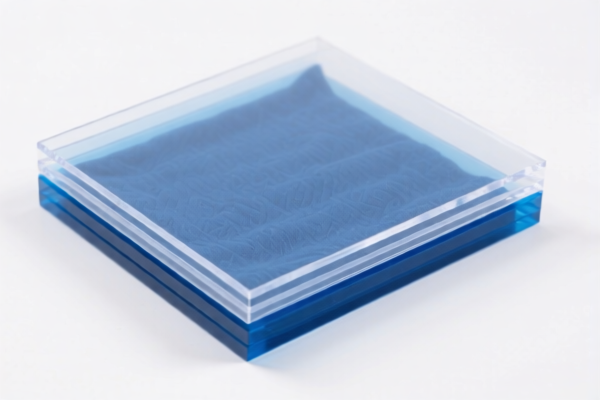
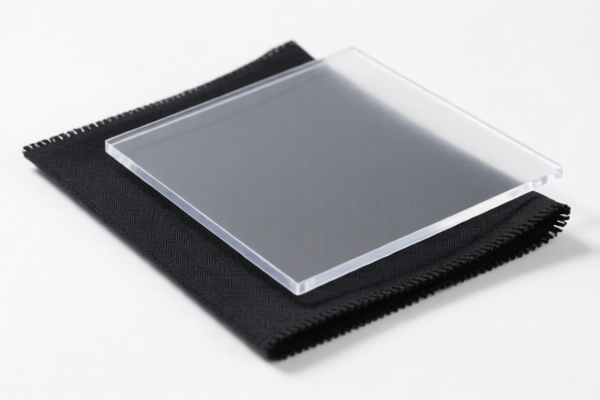
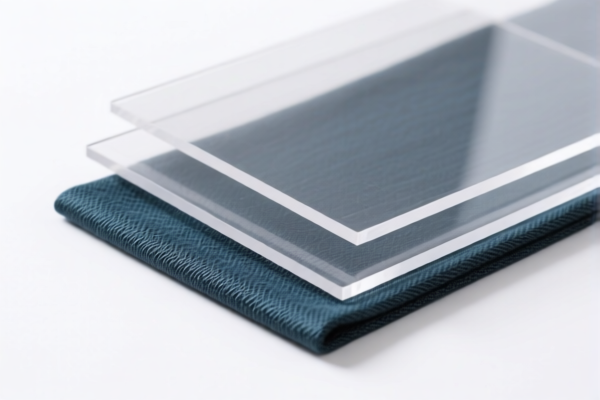
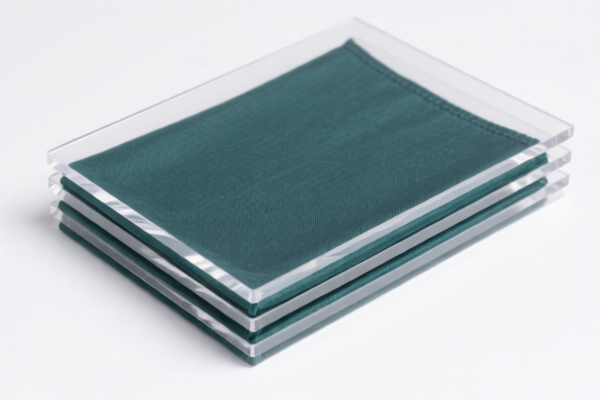
textile composite plastic translucent boards
CN → US| HS编码 | 关税税率 | 原产国 | 目的国 | 文档 |
|---|---|---|---|---|
| 3921121100 | 39.2% | CN | US | 官方文档 |
| 5903102010 | 35.0% | CN | US | 官方文档 |
| 3921121500 | 41.5% | CN | US | 官方文档 |
| 5903102090 | 35.0% | CN | US | 官方文档 |
| 3920435000 | 39.2% | CN | US | 官方文档 |
商品图片
AI分析
🧱 Textile Composite Plastic Translucent Boards (PVC-Based)
🌐 HS Code Reference & Customs Clearance Guide | 2026 Latest Tariff Analysis | Professional Clearance Strategy
📌 I. Product Definition & Classification: Do You Truly Understand "Textile Composite Plastic Boards"?
"Textile Composite Plastic Translucent Boards" typically refer to rigid or semi-rigid sheets made primarily of PVC (Polyvinyl Chloride) that are reinforced, coated, or laminated with textile fabrics to enhance strength, flexibility, and translucency. These products are widely used in construction (awnings, roofs), industrial manufacturing, and signage.
In international trade, the classification hinges on two critical factors: 1. Primary Material: Is it primarily plastic (Chapter 39) or primarily textile (Chapter 59)? 2. Processing Method: Is the textile merely a reinforcement embedded in plastic, or is it a fabric impregnated/coated with plastic?
⚠️ Key Distinction Point:
- If the plastic (PVC) provides the essential character and forms a rigid sheet/board structure with textile embedded → Chapter 39 (Plastics).
- If the textile fabric is the base, and PVC is applied as a coating/lamination → Chapter 59 (Impregnated/Coated Textiles).
📦 II. HS Code Classification Details (Authoritative 2026 Reference)
Based on the provided data, here are the four potential HS Codes, their summaries, and tax implications.
| HS Code | Product Description & Rationale | Tax Summary |
|---|---|---|
3921.12.11.00 |
PVC Board with Composite Fabric Attributes: Material is PVC (Polyvinyl Chloride), form is board/sheet, and it possesses composite fabric attributes. Fully complies with material, form, and composite characteristics. | 39.2% |
5903.10.20.10 |
Impregnated/Coated Textile Fabric: "PVC" corresponds to polyvinyl chloride; "Composite Fabric" fits the description of "textile fabrics impregnated, coated, covered or laminated with plastics." "Board" form is an application under this heading, no material conflict. | 35.0% |
3921.12.15.00 |
PVC Composite Fabric Board: Material is PVC, form is board (fits plate/sheet/film/foil), purpose/structure is composite fabric (fits combination with textile materials). Fully complies with all key limitations in the classification explanation. | 41.5% |
5903.10.20.90 |
Other PVC-Coated Textile Fabrics: Material is PVC (Polyvinyl Chloride), form is composite fabric (falls under impregnated, coated, or laminated textile fabrics), fits the description of polyvinyl chloride-coated textiles for this code. | 35.0% |
🔍 Important Note:
- The difference between 3921 and 5903 is often microscopic but legally critical.
- 3921 focuses on plastic products (boards/sheets) even if reinforced.
- 5903 focuses on textile fabrics that have been treated with plastic.
- All codes include additional tariffs (Section 301/122) due to Chinese origin.
💰 III. 2026 Latest Tariff Rate Breakdown (Including Additional Taxes)
✅ Applicable Country: United States (US)
✅ Origin: China (CN)
✅ Effective Date: Ongoing (Section 301 & Section 122 Tariffs)
🎯 1. 3921.12.11.00 — PVC Composite Board (Standard)
| Item | Details |
|---|---|
| Base Duty Rate | 4.2% (Ad Valorem) |
| Section 301 Tariff | +25.0% |
| Section 122 Tariff | +10.0% |
| Total Duty Rate | 39.2% |
| Tax Calculation | CIF Value × 39.2% |
| De Minimis Exemption | ❌ Not Eligible |
📌 Explanation:
- The 4.2% is the standard MFN (Most Favored Nation) duty for PVC articles.
- +25% is the additional tariff under Section 301 of the Trade Act.
- +10% is the Section 122 tariff applied to certain imports.
- Total: 39.2%. This is a high-cost entry point for PVC boards.
🎯 2. 5903.10.20.10 — Impregnated PVC Textile (Lower Base Rate)
| Item | Details |
|---|---|
| Base Duty Rate | 0.0% (Ad Valorem) |
| Section 301 Tariff | +25.0% |
| Section 122 Tariff | +10.0% |
| Total Duty Rate | 35.0% |
| Tax Calculation | CIF Value × 35.0% |
| De Minimis Exemption | ❌ Not Eligible |
📌 Explanation:
- The 0.0% base rate makes this attractive, but the additional tariffs remain significant.
- This classification applies if the customs authority determines the textile fabric is the essential character, not the plastic.
- Savings: 4.2% lower than3921.12.11.00.
🎯 3. 3921.12.15.00 — PVC Composite Fabric Board (Highest Base Rate)
| Item | Details |
|---|---|
| Base Duty Rate | 6.5% (Ad Valorem) |
| Section 301 Tariff | +25.0% |
| Section 122 Tariff | +10.0% |
| Total Duty Rate | 41.5% |
| Tax Calculation | CIF Value × 41.5% |
| De Minimis Exemption | ❌ Not Eligible |
📌 Explanation:
- This is the most expensive classification.
- It applies if the specific subheading for PVC boards with textile composites carries a higher base duty.
- Risk: Avoid this unless other options are clearly invalid.
🎯 4. 5903.10.20.90 — Other PVC-Coated Textiles (Lower Base Rate)
| Item | Details |
|---|---|
| Base Duty Rate | 0.0% (Ad Valorem) |
| Section 301 Tariff | +25.0% |
| > Section 122 Tariff | +10.0% |
| Total Duty Rate | 35.0% |
| Tax Calculation | CIF Value × 35.0% |
| De Minimis Exemption | ❌ Not Eligible |
📌 Explanation:
- Similar to5903.10.20.10, this is a "catch-all" for PVC-coated textiles not specified elsewhere.
- Total: 35.0%. Same tax burden as5903.10.20.10.
🛠️ IV. Customs Clearance Practical Advice (Real-World Pitfall Prevention)
✅ 1. Document Checklist (Essential for Clearance)
| Document | Required? | Description |
|---|---|---|
| ✅ Product Specification Sheet | ✔️ | Must detail: PVC content %, Fabric type (e.g., Polyester, Glass Fiber), Layer structure, Translucency rating. |
| ✅ Photos (Clear & Detailed) | ✔️ | Show cross-section of the board to prove if textile is embedded (3921) or coated (5903). |
| ✅ Commercial Invoice | ✔️ | Description must match HS Code rationale (e.g., "PVC Composite Board" vs. "PVC-Coated Fabric"). |
| ✅ Packing List | ✔️ | Weight and dimensions are critical for duty calculation. |
| ✅ Certification | ✔️ | RoHS, REACH, or other safety certifications if required for end-use. |
✅ 2. Classification Strategy (Key Mnemonic)
🔥 "Structure is King, Base Material Rules!"
| Scenario | Recommended HS Code | Rationale |
|---|---|---|
| Rigid Board with Embedded Fabric | 3921.12.11.00 or 3921.12.15.00 |
Plastic forms the board; textile is secondary reinforcement. |
| Flexible/Rigid Sheet, Fabric Base + PVC Coat | 5903.10.20.10 or 5903.10.20.90 |
Fabric is the structural base; PVC is a coating. |
| Misclassification Risk | ❌ Do Not Split | If shipped as one unit, do not split into "plastic part" and "fabric part." |
📌 Critical Tip:
- If the product is rigid and board-like, customs often lean toward Chapter 39.
- If the product is flexible or clearly fabric-first, customs may classify under Chapter 59.
- Proactive Communication: Provide cross-section photos to clear ambiguity.
✅ 3. Special Case Handling
| Situation | Advice |
|---|---|
| High-Value Custom Boards | Provide detailed technical datasheets to justify lower base rate (e.g., arguing for 5903 if base is 0%). |
| Mixed Shipments | Ensure all units are identical in composition. Mixed shipments may trigger inspection. |
| Dispute Resolution | If deemed incorrect, be prepared for Retroactive Duty Payment + Penalties. Pre-clearance ruling is recommended. |
🌍 V. Global Market Comparison (2026 Outlook)
| Country/Region | Preferred HS Code | Estimated Total Duty (China Origin) | Remarks |
|---|---|---|---|
| 🇺🇸 USA | 5903.10.20.10 / 3921.12.11.00 |
35.0% - 41.5% | Highest barriers due to Section 301/122. |
| 🇨🇳 China | Local HS Code | ~5-10% | No additional tariffs for domestic use. |
| 🇪🇺 EU | 3921 / 5903 | ~3-5% + VAT | No Section 301/122. Lower overall cost. |
| 🇬🇧 UK | 3921 / 5903 | ~3-5% + VAT | Post-Brexit tariffs generally lower than US. |
📌 Conclusion:
- The US market is the most expensive due to punitive tariffs.
- Chapter 59 (5903) offers a 4.2% - 6.5% saving on the base duty compared to Chapter 39, but additional tariffs remain.
- Strategic Suggestion: If possible, consider supply chain diversification to mitigate Section 301/122 impacts.
📌 VI. Common Errors & Pitfall Guide (Lessons Learned)
❌ Error 1: Declaring as "Plastic Sheet" when it's actually "PVC-Coated Fabric"
👉 Consequence: May be reclassified to 5903 with 0% base, but if audited and deemed incorrect, penalties apply. However, 3921 has higher base, so misclassification might seem beneficial, but it's risky if the product is clearly fabric-based.
❌ Error 2: Ignoring Section 122 Tariff
👉 Consequence: Underpayment by 10%. Back taxes + interest + fines.
❌ Error 3: Vague Description ("Plastic Board")
👉 Consequence: Customs cannot determine essential character. Delays, inspections, and potential misclassification.
❌ Error 4: Assuming De Minimis Applies
👉 Consequence: Section 301/122 tariffs do not apply to de minimis thresholds in many cases, or are explicitly excluded. Full duty applies.
✅ Correct Approach:
"PVC Composite Translucent Board, 3mm Thickness, Polyester Reinforcement, For Construction Use, Made in China"
→ Supports3921.12.11.00or5903.10.20.10based on structure.
🎯 VII. Conclusion: Precision in Classification Saves Costs!
🎯 Remember the Mantra:
🔹 "Board is Plastic (3921), Fabric is Coated (5903). Base Rate Varies, Add-Ons Are Fixed."
🔹 "3921: 39.2% Total. 5903: 35.0% Total. Choose Wisely!"
📌 Pro Tip:
- If your product is borderline, submit a Request for Advance Ruling to CBP (U.S. Customs and Border Protection) before shipping.
- Documentation is Key: Cross-section photos are your best evidence.
📣 Immediate Action:
📞 Consult a Licensed Customs Broker
📄 Prepare Technical Specs & Photos
🚀 Pre-Clearance RulingAvoid Surprises. Maximize Savings. Clear Confidently!
✨ Professional Clearance Starts with Accurate Classification!
💼 Every Percent Counts in International Trade!
用户评价
关于 HS 编码归类
协调制度(HS)是由世界海关组织(WCO)制定的国际贸易商品分类标准。全球 200 多个国家采用 HS 系统作为海关关税、贸易统计和进出口监管的基础。
每个 HS 编码遵循以下层级结构:
- 章(2 位)——商品大类(例如:第 84 章:机器和机械设备)
- 品目(4 位)——章内的更具体分类
- 子目(6 位)——国际通用细分,所有 WCO 成员国统一使用
- 本国细分(8-10 位)——各国自行扩展的细分编码,如美国 HTSUS 10 位编码
正确的 HS 编码归类对于顺利通关、准确缴纳关税和遵守贸易法规至关重要。错误归类可能导致海关延误、多缴关税或罚款。
从CN进口到US时,适用的关税税率可能包括:
- 最惠国(MFN)税率——适用于 WTO 成员国的标准关税税率
- 普通税率——适用于无贸易协定国家
- 贸易救济关税——附加关税,如 301 条款(反倾销)、232 条款(国家安全)或反补贴税
本页内容仅供参考。如需正式归类,请咨询当地海关或持牌报关代理。