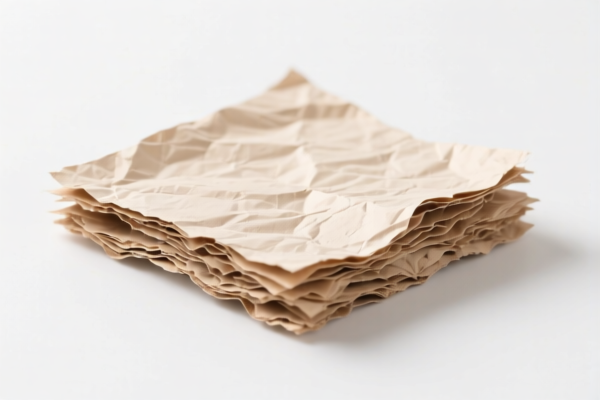
unbleached sulfite pulp
CN → US| HS编码 | 关税税率 | 原产国 | 目的国 | 文档 |
|---|---|---|---|---|
| 4702000020 | 35.0% | CN | US | 官方文档 |
商品图片



AI分析
🌿 Chemical Wood Pulp, Dissolving Grades, Sulfite Process (Unbleached)
🌐 HS Code Reference & Customs Clearance Guide | 2026 Latest Tariff Analysis | Professional Clearance Strategy
📌 I. Product Definition & Classification: What is "Dissolving Pulp"?
Chemical wood pulp, dissolving grades, refers to wood pulp processed specifically for use as a raw material in the production of regenerated fibers (such as viscose rayon, acetate) and cellulose derivatives (such as cellulose ethers, cellophane). Unlike mechanical pulp or standard kraft pulp used for paper, dissolving pulp must have high alpha-cellulose content and low lignin content.
The term "Sulfite" indicates the chemical process used to cook the wood chips (using sulfite salts), resulting in a pulp that is generally softer and has different chemical properties compared to "Kraft" pulp. The term "Unbleached" (often referred to as "Oxidized Dissolving Pulp" or "Greaseproof Pulp" in commercial contexts, though technically still "chemical pulp") means the pulp has not undergone the final bleaching stages to achieve whiteness, often appearing tan or brown. However, for HS Code classification purposes, the key differentiator is that it is "Dissolving Grade" and "Sulfite".
⚠️ Key Distinction:
- If it is not for dissolving purposes (i.e., for paper/cardboard) → It would fall under different codes (e.g., 4703, 4704, or 4705 depending on bleaching).
- If it is Kraft process → It falls under4703or4704.
- If it is Sulfite AND Dissolving Grade → It falls under 4702.00.
📦 II. HS Code Classification Details (2026 Latest Tariff Authority)
Based on the provided data, the specific HS Code for this product is:
| HS Code | Product Description | Key Characteristics |
|---|---|---|
4702.00.00.20 |
Chemical woodpulp, dissolving grades Sulfite | - Process: Sulfite - Grade: Dissolving - Bleaching: Unbleached (typically) - Application: Rayon, Cellophane, Cellulose derivatives |
🔍 Classification Logic:
- Heading 4702: Covers "Chemical wood pulp, dissolving grades, whether or not bleached."
- Subheading .20: Specifically identifies "Sulfite" dissolving pulp.
- Unbleached Status: Heading 4702 explicitly includes pulp "whether or not bleached," so the unbleached state does not change the primary HS Code, but it is part of the descriptive definition.
💰 III. 2026 Latest Tariff Rate Breakdown
✅ Applicable Country: United States (US)
✅ Origin: China (CN) (Inferred from standard trade context; if origin differs, check FTAs)
✅ Effective Date: Current 2026 Tariff Schedule
🎯 1. 4702.00.00.20 —— Chemical Wood Pulp, Dissolving Grades, Sulfite
| Item | Content |
|---|---|
| Base Tariff Rate | 0.0% |
| Additional Tariff (Section 301 / IEEPA) | 0.0% |
| Total Tariff Rate | 0.0% |
| Tax Calculation | CIF Value × 0.0% = $0 |
| De Minimis Eligibility | ⚠️ Depends on Value (See Advice Below) |
| Legal Basis Path | HTSUS: 4702.00.00.20 |
📌 Explanation:
- 0% Base Rate: Dissolving pulps generally have low base MFN (Most Favored Nation) tariffs in the US to support downstream manufacturing.
- 0% Additional Tariff: Unlike many manufactured goods (e.g., electronics, furniture), chemical wood pulp is largely excluded from the aggressive Section 301/IEEPA tariffs that target consumer and industrial goods.
- Cost Advantage: This is a non-tariff sensitive product line in the current trade environment.
🛠️ IV. Customs Clearance Practical Advice (Real-World Pitfall Avoidance)
✅ 1. Documentation Checklist (Must-Haves)
| Document | Required? | Explanation |
|---|---|---|
| ✅ Commercial Invoice | ✔️ | Must clearly state: "Chemical Wood Pulp, Dissolving Grade, Sulfite Process, Unbleached." |
| ✅ Bill of Lading / Air Waybill | ✔️ | Ensure weight and volume match invoice precisely. |
| ✅ Certificate of Origin (CO) | ✔️ | Essential to prove origin. If non-China, may support FTA benefits. |
| ✅ Product Specification Sheet | ✔️ | Crucial: Must confirm Alpha-Cellulose content (>90% for dissolving grade) to distinguish from paper-grade pulp. |
| ✅ MSDS (Material Safety Data Sheet) | ✔️ | Pulp is generally non-hazardous, but required for freight forwarder acceptance. |
| ✅ Insurance Certificate | ✔️ | For CIF valuation. |
✅ 2. Declaration Tips (Key Mnemonic)
🔥 "Grade Matters, Process Defines, Tariff is Free!"
| Scenario | Correct Declaration | Incorrect Approach |
|---|---|---|
| Sulfite Dissolving Pulp | 4702.00.00.20 |
Misdeclaring as 4703 (Kraft) → Wrong rate, potential audit |
| Kraft Dissolving Pulp | 4703.10.00.00 or 4703.21 |
Misdeclaring as Sulfite → Classification Error |
| Paper-Grade Sulfite Pulp | 4705.00.00.00 (Unbleached) |
Misdeclaring as Dissolving → Tariff Risk (Dissolving is 0%, Paper may vary) |
| Mechanical Pulp | 4706 or 4707 |
Misdeclaring as Chemical → Severe Penalty |
📌 Critical Note:
- Do not simply write "Wood Pulp." You must specify:
1. Process: Sulfite vs. Kraft vs. Soda
2. Grade: Dissolving vs. Paper vs. Mechanical
3. Bleaching: Bleached vs. Unbleached
- If the product is not for dissolving purposes (e.g., for tissue paper), it cannot use4702. It would likely be4705.00.00.00(Chemical pulp, unbleached, not specified elsewhere), which also has 0% base tariff but different regulatory scrutiny regarding fiber content.
✅ 3. Special Circumstances Handling
| Situation | Handling Advice |
|---|---|
| Origin: Vietnam/Mexico/Canada | Check FTAs (USMCA, US-VNT FTA). Base rate is 0% anyway, but FTA documentation may streamline customs. |
| High Moisture Content | Ensure weight is dry weight. Customs may re-weigh or reject if moisture exceeds standard contract terms (typically <12-14%). |
| Parties with Sanctions | Pulp is generally not sanctioned, but verify the supplier is not on the BIS Entity List or OFAC SDN List. |
| Environmental Compliance | While no tariff is applied, ensure the pulp is from FSC-certified or PEFC-certified sources if required by your US buyer's ESG policies. |
🌍 V. Global Market Comparison (2026 Latest)
| Country/Region | Recommended HS Code | Tariff Rate | Certification | Notes |
|---|---|---|---|---|
| 🇺🇸 United States | 4702.00.00.20 |
0.0% | FSC/PEFC (Voluntary) | No additional tariffs. Highly competitive. |
| 🇪🇺 European Union | 4702.00.00 |
0.0% | EUTR (Deforestation Regulation) | Strict deforestation-free proof required. |
| 🇨🇳 China | 4702.00.00 |
0.0% | CCC (if applicable) | Major importer of dissolving pulp. |
| 🇮🇳 India | 4702.00.00 |
0.0% - 5% | BIS | Check latest Indian Customs notifications. |
| 🇯🇵 Japan | 4702.00.00 |
0.0% | JIS | Low tariff environment. |
📌 Conclusion:
- Tariff-Free Status: Dissolving sulfite pulp enjoys 0% tariff in major markets, including the US and EU.
- Non-Tariff Barriers: The real challenge is compliance (deforestation regulations in EU/US, quality specs, moisture content) rather than duty costs.
📌 VI. Common Errors & Pitfalls (Lessons Learned)
❌ Error 1: Declaring "Paper Pulp" instead of "Dissolving Pulp"
👉 Consequence: If it is actually dissolving pulp, misdeclaration may lead to audits. However, both often have 0% base rates, so the financial impact is low, but reputational risk is high.
❌ Error 2: Not specifying "Sulfite" vs. "Kraft"
👉 Consequence: If declared as generic "Dissolving Pulp" without subheading specificity, Customs may request further documentation to clarify, causing delays.
❌ Error 3: Ignoring Moisture Content Discrepancies
👉 Consequence: If shipped wet weight but declared dry weight, it can be flagged for weight fraud or valuation discrepancies.
❌ Error 4: Assuming No Documentation Needed Because Tariff is 0%
👉 Consequence: Wrong. You still need a Certificate of Origin and detailed specs to prove "Dissolving Grade." Without this, goods may be held for inspection.
✅ Correct Practice:
"Chemical Wood Pulp, Dissolving Grade, Sulfite Process, Unbleached, Alpha-Cellulose >90%, FSC Certified, Bagged in 50kg PP Bags"
🎯 VII. Conclusion: Professional Declaration, Seamless Clearance!
🎯 Remember the Mnemonic:
🔹 "Sulfite Dissolving, 4702.20, Zero Percent, Tariff-Free!"
🔹 "Specify Grade, Specify Process, Avoid Delays!"
🔹 "0% Tariff, But 100% Compliance Required!"
📌 Pro Tip:
- Even though the tariff is 0%, ensure your invoice description is precise.
- If you are shipping to the EU, prepare Deforestation-Free Proof (EUTR) immediately.
- For the US, while no additional tariffs apply, maintaining traceability is key for supply chain audits.
📣 Immediate Action:
📞 Verify Product Specs: Confirm Alpha-Cellulose content.
📄 Prepare Documentation: Invoice, CO, MSDS, Spec Sheet.
🚀 Clear Customs Efficiently: With 0% tariff, speed depends on documentation accuracy, not duty payment.
✨ Professional Clearance Starts with Precise Classification!
💼 Your Cost Savings: 0% Tariff, But Your Efficiency: 100% Document Ready!
用户评价
关于 HS 编码归类
协调制度(HS)是由世界海关组织(WCO)制定的国际贸易商品分类标准。全球 200 多个国家采用 HS 系统作为海关关税、贸易统计和进出口监管的基础。
每个 HS 编码遵循以下层级结构:
- 章(2 位)——商品大类(例如:第 84 章:机器和机械设备)
- 品目(4 位)——章内的更具体分类
- 子目(6 位)——国际通用细分,所有 WCO 成员国统一使用
- 本国细分(8-10 位)——各国自行扩展的细分编码,如美国 HTSUS 10 位编码
正确的 HS 编码归类对于顺利通关、准确缴纳关税和遵守贸易法规至关重要。错误归类可能导致海关延误、多缴关税或罚款。
从CN进口到US时,适用的关税税率可能包括:
- 最惠国(MFN)税率——适用于 WTO 成员国的标准关税税率
- 普通税率——适用于无贸易协定国家
- 贸易救济关税——附加关税,如 301 条款(反倾销)、232 条款(国家安全)或反补贴税
本页内容仅供参考。如需正式归类,请咨询当地海关或持牌报关代理。