unprocessed pine wood posts
CN → US| HS编码 | 关税税率 | 原产国 | 目的国 | 文档 |
|---|---|---|---|---|
| 4403210112 | 35.0% | CN | US | 官方文档 |
| 4403210115 | 35.0% | CN | US | 官方文档 |
商品图片
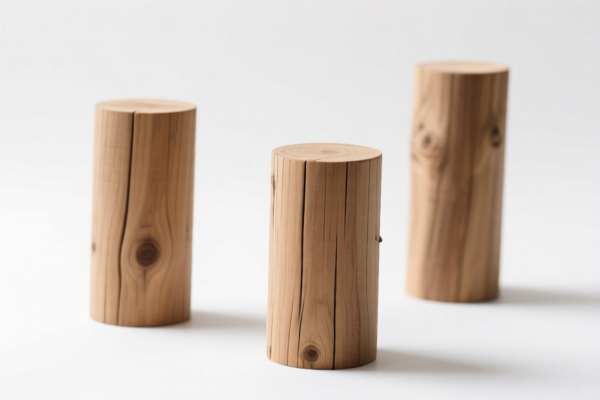
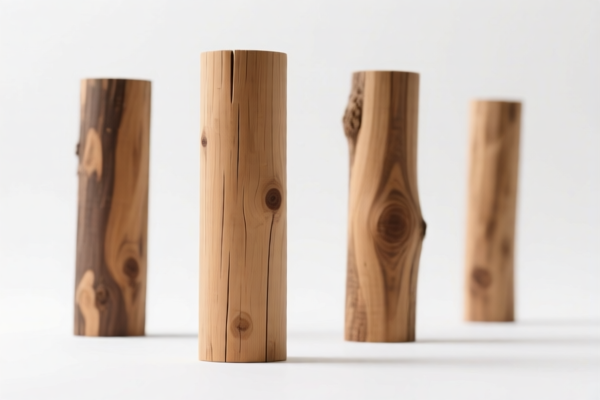
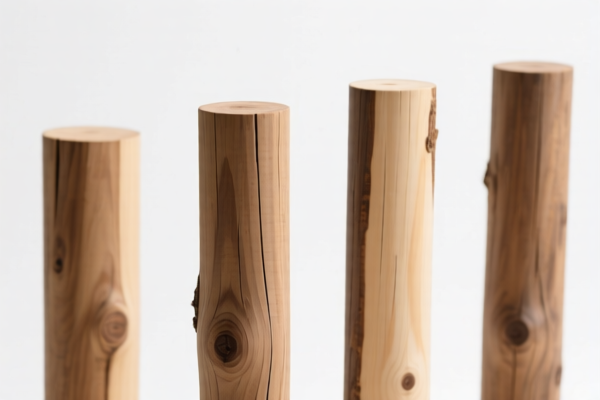
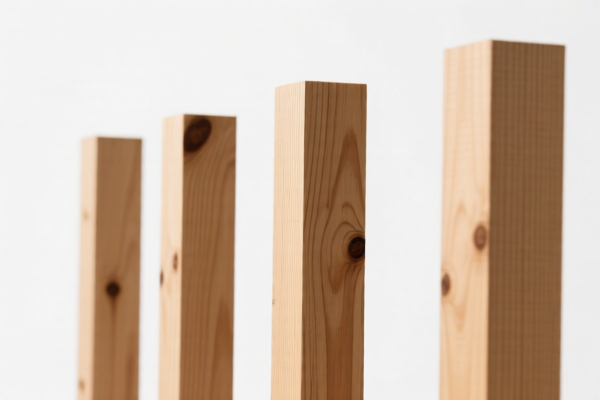
AI分析
🌲 Unprocessed Pine Wood Posts (Wood in the Rough)
🌐 HS Code Reference & Customs Clearance Guide | 2026 Latest Tariff Breakdown | Professional通关 Strategy for Coniferous Wood
📌 1. Product Definition & Classification: What Exactly Are "Unprocessed Pine Posts"?
In international trade, "Wood in the rough" refers to timber that has been stripped of bark or sapwood, or roughly squared, but has not undergone further processing (such as planing, sawing into dimensions, or chemical treatment beyond basic preservation).
For Pine (Pinus spp.), the classification hinges on two critical factors: 1. Dimension: The smallest cross-sectional dimension must be 15 cm or more. 2. End-Use: Whether they are used as poles (for utilities) or fence posts.
⚠️ Key Distinction Point:
- If the pine wood is roughly squared and meets the ≥15cm threshold → It falls under HS 4403.21.
- If it is smaller than 15cm → It may fall under different subheadings (not covered in ).
- "Unprocessed" means no heat treatment, pressure impregnation, or precise shaping.
📦 2. HS Code Classification Details (2026 Latest Tariff Authority Comparison)
Based on the provided , there are two specific HS Codes for unprocessed pine wood posts, differentiated by their intended use.
| HS Code | Product Description | Application Scenario | Tax Rate (US Import from China) |
|---|---|---|---|
4403.21.01.12 |
Poles, piles, and posts: Telephone, telegraph, and electrical power poles | Utility infrastructure, power grids, telecommunications towers | 25.0% |
4403.21.01.15 |
Poles, piles, and posts: Fence posts | Agricultural fencing, boundary marking, residential yards | 25.0% |
🔍 Key Insight:
- Both codes fall under "Other, coniferous: Of pine (Pinus spp.)".
- The smallest cross-sectional dimension must be 15 cm or more. If your product is smaller, these codes are invalid.
- Both carry the same tax rate in this dataset, but accurate classification is vital for customs documentation and statistical reporting.
💰 3. 2026 Latest Tariff Rate Breakdown (Detailed Tax Explanation)
✅ Applicable Country: United States (US)
✅ Origin: China (CN)
✅ Total Tax Rate: 25.0%
🎯 1. 4403.21.01.12 — Utility Poles (Telephone/Telegraph/Power)
| Item | Content |
|---|---|
| Base Tariff | 0.0% (ad valorem) |
| Section 301 Additional Tariff | +25.0% |
| Total Tax Rate | 25.0% |
| Tax Calculation | CIF Value × 25% |
| De Minimis Exemption | ❌ Not Applicable (Wood products typically do not qualify for de minimis relief under Section 301) |
| Legal Basis | HS 4403.21.01.12 → Section 301 Footnote for Chinese Pine Wood |
📌 Explanation:
- The 25% tariff is a result of the US Trade Act Section 301 investigation into intellectual property and unfair trade practices by China.
- Pine wood products are explicitly listed in the affected goods list.
- There is no base tariff (0%), but the additional 25% makes the total landed cost significantly higher.
🎯 2. 4403.21.01.15 — Fence Posts
| Item | Content |
|---|---|
| Base Tariff | 0.0% (ad valorem) |
| Section 301 Additional Tariff | +25.0% |
| Total Tax Rate | 25.0% |
| Tax Calculation | CIF Value × 25% |
| De Minimis Exemption | ❌ Not Applicable |
| Legal Basis | HS 4403.21.01.15 → Section 301 Footnote for Chinese Pine Wood |
📌 Note:
- Despite being for "fence posts," the tariff structure is identical to utility poles.
- No tariff preference is available for this category under current US-China trade relations.
🛠️ 4. Customs Clearance Practical Advice (Avoid Pitfalls)
✅ 1. Documentation Checklist (Essential for Clearance)
| Document | Required | Notes |
|---|---|---|
| ✅ Commercial Invoice | ✔️ | Must clearly state: "Unprocessed Pine Wood Posts, Pinus spp., Dimension: ≥15cm, Used for [Power/Fence]" |
| ✅ Packing List | ✔️ | Specify weight, dimensions, and quantity per pallet/container |
| ✅ Phytosanitary Certificate | ✔️ | Mandatory for wood products. Must confirm wood is free from pests and diseases (ISPM 15 compliance if packaged) |
| ✅ Wood Treatment Statement | ✔️ | Confirm if wood is untreated (as per "Unprocessed" definition) or has basic preservatives |
| ✅ Bill of Lading/Air Waybill | ✔️ | Ensure HS Code 4403.21.01.12 or 4403.21.01.15 is listed |
✅ 2. Declaration Tips (Critical for Accuracy)
🔥 Golden Rule:
"Dimension Matters, Use Defines Code, Treatment Must Be Clear!"
| Scenario | Correct Declaration | Wrong Practice |
|---|---|---|
| Power Poles | HS 4403.21.01.12 |
Misdeclaring as general lumber → Risk of penalty |
| Fence Posts | HS 4403.21.01.15 |
Misdeclaring as "raw timber" → Delays for inspection |
| Dimension <15cm | Not Covered in This Data | Forcing HS 4403.21.01.12/15 → Customs rejection |
| Treated vs. Untreated | Specify "Unprocessed" | Claiming "untreated" when chemically treated → False declaration |
✅ 3. Special Considerations
| Situation | Handling Advice |
|---|---|
| Impregnated Wood | If wood is pressure-treated with creosote or copper chemicals, it may fall under HS 4403.20 (Creosoted) or other subheadings. Check if your wood is "unprocessed" (untreated). |
| Bark Removal | "Stripped of bark or sapwood" is allowed under HS 4403. If bark is still attached, it is still "wood in the rough," but ensure consistency in description. |
| Roughly Squared | The wood does not need to be perfectly rectangular. "Roughly squared" means it has been debarked and has some flat sides, but not planed. |
🌍 5. Global Market Clearance Comparison (2026)
| Country/Region | Recommended HS Code | Tariff Rate (China Origin) | Certification Requirements | Notes |
|---|---|---|---|---|
| 🇺🇸 USA | 4403.21.01.12 / 4403.21.01.15 |
25.0% | Phytosanitary Certificate | High tariff due to Section 301 |
| 🇨🇳 China | 4403.21.01.12 / 4403.21.01.15 |
Varies (Export Duty) | N/A | N/A |
| 🇪🇺 EU | 4403.21 |
0% – 6% (depending on type) | Phytosanitary + FSC/PEFC (optional but recommended) | No Section 301 tariffs |
| 🇯🇵 Japan | 4403.21 |
0% – 5% | Phytosanitary | Strict pest inspection |
📌 Conclusion:
- The US imposes a 25% additional tariff on these pine wood posts.
- EU and Japan do not have this additional tariff, but require strict phytosanitary controls.
- Cost Impact: For a $10,000 shipment, expect $2,500 in additional US duties.
📌 6. Common Mistakes & Pitfalls (Lessons Learned)
❌ Mistake 1: Ignoring the 15cm dimension requirement
👉 Consequence: If the smallest cross-section is <15cm, the HS code is invalid → Customs delays, reclassification, and potential fines.
❌ Mistake 2: Misdeclaring treated wood as "unprocessed"
👉 Consequence: If the wood is chemically treated, it may require different HS codes and safety data sheets (SDS) → Seizure or return.
❌ Mistake 3: Omitting Phytosanitary Certificate
👉 Consequence: US Customs and Border Protection (CBP) and USDA will reject entry without this document → Demurrage charges and storage fees.
❌ Mistake 4: Using generic terms like "Wood Poles"
👉 Consequence: Ambiguity → Customs auditor may apply the highest duty rate or require additional proof of origin and material.
✅ Correct Approach:
"Unprocessed Pine Wood Posts (Pinus spp.), Smallest Cross-Section ≥15cm, Roughly Squared, Stripped of Bark, Used for [Power Lines/Fencing], Untreated, Phytosanitary Certificate Attached"
🎯 7. Conclusion: Precise Classification Saves Money!
🎯 Remember:
🔹 "15cm is the Line, Use Defines the Code, Phytosanitary is Key!"
🔹 "25% Tariff is Fixed, But Misclassification Costs More!"
📌 Pro Tip:
- If your pine wood posts are treated with preservatives, ensure you declare the treatment type. Untreated wood is simpler to clear but may have a shorter lifespan.
- Consider pre-classification rulings from US CBP if you are importing large volumes to ensure certainty.
📣 Action Item:
📞 Consult a Customs Broker: Verify your product’s dimensions and treatment status.
📄 Prepare Phytosanitary Certificates: Arrange with your local agricultural authority before shipment.
💼 Accurate Invoicing: Clearly state "Unprocessed Pine Wood Posts" and the HS Code on all documents.
✨ Professional clearance starts with precise classification!
💼 Every percentage point of duty affects your bottom line!
用户评价
关于 HS 编码归类
协调制度(HS)是由世界海关组织(WCO)制定的国际贸易商品分类标准。全球 200 多个国家采用 HS 系统作为海关关税、贸易统计和进出口监管的基础。
每个 HS 编码遵循以下层级结构:
- 章(2 位)——商品大类(例如:第 84 章:机器和机械设备)
- 品目(4 位)——章内的更具体分类
- 子目(6 位)——国际通用细分,所有 WCO 成员国统一使用
- 本国细分(8-10 位)——各国自行扩展的细分编码,如美国 HTSUS 10 位编码
正确的 HS 编码归类对于顺利通关、准确缴纳关税和遵守贸易法规至关重要。错误归类可能导致海关延误、多缴关税或罚款。
从CN进口到US时,适用的关税税率可能包括:
- 最惠国(MFN)税率——适用于 WTO 成员国的标准关税税率
- 普通税率——适用于无贸易协定国家
- 贸易救济关税——附加关税,如 301 条款(反倾销)、232 条款(国家安全)或反补贴税
本页内容仅供参考。如需正式归类,请咨询当地海关或持牌报关代理。