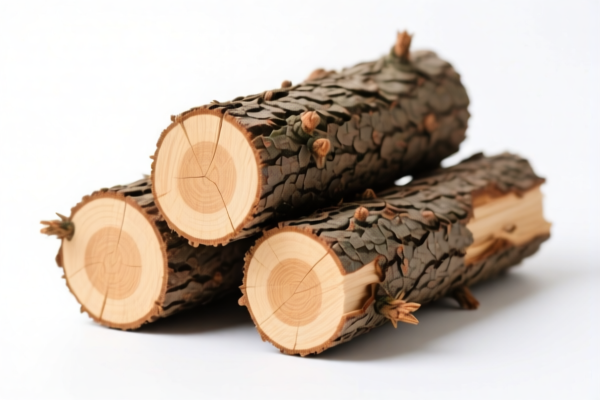
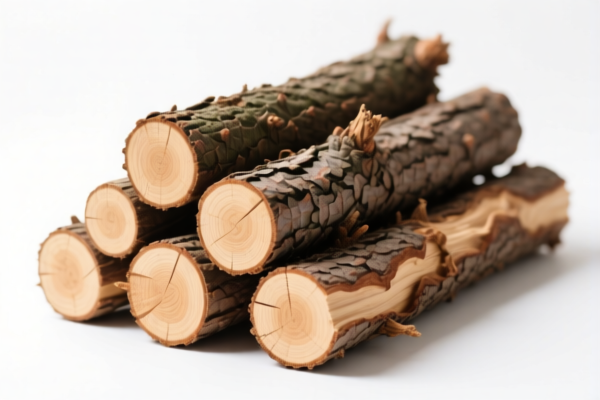
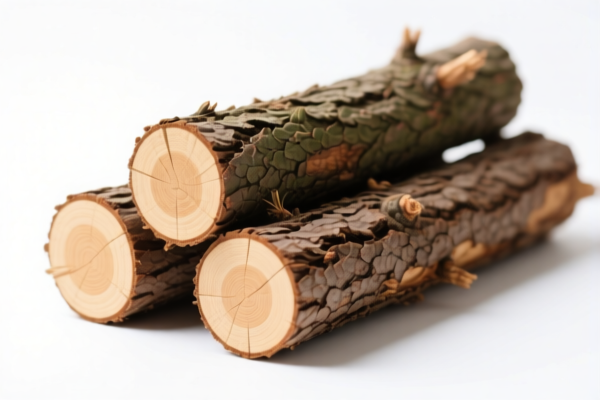
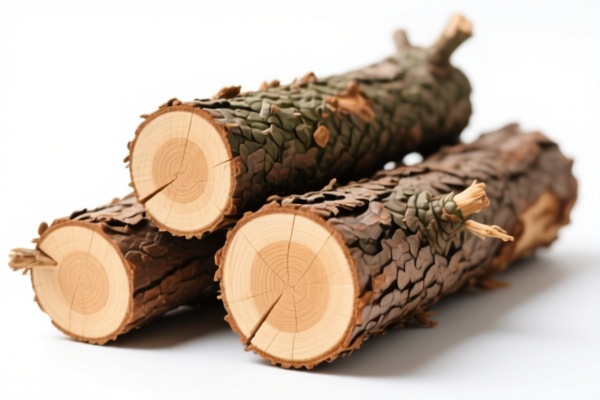
unprocessed poplar logs
CN → US| HS编码 | 关税税率 | 原产国 | 目的国 | 文档 |
|---|---|---|---|---|
| 1404909040 | 35.0% | CN | US | 官方文档 |
| 1404909090 | 35.0% | CN | US | 官方文档 |
| 4403970022 | 35.0% | CN | US | 官方文档 |
| 4403970067 | 35.0% | CN | US | 官方文档 |
| 4401120000 | 35.0% | CN | US | 官方文档 |
商品图片
AI分析
🌲 Unprocessed Poplar Logs (Yangmu Yuanmu)
🌐 HS Code Reference & Customs Clearance Guide | 2026 Latest Tariff Analysis | Professional Clearance Strategy
📌 Part I: Product Definition and Classification: Do You Truly Understand "Unprocessed Poplar Logs"?
Unprocessed Poplar Logs are the primary raw material derived from the Poplar tree ( genus Populus). In international trade, they are classified based on their natural state (unprocessed, unpeeled, or roughly squared) and material composition (plant-based wood). The classification depends heavily on the intended use (industrial material, chemical raw material, or fuel) and the specific format (raw logs vs. processed timber).
⚠️ Key Distinction Points:
- If the logs are intended for chemical processing (dyeing, tanning), they fall under Chapter 14 (Vegetable Products).
- If the logs are intended for construction, pulp, or general wood use, they fall under Chapter 44 (Wood and Wood Products).
- If the logs are strictly used as fuel (firewood), they may fall under Chapter 44.01.
📦 Part II: HS Code Classification Details (2026 Latest Tariff Authority Comparison)
| HS Code | Product Description | Applicable Scenario | Classification Logic |
|---|---|---|---|
1404.90.90.40 |
Other vegetable products (Vegetable raw materials for dyeing or tanning) | Poplar logs used as raw material for chemical extraction, dyeing, or tanning processes. | Fits the "catch-all" category for vegetable raw materials intended for dyeing/tanning. |
1404.90.90.90 |
Other vegetable products (N.E.C.) | Poplar logs in their primary form, not specifically for dyeing/tanning but classified as general vegetable raw materials. | Fits the material (plant) and form (primary/raw) characteristics of other vegetable products. |
4403.97.00.22 |
Wood, whether or not stripped of bark or sapwood, or roughly squared: Other wood: Poplar wood (in logs) | Most common classification for industrial poplar logs intended for construction, plywood, or pulp. | Explicitly matches the material (Poplar) and form (Logs) definition under "Wood in logs". |
4403.97.00.67 |
Wood, whether or not stripped of bark or sapwood, or roughly squared: Other wood: Poplar wood (in logs) | Alternative sub-category for poplar logs, often distinguished by specific size or processing standards. | Material Poplar and form Logs are consistent with this classification explanation. |
4401.12.00.00 |
Wood in chips or particles; other waste and scrap of wood; wood whether or not agglomerated: Firewood, in logs, in billets, in twigs, in faggots or in similar forms | Poplar logs intended exclusively for combustion/fuel purposes. | Poplar is a non-coniferous wood, and logs meet the fuel wood form requirements. |
🔍 Key Reminder:
- If the poplar logs are raw/unprocessed and intended for general wood products (plywood, veneer, furniture),4403.97.00.22or4403.97.00.67are the most accurate classifications.
- If the logs are specifically for chemical use (tanning/dyeing), use1404.90.90.40.
- If the logs are strictly for burning/fuel, use4401.12.00.00.
- Misclassification (e.g., declaring industrial logs as fuel logs) can lead to significant penalties or rejection.
💰 Part III: 2026 Latest Tariff Rate Breakdown (Including Surcharge Taxes)
✅ Applicable Country: United States (US)
✅ Origin: China (CN)
✅ Effective Date: 2025 November 10 onwards (for subsequent imports)
All listed HS Codes below incur the same total tariff rate due to current US trade policies on Chinese wood products.
🎯 1. 1404.90.90.40 / 1404.90.90.90 — Vegetable Products (Raw Materials for Dyeing/Tanning)
| Item | Content |
|---|---|
| Base Tariff | 0.0% (ad valorem) |
| Section 301 Surcharge | +25.0% (USITC Footnote) |
| Section 122 Tariff (IEEPA) | +10.0% (Targeting Chinese/ HK products, effective Nov 10, 2025) |
| Total Tariff Rate | 35.0% |
| Tax Calculation | CIF Value × 35% |
| De Minimis Exemption Eligible | ❌ No (deny_de_minimis) |
| Legal Basis Path | IEEPA:9903.01.25 → IEEPA:9903.01.24 → USITC:1404.90.90.40 → FOOTNOTE:301 |
📌 Explanation:
- "Section 301 Surcharge 25%": Imposed under the US Trade Act Section 301 for specific Chinese imports.
- "Section 122 Tariff 10%": Added under the International Emergency Economic Powers Act (IEEPA) specifically targeting certain Chinese wood/village products.
- Total 35%: High tariff burden. Must be factored into FOB/CIF pricing.
🎯 2. 4403.97.00.22 / 4403.97.00.67 — Poplar Logs (Wood Products)
| Item | Content |
|---|---|
| Base Tariff | 0.0% |
| Section 301 Surcharge | +25.0% |
| Section 122 Tariff (IEEPA) | +10.0% |
| Total Tariff Rate | 35.0% |
| Tax Calculation | CIF Value × 35% |
| De Minimis Exemption Eligible | ❌ No |
| Legal Basis Path | IEEPA:9903.01.25 → IEEPA:9903.01.24 → USITC:4403.97.00.22 → FOOTNOTE:301 |
📌 Note:
- Same tariff structure as vegetable products.
- Applies to industrial poplar logs (plywood, veneer, construction).
- Even if "roughly squared" or "unpeeled," the 35% rate applies.
🎯 3. 4401.12.00.00 — Firewood (Fuel Logs)
| Item | Content |
|---|---|
| Base Tariff | 0.0% |
| Section 301 Surcharge | +25.0% |
| Section 122 Tariff (IEEPA) | +10.0% |
| Total Tariff Rate | 35.0% |
| Tax Calculation | CIF Value × 35% |
| De Minimis Exemption Eligible | ❌ No |
| Legal Basis Path | IEEPA:9903.01.25 → IEEPA:9903.01.24 → USITC:4401.12.00.00 → FOOTNOTE:301 |
📌 Important:
- Do not assume firewood has lower tariffs.
- All wood logs from China face the 35% combined tariff.
🛠️ Part IV: Customs Clearance Practical Advice (Pitfall Avoidance Guide)
✅ 1. Required Documentation Checklist (Non-Negotiable)
| Document | Mandatory | Explanation |
|---|---|---|
| ✅ Commercial Invoice | ✔️ | Must clearly state "Unprocessed Poplar Logs," species (Populus spp.), origin, and HS Code. |
| ✅ Packing List | ✔️ | Detail logs per container, weight, dimensions, and packaging type (e.g., bulk, bundled). |
| ✅ Phytosanitary Certificate | ✔️ | Critical! Issued by the country of origin’s plant protection agency to prove no pests/diseases. |
| ✅ Fumigation Certificate | ✔️ | Proof of treatment (e.g., methyl bromide or heat treatment) to meet ISPM 15 standards. |
| ✅ Bill of Lading | ✔️ | Show "Shipper Load and Count" if applicable. |
| ✅ Species Declaration | ✔️ | Must specify "Poplar" (not generic "Softwood Logs") to avoid misclassification penalties. |
✅ 2. Declaration Tips (Key Mnemonic)
🔥 "Accurate Species, Valid Phyto, Don't Split Logs, Tariff 35%!"
| Scenario | Correct Declaration | Wrong Practice |
|---|---|---|
| Industrial Logs (Plywood/Veneer) | 4403.97.00.22 or 4403.97.00.67 |
Misdeclare as "Firewood" → Risk of penalty for wrong HS. |
| Chemical Raw Material Logs | 1404.90.90.40 |
Misdeclare as "Construction Wood" → Inconsistent with usage. |
| Fuel Logs | 4401.12.00.00 |
Misdeclare as "Industrial Logs" → May trigger unnecessary inspection for pests if fumigation docs don't match. |
| Mixed Container (Logs + Wood Products) | Separate HS Codes | Combine into one line item → Customs may reject or audit whole shipment. |
✅ 3. Special Case Handling
| Case | Handling Suggestion |
|---|---|
| OEM/Contract Logs | Provide purchase contract + technical specs to prove intended use (e.g., veneer vs. fuel). |
| Logs with Bark | Clearly state "With Bark" or "Without Bark" in description. Affects HS sub-category slightly. |
| Roughly Squared Logs | If logs are sawn into square shapes, they may fall under 4407 (Sawn Wood), not 4403 (Logs). Verify dimensions. |
| Pest Inspection Failure | If phytosanitary cert is missing or invalid, shipment will be rejected or destroyed. |
🌍 Part V: Global Market Clearance Comparison (2026 Latest)
| Country/Region | Recommended HS Code | Tariff (China Origin) | Certification Requirements | Notes |
|---|---|---|---|---|
| 🇺🇸 USA | 4403.97.00.22 / 4403.97.00.67 |
35% (Base 0% + 25% Sec 301 + 10% Sec 122) | Phytosanitary + Fumigation ISPM 15 | High cost. IEEPA 10% applies to all wood logs. |
| 🇨🇳 China (Import) | 4403.97.00.22 |
~5-10% (Variable) | Phytosanitary | Standard import duty. |
| 🇪🇺 EU | 4403.97.00.22 |
0% (if EUTR compliant) | EUTR Due Diligence + Fumigation | No extra tariff, but strict legality/pest checks. |
| 🇯🇵 Japan | 4403.97.00.22 |
5-6% | Phytosanitary + Quarantine | Moderate tariff. Strict wood pest control. |
📌 Conclusion:
- USA is the most expensive market for Chinese Poplar Logs due to the 35% combined tariff.
- EU and Japan have no Section 301/IEEPA surcharges but enforce strict phyto/quarantine regulations.
- Cost Advantage: If targeting the US, consider sourcing from non-China origins (e.g., Russia, Belarus) to avoid 35% tariff, but ensure legality certificates are robust.
📌 Part VI: Common Errors & Pitfall Guide (Lessons Learned)
❌ Error 1: Declaring "Poplar Logs" as "Firewood" (4401.12.00.00) to save costs.
👉 Consequence: If intended use is industrial, customs will reclassify and penalize for misdeclaration. Tariff is still 35%, but you lose trust.
❌ Error 2: Missing Phytosanitary Certificate.
👉 Consequence: Shipment rejection or mandatory re-export/destroyed at owner's expense.
❌ Error 3: Generic Description "Wood Logs".
👉 Consequence: Customs cannot determine HS Code → Shipment delayed for inspection → Potential demurrage fees.
❌ Error 4: Confusing "Logs" (4403) with "Sawn Wood" (4407).
👉 Consequence: If logs are roughly squared (> certain dimensions), they may be classified as 4407 (Tariff may differ). Ensure format matches HS definition.
✅ Correct Practice:
"Unprocessed Poplar Logs (Populus spp.), Roughly Squared, Fumigated, ISPM 15 Compliant, for Plywood Manufacturing, Origin: China"
🎯 Part VII: Conclusion: Professional Clearance, Cost Savings, Efficiency!
🎯 Remember the Mnemonic:
🔹 "Logs = 35%, Phyto is King, Species Matters, Don't Guess HS!"
🔹 "US Tariff 35% (25+10), EU Free but Strict, China Source High Cost!"
📌 Tips:
- If your poplar logs are sourced from Vietnam, Russia, or Belarus, you avoid the IEEPA 10% surcharge (if applicable to origin).
- Pre-ruling (Advance Ruling): Consider applying for an Advance Ruling from US CBP if the classification between 1404 and 4403 is ambiguous due to intended use.
- Fumigation: Ensure fumigation is done before shipment, and certificate matches the batch number.
📣 Immediate Action:
📞 Consult a licensed customs broker + Provide Product Photos + Apply for Phytosanitary Cert
🚀 Let your poplar logs clear smoothly, reduce risks, and maximize profits!
✨ Professional clearance starts with accurate classification!
💼 Every dollar saved in tariff is profit earned!
用户评价
关于 HS 编码归类
协调制度(HS)是由世界海关组织(WCO)制定的国际贸易商品分类标准。全球 200 多个国家采用 HS 系统作为海关关税、贸易统计和进出口监管的基础。
每个 HS 编码遵循以下层级结构:
- 章(2 位)——商品大类(例如:第 84 章:机器和机械设备)
- 品目(4 位)——章内的更具体分类
- 子目(6 位)——国际通用细分,所有 WCO 成员国统一使用
- 本国细分(8-10 位)——各国自行扩展的细分编码,如美国 HTSUS 10 位编码
正确的 HS 编码归类对于顺利通关、准确缴纳关税和遵守贸易法规至关重要。错误归类可能导致海关延误、多缴关税或罚款。
从CN进口到US时,适用的关税税率可能包括:
- 最惠国(MFN)税率——适用于 WTO 成员国的标准关税税率
- 普通税率——适用于无贸易协定国家
- 贸易救济关税——附加关税,如 301 条款(反倾销)、232 条款(国家安全)或反补贴税
本页内容仅供参考。如需正式归类,请咨询当地海关或持牌报关代理。