vintage clock
CN → US| HS编码 | 关税税率 | 原产国 | 目的国 | 文档 |
|---|---|---|---|---|
| 9706900060 | 17.5% | CN | US | 官方文档 |
| 9706100060 | 17.5% | CN | US | 官方文档 |
| 9105295000 | 0.0% | CN | US | 官方文档 |
| 9105996000 | 0.0% | CN | US | 官方文档 |
商品图片
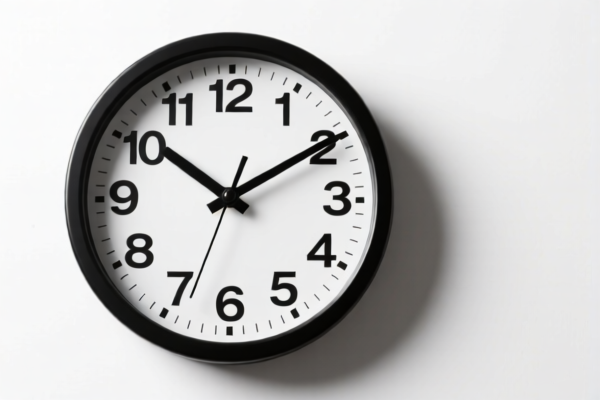
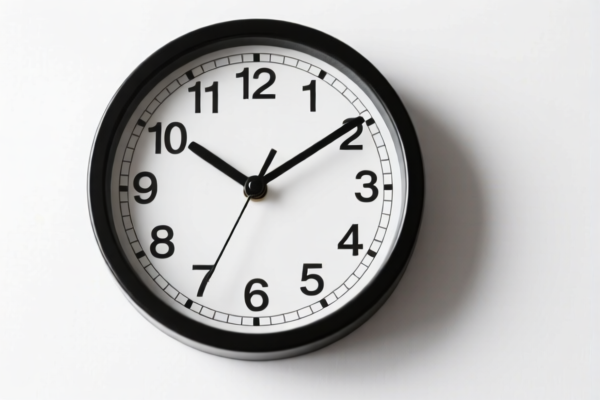
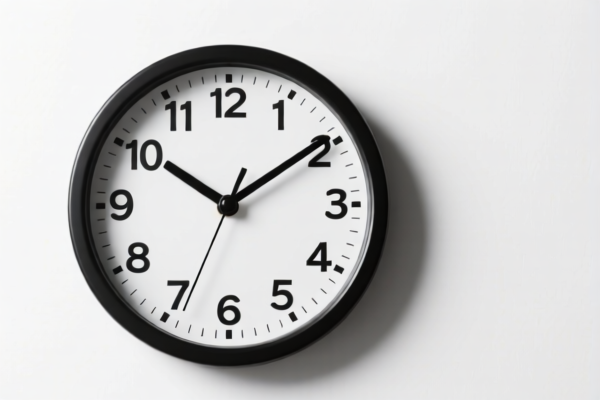
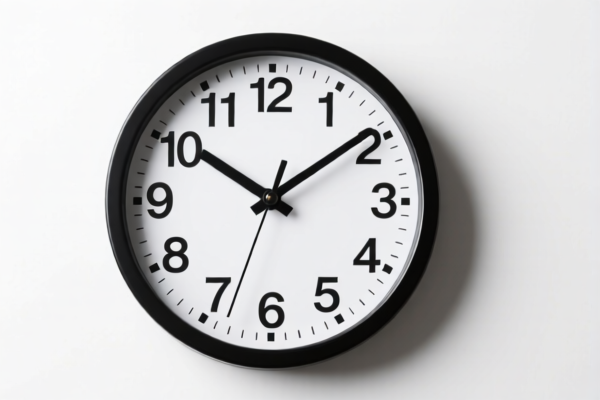
AI分析
🕰️ Vintage Clock (Antique Clocks)
🌐 HS Code Reference & Customs Clearance Guide | 2026 Latest Tariff Analysis | Professional Clearance Strategy
📌 I. Product Definition & Classification: Do You Really Understand "Vintage Clock"?
In international trade, "Vintage Clock" is not a single HS code but a category that splits based on age, type, and value. The term "Vintage" often implies "Antique," but customs authorities rely strictly on the 100-year rule for antiques.
There are two distinct paths for valuation and classification: 1. Antique Clocks (Age > 100 years): These benefit from 0% Base Duty due to their historical/cultural value, but are still subject to additional surcharges. 2. Modern Clocks (Age < 100 years): These are standard manufactured goods. Their classification depends on whether they are Wall Clocks or Other Clocks (e.g., Mantel, Desk, Pocket), and their unit value (specifically if >$5).
⚠️ Key Distinction Point:
- If the clock is over 100 years old → It is an Antique (HS 9706.xx).
- If the clock is less than 100 years old → It is a Standard Clock (HS 9105.xx).
- Wall Clocks vs. Other Clocks: Wall clocks have specific subheadings (9105.29), while other types fall under "Other" (9105.99).
- Valuation: For standard clocks, items valued over $5 each have specific sub-headings in the US HTSUS.
📦 II. HS Code Classification Details (2026 Latest Tariff Authority Comparison)
Based on the provided data, here are the precise HS Codes for "Vintage Clocks" depending on their actual age and type.
| HS Code | Product Description | Age Requirement | Base Duty | Section 301 (Additional) | Total Tax Burden |
|---|---|---|---|---|---|
9706.90.00.60 |
Antiques: Of an age exceeding 100 years, Other | > 100 Years | 0.0% | 7.5% | 7.5% |
9706.10.00.60 |
Antiques: Of an age exceeding 100 years, Of an age exceeding 250 years, Other | > 250 Years | 0.0% | 7.5% | 7.5% |
9105.29.50.00 |
Other Clocks: Wall Clocks: Other: Other: Valued over $5 each | < 100 Years | 30¢ each + 4.3% | 7.5% | 30¢ each + 11.8% |
9105.99.60.00 |
Other Clocks: Other: Other: Other: Valued over $5 each | < 100 Years | 23¢ each + 3.2% | 7.5% | 23¢ each + 10.7% |
🔍 Critical Reminder:
- "Vintage" ≠ "Antique": If your clock is 50 years old (1970s), it is NOT an antique. It must be classified under 9105.xx and taxed accordingly.
- Proof of Age: For HS 9706 codes, you must provide documentation (auction records, expert appraisal, brand history) proving the item is >100 years old. Without proof, Customs will reclassify it as a standard clock (HS 9105) and backtax + penalties.
💰 III. 2026 Latest Tariff Rate Breakdown (Including Additional Taxes)
✅ Applicable Country: United States (US)
✅ Origin: China (CN) (Assumed based on "Section 301" context in source data)
✅ Effective Time: Current Rates Apply
🎯 1. 9706.90.00.60 & 9706.10.00.60 — Antique Clocks (>100 Years)
This is the most beneficial category for true antiques.
| Item | Content |
|---|---|
| Base Duty | 0.0% (Duty-Free for Antiques) |
| Section 301 Surcharge | +7.5% |
| Total Effective Rate | 7.5% |
| Tax Calculation | CIF Value × 7.5% |
| De Minimis Eligibility | ❌ No (Antiques are generally not eligible for low-value exemption if formal entry is required, but primarily because the base duty is 0%, the 7.5% still applies). |
| Legal Basis Path | HTSUS:9706 → Section 301:7.5% |
📌 Explanation:
- The US harmonized tariff schedule exempts antiques over 100 years old from base customs duties.
- However, Section 301 tariffs (USITC Footnote 9903) still apply to goods originating from China.
- Result: You only pay 7.5%, compared to 10-20% for modern clocks.
- ⚠️ Warning: Misdeclaring a modern clock as an antique is Customs Fraud. Penalties include seizure, fines, and loss of importing privileges.
🎯 2. 9105.29.50.00 — Wall Clocks (Valued > $5, Non-Antique)
For modern wall clocks valued over $5.
| Item | Content |
|---|---|
| Base Duty | 30¢ each + 4.3% (Ad Valorem + Specific) |
| Section 301 Surcharge | +7.5% |
| Total Effective Rate | 30¢ each + 11.8% (4.3% + 7.5%) |
| Tax Calculation | (CIF Value × 11.8%) + (Number of Units × $0.30) |
| De Minimis Eligibility | ❌ No |
| Legal Basis Path | HTSUS:9105.29.50 → Section 301:7.5% |
📌 Explanation:
- Specific Duty: $0.30 per piece regardless of value. This hurts high-volume, low-cost shipments.
- Ad Valorem: 4.3% base + 7.5% surcharge = 11.8% on the value.
- Example: A $10 Wall Clock:
- Value Tax: $10 × 11.8% = $1.18
- Specific Tax: $0.30
- Total Tax: $1.48 per unit (Effective rate: 14.8%)
🎯 3. 9105.99.60.00 — Other Clocks (Valued > $5, Non-Antique)
For modern mantel, desk, or other non-wall clocks valued over $5.
| Item | Content |
|---|---|
| Base Duty | 23¢ each + 3.2% (Ad Valorem + Specific) |
| Section 301 Surcharge | +7.5% |
| Total Effective Rate | 23¢ each + 10.7% (3.2% + 7.5%) |
| Tax Calculation | (CIF Value × 10.7%) + (Number of Units × $0.23) |
| De Minimis Eligibility | ❌ No |
| Legal Basis Path | HTSUS:9105.99.60 → Section 301:7.5% |
📌 Explanation:
- Slightly lower base rate than wall clocks (3.2% vs 4.3%) and lower specific duty ($0.23 vs $0.30).
- Example: A $20 Desk Clock:
- Value Tax: $20 × 10.7% = $2.14
- Specific Tax: $0.23
- Total Tax: $2.37 per unit (Effective rate: 11.85%)
🛠️ IV. Customs Clearance Practical Advice (Battle-Tested Pitfall Guide)
✅ 1. Preparation Checklist (Non-Negotiable)
| Document | Must Provide | Description |
|---|---|---|
| ✅ Antique Proof | ✔️ (For HS 9706) | Auction catalogs, expert appraisals, or brand archives proving age >100 years. |
| ✅ Product Photos | ✔️ | Clear images showing mechanism, maker’s mark, and overall condition. |
| ✅ Commercial Invoice | ✔️ | Must explicitly state: "Antique Clock, Age >100 Years" OR "Wall Clock, Model XYZ, New". |
| ✅ Unit Value Declaration | ✔️ | For HS 9105, clearly state "Valued over $5 each" to match the subheading. |
| ✅ Packing List | ✔️ | Itemize each clock separately; do not bundle as "Lot of Clocks" if claiming per-unit specific duty. |
✅ 2. Declaration Tips (Key Mantra)
🔥 “Antique Needs Proof, Modern Needs Value, Wall vs Other Is Key!”
| Scenario | Correct HS Code | Wrong Practice |
|---|---|---|
| True Antique (>100 yrs) | 9706.90.00.60 |
Declaring as 9105.29.50.00 → Overpaying tax + Risk of audit if age is questioned. |
| Modern Wall Clock (>100 yrs) | 9105.29.50.00 |
Declaring as "Other Clock" → Incorrect classification, potential penalties. |
| Modern Desk Clock (>100 yrs) | 9105.99.60.00 |
Declaring as "Wall Clock" → Overpaying specific duty ($0.30 vs $0.23). |
| Clock Valued <$5 | Not in Data | ❓ Consult Expert: Subheadings for <$5 may differ (often lower specific duties). |
📌 Crucial Note on "Valued Over $5":
The provided HS codes (9105.29.50.00and9105.99.60.00) explicitly apply to items valued over $5 each.
- If your clock is valued under $5, these codes may NOT apply. You must check HTSUS for subheadings like9105.29.50.00vs lower-value counterparts.
- Misdeclaring a $2 clock as $5+ to avoid lower-duty codes or misclassifying a $6 clock as <$5 can lead to seizure.
✅ 3. Special Circumstances Handling
| Situation | Handling Advice |
|---|---|
| "Vintage" Decor Item (Fake Antique) | If the clock is a replica (made in 1990s but styled like 1800s), it MUST be declared as 9105.xx. Do not claim antique status. |
| Bundles/Lots | If shipping 100 clocks as one "Lot," Customs may assess the highest value item in the lot or reclassify based on the majority. Ship separately or declare line-by-line. |
| Movement Type | While not a primary factor in the provided data, mechanical vs. quartz can sometimes influence duty in other countries. For US HS 9105/9706, it does not change the code, but provenance does. |
| Partial Antiques | If a clock has original parts >100 years but was restored recently, it may still qualify as antique if it retains its "historic character." Provide restoration records. |
🌍 V. Global Market Comparison (2026 Latest)
| Country/Region | Recommended HS Code | Tariff Rate | Certification | Remarks |
|---|---|---|---|---|
| 🇺🇸 USA | 9706.90.00.60 (Antique) |
7.5% | None | 0% Base Duty for antiques. |
| 🇺🇸 USA | 9105.29.50.00 (Modern Wall) |
30¢ + 11.8% | None | High specific duty per unit. |
| 🇪🇺 EU | 9706.00.00.00 |
0% | CE (if electrical) | Antiques duty-free. Modern clocks ~2.5-4%. |
| 🇬🇧 UK | 9706.00.00.00 |
0% | UKCA | Similar to EU. |
| 🇨🇳 China (Export) | 9706.90.00.00 |
0% | None | No export duty on antiques from China (usually). |
📌 Conclusion:
- USA is the most complex market due to Section 301 tariffs and specific duties.
- EU/UK are more straightforward: Antiques are generally duty-free across the board without heavy surcharges like Section 301.
📌 VI. Common Mistakes & Pitfall Guide (Lessons Learned)
❌ Mistake 1: Calling any old clock an "Antique" without proof.
👉 Consequence: Customs reclassifies as 9105, backcharges 11.8% + specific duties, and adds penalties.
❌ Mistake 2: Declaring a $10 Wall Clock as "Valued under $5" to save money.
👉 Consequence: Incorrect classification. The $0.30 specific duty is correct for >$5. If <$5, the code changes, but if value is misdeclared, it’s fraud.
❌ Mistake 3: Ignoring the "Valued Over $5" threshold in HS 9105.
👉 Consequence: Using 9105.29.50.00 for a $2 clock may result in wrong duty calculation. Check HTSUS for <$5 subheadings (often lower specific duties but different ad valorem).
❌ Mistake 4: Packing antiques with modern clocks in one shipment without separate line items.
👉 Consequence: Customs may audit the whole shipment, delay clearance, or apply the highest tariff to the entire lot.
✅ Correct Practice:
"Antique Wall Clock, Circa 1890, Mechanical Movement, Provenance Provided" → HS 9706.90.00.60
"Modern Wall Clock, Quartz, Plastic Frame, Model ABC, Price $12.00" → HS 9105.29.50.00
🎯 VII. Conclusion: Professional Declaration, Save Costs, Clear Smoothly!
🎯 Remember the Mantra:
🔹 "Antique Needs Proof, Modern Needs Value, Wall vs Other Is Key!"
🔹 "HS 9706 for Antiques (7.5% Only), HS 9105 for Modern (Specific + Ad Valorem)!"
📌 Pro Tip:
If you are exporting modern clocks from China to the US, the specific duty (23¢-30¢ per unit) can eat into margins for low-cost items.
- Strategy: Consider bundling accessories or ensuring the unit value exceeds $5 to fit the described subheadings correctly, or check if <$5 subheadings offer lower total tax for bulk low-value items.
- For Antiques: Always keep provenance documents handy. The difference between 7.5% and 11.8%+ is significant.
📣 Immediate Action:
📞 Contact a Customs Broker + Provide Photos/Proof + Verify Unit Value
🚀 Ensure Correct HS Code, Avoid Penalties, Maximize Profit!
✨ Professional Clearance Starts with Accurate Classification!
💼 Your Every Penny Matters!
用户评价
关于 HS 编码归类
协调制度(HS)是由世界海关组织(WCO)制定的国际贸易商品分类标准。全球 200 多个国家采用 HS 系统作为海关关税、贸易统计和进出口监管的基础。
每个 HS 编码遵循以下层级结构:
- 章(2 位)——商品大类(例如:第 84 章:机器和机械设备)
- 品目(4 位)——章内的更具体分类
- 子目(6 位)——国际通用细分,所有 WCO 成员国统一使用
- 本国细分(8-10 位)——各国自行扩展的细分编码,如美国 HTSUS 10 位编码
正确的 HS 编码归类对于顺利通关、准确缴纳关税和遵守贸易法规至关重要。错误归类可能导致海关延误、多缴关税或罚款。
从CN进口到US时,适用的关税税率可能包括:
- 最惠国(MFN)税率——适用于 WTO 成员国的标准关税税率
- 普通税率——适用于无贸易协定国家
- 贸易救济关税——附加关税,如 301 条款(反倾销)、232 条款(国家安全)或反补贴税
本页内容仅供参考。如需正式归类,请咨询当地海关或持牌报关代理。