walking cane
CN → US| HS编码 | 关税税率 | 原产国 | 目的国 | 文档 |
|---|---|---|---|---|
| 8713100000 | 10.0% | CN | US | 官方文档 |
| 8713900060 | 10.0% | CN | US | 官方文档 |
| 9021100090 | 10.0% | CN | US | 官方文档 |
| 9021100050 | 10.0% | CN | US | 官方文档 |
商品图片
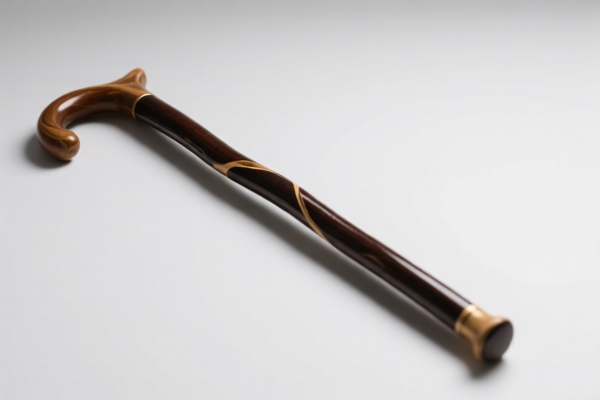
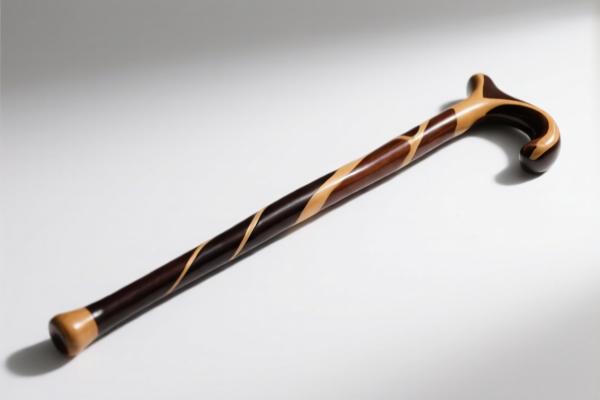
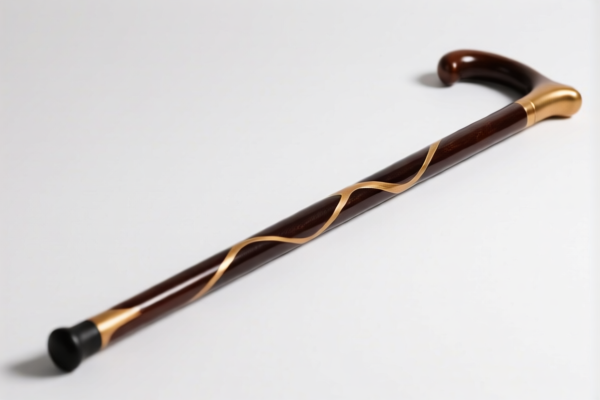
AI分析
🚶♂️ Walking Cane (Walking Aid for Persons with Disabilities)
🌐 HS Code Reference & Customs Clearance Guide | 2026 Updated Tariff Analysis | Professional Import Strategy
📌 One, Product Definition & Classification: Do You Really Know What a Walking Cane Is?
A walking cane is a non-motorized mobility aid designed to assist individuals with walking difficulties—especially those with physical disabilities, elderly users, or post-injury recovery patients. In international trade, it falls under the category of assistive devices for persons with disabilities, and its classification hinges on function, design, and intended use, not just physical form.
⚠️ Key Classification Insight:
- If it’s non-mechanical, supports standing/walking, and used by disabled persons → It qualifies as a disabled person’s mobility aid or orthopedic/orthotic device.
- It must not be powered, not a vehicle, and not a tool or furniture → Avoid misclassification into unrelated categories.
📦 Two, HS Code Classification Details (2026 Updated Tariff Authority)
| HS Code | Product Description | Applicable Use Case | Material Conflict? |
|---|---|---|---|
8713.10.00.00 |
Non-mechanical walking aids for persons with disabilities | Used by disabled individuals to assist walking; no motor or wheels | ✅ No |
8713.90.00.60 |
Other non-motorized mobility aids (e.g., walking canes, crutches) | Matches the functional and structural profile of non-three-wheeled mobility aids | ✅ No |
9021.10.00.90 |
Other orthopedic or fracture appliances (non-implantable) | Used to support or correct body posture; fits “assistance in movement” category | ✅ No |
9021.10.00.50 |
Orthopedic or fracture appliances (e.g., splints, supports, walking aids) | Medical-grade support device; used in rehabilitation and mobility assistance | ✅ No |
🔍 Critical Clarification:
- All four codes are valid for a walking cane if used as a mobility aid by persons with disabilities.
- The correct code depends on context:
- If medical/rehabilitation use →9021.10.00.50or9021.10.00.90
- If mobility aid with assistive function →8713.10.00.00or8713.90.00.60
- No material conflict exists → No restriction due to metal/plastic/wood composition.
💰 Three, 2026 Updated Tariff Breakdown (Including Additional Duties & Legal Basis)
✅ Applicable Country: United States (US)
✅ Origin: China (CN)
✅ Effective Date: November 10, 2025 (and onward)
🎯 1. 8713.10.00.00 — Non-Mechanical Mobility Aids for Disabled Persons
| Item | Detail |
|---|---|
| Base Duty | 0% (ad valorem) |
| Additional Duty (Section 301) | 0% |
| Section 122 Duty (IEEPA) | 10% |
| Total Effective Duty | 10.0% |
| Tax Calculation | CIF Value × 10% |
| De Minimis Threshold | ❌ Not applicable (denied under US law) |
| Legal Basis Path | IEEPA:9903.01.25 → Section 122: 19 U.S.C. § 1802 → HS:8713.10.00.00 |
📌 Explanation:
- This code applies to non-motorized walking aids used by persons with disabilities.
- The 10% Section 122 duty is a trade restriction under the International Emergency Economic Powers Act (IEEPA) targeting products from China.
- No additional Section 301 (USITC) tariff applies here, unlike electronics or machinery.
- Only 10% total duty, which is significantly lower than other categories (e.g., 45% for display modules).
🎯 2. 8713.90.00.60 — Other Non-Motorized Mobility Aids (e.g., Walking Canes, Crutches)
| Item | Detail |
|---|---|
| Base Duty | 0% |
| Additional Duty (Section 301) | 0% |
| Section 122 Duty (IEEPA) | 10% |
| Total Effective Duty | 10.0% |
| Tax Calculation | CIF × 10% |
| De Minimis Threshold | ❌ Not applicable |
| Legal Basis Path | IEEPA:9903.01.25 → Section 122: 19 U.S.C. § 1802 → HS:8713.90.00.60 |
📌 Note:
- This code is functionally equivalent to8713.10.00.00for walking canes.
- It is specifically designed for non-three-wheeled mobility devices like canes, crutches, and walkers.
- No material conflict → Safe for metal, wood, or composite canes.
🎯 3. 9021.10.00.90 — Other Orthopedic or Fracture Appliances (Non-Implantable)
| Item | Detail |
|---|---|
| Base Duty | 0% |
| Additional Duty (Section 301) | 0% |
| Section 122 Duty (IEEPA) | 10% |
| Total Effective Duty | 10.0% |
| Tax Calculation | CIF × 10% |
| De Minimis Threshold | ❌ Not applicable |
| Legal Basis Path | IEEPA:9903.01.25 → Section 122: 19 U.S.C. § 1802 → HS:9021.10.00.90 |
📌 Explanation:
- Applies to medical devices used for postural support, fracture recovery, or mobility assistance.
- Not for implants (like bone plates or screws), so excluded from 9021.10.00.50.
- “Other” category is appropriate for walking canes used in rehabilitation settings.
🎯 4. 9021.10.00.50 — Orthopedic or Fracture Appliances (e.g., Splints, Supports)
| Item | Detail |
|---|---|
| Base Duty | 0% |
| Additional Duty (Section 301) | 0% |
| Section 122 Duty (IEEPA) | 10% |
| Total Effective Duty | 10.0% |
| Tax Calculation | CIF × 10% |
| De Minimis Threshold | ❌ Not applicable |
| Legal Basis Path | IEEPA:9903.01.25 → Section 122: 19 U.S.C. § 1802 → HS:9021.10.00.50 |
📌 Note:
- This code is ideal for medical-grade walking aids used in hospitals, clinics, or rehab centers.
- If the cane is sold with a prescription or medical documentation, this code is strongly recommended.
🛠️ Four, Customs Clearance Best Practices (Real-World Pro Tips)
✅ 1. Required Documentation (Must-Have Checklist)
| Document | Required? | Notes |
|---|---|---|
| ✅ Product Specification Sheet | ✔️ | Include material, weight, height, grip type, intended user |
| ✅ Medical Use Certificate (if applicable) | ✔️ | For 9021 codes — e.g., "Used in physical therapy" |
| ✅ Product Photos (with label) | ✔️ | Show model number, brand, and usage context |
| ✅ Third-Party Test Report | ✔️ | FDA (if applicable), CE, ISO 13485, RoHS |
| ✅ Commercial Invoice | ✔️ | Clearly state: “Walking Cane for Persons with Disabilities” |
| ✅ Certificate of Origin (CO) | ✔️ | If from China, may be needed for tariff eligibility |
| ✅ Packing List | ✔️ | Show full product + accessories (e.g., tips, carry bag) |
✅ 2.申报技巧 (Key Tips for Accurate Filing)
🔥 “Use the Right Code, Match the Use — Medical = 9021, Mobility = 8713”
| Scenario | Correct HS Code | Wrong Code to Avoid |
|---|---|---|
| Walking cane for elderly user (general use) | 8713.10.00.00 or 8713.90.00.60 |
9021.10.00.50 (if not medical) |
| Cane used in hospital rehab program | 9021.10.00.50 or 9021.10.00.90 |
8713.10.00.00 (understated medical value) |
| Cane with adjustable height, non-motorized | 8713.90.00.60 |
8713.10.00.00 (if not "assistive vehicle" class) |
| Cane made of carbon fiber | 8713.10.00.00 |
8713.90.00.60 (if not crutch-like) |
✅ 3. Special Cases & Risk Mitigation
| Situation | Recommended Action |
|---|---|
| Cane sold with prescription | Use 9021.10.00.50 or 9021.10.00.90 — stronger legal basis |
| Cane marketed as "fitness aid" | Avoid 9021 codes — use 8713.10.00.00 instead |
| Cane with LED light or alarm | Still qualify as non-motorized → 8713.10.00.00 (no power motor) |
| Cane used by military or police | May qualify for “special use” exemption — contact CBP in advance |
| Cane with removable tip or stand | Still valid under 8713 — no functional motor |
🌍 Five, Global Market Comparison (2026 Update)
| Country/Region | Recommended HS Code | Duty Rate | Certification Required | Notes |
|---|---|---|---|---|
| 🇺🇸 United States | 8713.10.00.00 or 9021.10.00.50 |
10% (IEEPA 122) | FDA (if medical), CE, RoHS | No 301 tariff |
| 🇨🇳 China | 8713.10.00.00 |
5% | CCC, RoHS | No IEEPA duty |
| 🇪🇺 European Union | 8713.10.00.00 |
0% (if CE compliant) | CE, RoHS | No additional tariffs |
| 🇦🇺 Australia | 8713.10.00.00 |
5% | RCM | No IEEPA |
| 🇯🇵 Japan | 8713.10.00.00 |
0% | PSE | No IEEPA |
📌 Conclusion:
- The US is the only market imposing a 10% IEEPA Section 122 duty on walking canes from China.
- All other markets have 0–5% tariffs, making China-origin canes highly competitive elsewhere.
📌 Six, Common Mistakes & How to Avoid Them (Avoid Costly Errors!)
❌ Mistake 1: Using 9021.10.00.50 for a general-use cane
👉 Result: Overstated medical classification → audit risk, penalties
❌ Mistake 2: Using 8713.10.00.00 for a cane sold in a hospital with medical label
👉 Result: Understated value → may be challenged by CBP
❌ Mistake 3: Not providing medical documentation when using 9021 codes
👉 Result: Denial of preferred classification → higher risk of delay
❌ Mistake 4: Using “walking stick” or “cane” as the only description
👉 Result: Customs may misclassify as furniture or tool → incorrect HS Code
✅ Best Practice:
“Walking Cane, Adjustable Height, Non-Motorized, for Elderly & Disabled Users, with Rubber Tip, Model ABC, CE & RoHS Certified, Used in Physical Therapy”
🎯 Seven, Final Verdict: Precision Matters — One Wrong Code = 10% More Cost!
🎯 Remember the Rule:
🔹 “Medical Use → 9021.10.00.50/90”
🔹 General Mobility Aid → 8713.10.00.00/8713.90.00.60
🔹 10% IEEPA Duty Applies to All — But No 301 Tariff!
📌 Pro Tip:
If your walking cane is produced in Vietnam, Mexico, Thailand, or India, you may qualify for IEEPA Section 122 duty exemption → 0% tariff!
✅ Apply for a Pre-Release Ruling (Advance Ruling) to lock in the correct HS Code and duty rate.
📣 Act Now!
📞 Contact a licensed customs broker + provide product photos + request HS Code pre-approval
🚀 Ensure smooth clearance, avoid delays, and protect your profit margins!
✨ Smart Classification, Smart Trade!
💼 Your product’s success starts with the right HS Code.
用户评价
关于 HS 编码归类
协调制度(HS)是由世界海关组织(WCO)制定的国际贸易商品分类标准。全球 200 多个国家采用 HS 系统作为海关关税、贸易统计和进出口监管的基础。
每个 HS 编码遵循以下层级结构:
- 章(2 位)——商品大类(例如:第 84 章:机器和机械设备)
- 品目(4 位)——章内的更具体分类
- 子目(6 位)——国际通用细分,所有 WCO 成员国统一使用
- 本国细分(8-10 位)——各国自行扩展的细分编码,如美国 HTSUS 10 位编码
正确的 HS 编码归类对于顺利通关、准确缴纳关税和遵守贸易法规至关重要。错误归类可能导致海关延误、多缴关税或罚款。
从CN进口到US时,适用的关税税率可能包括:
- 最惠国(MFN)税率——适用于 WTO 成员国的标准关税税率
- 普通税率——适用于无贸易协定国家
- 贸易救济关税——附加关税,如 301 条款(反倾销)、232 条款(国家安全)或反补贴税
本页内容仅供参考。如需正式归类,请咨询当地海关或持牌报关代理。