抹刀
CN → US| HS编码 | 关税税率 | 原产国 | 目的国 | 文档 |
|---|---|---|---|---|
| 8205514500 | 35.0% | CN | US | 官方文档 |
| 8210000000 | 38.7% | CN | US | 官方文档 |
| 3926909989 | 22.8% | CN | US | 官方文档 |
| 3926909910 | 22.8% | CN | US | 官方文档 |
| 8205513030 | 38.7% | CN | US | 官方文档 |
商品图片
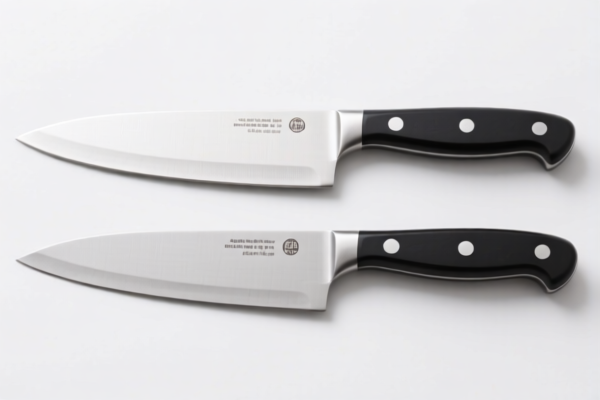
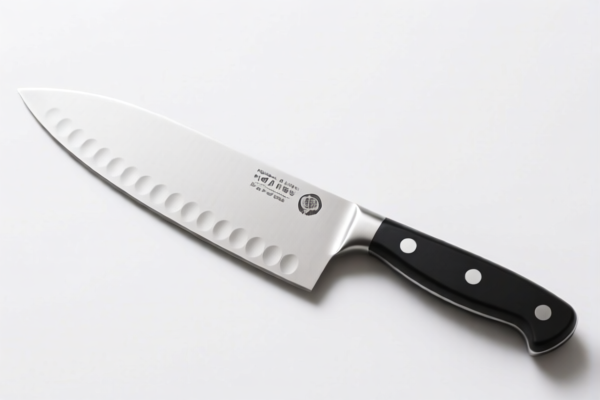
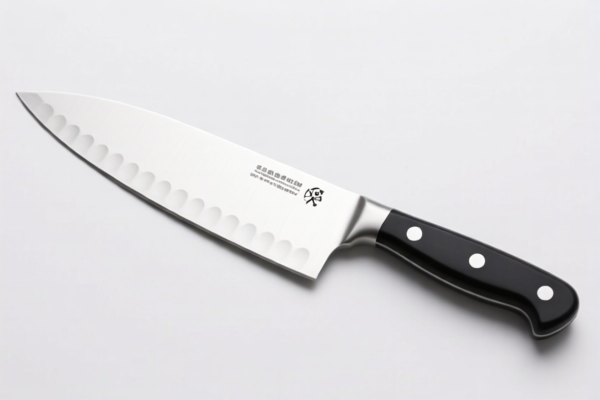
AI分析
Here is a comprehensive Wiki-Style Guide for classifying and importing Spatulas (Turners/Scrapers), based strictly on the provided data.
🥄 Spatula (Kitchen & General Purpose)
HS Code Classification & US Import Tax Strategy (2026 Edition)
Special Edition: Decoding "Spatula" Classification Conflicts & Tax Pitfalls
🌐 I. Product Definition & The "Material" Dilemma
A Spatula is a versatile hand tool used for mixing, spreading, scraping, and turning food. In international trade, its classification hinges on a single, often ambiguous factor: Material.
Since the user input only specifies "Spatula" without material details, customs authorities and automated classifiers must rely on Common Sense Inference to determine the HS Code.
⚖️ The Three Possible Scenarios:
- Metal Spatulas (Iron/Steel): Treated as Household Hand Tools or Kitchen Utensils.
- Plastic/Silicone Spatulas: Treated as Plastic Miscellaneous Articles or Food Prep Machinery.
- Multi-Material Spatulas: Requires careful breakdown or selection of the "dominant" material function.
⚠️ Critical Warning: The difference between a $5 plastic spatula and a $5 metal spatula results in a tax rate swing from 22.8% to 38.7%.
📦 II. HS Code Classification Matrix (Data-Driven)
Based on the provided dataset, here are the four specific classification paths for a generic "Spatula" entry.
| 🏷️ HS Code | Product Classification Logic | Inferred Material | Tax Rate (Total) |
|---|---|---|---|
| 8205.51.45.00 | Household Hand Tools Matches "Household tools" category. No conflict with copper-free context. |
Unknown (Assumed Metal) | 35.0% |
| 8210.00.00.00 | Manual Food Prep Appliances Matches "Manual mechanical appliances for food prep." Compatible with base metal/plastic/silicone. |
Base Metal / Silicone / Plastic | 38.7% |
| 3926.90.99.89 | Plastic Miscellaneous Articles Matches "Other plastic articles." No conflict with form/usage. |
Plastic (Inferred) | 22.8% |
| 3926.90.99.10 | Plastic Laboratory/Generic Vessels Matches "Other plastic articles." Common for plastic spatulas. |
Plastic (Inferred) | 22.8% |
| 8205.51.30.30 | Kitchen & Table Utensils Explicitly matches "Kitchen and table utensils." |
Iron / Steel (Inferred) | 38.7% |
🔍 Analysis: * Lowest Tax Path: If the spatula is 100% Plastic (or silicone-bladed with plastic handle), it falls under 3926 series (22.8%). * Highest Tax Path: If the spatula is Metal (Iron/Steel) or classified as a Food Prep Machine, it falls under 8205/8210 series (35.0% - 38.7%).
💰 III. 2026 Tariff Breakdown & Policy Details
✅ Target Market: United States (US) ✅ Origin: China (CN) 📅 Effective: 2025–2026 Import Cycle
🎯 Scenario A: The "Plastic" Advantage (Codes: 3926.90.99.89 / .10)
Best case for cost-saving if material is plastic.
| Tax Component | Rate | Policy Source | Explanation |
|---|---|---|---|
| Base Duty | 5.3% | General MFN | Standard Most-Favored-Nation tariff for plastic goods. |
| Trade War Tax | 7.5% | Section 301 (Add-on) | Additional tariff on specific plastic categories. |
| Section 122 Tax | 10% | Section 122 (New Policy) | Specific add-on tariff targeting Chinese plastic imports. |
| TOTAL RATE | 22.8% | Lowest Risk Tier |
🎯 Scenario B: The "Metal/Kitchen" Penalty (Codes: 8205 / 8210)
Higher cost tier for metal or general kitchen tools.
| Tax Component | Rate | Policy Source | Explanation |
|---|---|---|---|
| Base Duty | 3.7% | General MFN | Standard tariff for metal tools/kitchenware. |
| Trade War Tax | 25.0% | Section 301 (Add-on) | High add-on tariff for metal goods/tools from China. |
| Section 122 Tax | 10% | Section 122 (New Policy) | Additional tax layer on specific metal/tool categories. |
| TOTAL RATE | 38.7% | High Cost Tier |
🎯 Scenario C: The "Household Tool" Variant (Code: 8205.51.45.00)
| Tax Component | Rate | Policy Source | Explanation |
|---|---|---|---|
| Base Duty | 0.0% | General MFN | Some specific hand tools enjoy zero base duty. |
| Trade War Tax | 25.0% | Section 301 (Add-on) | Aggressive tariff on Chinese hand tools. |
| Section 122 Tax | 10% | Section 122 (New Policy) | Mandatory 10% add-on. |
| TOTAL RATE | 35.0% | Medium-High Cost Tier |
📌 Policy Key: The 10% Section 122 Tax applies uniformly across all HS Codes in the provided data. The massive difference (22.8% vs 38.7%) comes entirely from the Base Duty and the Section 301 Add-on (7.5% vs 25%).
🛠️ IV. Customs Clearance Strategy & Action Plan
✅ 1. Documentation Checklist (Non-Negotiable)
To avoid "Material Conflict" penalties, you must prove the composition of your spatulas.
| Document | Requirement | Why? |
|---|---|---|
| 🔬 Material Composition Sheet | MUST specify % of Metal vs. Plastic vs. Silicone. | Determines if it falls under 3926 (Plastic) or 8205/8210 (Metal). |
| 📸 High-Res Product Photos | Show the head (blade) and handle separately. | Customs officers verify if the "scraping edge" is plastic or metal. |
| 📄 Technical Spec Sheet | Mention "Heat Resistant Silicone" or "Stainless Steel". | Prevents "Unknown Material" classification which defaults to worst-case tax. |
| 📦 Packing List | Clearly state "Plastic Spatulas" or "Steel Spatulas". | Consistency with commercial invoice is vital. |
✅ 2. Declaration Tips (The "Golden Rules")
🔥 Rule #1: Be Specific on Material * Bad Declaration: "Spatula, Household Tool" (Ambiguous → Risk of 38.7%) * Good Declaration: "Plastic Kitchen Spatula, 100% Polypropylene, Silicone Blade" (Clear → 22.8%)
🔥 Rule #2: Avoid "Kitchen Utensil" Ambiguity for Plastic Items If your spatula is plastic, declaring it under
8205.51.30.30(Kitchen Utensil - Metal default) will trigger a 15% tax penalty. Use 3926.90.99.xx instead.🔥 Rule #3: The "Mixed Material" Trap If your spatula has a Plastic Handle and Metal Blade: * Customs usually classifies by the functional part (the blade). * Result: Likely
8205or8210(35-38.7%). * Strategy: If possible, separate shipments: one for all-metal, one for all-plastic.
✅ 3. Special Scenarios & Handling
| Scenario | Recommended Action | Expected Outcome |
|---|---|---|
| All Silicone/Silicone-Coated | Declare as Plastic/Composite under 3926. |
22.8% Tax (Lowest possible). |
| Stainless Steel Blade + Wood Handle | Declare under 8210.00.00 (Food Prep Tool) or 8205. | 38.7% Tax. |
| Stainless Steel Blade + Plastic Handle | Declare as 8205.51.45.00 or 8205.51.30.30. | 35.0% / 38.7% Tax. |
| OEM / Custom Color | Provide color code and material report. | No impact, but proof required. |
🚨 V. Common Pitfalls (The "Spatula Trap")
❌ Pitfall 1: The "One Size Fits All" Declaration * Error: Shipping a mixed box of plastic and metal spatulas under one HS Code. * Consequence: Customs may seize the shipment or audit the entire container, forcing a re-classification of all items to the highest tax rate (38.7%).
❌ Pitfall 2: Ignoring the "122 Clause" * Error: Forgetting the 10% Section 122 Tax in cost calculations. * Consequence: Profit margins evaporate. This tax is mandatory for all listed codes.
❌ Pitfall 3: Misidentifying "Manual Appliances"
* Error: Calling a manual plastic scraper a "Manual Mechanical Appliance" (8210) unnecessarily.
* Consequence: Unnecessarily high Base Duty (3.7% vs 5.3%? No, actually 3926 is cheaper). Wait, 8210 has 3.7% base + 25% = 28.7% + 10% = 38.7%. 3926 has 5.3% + 7.5% = 12.8% + 10% = 22.8%. Plastic is cheaper.
🎯 VI. Conclusion & Recommendation
For "Spatula" (抹刀): 1. If Plastic: Target HS Code 3926.90.99.89/10. * Total Tax: 22.8% * Strategy: Ensure all documentation explicitly states "Plastic" or "Silicone." 2. If Metal: Target HS Code 8205.51.30.30 (Kitchen Utensil) or 8210.00.00.00 (Manual Tool). * Total Tax: 38.7% (High cost). * Strategy: Minimize metal content if possible; consider composite designs that lean towards plastic classification.
💡 Pro Tip: If you are an importer, negotiate with your supplier to switch from metal-blade to high-quality silicone/plastic blades. The 15.9% tax difference can turn a loss into a profit!
✨ Ready to Ship? Verify your material composition now. The difference between 22.8% and 38.7% is your bottom line! 📉📈
用户评价
关于 HS 编码归类
协调制度(HS)是由世界海关组织(WCO)制定的国际贸易商品分类标准。全球 200 多个国家采用 HS 系统作为海关关税、贸易统计和进出口监管的基础。
每个 HS 编码遵循以下层级结构:
- 章(2 位)——商品大类(例如:第 84 章:机器和机械设备)
- 品目(4 位)——章内的更具体分类
- 子目(6 位)——国际通用细分,所有 WCO 成员国统一使用
- 本国细分(8-10 位)——各国自行扩展的细分编码,如美国 HTSUS 10 位编码
正确的 HS 编码归类对于顺利通关、准确缴纳关税和遵守贸易法规至关重要。错误归类可能导致海关延误、多缴关税或罚款。
从CN进口到US时,适用的关税税率可能包括:
- 最惠国(MFN)税率——适用于 WTO 成员国的标准关税税率
- 普通税率——适用于无贸易协定国家
- 贸易救济关税——附加关税,如 301 条款(反倾销)、232 条款(国家安全)或反补贴税
本页内容仅供参考。如需正式归类,请咨询当地海关或持牌报关代理。