抹刀
CN → US| HS Code | Tariff Rate | Origin | Destination | Doc |
|---|---|---|---|---|
| 8205514500 | 35.0% | CN | US | Official Doc |
| 8210000000 | 38.7% | CN | US | Official Doc |
| 3926909989 | 22.8% | CN | US | Official Doc |
| 3926909910 | 22.8% | CN | US | Official Doc |
| 8205513030 | 38.7% | CN | US | Official Doc |
Product Images
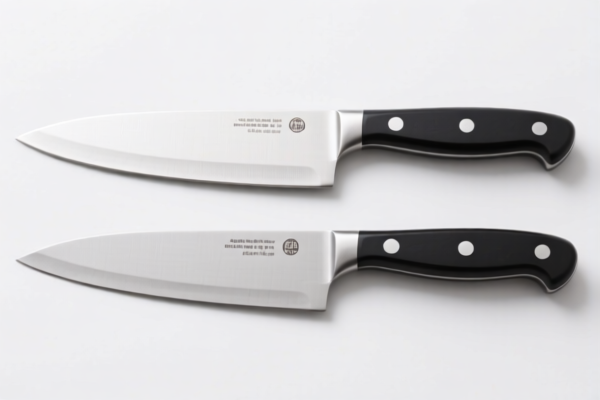
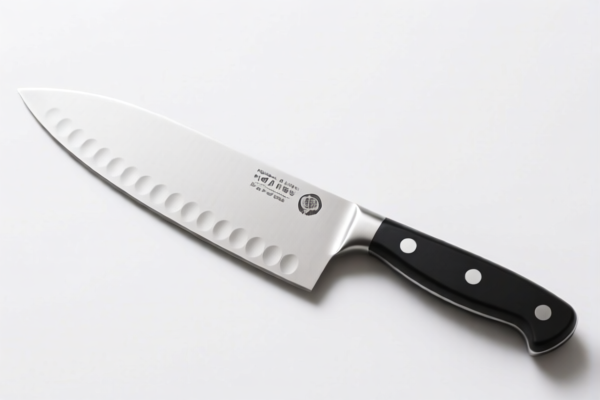
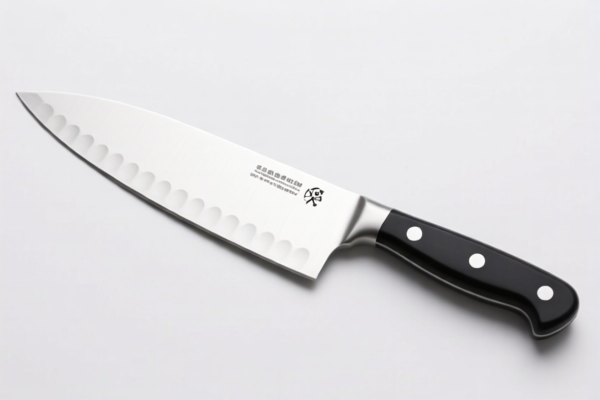
AI Analysis
Here is a comprehensive Wiki-Style Guide for classifying and importing Spatulas (Turners/Scrapers), based strictly on the provided data.
🥄 Spatula (Kitchen & General Purpose)
HS Code Classification & US Import Tax Strategy (2026 Edition)
Special Edition: Decoding "Spatula" Classification Conflicts & Tax Pitfalls
🌐 I. Product Definition & The "Material" Dilemma
A Spatula is a versatile hand tool used for mixing, spreading, scraping, and turning food. In international trade, its classification hinges on a single, often ambiguous factor: Material.
Since the user input only specifies "Spatula" without material details, customs authorities and automated classifiers must rely on Common Sense Inference to determine the HS Code.
⚖️ The Three Possible Scenarios:
- Metal Spatulas (Iron/Steel): Treated as Household Hand Tools or Kitchen Utensils.
- Plastic/Silicone Spatulas: Treated as Plastic Miscellaneous Articles or Food Prep Machinery.
- Multi-Material Spatulas: Requires careful breakdown or selection of the "dominant" material function.
⚠️ Critical Warning: The difference between a $5 plastic spatula and a $5 metal spatula results in a tax rate swing from 22.8% to 38.7%.
📦 II. HS Code Classification Matrix (Data-Driven)
Based on the provided dataset, here are the four specific classification paths for a generic "Spatula" entry.
| 🏷️ HS Code | Product Classification Logic | Inferred Material | Tax Rate (Total) |
|---|---|---|---|
| 8205.51.45.00 | Household Hand Tools Matches "Household tools" category. No conflict with copper-free context. |
Unknown (Assumed Metal) | 35.0% |
| 8210.00.00.00 | Manual Food Prep Appliances Matches "Manual mechanical appliances for food prep." Compatible with base metal/plastic/silicone. |
Base Metal / Silicone / Plastic | 38.7% |
| 3926.90.99.89 | Plastic Miscellaneous Articles Matches "Other plastic articles." No conflict with form/usage. |
Plastic (Inferred) | 22.8% |
| 3926.90.99.10 | Plastic Laboratory/Generic Vessels Matches "Other plastic articles." Common for plastic spatulas. |
Plastic (Inferred) | 22.8% |
| 8205.51.30.30 | Kitchen & Table Utensils Explicitly matches "Kitchen and table utensils." |
Iron / Steel (Inferred) | 38.7% |
🔍 Analysis: * Lowest Tax Path: If the spatula is 100% Plastic (or silicone-bladed with plastic handle), it falls under 3926 series (22.8%). * Highest Tax Path: If the spatula is Metal (Iron/Steel) or classified as a Food Prep Machine, it falls under 8205/8210 series (35.0% - 38.7%).
💰 III. 2026 Tariff Breakdown & Policy Details
✅ Target Market: United States (US) ✅ Origin: China (CN) 📅 Effective: 2025–2026 Import Cycle
🎯 Scenario A: The "Plastic" Advantage (Codes: 3926.90.99.89 / .10)
Best case for cost-saving if material is plastic.
| Tax Component | Rate | Policy Source | Explanation |
|---|---|---|---|
| Base Duty | 5.3% | General MFN | Standard Most-Favored-Nation tariff for plastic goods. |
| Trade War Tax | 7.5% | Section 301 (Add-on) | Additional tariff on specific plastic categories. |
| Section 122 Tax | 10% | Section 122 (New Policy) | Specific add-on tariff targeting Chinese plastic imports. |
| TOTAL RATE | 22.8% | Lowest Risk Tier |
🎯 Scenario B: The "Metal/Kitchen" Penalty (Codes: 8205 / 8210)
Higher cost tier for metal or general kitchen tools.
| Tax Component | Rate | Policy Source | Explanation |
|---|---|---|---|
| Base Duty | 3.7% | General MFN | Standard tariff for metal tools/kitchenware. |
| Trade War Tax | 25.0% | Section 301 (Add-on) | High add-on tariff for metal goods/tools from China. |
| Section 122 Tax | 10% | Section 122 (New Policy) | Additional tax layer on specific metal/tool categories. |
| TOTAL RATE | 38.7% | High Cost Tier |
🎯 Scenario C: The "Household Tool" Variant (Code: 8205.51.45.00)
| Tax Component | Rate | Policy Source | Explanation |
|---|---|---|---|
| Base Duty | 0.0% | General MFN | Some specific hand tools enjoy zero base duty. |
| Trade War Tax | 25.0% | Section 301 (Add-on) | Aggressive tariff on Chinese hand tools. |
| Section 122 Tax | 10% | Section 122 (New Policy) | Mandatory 10% add-on. |
| TOTAL RATE | 35.0% | Medium-High Cost Tier |
📌 Policy Key: The 10% Section 122 Tax applies uniformly across all HS Codes in the provided data. The massive difference (22.8% vs 38.7%) comes entirely from the Base Duty and the Section 301 Add-on (7.5% vs 25%).
🛠️ IV. Customs Clearance Strategy & Action Plan
✅ 1. Documentation Checklist (Non-Negotiable)
To avoid "Material Conflict" penalties, you must prove the composition of your spatulas.
| Document | Requirement | Why? |
|---|---|---|
| 🔬 Material Composition Sheet | MUST specify % of Metal vs. Plastic vs. Silicone. | Determines if it falls under 3926 (Plastic) or 8205/8210 (Metal). |
| 📸 High-Res Product Photos | Show the head (blade) and handle separately. | Customs officers verify if the "scraping edge" is plastic or metal. |
| 📄 Technical Spec Sheet | Mention "Heat Resistant Silicone" or "Stainless Steel". | Prevents "Unknown Material" classification which defaults to worst-case tax. |
| 📦 Packing List | Clearly state "Plastic Spatulas" or "Steel Spatulas". | Consistency with commercial invoice is vital. |
✅ 2. Declaration Tips (The "Golden Rules")
🔥 Rule #1: Be Specific on Material * Bad Declaration: "Spatula, Household Tool" (Ambiguous → Risk of 38.7%) * Good Declaration: "Plastic Kitchen Spatula, 100% Polypropylene, Silicone Blade" (Clear → 22.8%)
🔥 Rule #2: Avoid "Kitchen Utensil" Ambiguity for Plastic Items If your spatula is plastic, declaring it under
8205.51.30.30(Kitchen Utensil - Metal default) will trigger a 15% tax penalty. Use 3926.90.99.xx instead.🔥 Rule #3: The "Mixed Material" Trap If your spatula has a Plastic Handle and Metal Blade: * Customs usually classifies by the functional part (the blade). * Result: Likely
8205or8210(35-38.7%). * Strategy: If possible, separate shipments: one for all-metal, one for all-plastic.
✅ 3. Special Scenarios & Handling
| Scenario | Recommended Action | Expected Outcome |
|---|---|---|
| All Silicone/Silicone-Coated | Declare as Plastic/Composite under 3926. |
22.8% Tax (Lowest possible). |
| Stainless Steel Blade + Wood Handle | Declare under 8210.00.00 (Food Prep Tool) or 8205. | 38.7% Tax. |
| Stainless Steel Blade + Plastic Handle | Declare as 8205.51.45.00 or 8205.51.30.30. | 35.0% / 38.7% Tax. |
| OEM / Custom Color | Provide color code and material report. | No impact, but proof required. |
🚨 V. Common Pitfalls (The "Spatula Trap")
❌ Pitfall 1: The "One Size Fits All" Declaration * Error: Shipping a mixed box of plastic and metal spatulas under one HS Code. * Consequence: Customs may seize the shipment or audit the entire container, forcing a re-classification of all items to the highest tax rate (38.7%).
❌ Pitfall 2: Ignoring the "122 Clause" * Error: Forgetting the 10% Section 122 Tax in cost calculations. * Consequence: Profit margins evaporate. This tax is mandatory for all listed codes.
❌ Pitfall 3: Misidentifying "Manual Appliances"
* Error: Calling a manual plastic scraper a "Manual Mechanical Appliance" (8210) unnecessarily.
* Consequence: Unnecessarily high Base Duty (3.7% vs 5.3%? No, actually 3926 is cheaper). Wait, 8210 has 3.7% base + 25% = 28.7% + 10% = 38.7%. 3926 has 5.3% + 7.5% = 12.8% + 10% = 22.8%. Plastic is cheaper.
🎯 VI. Conclusion & Recommendation
For "Spatula" (抹刀): 1. If Plastic: Target HS Code 3926.90.99.89/10. * Total Tax: 22.8% * Strategy: Ensure all documentation explicitly states "Plastic" or "Silicone." 2. If Metal: Target HS Code 8205.51.30.30 (Kitchen Utensil) or 8210.00.00.00 (Manual Tool). * Total Tax: 38.7% (High cost). * Strategy: Minimize metal content if possible; consider composite designs that lean towards plastic classification.
💡 Pro Tip: If you are an importer, negotiate with your supplier to switch from metal-blade to high-quality silicone/plastic blades. The 15.9% tax difference can turn a loss into a profit!
✨ Ready to Ship? Verify your material composition now. The difference between 22.8% and 38.7% is your bottom line! 📉📈
Customer Reviews
About HS Code Classification
The Harmonized System (HS) is an internationally standardized nomenclature developed by the World Customs Organization (WCO) to classify traded products. Over 200 countries use the HS system as the basis for customs tariffs, trade statistics, and import/export regulations.
Each HS code follows a hierarchical structure:
- Chapter (2 digits) — Broad category of goods (e.g., Chapter 84: Machinery and Mechanical Appliances)
- Heading (4 digits) — More specific grouping within the chapter
- Subheading (6 digits) — Internationally standardized breakdown, used by all WCO member countries
- National subdivisions (8-10 digits) — Country-specific extensions for further classification, such as US HTSUS 10-digit codes
Correct HS code classification is essential for smooth customs clearance, accurate duty payment, and compliance with trade regulations. Misclassification can lead to customs delays, overpayment of duties, or penalties.
When importing from CN to US, the applicable tariff rates may include:
- Most-Favored-Nation (MFN) rate — The standard duty rate applied to WTO members
- General rate — Applied to countries without trade agreements
- Trade remedy duties — Additional tariffs such as Section 301 (anti-dumping), Section 232 (national security), or countervailing duties
The information provided on this page is for reference purposes only. For official classification, please consult with your local customs authority or a licensed customs broker.