3 in 1 blender
CN → US| HS编码 | 关税税率 | 原产国 | 目的国 | 文档 |
|---|---|---|---|---|
| 8509400015 | 14.2% | CN | US | 官方文档 |
| 8509400040 | 14.2% | CN | US | 官方文档 |
| 8438100010 | 17.5% | CN | US | 官方文档 |
商品图片
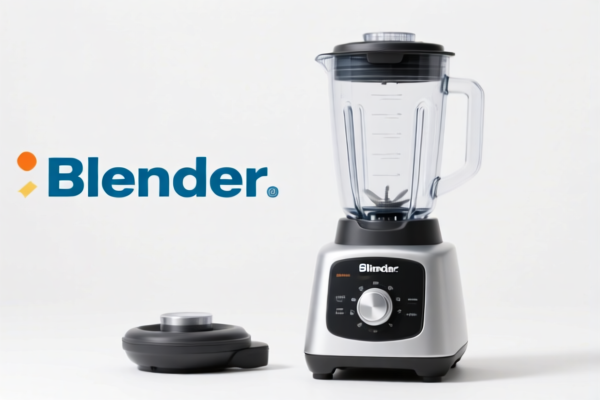
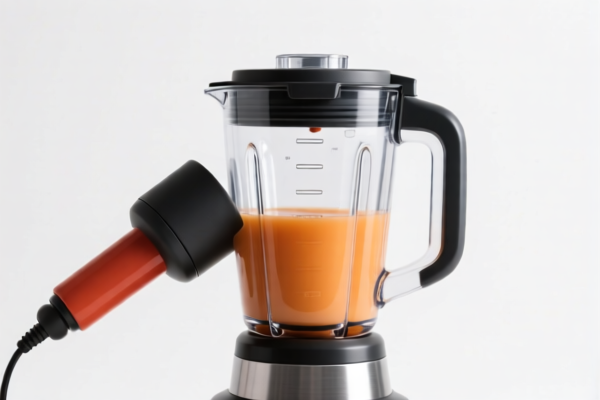
AI分析
🥤 3-in-1 Blender: The Ultimate Homewares vs. Food Processing Dilemma
🌐 HS Code Reference & Customs Clearance Guide | 2026 Latest Tariff Analysis | Strategic Classification Strategy
📌 I. Product Definition & Classification: What Exactly is a "3-in-1 Blender"?
A 3-in-1 Blender is a versatile kitchen appliance that typically combines multiple functions, such as blending, grinding, and processing food, within a single unit or via interchangeable attachments. In international trade, the critical distinction lies in its primary function and intended use:
- Home-use Electric Appliances: Designed for domestic kitchens, powered by electricity, and intended for general household food preparation.
- Food Processing Machinery: Often categorized under industrial or semi-industrial food processing equipment, especially if marketed for high-volume or specialized processing tasks.
⚠️ Key Classification Criteria:
- If the device is compact, portable, and marketed for home use → It likely falls under Chapter 85 (Electrical Machinery) as household appliances.
- If the device is larger, more robust, and marketed for food processing/commercial use → It may fall under Chapter 84 (Nuclear Reactors, Boilers, Machinery) as food/beverage processing machinery.
📦 II. HS Code Classification Details (2026 Latest Tariff Authority Comparison)
| HS Code | Product Description | Applicable Scenario | Is it Home-use? |
|---|---|---|---|
8509.40.00.15 |
3-in-1 Blender as Household Electric Appliance | Compact blender, grinder, and processor for home kitchens | ✅ Yes |
8509.40.00.40 |
3-in-1 Blender as Food Processor/Grinder | Functions similar to food grinders and processors, categorized under household food handling appliances | ✅ Yes |
8438.10.00.10 |
3-in-1 Blender as Food Processing Machinery | Industrial/semi-industrial food or beverage processing equipment | ❌ No |
🔍 Critical Reminder:
- Home-use blenders (even with multiple functions) are generally classified under 8509.40 because they are electric household appliances.
- Food processing machinery under 8438.10 applies to equipment that is not primarily designed for home use, often featuring larger capacities or industrial-grade components.
💰 III. 2026 Latest Tariff Rate Breakdown (Including Surcharges, Policy Add-ons)
✅ Applicable Country: USA (US)
✅ Origin: China (CN)
✅ Effective Date: November 10, 2025 (and subsequent imports)
🎯 1. 8509.40.00.15 —— 3-in-1 Blender as Household Electric Appliance
| Item | Details |
|---|---|
| Base Tariff Rate | 4.2% (ad valorem) |
| USITC Surtax (Section 301) | 0.0% |
| IEEPA Surtax (Section 122) | +10.0% (applies to Chinese/Hong Kong products) |
| Total Tariff Rate | 14.2% |
| Tax Calculation | CIF Value × 14.2% |
| De Minimis Eligibility | ❌ No (deny_de_minimis) |
| Legal Basis Path | IEEPA:9903.01.24 → USITC:8509.40.00.15 → FOOTNOTE:122 |
📌 Explanation:
- Base Tariff 4.2%: Standard duty for household electric blenders under Chapter 85.
- Section 301 Surcharge 0.0%: This specific subheading is exempt from Section 301 additional tariffs.
- Section 122 Surcharge 10.0%: Applied under the International Emergency Economic Powers Act (IEEPA) for certain Chinese goods.
- Total 14.2%: Relatively moderate compared to other electrical appliances, but still significant for margin-sensitive goods.
🎯 2. 8509.40.00.40 —— 3-in-1 Blender as Food Processor/Grinder
| Item | Details |
|---|---|
| Base Tariff Rate | 4.2% (ad valorem) |
| USITC Surtax (Section 301) | 0.0% |
| IEEPA Surtax (Section 122) | +10.0% (applies to Chinese/Hong Kong products) |
| Total Tariff Rate | 14.2% |
| Tax Calculation | CIF Value × 14.2% |
| De Minimis Eligibility | ❌ No (deny_de_minimis) |
| Legal Basis Path | IEEPA:9903.01.24 → USITC:8509.40.00.40 → FOOTNOTE:122 |
📌 Note:
- Identical to 8509.40.00.15: Both subheadings fall under the same tariff structure because they are both household electrical appliances.
- Functional Nuance: Even if marketed as a "grinder" or "processor," as long as it is for home use, it remains in Chapter 85.
🎯 3. 8438.10.00.10 —— 3-in-1 Blender as Food Processing Machinery
| Item | Details |
|---|---|
| Base Tariff Rate | 0.0% (ad valorem) |
| USITC Surtax (Section 301) | +7.5% |
| IEEPA Surtax (Section 122) | +10.0% (applies to Chinese/Hong Kong products) |
| Total Tariff Rate | 17.5% |
| Tax Calculation | CIF Value × 17.5% |
| De Minimis Eligibility | ❌ No (deny_de_minimis) |
| Legal Basis Path | IEEPA:9903.01.24 → USITC:8438.10.00.10 → FOOTNOTE:122 |
📌 Critical Distinction:
- Base Tariff 0.0%: Food processing machinery under Chapter 84 often enjoys lower base rates.
- Section 301 Surcharge 7.5%: Unlike household appliances, some food processing machinery is subject to Section 301 tariffs.
- Section 122 Surcharge 10.0%: Also applies to Chinese-origin food processing equipment.
- Total 17.5%: Higher than household blenders due to the Section 301 surcharge. This classification is disadvantageous for cost efficiency.
🛠️ IV. Customs Clearance Practical Advice (Real-World Pitfall Avoidance Guide)
✅ 1. Documentation Checklist (All Required)
| Document | Required | Notes |
|---|---|---|
| ✅ Product Specification Sheet | ✔️ | Dimensions, power rating, voltage, frequency, material |
| ✅ Photos of Product & Label | ✔️ | Clear view of model number, brand, input/output specs |
| ✅ Commercial Invoice | ✔️ | Must clearly state "3-in-1 Blender for Home Use" or "Food Processing Machinery" |
| ✅ Packing List | ✔️ | Detail contents (blender, blades, cups, manuals) |
| ✅ Certificate of Origin (CO) | ✔️ | If eligible for preferential treatment (unlikely for China) |
| ✅ Third-Party Certifications | ✔️ | UL, ETL, FCC (if applicable), CE (for EU reference) |
✅ 2. Declaration Strategy (Key Tips)
🔥 "Home Use Goes to 85, Industrial Goes to 84, Check Your Marketing!"
| Scenario | Correct Declaration | Wrong Approach |
|---|---|---|
| Compact Blender for Home | 8509.40.00.15 or 8509.40.00.40 |
Declare as "Food Machine" → 17.5% |
| Large-capacity Blender for Cafe | 8438.10.00.10 |
Declare as "Home Appliance" → Risk of reclassification + penalties |
| Blender with Multiple Attachments | Declare as Single Unit under 8509.40 | Split into "Blender + Grinder" → Complex & risky |
| OEM/White-label Product | Provide Customer Order + Specs | Vague description → Customs delay |
✅ 3. Special Cases Handling
| Scenario | Handling Advice |
|---|---|
| Marketed as "Commercial Blender" | Likely classified under 8438.10.00.10 → Higher duty (17.5%). Avoid if cost-sensitive. |
| Marketeted as "Home Blender" | Classify under 8509.40.00.15/40 → Lower duty (14.2%). Ensure marketing materials reflect "home use." |
| Blender + Grinder Combo | If integrated into one motor unit → Classify as single appliance under 8509.40. |
| Blender with Industrial Features | (e.g., stainless steel body, heavy-duty motor) → May trigger reclassification to 8438.10.10. |
🌍 V. Global Market Customs Comparison (2026 Latest)
| Country/Region | Recommended HS Code | Tariff Rate | Certification Requirements | Notes |
|---|---|---|---|---|
| 🇺🇸 USA | 8509.40.00.15 / .40 |
14.2% (China) | UL/ETL, FCC | Best option for cost |
| 🇺🇸 USA | 8438.10.00.10 |
17.5% (China) | N/A | Avoid if possible |
| 🇨🇳 China | 8509.40.00.15 |
8-10% | CCC | No additional surcharges |
| 🇪🇺 EU | 8509.40.00.15 |
4-6% | CE, RoHS, WEEE | No additional surcharges |
| 🇬🇧 UK | 8509.40.00.15 |
4-6% | UKCA, RoHS | Post-Brexit rules apply |
| 🇦🇺 Australia | 8509.40.00.15 |
5% | RCM, C-Tick | No additional surcharges |
📌 Conclusion:
- USA is the most complex market due to Section 301 and Section 122 surcharges.
- Classifying as a Home Appliance (8509.40) is significantly cheaper than as Food Processing Machinery (8438.10).
- Marketing and product design should align with the desired classification to avoid customs disputes.
📌 VI. Common Mistakes & Pitfalls (Lessons Learned)
❌ Mistake 1: Declaring a home-use blender as food processing machinery
👉 Consequence: Duty increases from 14.2% to 17.5% → Higher costs + potential audit.
❌ Mistake 2: Declaring a commercial blender as a home appliance
👉 Consequence: Customs reclassifies to 8438.10 → Back taxes, penalties, delays.
❌ Mistake 3: Using vague terms like "Kitchen Machine"
👉 Consequence: Customs ambiguity → Inspection delays, additional documentation requests.
❌ Mistake 4: Ignoring Section 122 surcharge
👉 Consequence: Underpaying duties → Seizure, fines, or blacklisting.
✅ Correct Approach:
"3-in-1 Electric Blender for Home Use, 1000W, 120V, with Grinding & Processing Attachments, Model XYZ, UL Certified"
🎯 VII. Conclusion: Strategic Classification for Cost Efficiency
🎯 Key Takeaway:
🔹 "Home Use = 8509.40 (14.2%) | Industrial Use = 8438.10 (17.5%)"
🔹 "Marketing Matters: Align Product Image with Classification"
🔹 "Always Declare Accurately: Misclassification Risks Penalties & Delays"
📌 Pro Tip:
- If your product is borderline (e.g., large capacity but for home use), provide detailed specs and marketing materials to justify classification under 8509.40.
- Consider applying for an Advance Ruling from US Customs to secure classification certainty before shipping.
📣 Immediate Action Required:
📞 Engage a Licensed Customs Broker + Provide Product Photos & Specs + Confirm Marketing Claims
🚀 Optimize Your HS Code Classification to Save 3.3% in Duties!
✨ Professional Customs Clearance Starts with Precise Classification!
💼 Every Dollar Saved in Duties is Pure Profit!
用户评价
关于 HS 编码归类
协调制度(HS)是由世界海关组织(WCO)制定的国际贸易商品分类标准。全球 200 多个国家采用 HS 系统作为海关关税、贸易统计和进出口监管的基础。
每个 HS 编码遵循以下层级结构:
- 章(2 位)——商品大类(例如:第 84 章:机器和机械设备)
- 品目(4 位)——章内的更具体分类
- 子目(6 位)——国际通用细分,所有 WCO 成员国统一使用
- 本国细分(8-10 位)——各国自行扩展的细分编码,如美国 HTSUS 10 位编码
正确的 HS 编码归类对于顺利通关、准确缴纳关税和遵守贸易法规至关重要。错误归类可能导致海关延误、多缴关税或罚款。
从CN进口到US时,适用的关税税率可能包括:
- 最惠国(MFN)税率——适用于 WTO 成员国的标准关税税率
- 普通税率——适用于无贸易协定国家
- 贸易救济关税——附加关税,如 301 条款(反倾销)、232 条款(国家安全)或反补贴税
本页内容仅供参考。如需正式归类,请咨询当地海关或持牌报关代理。