35mm Color Eco friendly Film
CN → US| HS编码 | 关税税率 | 原产国 | 目的国 | 文档 |
|---|---|---|---|---|
| 3706106060 | 35.0% | CN | US | 官方文档 |
| 3706106030 | 35.0% | CN | US | 官方文档 |
| 3702540030 | 38.7% | CN | US | 官方文档 |
| 3702530030 | 38.7% | CN | US | 官方文档 |
| 5407301000 | 35.0% | CN | US | 官方文档 |
商品图片
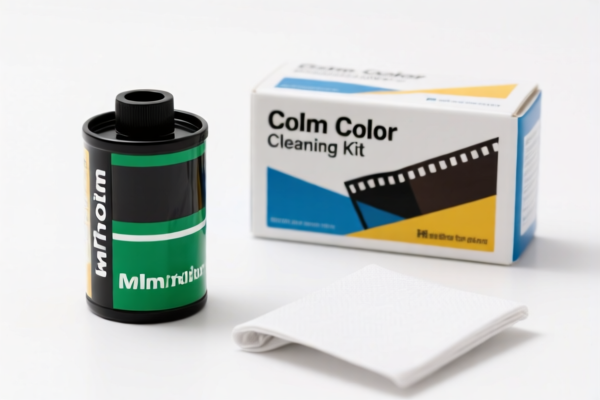
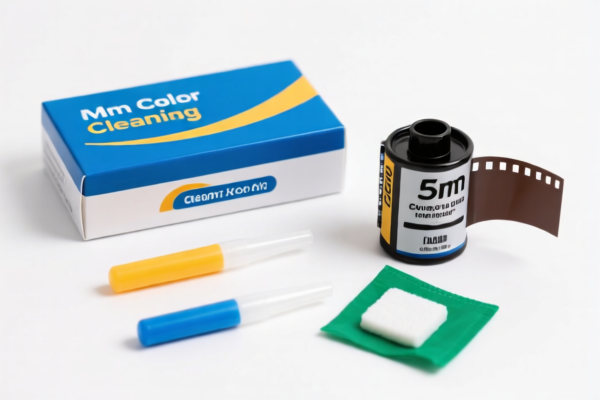
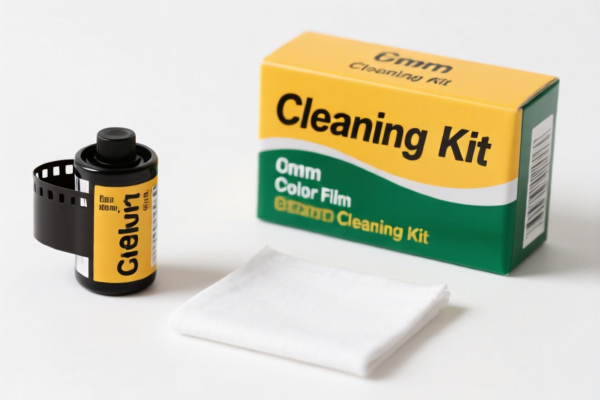
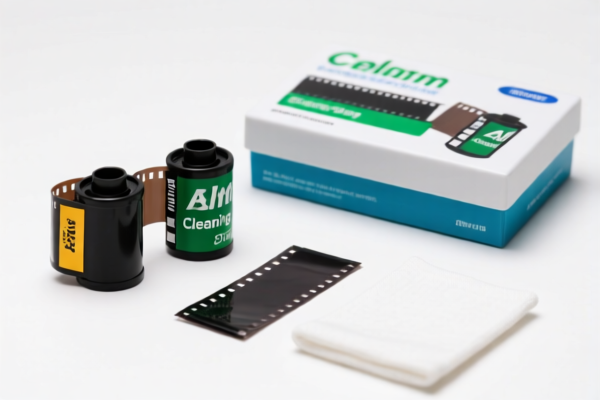
AI分析
🎞️ 35mm Color Eco-Friendly Film
🌐 HS Code Reference & Customs Clearance Guide | 2026 Latest Tariff Analysis | Professional Clearance Strategy
📌 I. Product Definition & Classification: Understanding "Eco-Friendly" in Film Classification
"35mm Color Eco-Friendly Film" refers to photographic film with a width of 35mm, processed in color, which meets the exposure and development attributes defined under Chapter 37 of the Harmonized System. The term "Eco-Friendly" typically refers to manufacturing processes or chemical formulations (e.g., reduced environmental impact in development) but does not change the physical or technical nature of the film for HS Code purposes.
In international trade, 35mm color film is primarily classified under two main categories depending on its opacity and specific characteristics:
1. Exposed/Developed Film (Heading 3706):
Films that have already been exposed and developed. This category is often subject to different tariff structures compared to unexposed film.
2. Unexposed Photographic Film (Heading 3702):
Films that are ready for use but not yet exposed. Within this heading, distinctions are made based on transparency (opaque vs. transparent) and width (35mm).
⚠️ Key Distinction Point:
- If the film is already exposed and developed, it falls under 3706.
- If the film is unexposed, it falls under 3702. Within 3702, transparent films (standard negatives/slide film) are distinguished from opaque films (e.g., X-ray or special effect films).
- "Eco-friendly" claims do not create a separate HS code; they must be supported by specific material composition if claiming under generic plastic/film headings (rare for photographic film).
📦 II. HS Code Classification Details (Based on Provided Data)
The following HS Codes and tax details are strictly derived from the provided <DATA> content.
| HS Code | Product Description | Summary Explanation | Total Tax Rate |
|---|---|---|---|
3706.10.60.60 |
35mm Color Film, Exposed/Developed | Classified under "Other" categories for films ≥35mm that are already exposed and developed. | 35.0% |
3706.10.60.30 |
35mm Color Film, Exposed/Developed | Classified under "Other" categories for 35mm width films, applied on a catch-all basis. | 35.0% |
3702.54.00.30 |
35mm Color Opaque Film | Exact match in specification, material, and form. Specifically noted as opaque film. | 38.7% |
3702.53.00.30 |
35mm Color Transparent Film | Matches width, color, and roll attributes. Opacity is not the defining factor for this specific code compared to 3702.54. | 38.7% |
5407.30.10.00 |
Generic Plastic Film/Sheeting | Inferred as organic polymer material forming a film/thin sheet, classified under textiles/films if not clearly photographic. | 35.0% |
🔍 Critical Note:
- Codes3706.10.60.60and3706.10.60.30apply to exposed/developed films.
- Codes3702.54.00.30and3702.53.00.30apply to unexposed films (distinguished by opacity/type).
- Code5407.30.10.00is a fallback for generic plastic films if photographic characteristics cannot be proven.
💰 III. 2026 Latest Tariff Rate Details (Including Surtaxes & Policy Add-ons)
✅ Applicable Country: United States (US)
✅ Origin: China (CN) (Implied by "122 Clause" and surtax structure in data)
✅ Effective Time: Current 2026 Tariff Schedule
🎯 1. Codes 3706.10.60.60 & 3706.10.60.30 — Exposed 35mm Color Film
| Item | Content |
|---|---|
| Base Tariff | 0.0% (ad valorem) |
| USITC Surcharge | +25.0% (Section 301 / Add-on Tariff) |
| "122 Clause" Surcharge | +10.0% (Specific policy surcharge referenced in data) |
| Total Tax Rate | 35.0% |
| Tax Calculation | CIF Value × 35% |
| De Minimis Exemption | ❌ Not Applicable (High tariff rates typically deny de minimis) |
| Legal Basis Path | Base 0% → +25% (USITC) → +10% (Policy 122) |
📌 Explanation:
- The base duty is 0%, but significant add-ons apply.
- The 25% is the standard Section 301 surcharge on Chinese goods.
- The 10% is attributed to the "122 Clause" (likely referring to a specific trade remedy or administrative clause in the provided dataset).
- Total: 35%. This is a moderate-to-high tariff for photographic supplies.
🎯 2. Codes 3702.54.00.30 & 3702.53.00.30 — Unexposed 35mm Color Film
| Item | Content |
|---|---|
| Base Tariff | 3.7% |
| USITC Surcharge | +25.0% (Section 301 / Add-on Tariff) |
| "122 Clause" Surcharge | +10.0% (Specific policy surcharge) |
| Total Tax Rate | 38.7% |
| Tax Calculation | CIF Value × 38.7% |
| De Minimis Exemption | ❌ Not Applicable |
| Legal Basis Path | Base 3.7% → +25% (USITC) → +10% (Policy 122) |
📌 Note:
- Unexposed film carries a higher base duty (3.7%) compared to exposed film (0%).
- The add-ons remain the same (25% + 10%).
- Total: 38.7%. This is the highest tariff bracket in the provided dataset for this product.
🎯 3. Code 5407.30.10.00 — Generic Plastic Film
| Item | Content |
|---|---|
| Base Tariff | 0.0% |
| USITC Surcharge | +25.0% |
| "122 Clause" Surcharge | +10.0% |
| Total Tax Rate | 35.0% |
| Tax Calculation | CIF Value × 35% |
| De Minimis Exemption | ❌ Not Applicable |
📌 Warning:
- Misclassifying photographic film as generic plastic film (5407.30.10.00) may lead to customs audits if the product clearly demonstrates photographic properties.
- While the rate (35%) is lower than unexposed film (38.7%), it is higher than exposed film (35%) and risky from a compliance standpoint.
🛠️ IV. Customs Clearance Practical Advice (Risk Avoidance Guide)
✅ 1. Required Documentation Checklist
| Document | Required | Description |
|---|---|---|
| ✅ Product Specification Sheet | ✔️ | Must specify: Width (35mm), Type (Color), Status (Exposed/Unexposed), Opacity (Opaque/Transparent). |
| ✅ Material Composition Statement | ✔️ | Confirm it is photographic emulsion on cellulose acetate or polyester base, not just "plastic film." |
| ✅ Certificate of Origin (CO) | ✔️ | Crucial for verifying China origin to apply correct surcharges. |
| ✅ Commercial Invoice | ✔️ | Clearly state "35mm Color Photographic Film" and HS Code. Avoid vague terms like "Eco Film." |
| ✅ Packing List | ✔️ | Detail quantity per roll/case. |
| ✅ Third-Party Test Report | ✔️ | If claiming "Eco-Friendly," provide certification to support marketing claims (though not affecting HS Code). |
✅ 2. Declaration Tips (Key Mantras)
🔥 “Identify Exposure Status, Distinguish Opacity, Declare Precisely!”
| Scenario | Correct Declaration | Incorrect Practice |
|---|---|---|
| Exposed & Developed | HS Code: 3706.10.60.60 |
Declaring as unexposed film (Risk of penalty) |
| Unexposed & Transparent | HS Code: 3702.53.00.30 |
Declaring as opaque film (Wrong subheading) |
| Unexposed & Opaque | HS Code: 3702.54.00.30 |
Declaring as transparent film |
| Generic Plastic Roll | HS Code: 5407.30.10.00 |
Declaring as photographic film without emulsion evidence |
📌 Key Insight:
- "Eco-Friendly" is a marketing term, not a customs classification term. Do not use it in the HS Code declaration field. Use "Photographic Film" instead.
- Always verify if the film is exposed or unexposed. This is the primary determinant for Chapter 37 subheading selection (3706 vs. 3702).
✅ 3. Special Situation Handling
| Situation | Recommendation |
|---|---|
| "Eco-Friendly" Certification | Provide the certification to the buyer for value-add, but do not alter the HS Code. Customs does not recognize "eco" as a preferential category for film. |
| Mixed Consignment | If a shipment contains both exposed and unexposed film, declare separately. Mixing codes in one line item will cause clearance delays. |
| Customs Inquiry on "122 Clause" | Be prepared to explain that the 10% surcharge is a known policy add-on for Chinese-origin goods in the 2026 tariff schedule. |
🌍 V. Global Market Comparison (2026 Outlook)
| Country/Region | Recommended HS Code | Estimated Tariff | Certification | Notes |
|---|---|---|---|---|
| 🇺🇸 USA | 3706.10.60.60 or 3702.53.00.30 |
35.0% - 38.7% | None specific | High surcharges (25%+10%) apply to China origin. |
| 🇨🇳 China | 3706.10.60 / 3702.53 |
~5-10% | CCC (if applicable) | Lower base duties, no US-style surcharges. |
| 🇪🇺 EU | 3706.10 / 3702.53 |
0-4% | CE (for chemicals) | Generally low tariffs for photographic goods. |
| 🇯🇵 Japan | 3706.10 / 3702.53 |
0-8% | PSE (if electronic components) | Favorable trade agreement terms may apply. |
📌 Conclusion:
- The USA imposes the highest effective tariff (35-38.7%) due to additive surcharges.
- "Eco-Friendly" does not provide tariff relief in the US or most major markets for photographic film.
- Compliance with the Exposed vs. Unexposed distinction is critical to avoid overpayment or misdeclaration penalties.
📌 VI. Common Errors & Pitfalls (Lessons Learned)
❌ Error 1: Classifying all 35mm film under 5407.30.10.00 (Generic Film)
👉 Consequence: Customs may reject the declaration if photographic emulsion is detected, leading to re-classification and penalties.
❌ Error 2: Ignoring the "Exposed" vs. "Unexposed" distinction
👉 Consequence:
- Exposed film (3706) has a 0% base rate.
- Unexposed film (3702) has a 3.7% base rate.
- Misclassification leads to underpayment of 3.7% plus interest.
❌ Error 3: Using "Eco-Friendly" as the primary product name in declaration
👉 Consequence: Confusion for customs officers. Use "35mm Color Photographic Film" as the technical name, and mention "Eco-Friendly" in the description field only.
✅ Correct Practice:
"35mm Color Photographic Film, Unexposed, Transparent, Cellulose Acetate Base, Model EcoFilm-35, for Consumer Use"
🎯 VII. Conclusion: Professional Declaration, Cost Efficiency
🎯 Remember:
🔹 "Expose vs. Unexposed dictates the Chapter 37 heading."
🔹 "Opaque vs. Transparent distinguishes the unexposed subheadings."
🔹 "Eco-Friendly is marketing, not classification."
🔹 "Total US Tax is 35-38.7% for China-origin film in 2026."
📌 Pro Tip:
If your film is manufactured in Vietnam, Thailand, or Malaysia, you may qualify for IEEPA exemptions or lower Section 301 rates. Consider Advance Ruling applications with the US CBP to confirm the exact HS Code for your specific "Eco-Friendly" formulation.
📣 Immediate Action:
📞 Consult a licensed customs broker.
📄 Provide technical datasheets showing emulsion and base material.
🚀 Ensure accurate HS Code selection to optimize your 2026 clearance costs.
✨ Professional Clearance, Precision from the Start!
💼 Your margin depends on correct classification!
用户评价
关于 HS 编码归类
协调制度(HS)是由世界海关组织(WCO)制定的国际贸易商品分类标准。全球 200 多个国家采用 HS 系统作为海关关税、贸易统计和进出口监管的基础。
每个 HS 编码遵循以下层级结构:
- 章(2 位)——商品大类(例如:第 84 章:机器和机械设备)
- 品目(4 位)——章内的更具体分类
- 子目(6 位)——国际通用细分,所有 WCO 成员国统一使用
- 本国细分(8-10 位)——各国自行扩展的细分编码,如美国 HTSUS 10 位编码
正确的 HS 编码归类对于顺利通关、准确缴纳关税和遵守贸易法规至关重要。错误归类可能导致海关延误、多缴关税或罚款。
从CN进口到US时,适用的关税税率可能包括:
- 最惠国(MFN)税率——适用于 WTO 成员国的标准关税税率
- 普通税率——适用于无贸易协定国家
- 贸易救济关税——附加关税,如 301 条款(反倾销)、232 条款(国家安全)或反补贴税
本页内容仅供参考。如需正式归类,请咨询当地海关或持牌报关代理。