35mm Color Film Standard Sensitivity
CN → US| HS编码 | 关税税率 | 原产国 | 目的国 | 文档 |
|---|---|---|---|---|
| 3706106060 | 35.0% | CN | US | 官方文档 |
| 3706106030 | 35.0% | CN | US | 官方文档 |
商品图片
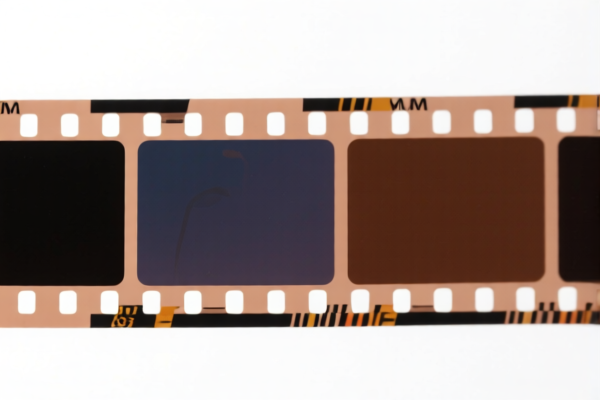
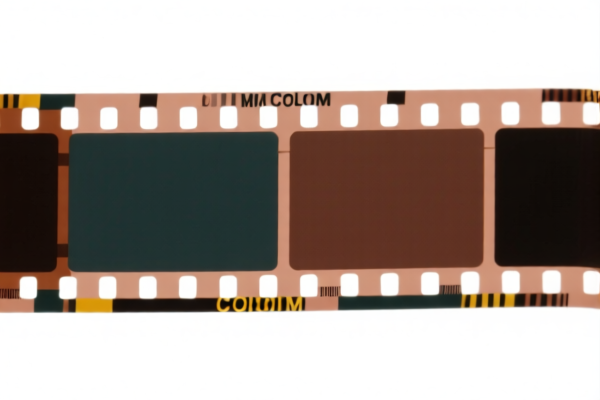
AI分析
🎞️ 35mm Color Film Standard Sensitivity (Exposed & Developed)
🌐 HS Code Reference & Customs Clearance Guide | 2026 Latest Tariff Analysis | Professional-Level Strategy
📌 I. Product Definition & Classification: What is "Standard Sensitivity"?
"35mm Color Film" refers to motion-picture film, exposed and developed, whether or not incorporating a sound track or consisting only of a sound track, with a width of 35 mm or more. In international trade, the term "Standard Sensitivity" is a technical descriptor indicating that the film’s speed (ISO/ASA rating) falls within the common range for general-purpose cinema or photography use, typically distinguishing it from "High Sensitivity" (fast film for low light) or "Low Sensitivity" (slow film for studio/precision work).
The key distinction lies in the intended use: * Feature Films: If the film stock is specifically prepared, packaged, or marketed for the production of narrative feature films (as opposed to newsreels, educational films, or amateur snapshots), it falls under the "Feature films" sub-category. * Release Prints vs. Raw Stock: The data provided specifically refers to exposed and developed film. * Positive Release Prints: These are copies ready for projection in cinemas. * Other (Feature Films): This often captures other exposed/developed 35mm film formats used in feature production that do not strictly fit the "release print" definition or includes intermediate negatives/positives depending on specific customs interpretations, but the HS codes provided clearly separate "Other" from "Positive release prints."
⚠️ Key Distinction Point: - If the film is exposed and developed and intended for cinematic distribution (release), it is classified as "Positive release prints". - If the film is exposed and developed but falls under the broader category of Feature Films (not strictly limited to final release prints, or including other developed formats for feature production), it is classified as "Other Feature films". - Crucially: The term "Standard Sensitivity" is a descriptive attribute within the product description but does not change the HS Code classification; the physical form (35mm, exposed/developed) and intended use (Feature Film) drive the classification.
📦 II. HS Code Classification Details (2026 Latest Tariff Authority对照)
| HS Code | Product Description | Applicable Scenario | Sensitivity/Format |
|---|---|---|---|
3706.10.60.60 |
Motion-picture film, exposed and developed, 35mm+: Other Feature films: Other | Exposed/developed 35mm film for feature films that are not final positive release prints (e.g., intermediates, specific processed stocks). | Standard Sensitivity (as descriptor) |
3706.10.60.30 |
Motion-picture film, exposed and developed, 35mm+: Other Feature films: Positive release prints | Final developed 35mm film reels ready for public screening in cinemas. | Standard Sensitivity (as descriptor) |
🔍 Key Reminder: - Both codes apply to 35mm or wider film. - Both codes apply to exposed and developed film (not raw, unexposed film which would be classified under 3706.10.10). - The distinction between
...60.60("Other") and...60.30("Positive release prints") is critical. If you are importing final copies for theaters, use 60.30. If importing other processed film stocks for feature production (e.g., masters, intermediates), use 60.60. - "Standard Sensitivity" is part of the commercial description and must be included in the declaration to match the commercial invoice and packing list, but the HS Code is determined by the "Feature film" and "Positive release print" status.
💰 III. 2026 Latest Tariff Rate Detail (Including Additional Taxes & Policy Add-ons)
✅ Applicable Country: United States (US)
✅ Origin: China (CN)
✅ Effective Date: Ongoing (Current 301 Tariffs)
🎯 1. 3706.10.60.60 —— Other Feature Films (Other)
| Item | Content |
|---|---|
| Base Tariff Rate | 0.0% (ad valorem) |
| Section 301 Additional Tariff | +25.0% (USITC Footnote) |
| Total Tax Rate | 25.0% |
| Tax Calculation | CIF Value × 25% |
| De Minimis Exemption | ❌ Not Applicable (Deny de minimis for Section 301 goods) |
| Legal Basis Path | USITC:3706.10.60.60 → Section 301: 25% |
📌 Explanation: - The base tariff for motion picture film is often 0%, but Section 301 tariffs on Chinese goods impose an additional 25%. - Total Effective Rate: 25%. - This is a significant duty burden for film distributors or production companies importing finished film stock from China.
🎯 2. 3706.10.60.30 —— Positive Release Prints
| Item | Content |
|---|---|
| Base Tariff Rate | 0.0% (ad valorem) |
| Section 301 Additional Tariff | +25.0% (USITC Footnote) |
| Total Tax Rate | 25.0% |
| Tax Calculation | CIF Value × 25% |
| De Minimis Exemption | ❌ Not Applicable (Deny de minimis for Section 301 goods) |
| Legal Basis Path | USITC:3706.10.60.30 → Section 301: 25% |
📌 Note: - Despite being "release prints" (which are often high-value and small volume), the tariff structure is identical to "Other Feature films" in this context. - The 25% additional duty applies uniformly to both codes under current US-China trade policies. - Total Effective Rate: 25%.
🛠️ IV. Customs Clearance Practical Advice (Battle-Tested Pitfall Avoidance)
✅ 1. Required Documentation Checklist (Non-negotiable)
| Document | Mandatory? | Description |
|---|---|---|
| ✅ Commercial Invoice | ✔️ | Must explicitly state: "35mm Color Film, Exposed and Developed, Standard Sensitivity, Feature Film" |
| ✅ Packing List | ✔️ | Must detail reels, canisters, and contents per reel. Clearly distinguish between "Release Prints" and "Other/Intermediates" if mixed. |
| ✅ Certificate of Origin | ✔️ | Essential for confirming Chinese origin to apply (or challenge) Section 301 status. |
| ✅ Product Description Specification | ✔️ | Confirm film speed (ISO/ASA) if requested, but primarily confirm "Exposed and Developed" status. |
| ✅ Bill of Lading/Air Waybill | ✔️ | Consignee and shipper details must match commercial invoice. |
| ✅ ISF (10+2) Filing | ✔️ | Must be filed 24 hours before loading for ocean freight. |
✅ 2. Declaration Tips (Key Mantra)
🔥 "Exposed & Developed? Feature Film? 25% Hit!"
| Scenario | Correct Declaration | Incorrect Practice |
|---|---|---|
| Final Theater Copies | 3706.10.60.30 + "Positive Release Prints" |
Misclassifying as "Raw Film" (3706.10.10) → 0% base but severe penalties for misdeclaration of state of film. |
| Processed Intermediates/Masters | 3706.10.60.60 + "Other Feature Films" |
Using "Release Print" code → Possible audit if not final prints. |
| Raw, Unexposed Film | 3706.10.10.xx |
Using 3706.10.60.xx → Major Compliance Error. Raw film is NOT exposed/developed. |
| 16mm or Smaller Film | 3706.90.xx |
Using 3706.10.xx → Width must be 35mm or more. |
✅ 3. Special Circumstances Handling
| Situation | Handling Advice |
|---|---|
| Mixed Shipments | Clearly separate "Release Prints" and "Other" in the line items of the ACE (Automated Commercial Environment) entry. Do not average the HS codes. |
| Sample Shipments | Even for samples, if exposed and developed, the 25% duty applies. No de minimis exemption for Section 301 goods. |
| Film for Editing/Mastering | Ensure the description matches 3706.10.60.60. If it is a "Master," ensure it is not a "Print." Masters are often considered "Other." |
| Sensitive Information | Film may contain unreleased content. Use NDA and secure logistics, but commercial value must be declared accurately for duty calculation. Under-declaring value triggers audits. |
🌍 V. Global Major Market Customs Comparison (2026 Latest)
| Country/Region | Recommended HS Code | Tariff Rate | Certification Requirements | Notes |
|---|---|---|---|---|
| 🇺🇸 USA | 3706.10.60.30 / 60.60 |
25% (Total) | None specific | High tariff burden. |
| 🇨🇳 China | 3706.10.60 |
0% - 5% | CCC (if applicable) | Import duty may be low, but export from US to China differs. |
| 🇪🇺 EU | 3706.10 |
0% - 4% | CE (for equipment) | Generally lower duties. |
| 🇬🇧 UK | 3706.10 |
0% - 5% | UKCA | Post-Brexit rules apply. |
| 🇯🇵 Japan | 3706.10 |
0% - 3% | PSE (for equipment) | Low duties. |
📌 Conclusion: - The United States is the only major market among those listed with a 25% punitive tariff on this category due to Section 301. - For US-bound shipments, the 25% cost must be factored into pricing strategies. - EU, UK, and Japan offer more favorable duty rates, but consider non-tariff barriers (certifications, IP laws).
📌 VI. Common Errors & Pitfall Guide (Blood & Tears Lessons)
❌ Error 1: Declaring Raw/Unexposed film as Exposed/Developed (3706.10.60)
👉 Consequence: Misdeclaration of State of Goods. If raw, base duty is 0%. If declared as developed, you pay 25% unnecessarily. Wait, actually:
Correction: If you declare Raw film (3706.10.10) but it is Exposed, you are evading the 25% duty.
👉 Real Risk: If Customs inspects and finds exposed film declared as raw, penalties + back taxes + 25% duty + fraud charges.
👉 Correct Action: Accurately state "Exposed and Developed."
❌ Error 2: Not distinguishing between Release Prints and Other
👉 Consequence: Minor administrative query. While both have 25% duty, accurate classification prevents audits. Release Prints are a specific subset.
❌ Error 3: Ignoring Section 301 Eligibility
👉 Consequence: Many importers assume all film is 0%. False. The 25% add-on is automatic.
👉 Solution: Budget for 25%. No exclusions currently available for this specific HS code from China.
❌ Error 4: Incorrect Width Declaration
👉 Consequence: If film is 16mm, 3706.10 is wrong. It should be 3706.90.
👉 Correct Action: Verify physical width. 35mm is standard for "Feature Films" in this context.
✅ Correct Declaration Example:
"35mm Color Motion Picture Film, Exposed and Developed, Standard Sensitivity, Positive Release Prints for Feature Films, HS Code 3706.10.60.30"
🎯 VII. Conclusion: Professional Declaration, Time-Saving, Cost-Effective!
🎯 Remember the Mantra:
🔹 "Exposed & Developed? 35mm or More? Feature Film? 25% Duty!"
🔹 "Raw Film is 0% Base (but also 25% if from China). Exposed is 25%. Don't mix them up!"
🔹 "Release Prints = .60.30. Other Feature = .60.60. Both 25%."
📌 Tips:
- If your film is produced in the USA, Europe, or Japan, the 25% Section 301 tariff does not apply. You will only pay the 0% base tariff.
- Always verify Country of Origin. The 25% is specific to Chinese origin.
- Consult with a licensed customs broker to confirm the "Exposed and Developed" status with photographic evidence if required by CBP.
📣 Immediate Action:
📞 Contact a Customs Broker + Provide Product Images + Confirm Country of Origin
🚀 Ensure your film clears US Customs smoothly, avoiding 25% unexpected costs or seizures due to misclassification.
✨ Professional Clearance, Starting with Accurate Classification!
💼 Your Every Penny, Deserves to be Precisely Calculated!
用户评价
关于 HS 编码归类
协调制度(HS)是由世界海关组织(WCO)制定的国际贸易商品分类标准。全球 200 多个国家采用 HS 系统作为海关关税、贸易统计和进出口监管的基础。
每个 HS 编码遵循以下层级结构:
- 章(2 位)——商品大类(例如:第 84 章:机器和机械设备)
- 品目(4 位)——章内的更具体分类
- 子目(6 位)——国际通用细分,所有 WCO 成员国统一使用
- 本国细分(8-10 位)——各国自行扩展的细分编码,如美国 HTSUS 10 位编码
正确的 HS 编码归类对于顺利通关、准确缴纳关税和遵守贸易法规至关重要。错误归类可能导致海关延误、多缴关税或罚款。
从CN进口到US时,适用的关税税率可能包括:
- 最惠国(MFN)税率——适用于 WTO 成员国的标准关税税率
- 普通税率——适用于无贸易协定国家
- 贸易救济关税——附加关税,如 301 条款(反倾销)、232 条款(国家安全)或反补贴税
本页内容仅供参考。如需正式归类,请咨询当地海关或持牌报关代理。