35mm Color Reversal Film Wide Format
CN → US| HS编码 | 关税税率 | 原产国 | 目的国 | 文档 |
|---|---|---|---|---|
| 3703906000 | 37.8% | CN | US | 官方文档 |
| 3703206000 | 38.1% | CN | US | 官方文档 |
| 3701910030 | 38.7% | CN | US | 官方文档 |
| 3702530060 | 38.7% | CN | US | 官方文档 |
| 3701910060 | 38.7% | CN | US | 官方文档 |
商品图片

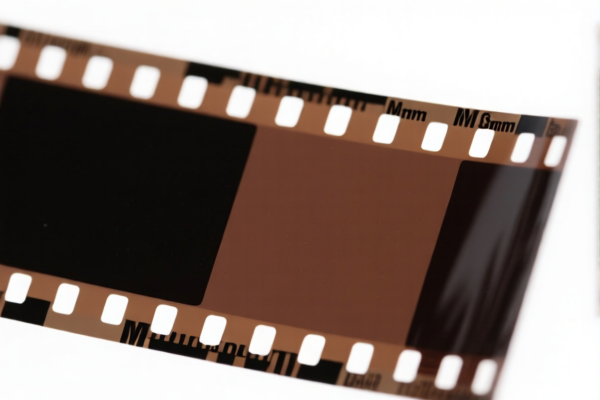
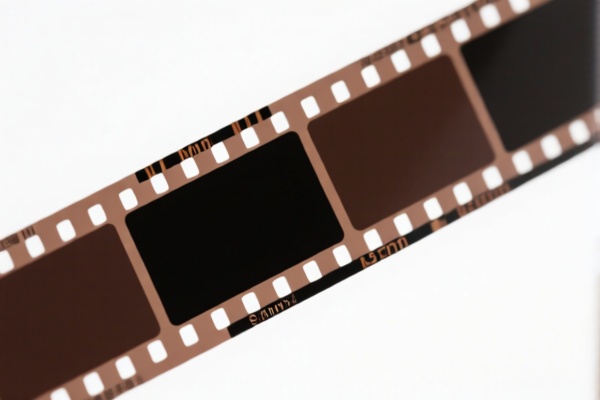
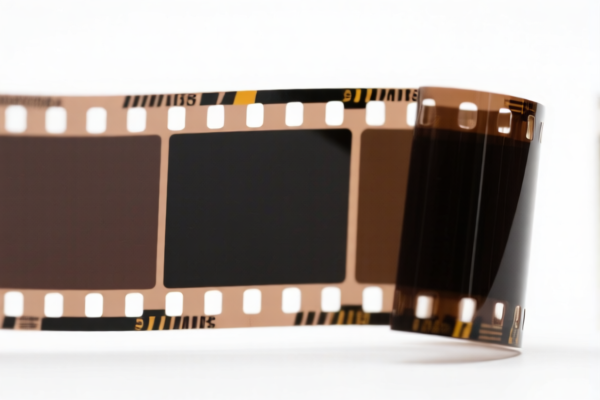
AI分析
🎞️ 35mm Color Reversal Film Wide Format (Slideshow Film)
🌐 HS Code Reference & Clearance Guide | 2026 Latest Tariff Analysis | Professional Customs Strategy
📌 I. Product Definition & Classification: What Exactly is "35mm Color Reversal Film"?
35mm Color Reversal Film (often called Slide Film or Ektachrome/Fuji Velvia) is a high-precision photosensitive material used to produce positive images (slides) for projectors, viewers, and scanners.
- "Reversal Film": Unlike negative film which produces inverted colors, this film produces natural colors directly.
- "35mm": Refers to the width of the film strip (35 millimeters).
- "Wide Format": In the context of 35mm, this usually implies Standard 35mm (vs. the older, narrower 16mm) or potentially specific aspect ratios used in professional photography. It is distinct from medium format (120/220) or panoramic films.
- "Color": Clearly indicates the chemical composition for color reproduction.
⚠️ Key Distinction:
- If the film is unexposed (new roll) → It is a Photosensitive Material (Ch 37).
- If the film is exposed (already shot) → It may be classified differently (often excluded or treated as waste/scrap depending on jurisdiction, but here we assume new/unexposed for import purposes).
- Material Basis: It consists of a transparent plastic base (usually cellulose acetate or polyester) coated with light-sensitive silver halide emulsions.
📦 II. HS Code Classification Details (Based on Provided Data)
The following HS Codes are extracted directly from the <DATA> provided. All codes fall under Chapter 37: Photographic or Cinematographic Goods.
| HS Code | Product Description & Match Logic | Total Tax Rate | Tax Breakdown |
|---|---|---|---|
3703.90.60.00 |
Match Logic: The product is a photosensitive material. It falls under "Other" categories for unexposed photographic film/paper. This is a broad catch-all for photosensitive materials that do not fit specific standard categories. | 37.8% | Base: 2.8% Section 301: 25.0% Section 122: 10.0% |
3703.20.60.00 |
Match Logic: The term "Color" corresponds to "Color" in classification; "Film" is the physical form; it fits the use case of color photographic materials. This is a precise match for color film. | 38.1% | Base: 3.1% Section 301: 25.0% Section 122: 10.0% |
3701.91.00.30 |
Match Logic: "Color" → "Color Photography"; "Film" → "Film" form. Based on material consistency, it is classified as photosensitive materials for color photography. | 38.7% | Base: 3.7% Section 301: 25.0% Section 122: 10.0% |
3702.53.00.60 |
Match Logic: "35mm" and "Color" align with "Color Photographic Film" and "Slide Film". The material meets the requirements for photosensitive film rolls. This is a highly specific match for 35mm slide film. | 38.7% | Base: 3.7% Section 301: 25.0% Section 122: 10.0% |
3701.91.00.60 |
Match Logic: "Color" → Use: "Color Photography"; "35mm Film" → Form: "Photographic Film". It falls under "Other" color photographic products for 35mm film. | 38.7% | Base: 3.7% Section 301: 25.0% Section 122: 10.0% |
🔍 Critical Analysis:
- All suggested HS Codes result in a Total Tax Rate between 37.8% and 38.7%.
- The Section 301 Tariff (25%) is the dominant cost driver, applied to Chinese-origin goods.
- The Section 122 Tariff (10%) is an additional punitive tariff.
- The Base Tariff varies from 2.8% to 3.7% depending on the specific sub-category precision.
💰 III. 2026 Latest Tariff Rate Detail (Including Surcharges & Policy Add-ons)
✅ Applicable Country: United States (US)
✅ Country of Origin: China (CN) (Implied by the presence of Section 301 and 122 tariffs)
✅ Effective Date: Current tariffs apply as of 2026.
🎯 1. Breakdown of the "Total Tax" (37.8% - 38.7%)
| Component | Rate | Source / Legal Basis | Explanation |
|---|---|---|---|
| Base Tariff | 2.8% - 3.7% | HTSUS (Harmonized Tariff Schedule of the United States) | Standard Most-Favored-Nation (MFN) rate for Chapter 37 goods. |
| Section 301 Tariff | +25.0% | USITC Footnote 9903.88.01 (and related) | Additional duty on Chinese imports under Section 301 of the Trade Act of 1974. This is mandatory for goods from China. |
| Section 122 Tariff | +10.0% | Section 122 of the Trade Act (or similar executive order) | Additional punitive tariff imposed on Chinese goods. |
| TOTAL EFFECTIVE RATE | 37.8% - 38.7% | Sum of all above | This is the final duty rate. |
📌 Explanation:
- The 3.1% - 3.7% difference in base rates depends on how precisely the customs broker can link "35mm Color Reversal" to a specific sub-heading (e.g.,3702.53for slide film vs.3701.91for other photosensitive materials).
- Section 301 (25%) is non-negotiable for Chinese-origin goods.
- Section 122 (10%) is an additional layer of tax.
- No De Minimis Exemption: These goods are not eligible for the $800 de minimis exemption (Section 321) if declared under these HS codes for commercial import.
🛠️ IV. Clearance Practical Advice (Battle-Tested Pitfall Avoidance)
✅ 1. Documentation Checklist (Do Not Skip)
| Document | Required? | Notes |
|---|---|---|
| Product Specification Sheet | ✔️ | Must state: "Unexposed Color Reversal Film," "35mm Width," "Emulsion Type" (e.g., E-6 process). |
| Commercial Invoice | ✔️ | Must clearly describe: "35mm Color Slide Film, Unexposed." Avoid vague terms like "Photographic Supplies." |
| Packing List | ✔️ | List quantity (rolls), gross weight, net weight. |
| Country of Origin Certificate | ✔️ | Crucial. If not from China, Section 301/122 tariffs may be avoided. If from China, tariffs are mandatory. |
| MSDS (Material Safety Data Sheet) | ✔️ | Required because film contains chemical emulsions (silver halides). |
| Photos of Product & Labeling | ✔️ | Show the label clearly indicating "Color Reversal Film" and "35mm." |
✅ 2. Declaration Strategy (Key Mnemonic)
🔥 "Precise Description, Clear Origin, Avoid Ambiguity!"
| Scenario | Correct Declaration | Incorrect Declaration | Consequence |
|---|---|---|---|
| Standard 35mm Color Slide | 3702.53.00.60 - "35mm Color Photographic Slide Film" |
"Camera Film" or "Photographic Material" | Risk of misclassification, higher audit scrutiny, potential penalty. |
| Bulk Commercial Import | Full HS Code 3702.53.00.60 + Origin CN |
"General Goods" | Delayed clearance, seizure, or retroactive tax assessment. |
| Sample for Testing | Same HS Code (even for samples) | "Gift" or "Sample" | If value > $800 or commercial intent, de minimis does NOT apply. |
✅ 3. Special Considerations
| Situation | Advice |
|---|---|
| Non-Chinese Origin | If the film is made in Japan (Fujifilm/Kodak Japan), South Korea, or Germany, you can avoid the 25% Section 301 and 10% Section 122 tariffs. The rate drops to just the Base Tariff (2.8%-3.7%). This is a major cost-saving opportunity! |
| Exposed Film | If the film is already exposed, it is NOT HS Code 37. It may be classified as waste or recyclable materials, or even prohibited. Never declare exposed film as "new film." |
| Panoramic 35mm | If "Wide Format" means super-wide (e.g., 35mm cropped to 3:2 or specific panoramic), ensure the description matches the physical width. If it's actually 110 film or APS, it would be a different HS Code. |
🌍 V. Global Market Comparison (2026)
| Region | Recommended HS Code | Est. Tariff (China Origin) | Tariff (Non-China Origin) | Notes |
|---|---|---|---|---|
| 🇺🇸 USA | 3702.53.00.60 |
38.7% | 3.7% | Highest cost due to Section 301/122. |
| 🇨🇳 China | 3702.53.00.60 |
~3.1% | ~3.1% | No Section 301/122. |
| 🇪🇺 EU | 3702.53.00.60 |
0% (If under MFN quota) | 0% | No Section 301/122. Check EU anti-dumping rules. |
| 🇯🇵 Japan | 3702.53.00.60 |
0% - 3.1% | 0% - 3.1% | Low tariffs, no punitive add-ons. |
📌 Conclusion:
- Importing from China to the US is extremely expensive due to the 35%+ additional tariffs.
- Strategy: If possible, source non-Chinese origin film (e.g., Fujifilm Japan, Kodak USA) to reduce tariffs from 38.7% to 3.7%.
- Clearance Risk: High. Customs will scrutinize the "photosensitive" nature. Ensure proper safety documentation (MSDS) is provided.
📌 VI. Common Errors & Pitfalls (Lessons Learned)
❌ Error 1: Declaring as "Camera Accessories" or "Photographic Supplies" (General term).
👉 Consequence: Customs will reclassify, apply highest possible rate, and issue penalties.
❌ Error 2: Ignoring the Origin. Assuming all film is treated the same.
👉 Consequence: Paying 38.7% on Chinese film when Japanese film could be 3.7%. Always declare Country of Origin accurately.
❌ Error 3: Failing to provide MSDS.
👉 Consequence: Customs holds the shipment for chemical safety review, causing delays of 2-4 weeks.
❌ Error 4: Confusing Negative vs. Reversal film.
👉 Consequence: While both are Ch 37, specific sub-headings may differ. Mislabeling can lead to audit flags.
✅ Correct Action:
"35mm Color Reversal Film, Unexposed, E-6 Process Compatible, Manufacturer: [Name], Country of Origin: [Japan/China]"
🎯 VII. Conclusion: Professional Clearance, Cost Optimization!
🎯 Key Takeaways:
🔹 HS Code:
3702.53.00.60is the most precise match for 35mm Color Slide/Reversal Film.
🔹 Tariff: 38.7% if from China (due to Section 301 + 122). 3.7% if from non-China.
🔹 Documentation: MSDS + Precise Description are mandatory.
🔹 Strategy: Sourcing outside China can save ~35% in tariffs.
📌 Pro Tip:
If you are importing large volumes, consider applying for a Section 301 Exclusion if available (though rare for consumer film). Alternatively, transshipment (if legal and compliant) or sourcing from non-target countries is the most effective cost-reduction strategy.
📣 Immediate Action:
📞 Verify Country of Origin.
📄 Prepare MSDS and Spec Sheet.
🏷️ Label invoices clearly: "UNEXPOSED 35MM COLOR REVERSAL FILM."
🚀 Clear Customs Smoothly, Save Costs, Profit More!
✨ Professional Customs Clearance Starts with Accurate Classification!
💼 Every Percentage Point of Tariff is a Point of Profit!
用户评价
关于 HS 编码归类
协调制度(HS)是由世界海关组织(WCO)制定的国际贸易商品分类标准。全球 200 多个国家采用 HS 系统作为海关关税、贸易统计和进出口监管的基础。
每个 HS 编码遵循以下层级结构:
- 章(2 位)——商品大类(例如:第 84 章:机器和机械设备)
- 品目(4 位)——章内的更具体分类
- 子目(6 位)——国际通用细分,所有 WCO 成员国统一使用
- 本国细分(8-10 位)——各国自行扩展的细分编码,如美国 HTSUS 10 位编码
正确的 HS 编码归类对于顺利通关、准确缴纳关税和遵守贸易法规至关重要。错误归类可能导致海关延误、多缴关税或罚款。
从CN进口到US时,适用的关税税率可能包括:
- 最惠国(MFN)税率——适用于 WTO 成员国的标准关税税率
- 普通税率——适用于无贸易协定国家
- 贸易救济关税——附加关税,如 301 条款(反倾销)、232 条款(国家安全)或反补贴税
本页内容仅供参考。如需正式归类,请咨询当地海关或持牌报关代理。