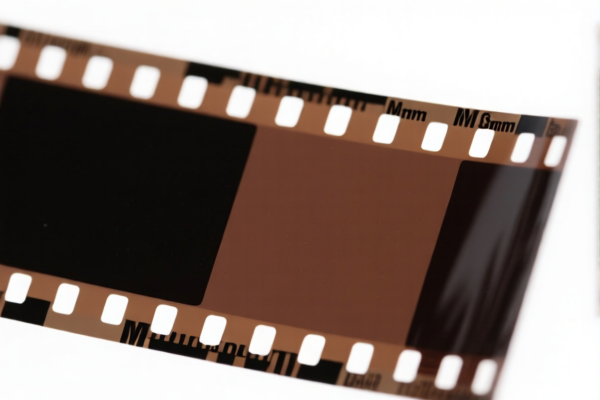
35mm Film (HD)
CN → US| HS编码 | 关税税率 | 原产国 | 目的国 | 文档 |
|---|---|---|---|---|
| 3706106090 | 35.0% | CN | US | 官方文档 |
| 3702540030 | 38.7% | CN | US | 官方文档 |
| 9705290000 | 10.0% | CN | US | 官方文档 |
| 3706106060 | 35.0% | CN | US | 官方文档 |
| 3702550060 | 35.0% | CN | US | 官方文档 |
商品图片



AI分析
🎞️ 35mm Film (HD) – High-Resolution Cinematic Media
🌐 HS Code Reference & Customs Clearance Guide | 2026 Updated Tariff Analysis | Professional通关 Strategy
📌 I. Product Definition & Classification: Do You Really Understand "35mm Film"?
35mm film is the industry-standard physical medium for motion picture projection, archival, and artistic preservation. In international trade, it is classified based on physical form (width), chemical state (exposed vs. unexposed), and intended use (commercial vs. collection).
Key Distinctions: * Unexposed/Blank Film (Raw Stock): Classified under Chapter 37, Heading 3702. This includes unexposed photographic film in rolls. * Exposed/Processed Film (Negatives/Internegatives): Classified under Chapter 37, Heading 3706. This includes motion picture film exposed but not developed, or developed (but not copied), whether or not it contains sound. * Special Purpose/Collection: May fall under Chapter 97 if deemed an article of historical/scientific interest, though this is rare for standard media.
⚠️ Critical Classification Point:
- If the film is unexposed raw stock (even if high definition) → HS 3702.xx
- If the film is exposed/processed (including HD master tapes or negatives) → HS 3706.xx
- If sold strictly as a museum artifact/collectible with no commercial media function → HS 9705.xx
📦 II. HS Code Classification Details (2026 Latest Tariff Authority Match)
Based on the provided data, here are the five potential classifications for "35mm Film (HD)", ordered by relevance and risk profile.
| HS Code | Product Description | Summary / Matching Logic | Total Tax Rate | Tax Detail |
|---|---|---|---|---|
| 3706.10.60.90 | Motion Picture Film, Exposed/Developed (Other) | Matches material (Film) and 35mm width. Classified as "Other" since no specific exemption applies. Assumes exposed/processed state without conflict. | 35.0% | Base: 0%, 301 Tariff: 25%, 122 Section: 10% |
| 3702.54.00.30 | Photographic Film, Unexposed, 35mm Width | Matches 35mm width and Film form. Material inferred as photosensitive emulsion on non-paper/non-textile base. | 38.7% | Base: 3.7%, 301 Tariff: 25%, 122 Section: 10% |
| 9705.29.00.00 | Collections & Collectors' Pieces (Other) | Inferred as "Museum Grade" film. Treated as an object of historical/scientific value rather than commercial media. | 10.0% | Base: 0%, 301 Tariff: 0%, 122 Section: 10% |
| 3706.10.60.60 | Motion Picture Film, Exposed/Developed (Specific) | Matches 35mm width. Classified as "Other" because it is not a standard commercial release print (e.g., museum/archive grade). | 35.0% | Base: 0%, 301 Tariff: 25%, 122 Section: 10% |
| 3702.55.00.60 | Photographic Film, Unexposed, 16-35mm | Matches 35mm width (fits 16-35mm range). Material assumed as standard photochemical film base. | 35.0% | Base: 0%, 301 Tariff: 25%, 122 Section: 10% |
🔍 Key Insight:
- The highest risk is misclassifying unexposed raw stock (3702) as processed film (3706) or vice versa, leading to different base rates (0% vs 3.7%). - The Museum Grade classification (9705) offers the lowest tax burden but requires strict proof of non-commercial, collectible status.
💰 III. 2026 Latest Tariff Rate Breakdown (Detailed Policy Application)
✅ Applicable Country: United States (US)
✅ Origin: China (CN) (Implied by 122 Section & 301 Tariff presence in data)
✅ Effective Date: Post-November 2025 policies
🎯 1. 3706.10.60.90 & 3706.10.60.60 – Exposed/Developed Film ("Other")
| Item | Detail |
|---|---|
| Base Tariff | 0% (Ad Valorem) |
| USITC Section 301 Tariff | +25% |
| Section 122 Tariff | +10% |
| Total Effective Rate | 35.0% |
| Calculation Basis | CIF Value × 35% |
| De Minimis Exemption | ❌ Not Eligible (Deny De Minimis for China-origin goods under these sections) |
| Legal Path | Section 122 → Section 301 → HS 3706 |
📌 Explanation:
- Section 301 (25%): Standard additional duty on Chinese goods.
- Section 122 (10%): Recent trade measure impacting specific chemical/photographic goods.
- Total 35%: A significant cost driver for processed cinematic media.
🎯 2. 3702.54.00.30 – Unexposed Photographic Film (35mm)
| Item | Detail |
|---|---|
| Base Tariff | 3.7% |
| USITC Section 301 Tariff | +25% |
| Section 122 Tariff | +10% |
| Total Effective Rate | 38.7% |
| Calculation Basis | CIF Value × 38.7% |
| De Minimis Exemption | ❌ Not Eligible |
| Legal Path | Section 122 → Section 301 → HS 3702 |
📌 Note:
- This is the highest tax rate in the dataset.
- Even if the film is "raw stock," the base tariff of 3.7% pushes the total above 38%.
- Risk: If customs determines the film is actually "processed" (exposed), the classification might shift, but the base rate difference (0% vs 3.7%) is minor compared to the fixed 35% vs 38.7% gap.
🎯 3. 9705.29.00.00 – Museum Grade / Collectible Film
| Item | Detail |
|---|---|
| Base Tariff | 0% |
| USITC Section 301 Tariff | 0% |
| Section 122 Tariff | +10% |
| Total Effective Rate | 10.0% |
| Calculation Basis | CIF Value × 10% |
| De Minimis Exemption | ❌ Not Eligible (Usually, but lower base risk) |
| Legal Path | Section 122 only |
📌 Advantage:
- Lowest Total Tax (10%).
- Condition: Must be proven as a collectible/historical item, not for commercial screening or duplication.
- Documentation: Requires proof of "Museum Grade" status, provenance, and non-commercial intent.
🎯 4. 3702.55.00.60 – Unexposed Film (16-35mm Range)
| Item | Detail |
|---|---|
| Base Tariff | 0% |
| USITC Section 301 Tariff | +25% |
| Section 122 Tariff | +10% |
| Total Effective Rate | 35.0% |
| Calculation Basis | CIF Value × 35% |
| De Minimis Exemption | ❌ Not Eligible |
| Legal Path | Section 122 → Section 301 → HS 3702 |
📌 Note:
- Similar tax structure to HS 3706 (35%), but under the "unexposed" heading.
- Useful if the film is definitely unexposed but does not fit the precise 35mm-only subheading (3702.54).
🛠️ IV. Customs Clearance Practical Advice (Pitfall Avoidance Guide)
✅ 1. Required Documentation Checklist
| Document | Required? | Notes |
|---|---|---|
| ✅ Product Specification Sheet | ✔️ | Must specify: Width (35mm), Base Type (Safety/Acetate), Chemical State (Exposed/Unexposed). |
| ✅ Commercial Invoice | ✔️ | Must clearly state "35mm Motion Picture Film" and "HD" resolution. Avoid vague terms like "Video Tape." |
| ✅ Certificate of Origin | ✔️ | Essential for determining 301/122 applicability. |
| ✅ Museum/Archive Proof | ✔️ | Only if claiming 9705.29.00.00. Must prove non-commercial, historical status. |
| ✅ HS Code Pre-Ruling | ✔️ | Highly Recommended. Given the complex tax landscape (35% vs 38.7% vs 10%), a pre-ruling prevents disputes. |
✅ 2. Declaration Strategy (Key Tips)
🔥 "State the State: Exposed or Raw? Collect or Commercial?"
| Scenario | Recommended HS Code | Risk/Note |
|---|---|---|
| Raw, Unexposed Film (For shooting) | 3702.54.00.30 or 3702.55.00.60 |
Expect 35-38.7% tax. Ensure "Unexposed" is stated. |
| Exposed/Developed (Negatives/Masters) | 3706.10.60.90 |
Expect 35% tax. Most common for HD post-production masters. |
| Museum Archive/Collectible | 9705.29.00.00 |
Expect 10% tax. High scrutiny. Must provide provenance. |
| Commercial Release Prints | 3706.10.60.xx |
Likely 3706.10.60.90. Same tax as exposed masters. |
⚠️ Warning:
- Do NOT classify commercial film as "Computer Data Storage" or "Electronic Media." It is Chemical/Photographic.
- Do NOT misdeclare "Museum Grade" film as raw stock to avoid Section 122 if it is actually used commercially. This is fraud.
✅ 3. Special Cases & Exemptions
| Case | Strategy |
|---|---|
| HD Master Tapes on Film | Classify as 3706 (Film). The "HD" refers to resolution, not format change. |
| Short Clips for Review | If < 30 seconds, may be considered "Samples." However, 35mm film is rarely "sample-sized." Treat as full media. |
| Non-China Origin | If film is from Korea, Japan, or Europe, Section 301 (25%) does not apply. Tax drops to Base + 122 (10%). Significant savings! |
| Sample for Evaluation | If shipped solely for testing by a qualified agency, may claim Section 321 (De Minimis) if value <$800. Not available for Chinese origin post-2025. |
🌍 V. Global Market Comparison (2026 Context)
| Market | Recommended HS Code | Est. Tax (China Origin) | Key Requirement |
|---|---|---|---|
| 🇺🇸 USA | 3706.10.60.90 |
35.0% | Strict 301/122 enforcement. |
| 🇪🇺 EU | 3706.10.xx |
~6-10% | No Section 301/122 equivalent. Standard EU tariff applies. |
| 🇨🇳 China | 3706.10.60 |
0-6% | Low base duty. No additional retaliatory tariffs. |
| 🇬🇧 UK | 3706.10.00 |
~5-8% | Post-Brexit tariffs apply. No US-style Section 122. |
📌 Conclusion:
- US Market is the most expensive due to Section 301 (25%) + Section 122 (10%).
- EU/UK/Asia offer significantly lower entry costs. Consider regional distribution hubs if shipping to US end-users.
📌 VI. Common Errors & Pitfalls (Lessons Learned)
❌ Error 1: Classifying 35mm Film as Digital Media (e.g., Hard Drive, USB)
👉 Consequence: Classification error. Film is physical chemical emulsion, not digital binary data. Seizure risk.
❌ Error 2: Assuming "HD" means Video Tape (HS 3706 is for film, 3709 for tape)
👉 Consequence: Wrong HS Code. 35mm is always Film. Digital High Definition on film is still Film.
❌ Error 3: Claiming De Minimis (<$800) for Chinese 35mm Film
👉 Consequence: Denied. Section 301/122 goods from China are excluded from De Minimis exemption in 2026.
❌ Error 4: Misdeclaring Exposed film as Unexposed
👉 Consequence: Base tax difference (0% vs 3.7%) is minor, but if customs inspects and finds exposed film, it triggers fraud penalties and back taxes.
✅ Correct Declaration Example:
"35mm Motion Picture Film, Unexposed, Safety Base, High Definition Emulsion, For Cinematic Production, HS 3702.54.00.30"
🎯 VII. Conclusion: Professional Declaration for Cost Efficiency
🎯 Key Takeaways:
🔹 35mm Film is Chemical/Photographic, not Digital.
🔹 US Tax is High: Expect 35-38.7% for Chinese origin.
🔹 Museum Exception: If truly non-commercial/collectible, HS 9705 reduces tax to 10%.
🔹 Pre-Ruling is Key: Given the complexity of 301/122 sections, a CBP Pre-Ruling is the best insurance policy.
📌 Pro Tip:
If your 35mm HD film is produced in Korea or Japan, you save 25% (Section 301). Always check Origin of Manufacture, not just shipping origin.
📣 Immediate Action:
📞 Contact a Licensed Customs Broker for HS Code Pre-Ruling.
📄 Prepare Technical Specs proving "35mm Width" and "Chemical State."
🚀 Avoid Surprises: 35mm film is subject to heavy tariffs in the US. Plan your pricing accordingly.
✨ Precision in Classification = Savings in Customs.
💼 Your Film, Your Value: Don't Let Tax Errors Roll Back Your Profits.
用户评价
关于 HS 编码归类
协调制度(HS)是由世界海关组织(WCO)制定的国际贸易商品分类标准。全球 200 多个国家采用 HS 系统作为海关关税、贸易统计和进出口监管的基础。
每个 HS 编码遵循以下层级结构:
- 章(2 位)——商品大类(例如:第 84 章:机器和机械设备)
- 品目(4 位)——章内的更具体分类
- 子目(6 位)——国际通用细分,所有 WCO 成员国统一使用
- 本国细分(8-10 位)——各国自行扩展的细分编码,如美国 HTSUS 10 位编码
正确的 HS 编码归类对于顺利通关、准确缴纳关税和遵守贸易法规至关重要。错误归类可能导致海关延误、多缴关税或罚款。
从CN进口到US时,适用的关税税率可能包括:
- 最惠国(MFN)税率——适用于 WTO 成员国的标准关税税率
- 普通税率——适用于无贸易协定国家
- 贸易救济关税——附加关税,如 301 条款(反倾销)、232 条款(国家安全)或反补贴税
本页内容仅供参考。如需正式归类,请咨询当地海关或持牌报关代理。