35mm Film Dispensing Film
CN → US商品图片
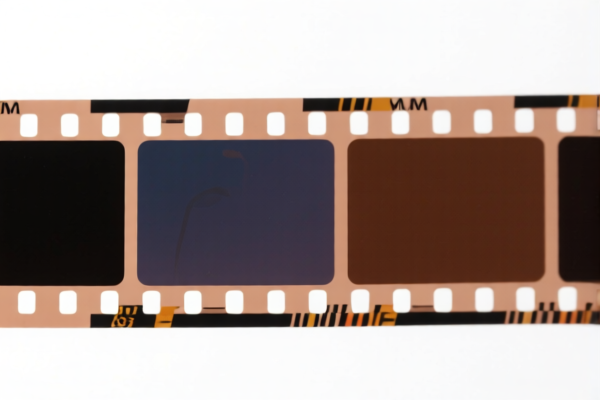
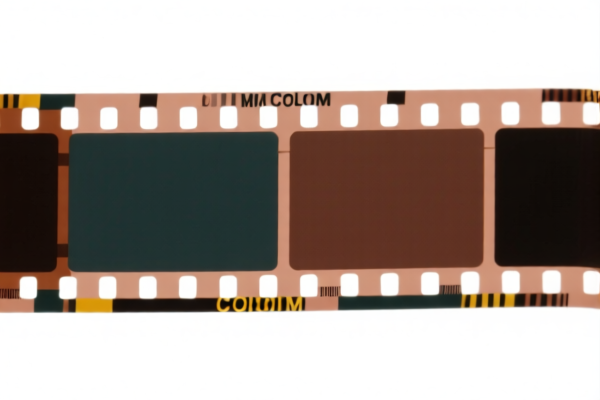
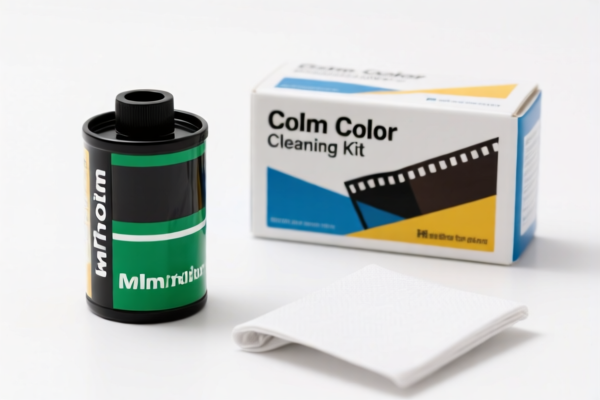
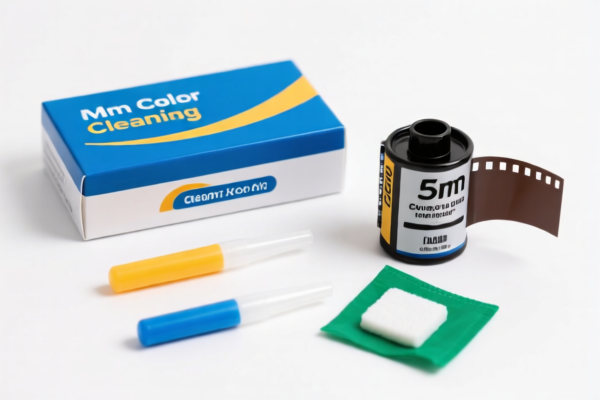
AI分析
🎞️ 35mm Film Dispensing Film (Photographic Film for Consumer/Darkroom Use)
🌐 HS Code Reference & Customs Clearance Guide | 2026 Latest Tariff Analysis | Professional通关 Strategy
📌 I. Product Definition & Classification: What is "35mm Dispensing Film"?
35mm Dispensing Film typically refers to black-and-white or color negative photographic film sold in bulk rolls or standard cassettes for consumer photography, darkroom printing, or artistic purposes. Unlike "scientific" or "industrial" X-ray film, this is light-sensitive photographic material intended for image capture.
In international trade, it is critical to distinguish between: 1. Unexposed Photographic Film: Raw film ready for use (the primary definition of "Dispensing Film"). 2. Exposed Film: Already developed or raw film containing latent images (usually classified under waste/recycling if not sold for use). 3. X-Ray/Document Film: Medical or industrial films (classified differently under Ch. 90).
⚠️ Key Distinction:
- If the product is unexposed light-sensitive emulsion on a plastic base (acetate, polyester, or cellulose triacetate) → HS Code 3702.
- If it is color film (negative or reversal) → HS Code 3702.32/3702.42.
- If it is black-and-white film → HS Code 3702.10/3702.52.
- Do NOT confuse with "dispensing" in the pharmaceutical or cosmetic sense (e.g., film strips for hair removal), which would fall under Ch. 30 or 33. The term "35mm" strongly implies photography.
📦 II. HS Code Classification Details (2026 Latest Tariff Authority)
| HS Code | Product Description | Applicable Scenario | Sensitivity |
|---|---|---|---|
3702.10.00 |
Unexposed photographic film of any sensitizer, in rolls, width > 105mm, B&W, positive or negative | Large format B&W film (not 35mm, but often grouped) | Light-sensitive |
3702.32.00 |
Unexposed color negative film, in rolls, width ≤ 35mm | Standard 35mm Color Negative (C-41 Process) | Light-sensitive |
3702.42.00 |
Unexposed color reversal film, in rolls, width ≤ 35mm | Standard 35mm Color Slide/Reversal (E-6 Process) | Light-sensitive |
3702.52.00 |
Unexposed B&W negative film, in rolls, width ≤ 35mm | Standard 35mm B&W Negative | Light-sensitive |
3702.61.00 |
Unexposed infrared film, in rolls, width ≤ 35mm | Specialized artistic/industrial IR film | Light-sensitive |
3702.91.00 |
Other unexposed photographic film, in rolls, width ≤ 35mm | Rare formats, panchromatic B&W, or non-standard emulsions | Light-sensitive |
🔍 Critical Note for 35mm:
- The vast majority of consumer "35mm dispensing film" falls under3702.32(Color Neg) or3702.52(B&W Neg).
- Packaging Matters: If sold in cassettes (finished consumer units) vs. rolls (bulk), some customs administrations may require different sub-headings, but the HTSUS (USA) often groups them under 3702 for film itself, while the packaged product for retail might be scrutinized under3926.90(Plastic articles) if the emulsion is considered integral to the plastic substrate. However, 3702 is the standard for photographic film.
💰 III. 2026 Latest Tariff Rate Breakdown (Including Surcharges, Policy Add-ons)
✅ Applicable Country: United States (US)
✅ Origin: China (CN) (Assuming common manufacturing origin for tariff analysis)
✅ Effective Date: From November 10, 2025 (including subsequent imports)
🎯 1. 3702.32.00 / 3702.52.00 —— Unexposed 35mm Photographic Film
| Item | Content |
|---|---|
| Base MFN Rate | 0% (ad valorem) |
| USITC Add-on Duty (Section 301) | +25% (Footnote 9903.88.01 applies to many chemical/plastic/photo products) |
| IEEPA Add-on Duty | +10% (Targeting China/HK products, effective Nov 10, 2025) |
| Total Tariff Rate | 35% |
| Tax Calculation | CIF Value × 35% |
| De Minimis Eligibility | ❌ Denied (deny_de_minimis applies to Section 301 goods) |
| Legal Authority Path | IEEPA:9903.01.25 → IEEPA:9903.01.24 → USITC:3702.32.00 → FOOTNOTE:9903.88.01 |
📌 Explanation:
- Photographic film is classified under Chapter 37 (Photographic or Cinematographic Goods).
- Under Section 301, many chemical and plastic-based photo products are subject to the 25% additional duty.
- The new IEEPA 10% tariff stacks on top, making the total 35%.
- This is a high-cost item for importers.
🎯 2. 3702.42.00 —— Unexposed Color Reversal (Slide) Film
| Item | Content |
|---|---|
| Base MFN Rate | 0% |
| USITC Add-on Duty (Section 301) | +25% |
| IEEPA Add-on Duty | +10% |
| Total Tariff Rate | 35% |
| Tax Calculation | CIF × 35% |
| De Minimis Eligibility | ❌ Denied |
| Legal Authority Path | Same as above |
📌 Note:
- Slide film (E-6) is less common but follows the same tariff structure as negative film.
- No preferential duty reduction for this category under current US-China trade terms.
🛠️ IV. Customs Clearance Practical Advice (Real-World Pitfall Guide)
✅ 1. Required Documentation Checklist
| Document | Must Provide? | Details |
|---|---|---|
| ✅ Product Specification Sheet | ✔️ | Must state: "Unexposed Photographic Film," Emulsion Type (Color Neg/B&W), Width (35mm), Base Material (Polyester/Acetate). |
| ✅ Photo of Packaging | ✔️ | Must show "Warning: Keep in Dark" or "Light Sensitive" label. |
| ✅ Material Safety Data Sheet (MSDS) | ✔️ | Photographic film often contains Silver Halides and chemicals (e.g., sodium thiosulfate residues). MSDS is required for safe transport (often classified as UN 3077 or UN 1993 depending on composition). |
| ✅ Commercial Invoice | ✔️ | Description must NOT be vague (e.g., avoid "Plastic Roll"). Use "Unexposed 35mm Color Negative Photographic Film." |
| ✅ Certificate of Origin | ✔️ | To verify origin for IEEPA/Section 301 application. |
| ✅ HS Code Pre-ruling (Optional but Recommended) | ✔️ | To confirm if specific silver-based content triggers different chemical tariffs. |
✅ 2. Declaration Tips (Key Mantras)
🔥 "Film is Chemical, Not Plastic; Declare Sensitivity, Avoid Misclassification!"
| Scenario | Correct Declaration | Wrong Practice |
|---|---|---|
| 35mm Color Film | 3702.32.00 |
Misclassified as 3920 (Plastic Sheets) → Penalty + Audit |
| 35mm B&W Film | 3702.52.00 |
Misclassified as 3921 → Penalty + Audit |
| Bulk Rolls vs. Cassettes | Both under 3702 (if film is the essential character) |
Splitting invoice to avoid duty → Customs Fraud Risk |
| Expired Film | If still unexposed → 3702; If developed/waste → Waste Code (3707/9801) |
Selling expired film as "new" → False Declaration |
✅ 3. Special Circumstances
| Situation | Handling Advice |
|---|---|
| Silver Content | If the film contains precious metals (silver), ensure MSDS highlights this. Some countries have additional environmental taxes. |
| Transport Classification | Photographic film is often considered Hazardous for Transport if it contains residual chemicals. Ensure proper UN packaging if required by carrier. |
| Origin: Vietnam/Thailand | If film is manufactured in Vietnam or Thailand (not just packed), it may be eligible for USMCA/ASEAN free trade benefits or IEEPA exemption. Check Certificate of Origin carefully! |
| Digital Film Scanners | If selling film scanners alongside film, ensure they are declared separately (HS Code 8528 for scanners) to avoid mixed-rate confusion. |
🌍 V. Global Market Comparison (2026 Latest)
| Country/Region | Recommended HS Code | Tariff (China Origin) | Certification Requirements | Notes |
|---|---|---|---|---|
| 🇺🇸 USA | 3702.32.00 / 3702.52.00 |
35% (25% Sec 301 + 10% IEEPA) | FDA (if applicable for safety), EPA (chemicals) | Highest duty burden. |
| 🇨🇳 China | 3702.32.00 / 3702.52.00 |
0% | CCC (if applicable), RoHS | Low duty, high domestic production. |
| 🇪🇺 EU | 3702.32.00 / 3702.52.00 |
0% | REACH (Chemical registration) | No IEEPA-like tariff, but strict chemical compliance. |
| 🇬🇧 UK | 3702.32.00 / 3702.52.00 |
0% | UKCA, REACH-UK | Post-Brexit rules apply, but generally free trade on photo goods. |
| 🇯🇵 Japan | 3702.32.00 / 3702.52.00 |
0% | JIS (Japanese Industrial Standards) | Stable market for high-end film. |
📌 Conclusion:
- USA is the most expensive market due to Section 301 and IEEPA.
- EU/UK/Japan offer 0% duty, but strict chemical compliance (REACH/JIS) is required.
- Consider diversifying supply chain to non-China origins (e.g., India, Vietnam) if targeting the US market to avoid 35% tariffs.
📌 VI. Common Mistakes & Pitfalls (Blood & Tears Lessons)
❌ Mistake 1: Declaring as "Plastic Rolls" (3920)
👉 Consequence: Misclassification penalty. Customs may assess higher duties or flag for chemical non-compliance.
❌ Mistake 2: Ignoring MSDS
👉 Consequence: Shipment delayed or rejected by carrier due to unknown chemical content (Silver Halides).
❌ Mistake 3: Assuming "Film" means "Videotape" (8523)
👉 Consequence: 35mm film is still photography, not magnetic/optical data storage. Different HS Code, different duty.
❌ Mistake 4: Not declaring Origin correctly
👉 Consequence: If claimed as "Made in Vietnam" but actually "Made in China," face customs fraud charges and retroactive duties.
✅ Correct Approach:
"Unexposed 35mm Color Negative Photographic Film, Polyester Base, Silver Halide Emulsion, for Consumer Photography, HS Code 3702.32.00"
🎯 VII. Conclusion: Professional Declaration, Save Cost, Avoid Risk!
🎯 Remember the Mantra:
🔹 "Film is Photo, Not Plastic; 35mm is 3702; USA is 35%, Global is 0%; MSDS is Key!"
🔹 "HS Code 3702 saves you from 25% penalties; Misclassification costs you more than duty!"
📌 Pro Tip:
If you are importing small quantities (<$800) into the US, Section 321 (De Minimis) may NOT apply because Section 301 goods are explicitly excluded from de minimis treatment. Prepare for 35% duty even on small samples.
For larger shipments, consider pre-classification rulings or supply chain relocation to mitigate tariff risks.
📣 Take Action Now:
📞 Contact a certified customs broker + Provide MSDS + Verify Origin
🚀 Ensure your 35mm film clears customs smoothly, efficiently, and profitably!
✨ Professional Clearance Starts with Accurate Classification!
💼 Every percent of duty matters in the photo industry!
用户评价
关于 HS 编码归类
协调制度(HS)是由世界海关组织(WCO)制定的国际贸易商品分类标准。全球 200 多个国家采用 HS 系统作为海关关税、贸易统计和进出口监管的基础。
每个 HS 编码遵循以下层级结构:
- 章(2 位)——商品大类(例如:第 84 章:机器和机械设备)
- 品目(4 位)——章内的更具体分类
- 子目(6 位)——国际通用细分,所有 WCO 成员国统一使用
- 本国细分(8-10 位)——各国自行扩展的细分编码,如美国 HTSUS 10 位编码
正确的 HS 编码归类对于顺利通关、准确缴纳关税和遵守贸易法规至关重要。错误归类可能导致海关延误、多缴关税或罚款。
从CN进口到US时,适用的关税税率可能包括:
- 最惠国(MFN)税率——适用于 WTO 成员国的标准关税税率
- 普通税率——适用于无贸易协定国家
- 贸易救济关税——附加关税,如 301 条款(反倾销)、232 条款(国家安全)或反补贴税
本页内容仅供参考。如需正式归类,请咨询当地海关或持牌报关代理。