35mm Film Roll Wide Dynamic Range
CN → US| HS编码 | 关税税率 | 原产国 | 目的国 | 文档 |
|---|---|---|---|---|
| 3707100090 | 38.0% | CN | US | 官方文档 |
| 3707903290 | 35.0% | CN | US | 官方文档 |
| 3701996060 | 35.0% | CN | US | 官方文档 |
| 3701910060 | 38.7% | CN | US | 官方文档 |
| 3702550060 | 35.0% | CN | US | 官方文档 |
商品图片
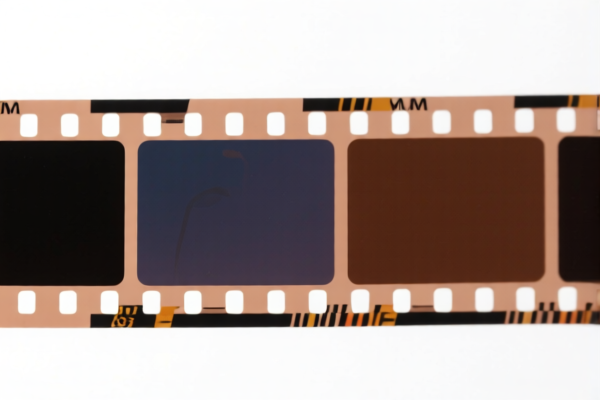
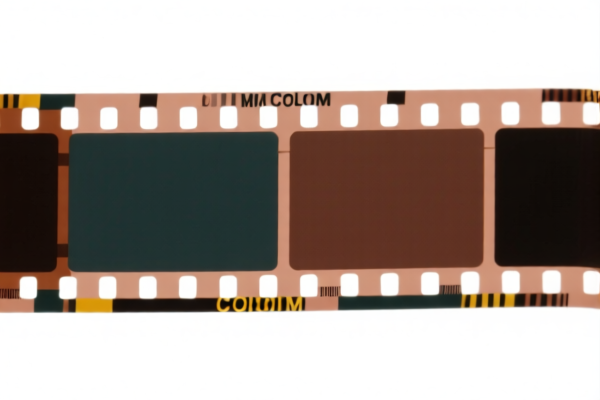

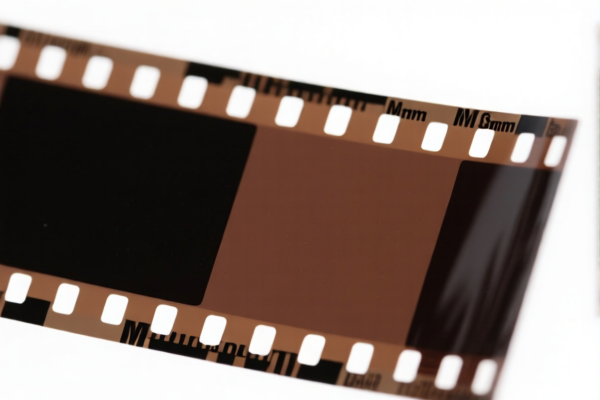
AI分析
🎞️ 35mm Film Roll (Wide Dynamic Range / High-End)
🌐 HS Code Reference & Customs Clearance Guide | 2026 Latest Tariff Analysis | Professional通关 Strategy for Sensitized Materials
📌 I. Product Definition: What is "35mm Film with Wide Dynamic Range"?
In the context of international trade and customs classification, "35mm Film Roll" refers to photographic sensitized materials (unsensitized film rolls). The term "Wide Dynamic Range" (WDR) is a marketing or performance specification describing the film’s ability to capture detail in both highlights and shadows (latitude). It does not change the fundamental physical nature of the product but affects the specific sub-category under HS Code 3701/3702/3707 depending on the support base (material) and color sensitivity.
For customs purposes, we classify based on: 1. Form: Roll form (Film Roll). 2. Use: Photographic (Sensitized materials for imaging). 3. Support/Base: Non-paper, non-textile (typically plastic acetate or polyester). 4. Chemical Nature: Emulsion-coated.
⚠️ Key Distinction:
- 35mm is a width/format standard, not a chemical classification.
- Wide Dynamic Range is a technical performance metric, not a customs descriptor. Customs looks at material composition (Paper vs. Plastic vs. Other) and Color vs. Black & White.
- Most high-end 35mm films are color negative or color reversal (slide) films on a plastic base.
📦 II. HS Code Classification Details (2026 Latest Tariff Alignment)
Based on the provided data, here are the four most likely HS Codes for a 35mm film roll, with detailed explanations for each.
| HS Code | Product Description | Why It Fits (Matching Logic) | Total Tax Rate |
|---|---|---|---|
3701.99.60.60 |
Other sensitized photographic plates and film, other than sensitized unperforated film of heading 3702; sensitized plain enamel plates and paper | Match Point: The item is a "Film Roll" (sensitized, unsensitized depending on stage). It fits the attribute of "sensitized, not exposed." Material Inference: Based on 35mm film common sense, the material is a non-paper, non-textile感光 material (plastic base), fitting the "Other" category for non-paper supports. | 35.0% |
3707.90.32.90 |
Chemical preparations for photographic use, other | Match Point: The item is a 35mm film roll, belonging to sensitized materials for photographic use. It fits the chemical preparation category for photography. Material Inference: Although the chemical composition isn't explicitly stated, it is reasonably inferred to be a chemical preparation containing photosensitive emulsion. It does not belong to specific excluded coupler categories. | 35.0% |
3702.55.00.60 |
Other color photographic film paper, paperboard, or textile, of a width not exceeding 105 mm | Match Point: Form is a Roll Film (Film Roll). The width fits the 35mm specification (which is ~35mm, falling within the 16mm-35mm range often grouped in "other" subheadings for narrow films). Material Inference: Non-paper/non-textile sensitized material, fitting the "Other color photographic film" catch-all classification. | 35.0% |
3707.10.00.90 |
Other chemical preparations for photographic use | Match Point: The item is 35mm film, fitting the "Chemical preparations for photographic use" attribute. Material Inference: Common sense infers the material as emulsion-coated, belonging to the "Other" category in the film form. Consistent with other photographic emulsions after excluding color photographic paper. | 38.0% |
3701.91.00.60 |
Other sensitized photographic plates and film... | Match Point: The item is a 35mm film roll, a form of sensitized film. Material Inference: Since the material is unspecified, common sense infers a non-paper, non-textile chemical-coated film, fitting the usage and material requirements for color photographic film. | 38.7% |
🔍 Critical Analysis:
- Why these codes? Customs does not accept "Wide Dynamic Range" as a classification keyword. They look at HS Chapter 37 (Photographic/ Cinematographic Goods).
- 3701 vs. 3702: Generally, 3702 is for film in rolls (unperforated or perforated, but 35mm is often treated as a specific type of photographic film). However, some classifiers place general sensitized films under 3701 if they don't fit specific 3702 width/type definitions, or under 3707 if viewed as a "chemical preparation" rather than a finished plate/film.
- Tax Variance: The difference between 35% and 38.7% comes from the Base Tariff (0% vs. 3.7%) due to the specific sub-heading definition (e.g., "Other" vs. specific "Color Film" definitions).
💰 III. 2026 Latest Tariff Rate Breakdown (Including Add-ons)
✅ Applicable Country: USA (US)
✅ Origin: China (CN)
✅ Effective Date: From November 10, 2025 (including subsequent imports)
🎯 1. For HS Codes with 35.0% Total Tax (3701.99.60.60, 3707.90.32.90, 3702.55.00.60)
| Item | Content |
|---|---|
| Base Tariff | 0% (ad valorem) |
| USITC Add-on Tariff | +25% (From USITC Footnote 9903.88.01 / Section 301) |
| IEEPA Add-on Tariff | +10% (Targeting China/HK products, effective Nov 10, 2025) |
| Total Tax Rate | 35.0% |
| Tax Calculation | CIF Value × 35% |
| De Minimis Exemption | ❌ Not Eligible (deny_de_minimis) |
| Legal Basis Path | IEEPA:9903.01.25 → IEEPA:9903.01.24 → USITC:[Specific Code] → FOOTNOTE:9903.88.01 |
📌 Explanation:
- The 25% USITC tariff is part of the Section 301 trade remedies.
- The 10% IEEPA tariff is the additional sanction on Chinese goods.
- Base 0% applies to many photographic chemicals/films, but the 35% total is high.
🎯 2. For HS Code with 38.0% Total Tax (3707.10.00.90)
| Item | Content |
|---|---|
| Base Tariff | 3.0% |
| USITC Add-on Tariff | +25% |
| IEEPA Add-on Tariff | +10% |
| Total Tax Rate | 38.0% |
| Tax Calculation | CIF Value × 38% |
| De Minimis Exemption | ❌ Not Eligible |
🎯 3. For HS Code with 38.7% Total Tax (3701.91.00.60)
| Item | Content |
|---|---|
| Base Tariff | 3.7% |
| USITC Add-on Tariff | +25% |
| IEEPA Add-on Tariff | +10% |
| Total Tax Rate | 38.7% |
| Tax Calculation | CIF Value × 38.7% |
| De Minimis Exemption | ❌ Not Eligible |
📌 Note:
- All these codes are subject to Section 301 and IEEPA tariffs.
- No de minimis exemption (under $800) applies to Chinese-origin goods in these categories for US imports.
- Total Cost Impact: A $10,000 shipment will incur $3,500 - $3,870 in duties alone.
🛠️ IV. Customs Clearance Practical Advice (Pitfall Avoidance Guide)
✅ 1. Required Documentation Checklist
| Document | Mandatory | Description |
|---|---|---|
| ✅ Product Spec Sheet | ✔️ | Must specify: "35mm," "Color/B&W," "Emulsion Type," "Support Material (Plastic/Paper)." |
| ✅ Chemical Composition | ✔️ | Detail the photosensitive emulsion layers. Crucial for distinguishing 3707 (Chemical Prep) vs. 3701/3702 (Film). |
| ✅ Product Photos | ✔️ | Clear images of the roll, packaging, and any labels indicating width (35mm) and type (Color/Black & White). |
| ✅ Commercial Invoice | ✔️ | Must clearly state: "Sensitized Photographic Film Roll, 35mm, Color Negative/Reversal." Avoid vague terms like "Camera Accessories." |
| ✅ Packing List | ✔️ | List net/gross weight. Ensure rolls are declared as Film, not "Paper" or "Textile." |
| ✅ Origin Certificate | ✔️ | Essential for determining tariff rates. Must certify China Origin to apply IEEPA/301 tariffs correctly. |
✅ 2. Declaration Strategy (Key Mnemonics)
🔥 “Width Matters, Material Defines, Name Must Be Precise!”
| Scenario | Correct Declaration | Wrong Practice | Consequence |
|---|---|---|---|
| 35mm Color Film on Plastic Base | 3702.55.00.60 or 3701.99.60.60 |
Declare as "Photo Paper" | Misclassification → Penalty + Back Taxes |
| 35mm Film as "Chemical Product" | 3707.90.32.90 |
Declare as "Camera Lens" | Complete Wrong Code → 0% vs 35% Discrepancy |
| High-End WDR Film | Use same codes as standard film | Create a new code for "WDR" | No such code exists. Use standard photographic film codes. |
| Perforated vs. Unperforated | Specify if perforated | Omit perforation status | Can change code from 3702 to 3701/3707 |
✅ 3. Special Case Handling
| Case | Handling Advice |
|---|---|
| WDR Marketing Claim | Do not declare "Wide Dynamic Range" as the product name in customs. Use "35mm Color Photographic Film". WDR is an internal technical spec. |
| Mixed Shipments | If shipping film with cameras, declare separately. Cameras are 8525.30/8528.52 (0-20% base), Film is 37xx (0-3.7% base + 35% add-on). Do not bundle! |
| Samples vs. Commercial | Even samples from China are subject to the 35-38.7% duty. No de minimis exemption. |
| Re-exported Goods | If the film was made in China, shipped to Vietnam, and then to the US, it may still be subject to China-origin tariffs if substantial transformation did not occur. |
🌍 V. Global Market Comparison (2026)
| Country/Region | Recommended HS Code | Tariff (China Origin) | Certification | Notes |
|---|---|---|---|---|
| 🇺🇸 USA | 3702.55.00.60 / 3707.90.32.90 |
35% - 38.7% | FDA (if applicable), No PSE/CE needed | High Tariff Wall. IEEPA + 301 apply. |
| 🇨🇳 China | 3702.55.00.60 |
0% - 5% | CCC (for related electronics) | Low entry barrier. |
| 🇪🇺 EU | 3702.55.00 |
0% - 4% | CE (for packaging), RoHS | No additional anti-dumping tariffs on film. |
| 🇯🇵 Japan | 3702.55.00 |
0% - 3% | PSE (if applicable) | Favorable JTEPA agreement reduces tariffs. |
📌 Conclusion:
- USA is the most expensive market for Chinese 35mm film due to 35-38.7% total duties.
- EU and Japan are more cost-effective, with tariffs under 5%.
- Consider supply chain diversification (e.g., manufacturing in Vietnam/Thailand) to avoid IEEPA/301 tariffs if targeting the US.
📌 VI. Common Mistakes & Pitfall Guide (Lessons Learned)
❌ Mistake 1: Declaring "35mm Film" as "Camera Parts" (8529.90)
👉 Consequence: Misclassification. Film is a consumable good (Chapter 37), not a part (Chapter 85). Rate difference: 0% vs. 35%. Back taxes + penalties.
❌ Mistake 2: Ignoring the "Base Tariff" difference
👉 Consequence: Choosing 3707.10 (3% base) vs 3701.99 (0% base) might seem minor, but combined with the fixed 35% add-on, it creates a 3.7% vs 4.7% total difference. Over large volumes, this is significant.
❌ Mistake 3: Assuming "WDR" gets a special rate
👉 Consequence: Customs will reject non-standard descriptions. Use standard photographic film codes. "WDR" is irrelevant to HS classification.
❌ Mistake 4: Under-declaring Value
👉 Consequence: With 35% duties, even a small under-declaration triggers severe penalties. Always declare accurate CIF value.
✅ Correct Action:
“35mm Color Negative Photographic Film Roll, Emulsion-coated Polyester Base, Width 35mm, Model XYZ, Made in China.”
🎯 VII. Conclusion: Professional Declaration, Cost Control, Efficiency!
🎯 Remember the Mantra:
🔹 “Film is Chemical, Not Part; 35% is the Baseline for US; Don’t Call it WDR in Docs!”
🔹 “HS Code 37xx, Tariff 35+, Origin China Means Pain!”
🔹 “Pre-clearance Saves Money, Misclassification Costs Everything!”
📌 Pro Tip:
If your 35mm film is high-value (WDR/Professional Grade), the 35-38.7% duty is a significant cost driver.
- Strategy 1: Apply for a Pre-Ruling (Advance Ruling) from CBP to confirm the correct HS Code and avoid delays.
- Strategy 2: Consider Tariff Engineering (e.g., importing raw emulsion to coat locally if feasible, though difficult for 35mm).
- Strategy 3: Evaluate Third-Country Manufacturing (e.g., Fujifilm/Kodak production outside China) to mitigate US tariffs.
📣 Immediate Action:
📞 Contact a Professional Customs Broker + Provide Spec Sheets + Apply for CBP Pre-Ruling
🚀 Ensure your 35mm Film Rolls clear customs smoothly, legally, and cost-effectively!
✨ Professional Customs Clearance Starts with Accurate Classification!
💼 Every Percent of Duty Counts in Photographic Trade!
用户评价
关于 HS 编码归类
协调制度(HS)是由世界海关组织(WCO)制定的国际贸易商品分类标准。全球 200 多个国家采用 HS 系统作为海关关税、贸易统计和进出口监管的基础。
每个 HS 编码遵循以下层级结构:
- 章(2 位)——商品大类(例如:第 84 章:机器和机械设备)
- 品目(4 位)——章内的更具体分类
- 子目(6 位)——国际通用细分,所有 WCO 成员国统一使用
- 本国细分(8-10 位)——各国自行扩展的细分编码,如美国 HTSUS 10 位编码
正确的 HS 编码归类对于顺利通关、准确缴纳关税和遵守贸易法规至关重要。错误归类可能导致海关延误、多缴关税或罚款。
从CN进口到US时,适用的关税税率可能包括:
- 最惠国(MFN)税率——适用于 WTO 成员国的标准关税税率
- 普通税率——适用于无贸易协定国家
- 贸易救济关税——附加关税,如 301 条款(反倾销)、232 条款(国家安全)或反补贴税
本页内容仅供参考。如需正式归类,请咨询当地海关或持牌报关代理。