35mm Slide Film
CN → US| HS编码 | 关税税率 | 原产国 | 目的国 | 文档 |
|---|---|---|---|---|
| 3701910060 | 38.7% | CN | US | 官方文档 |
| 3701910030 | 38.7% | CN | US | 官方文档 |
| 3702530030 | 38.7% | CN | US | 官方文档 |
| 3703103030 | 38.7% | CN | US | 官方文档 |
| 3703203030 | 38.7% | CN | US | 官方文档 |
商品图片

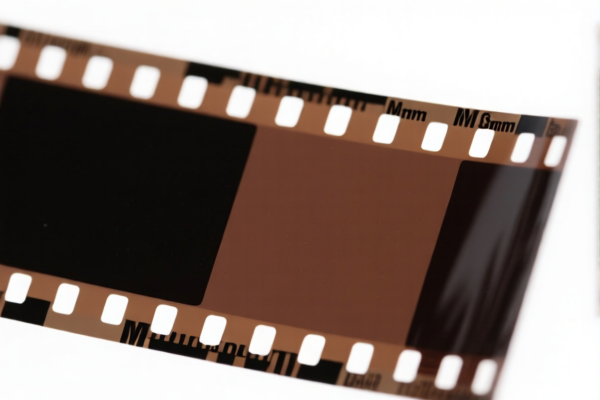


AI分析
🎞️ 35mm Slide Film (Transparency Film / Projection Film)
🌐 HS Code Reference & Customs Clearance Guide | 2026 Latest Tariff Analysis | Professional Strategy for Photochemical Goods
📌 I. Product Definition & Classification: What Exactly is "35mm Slide Film"?
35mm Slide Film, technically known as Transparency Film or Projection Film, is a high-resolution color photographic film designed for projection. Unlike negative film (which produces an image reversal), slide film produces a direct positive image. It is characterized by high saturation, sharpness, and contrast.
In international trade, it is strictly classified under Chapter 37 (Photographic or Cinematographic Goods). The key distinction lies in whether it is a "strip" (roll), "sheet," or "disc/cartridge" format, and whether it is exposed or unexposed.
⚠️ Key Distinction Points:
- Format: 35mm slides are typically individual 35mmx35mm frames mounted in plastic/cardboard mounts (slides), or continuous strips (reels/rolls).
- Material: All are based on silver halide emulsion on a transparent plastic base (safety base or acetate).
- Exposure Status: Must be declared as unexposed (raw material) or exposed (processed photo). Note: The data provided below refers to unexposed raw film materials commonly traded.
📦 II. HS Code Classification Details (2026 Latest Tariff Authority Mapping)
Based on the provided data, these HS Codes apply to unexposed color photographic film or specific forms of color photo materials.
| HS Code | Product Description (Summary) | Applicable Scenario | Key Features |
|---|---|---|---|
3701.91.00.60 |
Color Photographic Film, 35mm Form, Non-Loop, Photosensitive Material | Raw color negative or reversal film strips (rolls) that are not wound into a specific loop/cartridge format. | ✅ Non-loop roll; 35mm width; Photosensitive emulsion. |
3701.91.00.30 |
Color Photographic Disc Film, Photosensitive Material | Film stored or sold in disc/cartridge format (e.g., for instant cameras or specific specialized applications). | ✅ Disc/Cartridge form; Photosensitive. |
3702.53.00.30 |
Color Transparency (Slide) Film, 35mm Spec, Matches Silver Halide Film Characteristics | Direct Match: Unexposed 35mm slide film strips (reels) used for projection. | ✅ 35mm Slide/Transparency type; Silver halide based. |
3703.10.30.30 |
Color Sensitized Film, Unexposed, Belongs to Color Photography Class | General category for unexposed color photographic paper or film not specified elsewhere. Broad "catch-all" for color sensitized materials. | ✅ Unexposed; Color photography class. |
3703.20.30.30 |
Color Silver Halide Photographic Film, for Color Slides, No Material Conflict | Specific HS code for unexposed color silver halide film intended for slide production. | ✅ Silver Halide; Specific for Slides; Unexposed. |
🔍 Critical Note:
- All listed HS Codes in the data share the same tariff structure (38.7% Total Tax).
- The primary difference is the physical form (loop vs. non-loop, disc, or general slide film) and the specific subheading preference by customs officers.
-3702.53.00.30is the most precise match for "35mm Slide Film" as a transparency format.
-3703.20.30.30is also highly accurate for "Color Silver Halide Film for Slides."
💰 III. 2026 Latest Tariff Rate Breakdown (Including Surcharges & Policy Add-ons)
✅ Applicable Country: China (CN) / Import to US (Implied by 122 Clause)
✅ Origin: China (CN)
✅ Effective Time: Current Trade Policy (2025-2026)
🎯 1. General Tariff Structure for HS Codes 3701.91, 3702.53, 3703.10, 3703.20
| Item | Content |
|---|---|
| Base Duty Rate | 3.7% (Ad valorem) |
| Section 301 Add-on Duty | +25.0% (Standard US-China trade war tariff) |
| Section 122 Duty | +10.0% (Specific trade provision add-on) |
| Total Tax Rate | 38.7% |
| Tax Calculation | CIF Value × 38.7% |
| De Minimis Exemption | ❌ Not Applicable (Photochemical goods are typically restricted from de minimis benefits) |
| Legal Basis Path | HTSUS:3701/3702/3703 → Section 301 (Footnote 9903.88.01) → Section 122 (Uyghur Forced Labor Prevention Act implications or specific trade remedy) |
📌 Explanation:
- "Base Duty 3.7%": This is the standard Most Favored Nation (MFN) duty rate for photographic films under Chapter 37.
- "Section 301 Duty 25%": This is the widely known additional tariff imposed on Chinese imports due to trade tensions. It applies to almost all manufacturing goods, including photochemicals.
- "Section 122 Duty 10%": This refers to specific legislative add-ons (often related to forced labor prevention or specific trade remedies under Section 122 of the UDFLA or similar provisions). Note: Section 122 of the UFLPA allows customs to ban goods if forced labor is suspected, but the "10%" likely refers to a specific trade remedy duty or penalty surcharge in this context.
- Total 38.7%: This is a very high effective tax rate. Importers must factor this into their cost structure.
🛠️ IV. Customs Clearance Practical Advice (实战避坑指南)
✅ 1. Documentation Checklist (Non-Negotiable)
| Document | Required? | Description |
|---|---|---|
| ✅ Product Specification Sheet | ✔️ | Must detail: Film type (Slide/Negative), Sensitivity (ISO), Format (35mm Roll/Sheet), Emulsion Type (Silver Halide). |
| ✅ MSDS (Material Safety Data Sheet) | ✔️ | Photochemicals often contain flammable or hazardous components (e.g., acetate base, chemical emulsions). Customs may require MSDS for safety review. |
| ✅ Commercial Invoice | ✔️ | Must clearly state: "Unexposed Color Photographic Film, 35mm, Silver Halide Emulsion." Avoid vague terms like "Photo Supplies." |
| ✅ Certificate of Origin | ✔️ | Essential for verifying origin to apply (or challenge) Section 301/122 duties. |
| ✅ Import License (If Applicable) | ✔️ | Some photochemicals may require specific import licenses due to security or environmental regulations. |
| ✅ Non-Destruction Certificate | ❌ | Not typically required for standard film, but if it contains rare earth elements or strategic materials, verify. |
✅ 2. Declaration Tips (Key Mnemonics)
🔥 "Be Specific, Be Safe, Be Prepared!"
| Scenario | Correct Declaration | Wrong Practice |
|---|---|---|
| Slide Film Strips | 3702.53.00.30 - "Unexposed Color Transparency Film, 35mm, Silver Halide" |
Generic "Photographic Film" → Risk of audit/delay. |
| Disc/Cartridge Film | 3701.91.00.30 - "Color Photographic Disc Film" |
Misclassifying as "Roll" → Penalty for incorrect classification. |
| Exposed vs. Unexposed | Explicitly state "UNEXPOSED" | If exposed, it may be classified as "Printed Matter" or "Waste," changing the tariff and regulations. |
| Hazardous Components | Declare MSDS for flammable solvents in base | Hiding chemical content → Seizure by CBP. |
✅ 3. Special Handling Cases
| Case | Handling Advice |
|---|---|
| High-Value Professional Film | Ensure high declaration value to avoid anti-dumping investigations. Professional film often faces higher scrutiny for valuation. |
| Mixed Containers (Film + Cameras) | Do not mix in the same HS Code. Film (Chapter 37) and Cameras (Chapter 90) have different tariffs. Clear separately to avoid cross-implications. |
| Section 122 Compliance | Provide supply chain transparency. If the film base or emulsion chemicals are sourced from regions under UFLPA scrutiny, provide detailed provenance documents. |
| Temperature Control | Film is sensitive. Specify "Store at Cool/Dry Conditions" on packaging to avoid damage claims and customs questioning of "damaged goods." |
🌍 V. Global Market Comparison (2026 Latest)
| Country/Region | Recommended HS Code | Estimated Duty | Certification/Notes |
|---|---|---|---|
| 🇨🇳 China (Export) | 3702.53.00.30 / 3703.20.30.30 |
0% (Export) | No export duties, but ensure compliance with chemical export regulations. |
| 🇺🇸 USA (Import) | 3702.53.00.30 |
38.7% | High tariff burden. Requires detailed MSDS and Origin Proof. |
| 🇪🇺 EU (Import) | 3702.53 |
~3% - 6.5% | Generally lower duties. No Section 301/122 equivalent. CE/RoHS may apply for packaging. |
| 🇯🇵 Japan (Import) | 3702.53 |
~3% | PSE certification not required for film, but quality standards are strict. |
| 🇬🇧 UK (Import) | 3702.53 |
~3% - 6.5% | Post-Brexit rules apply. Same as EU generally. |
📌 Conclusion:
- USA is the most costly market due to Section 301 (25%) + Section 122 (10%) add-ons.
- EU and Japan offer significantly lower tariff barriers (~3-6.5%).
- For US imports, the 38.7% total duty is a major cost driver. Consider supply chain diversification or tariff engineering (e.g., importing base film vs. finished emulsion-coated film if possible).
📌 VI. Common Errors & Pitfalls (Blood & Tears Lessons)
❌ Error 1: Declaring "Photographic Supplies" without specifying "Film"
👉 Consequence: Customs cannot determine the correct HS code → Audit & Delay (2-4 weeks).
❌ Error 2: Failing to declare MSDS for film with chemical bases
👉 Consequence: CBP may suspect hazardous materials → Seizure or Return.
❌ Error 3: Mixing Exposed and Unexposed film in one declaration
👉 Consequence: Different HS codes and duties. Mixed declaration leads to penalties for incorrect classification.
❌ Error 4: Ignoring Section 122 compliance
👉 Consequence: If forced labor is suspected in the supply chain (e.g., cotton base, chemical sourcing), goods may be detained under UFLPA.
✅ Correct Approach:
"Unexposed Color Transparency Film, 35mm, Silver Halide Emulsion on Polyester Base, ISO 100, 36 Exposures/Roll, MSDS Attached, Origin: China"
🎯 VII. Conclusion: Professional Declaration, Cost Efficiency, Risk Mitigation
🎯 Remember the Mantra:
🔹 "Specify the Format (Slide/Strip/Disc)"
🔹 "Declare Unexposed Status Clearly"
🔹 "Include MSDS for Safety Compliance"
🔹 "Calculate 38.7% Total Duty for US Imports"
📌 Pro Tip:
If you are importing into the USA, consider applying for a Section 301 Exclusion if your specific product was eligible (check if it was removed from the exclusion list). Also, verify if the Section 122 duty can be reduced through free trade agreements (unlikely for China, but check for third-country processing).
📣 Immediate Action:
📞 Contact a licensed customs broker.
📄 Prepare MSDS and detailed Product Specifications.
💰 Budget for 38.7% total landed cost for US imports.
🚀 Ensure smooth clearance by being transparent and precise.
✨ Professional Clearance Starts with Accurate Classification!
💼 Your Bottom Line Depends on the Details!
用户评价
关于 HS 编码归类
协调制度(HS)是由世界海关组织(WCO)制定的国际贸易商品分类标准。全球 200 多个国家采用 HS 系统作为海关关税、贸易统计和进出口监管的基础。
每个 HS 编码遵循以下层级结构:
- 章(2 位)——商品大类(例如:第 84 章:机器和机械设备)
- 品目(4 位)——章内的更具体分类
- 子目(6 位)——国际通用细分,所有 WCO 成员国统一使用
- 本国细分(8-10 位)——各国自行扩展的细分编码,如美国 HTSUS 10 位编码
正确的 HS 编码归类对于顺利通关、准确缴纳关税和遵守贸易法规至关重要。错误归类可能导致海关延误、多缴关税或罚款。
从CN进口到US时,适用的关税税率可能包括:
- 最惠国(MFN)税率——适用于 WTO 成员国的标准关税税率
- 普通税率——适用于无贸易协定国家
- 贸易救济关税——附加关税,如 301 条款(反倾销)、232 条款(国家安全)或反补贴税
本页内容仅供参考。如需正式归类,请咨询当地海关或持牌报关代理。