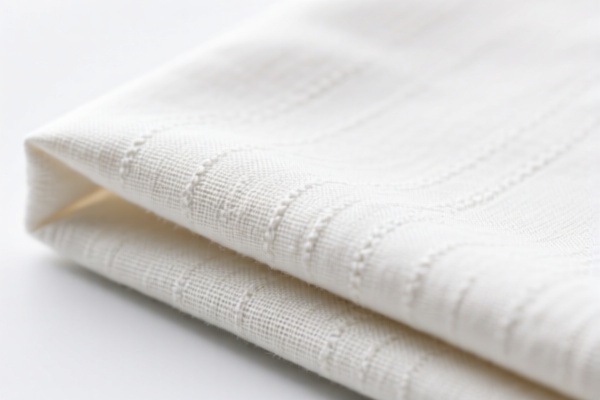
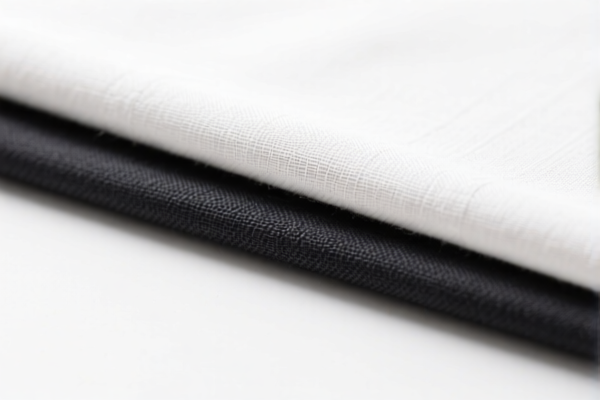
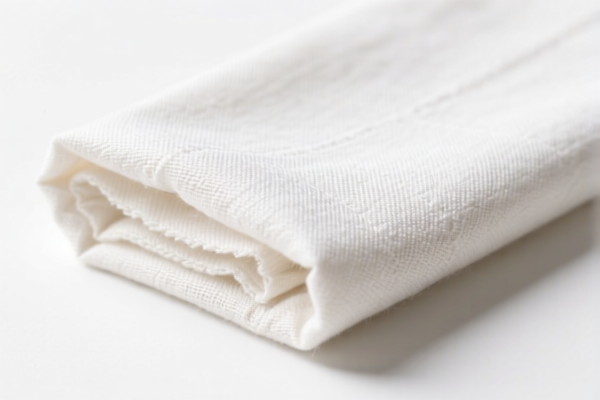
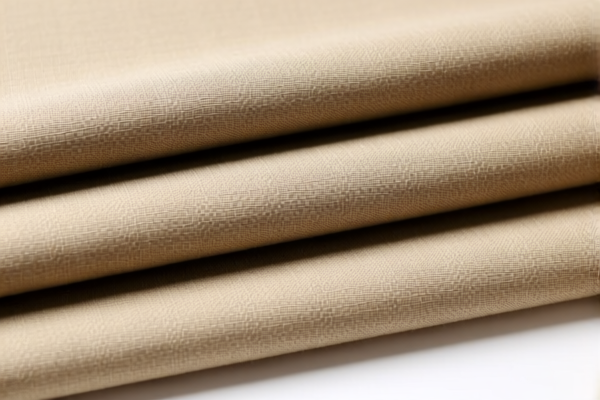
4 layer twill unbrushed fabric
CN → US| HS编码 | 关税税率 | 原产国 | 目的国 | 文档 |
|---|---|---|---|---|
| 5208230000 | 44.1% | CN | US | 官方文档 |
| 5208130000 | 42.9% | CN | US | 官方文档 |
| 5512210060 | 47.0% | CN | US | 官方文档 |
| 5512110060 | 47.0% | CN | US | 官方文档 |
| 5407830040 | 43.5% | CN | US | 官方文档 |
商品图片
AI分析
🧵 4-Layer Twill Unbrushed Fabric (4 Thread Twill Unnapped)
🌐 HS Code Reference & Customs Clearance Guide | 2026 Latest Tariff Analysis | Professional Customs Strategy
📌 Product Definition & Classification: What is "4-Layer Twill Unbrushed"?
This product refers to a woven fabric constructed with a twill weave (diagonal rib pattern), described as "Unnapped" (meaning the surface is smooth, not raised, fuzzy, or brushed). The term "4 Thread" typically refers to the yarn count (denier) or the specific thread count per unit, indicating a fine-to-medium weight fabric.
The core challenge in classification lies in identifying the fiber content (Cotton, Synthetic Filament, or Wool), as this dictates the HS Code chapter and, consequently, the tariff rate. Based on the provided data, we analyze the three most likely scenarios: Cotton, Synthetic Staple Fiber, and Synthetic Filament.
📦 1. HS Code Classification Details (2026 Latest Tariff Mapping)
| HS Code | Product Description | Material Logic | Total Tax Rate |
|---|---|---|---|
| 5208.23.00.00 | 4 Thread Twill Unnapped, Cotton | Matches "Cotton Woven Fabric, Unnapped, Twill." "4 Thread" fits fine cotton yarns. | 44.1% |
| 5208.13.00.00 | 4 Thread Twill Unnapped, Cotton | Matches "Cotton Woven Fabric, Unnapped, Twill." Specific subheading for unbleached/undyed variants. | 42.9% |
| 5512.21.00.60 | 4 Thread Twill Unnapped, Synthetic Staple | Matches "Woven Fabrics of Synthetic Staple Fibers." No conflict with Acrylic (if not specified as Acrylic). | 47.0% |
| 5512.11.00.60 | 4 Thread Twill Unnapped, Synthetic Staple | Matches "Woven Fabrics of Synthetic Staple Fibers (Polyester/Acrylic blend)." | 47.0% |
| 5407.83.00.40 | 4 Thread Twill Unnapped, Synthetic Filament | Matches "Woven Fabrics of Other Synthetic Filament Yarns." Fits the "4 Thread" filament characteristic. | 43.5% |
🔍 Key Classification Logic: * If Cotton: Goes to Chapter 52. The difference between
5208.23and5208.13often depends on whether the fabric is bleached, dyed, or printed.5208.23is generally for dyed/piece-dyed, while5208.13may apply to unbleached or specific weaves. * If Synthetic Staple (e.g., Polyester staple, Nylon staple): Goes to Chapter 55, Heading 55.12. * If Synthetic Filament (e.g., Polyester filament, Nylon filament): Goes to Chapter 54, Heading 54.07.
💰 2. 2026 Latest Tariff Rate Breakdown (Including Surcharges & Policies)
✅ Applicable Country: United States (US) ✅ Origin: China (CN) ✅ Effective Date: November 10, 2025 (and subsequent imports)
🎯 Scenario A: Cotton Fabrics (5208.23.00.00 & 5208.13.00.00)
| Item | Details |
|---|---|
| Base Duty Rate | 9.1% (for 5208.23) / 7.9% (for 5208.13) |
| USITC Section 301 Surcharge | +25.0% |
| Section 122 Surcharge | +10.0% |
| Total Tax Rate | 44.1% (5208.23) / 42.9% (5208.13) |
| De Minimis Exemption? | ❌ No (Deny De Minimis) |
| Legal Basis Path | USITC:5208.23.00.00 → FOOTNOTE:301 → IEEPA:Section122 |
📌 Explanation: * Base Duty: Standard MFN rate for cotton woven fabrics. * Section 301 (25%): Applied to all Chinese-origin textile products listed in the trade war schedules. * Section 122 (10%): Additional surcharge targeting specific Chinese imports under Section 301. * Result: A total tax burden of ~43-44%. This is extremely high, significantly impacting profit margins.
🎯 Scenario B: Synthetic Staple Fibers (5512.21.00.60 & 5512.11.00.60)
| Item | Details |
|---|---|
| Base Duty Rate | 12.0% |
| USITC Section 301 Surcharge | +25.0% |
| Section 122 Surcharge | +10.0% |
| Total Tax Rate | 47.0% |
| De Minimis Exemption? | ❌ No (Deny De Minimis) |
| Legal Basis Path | USITC:5512.21.00.60 → FOOTNOTE:301 → IEEPA:Section122 |
📌 Explanation: * Synthetic staple fabrics have a higher base duty (12%) compared to some cotton variants. * The surcharges remain the same (35% total surcharges). * Result: 47.0%, the highest among the options. This is the most expensive classification if the material is synthetic staple.
🎯 Scenario C: Synthetic Filament (5407.83.00.40)
| Item | Details |
|---|---|
| Base Duty Rate | 8.5% |
| USITC Section 301 Surcharge | +25.0% |
| Section 122 Surcharge | +10.0% |
| Total Tax Rate | 43.5% |
| De Minimis Exemption? | ❌ No (Deny De Minimis) |
| Legal Basis Path | USITC:5407.83.00.40 → FOOTNOTE:301 → IEEPA:Section122 |
📌 Explanation: * Synthetic filament fabrics have a moderate base duty (8.5%). * Result: 43.5%. This is slightly cheaper than the synthetic staple option but comparable to cotton.
🛠️ 3. Customs Clearance Practical Advice (Real-World Pitfalls Guide)
✅ 1. Documentation Checklist (Essential)
| Document | Required? | Notes |
|---|---|---|
| ✅ Product Specification Sheet | ✔️ | Must specify Fiber Content (e.g., 100% Cotton, 100% Polyester). This is the single most important factor for HS Code selection. |
| ✅ Weave Structure Diagram | ✔️ | Confirm "Twill Weave" and "Unnapped/Smooth Surface." |
| ✅ Fabric Sample | ✔️ | Physical sample for Customs verification if needed. |
| ✅ Commercial Invoice | ✔️ | Must clearly state: "Woven Fabric, Twill Weave, Unbrushed, [Fiber Content]." |
| ✅ Packing List | ✔️ | Include weight (kg/lbs) and dimensions. |
| ✅ Certificate of Origin | ✔️ | Required to prove origin for Section 301/122 applicability. |
✅ 2. Classification Strategy (Key Tips)
🔥 "Fiber Content is King, Weave is Queen, Surface is Prince!"
| Situation | Correct Action | Wrong Action |
|---|---|---|
| Material is Cotton | Use 5208.xxxx |
Don't use 5512 (Synthetic) → 47% vs 44% |
| Material is Synthetic | Determine if Staple (short fiber) or Filament (long fiber). | Confusing Staple vs. Filament → Misclassification Risk |
| "Unbrushed" Definition | Ensure no Nap, Pile, or Fuzz. If brushed, it may move to Chapter 58 or 54/55 different subheadings. | Claiming "Unbrushed" if fabric is fuzzy → Customs Penalty |
| "4 Thread" | Clarify if it means Yarn Count (e.g., 4/2) or Thread Count. | Ambiguous description → Delayed Clearance |
✅ 3. Special Handling for Textiles
| Scenario | Recommendation |
|---|---|
| Cotton vs. Synthetic | If the fabric is a blend (e.g., Cotton/Poly), the classification changes again. Ensure pure material claims. |
| Section 301/122 Exemptions | Check if your specific HS Code was exempted. Currently, most textile HS Codes are not exempt. |
| De Minimis (Section 321) | ❌ Do NOT use De Minimis ($800 threshold). The data indicates deny_de_minimis. Small shipments are still subject to full duties. |
| Labeling | Ensure fabric bolts are labeled with fiber content, width, and length per US textile labeling laws (FTC). |
🌍 4. Global Market Comparison (2026 Latest)
| Country/Region | Recommended HS Code | Tariff (China Origin) | Notes |
|---|---|---|---|
| 🇺🇸 USA | 5208.23.00.00 / 5512.21.00.60 |
43.5% - 47.0% | High tariffs due to Section 301 & 122. No De Minimis. |
| 🇨🇳 China | 5208.23.00.00 |
~5-9% | Lower base rates. |
| 🇪🇺 EU | 5208.23.00.00 |
~10-12% | No Section 301, but standard MFN applies. |
| 🇨🇦 Canada | 5208.23.00.00 |
~10-12% | CUSMA benefits may apply if produced in NA. |
📌 Conclusion: * The US market is the most challenging for Chinese-origin fabrics due to the 35% total surcharge (25% + 10%). * Cotton fabrics (
5208) are slightly cheaper than Synthetic Staple (5512) but more expensive than Synthetic Filament (5407) in terms of base duty, but total rates are similar. * Synthetic Filament (5407.83.00.40) offers the lowest total tax at 43.5%, followed by Cotton (44.1%), then Synthetic Staple (47.0%).
📌 5. Common Errors & Pitfalls (Lessons Learned)
❌ Error 1: Misidentifying "Unbrushed" as "Brushed" 👉 Consequence: If fabric is actually brushed, it may require a different HS Code (e.g., Chapter 58), leading to higher duties or rejection.
❌ Error 2: Ignoring Fiber Content 👉 Consequence: Declaring "Synthetic" when it's Cotton (or vice versa) is fraud. Seizure, fines, and loss of importing privileges.
❌ Error 3: Assuming De Minimis Applies 👉 Consequence: Small samples under $800 are NOT exempt for these HS Codes. You must pay the full 43-47% tax even on small shipments.
✅ Correct Action:
"100% Cotton, 4/2 Yarn, Twill Weave, Unnapped Fabric, 44 Inches Wide" Be precise about fiber, weave, and surface finish.
🎯 6. Conclusion: Professional Declaration for Cost Control
🎯 Key Takeaway:
🔹 "Fiber Determines HS Code, HS Code Determines Tax, Tax Determines Profit!" 🔹 Synthetic Filament (
5407.83.00.40) has the lowest total tax (43.5%). 🔹 Synthetic Staple (5512.21.00.60) has the highest total tax (47.0%).
📌 Pro Tip:
If you have the option to source or produce using Synthetic Filament instead of Staple Fiber, it saves 3.5% in total tax. If using Cotton, ensure the fabric is dyed/piece-dyed (likely 5208.23) unless unbleached.
✨ Professional Clearance, Starting with Accurate Classification! 💼 Every Percent Saved is Pure Profit!
📢 Immediate Action:
📞 Contact a licensed customs broker. 📤 Provide Fiber Content and Weave Structure documentation. 🚀 Clear Customs Smoothly, Optimize Costs, Maximize Profits!
用户评价
关于 HS 编码归类
协调制度(HS)是由世界海关组织(WCO)制定的国际贸易商品分类标准。全球 200 多个国家采用 HS 系统作为海关关税、贸易统计和进出口监管的基础。
每个 HS 编码遵循以下层级结构:
- 章(2 位)——商品大类(例如:第 84 章:机器和机械设备)
- 品目(4 位)——章内的更具体分类
- 子目(6 位)——国际通用细分,所有 WCO 成员国统一使用
- 本国细分(8-10 位)——各国自行扩展的细分编码,如美国 HTSUS 10 位编码
正确的 HS 编码归类对于顺利通关、准确缴纳关税和遵守贸易法规至关重要。错误归类可能导致海关延误、多缴关税或罚款。
从CN进口到US时,适用的关税税率可能包括:
- 最惠国(MFN)税率——适用于 WTO 成员国的标准关税税率
- 普通税率——适用于无贸易协定国家
- 贸易救济关税——附加关税,如 301 条款(反倾销)、232 条款(国家安全)或反补贴税
本页内容仅供参考。如需正式归类,请咨询当地海关或持牌报关代理。