4 layer twisted velvet fabric
CN → US| HS编码 | 关税税率 | 原产国 | 目的国 | 文档 |
|---|---|---|---|---|
| 5903102010 | 35.0% | CN | US | 官方文档 |
| 5903102090 | 35.0% | CN | US | 官方文档 |
商品图片
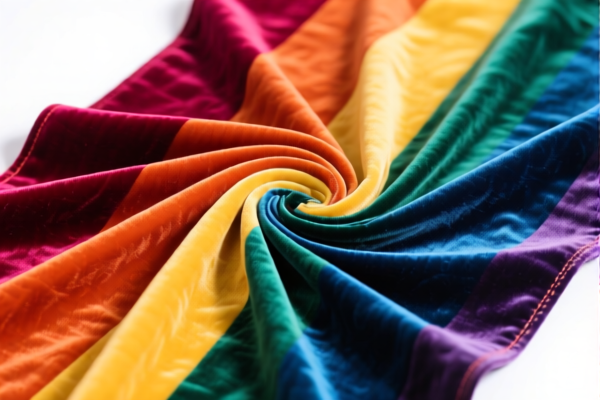
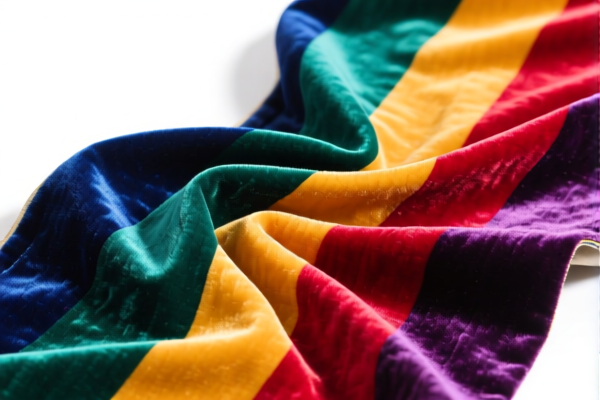
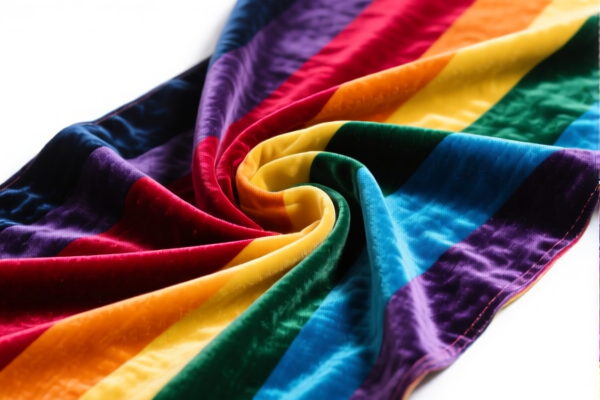
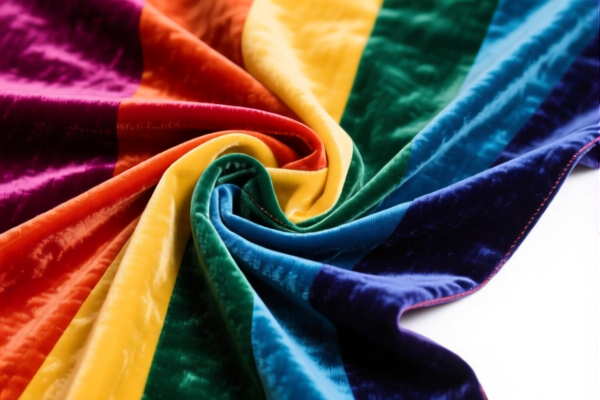
AI分析
🧵 Twisted Velvet Fabric (4-Layer) – The High-End Textile Complex
🌐 HS Code Reference & Customs Clearance Guide | 2026 Latest Tariff Analysis | Professional Clearance Strategy for Plastic-Impregnated Textiles
📌 I. Product Definition: What is "4-Layer Twisted Velvet Fabric"?
"Twisted velvet fabric" typically refers to a luxurious textile where velvet loops are twisted or crushed to create a textured, shimmering, or 3D effect. However, the key to customs classification lies not in the visual texture, but in its chemical treatment and composition.
⚠️ Critical Distinction:
Standard velvet is just fibers. BUT, if this fabric has been impregnated, coated, covered, or laminated with plastics (such as PVC to provide stiffness, waterproofing, or specific texture retention), it moves out of standard Chapter 50/51/52/53 and into Chapter 59.Specific Scenario: The description provided in the data corresponds to fabrics made of man-made fibers (polyester, nylon, acrylic, etc.) that are coated/covered with Polyvinyl Chloride (PVC) and contain >70% by weight of rubber or plastics.
🔍 Key Classification Trigger:
- Is it pure fabric? → No, the data specifies plastic impregnation/coating.
- Material? → Man-made fibers.
- Coating? → Polyvinyl Chloride (PVC).
- Composition? → Over 70% by weight of rubber or plastics.
📦 II. HS Code Classification Details (2026 Latest Tariff Authority Match)
Based strictly on the provided <DATA>, here are the precise HS codes for PVC-coated man-made fiber twisted velvet where the plastic content exceeds 70%.
| HS Code | Product Description | Applicable Scenario | Plastic/Content Ratio |
|---|---|---|---|
5903.10.20.10 |
Textile fabrics impregnated, coated, covered or laminated with plastics (other than heading 5902): With poly(vinyl chloride): Of man-made fibers: Other: Over 70 percent by weight of rubber or plastics | High-plastic content PVC-coated velvet (e.g., rigid awning velvet, heavy-duty upholstery velvet with thick PVC backing) | > 70% |
5903.10.20.90 |
Textile fabrics impregnated, coated, covered or laminated with plastics (other than heading 5902): With poly(vinyl chloride): Of man-made fibers: Other: Other | PVC-coated velvet with ≤ 70% plastic/rubber weight content (standard coated velvet, thinner coatings) | ≤ 70% |
📌 Note: The data also mentions: "Fabrics, of yarns sheathed with poly(vinyl chloride), not otherwise impregnated, coated, covered or laminated". If your twisted velvet is made from PVC-sheathed yarns (yarns wrapped in PVC before weaving), it still falls under 5903.10.20.10 or .90 depending on the final plastic weight ratio.
💰 III. 2026 Tariff Rate Breakdown (Including Additional Duties)
✅ Applicable Country: United States (US)
✅ Origin: China (CN)
✅ Effective Time: Current US Trade Policy (Section 301 + IEEPA)
🎯 1. HS Code 5903.10.20.10 (Over 70% Plastic Weight)
| Item | Details |
|---|---|
| Base Tariff | 0.0% (Ad Valorem) |
| Additional Tariff (Section 301) | +25.0% |
| IEEPA Tariff | See Note Below |
| Total Tariff Rate | 25.0% |
| Tax Calculation | CIF Value × 25% |
| De Minimis Exemption | ❌ Not Applicable (Textiles > $800 do not qualify for Section 321 de minimis if classified under 5903 with Section 301 tariffs) |
| Legal Reference Path | HTSUS: 5903.10.20.10 → USITC: 301 Footnote → 25% Additional Duty |
📌 Interpretation:
- The base duty is 0% for this specific subheading.
- However, the 25% Section 301 tariff applies to Chinese-origin goods in this category.
- Total Cost Impact: You must pay 25% on top of the CIF value.
- Why not 45%?: Unlike electronics or some machinery, certain plastic-coated textiles may have different Section 301 lists. Based on the<DATA>provided, the total tax is explicitly 25.0%. Do not assume the 45% (25%+10% or 25%+20%) unless verified by a separate IEEPA ruling for this specific code. The data says 25.0% total.
🎯 2. HS Code 5903.10.20.90 (Other / ≤ 70% Plastic Weight)
| Item | Details |
|---|---|
| Base Tariff | 0.0% (Ad Valorem) |
| Additional Tariff (Section 301) | +25.0% |
| Total Tariff Rate | 25.0% |
| Tax Calculation | CIF Value × 25% |
| De Minimis Exemption | ❌ Not Applicable |
| Legal Reference Path | HTSUS: 5903.10.20.90 → USITC: 301 Footnote → 25% Additional Duty |
📌 Interpretation:
- Same tariff structure as above.
- The distinction between.10and.90is purely for statistical and regulatory monitoring purposes, but the duty rate is identical (25%).
🛠️ IV. Customs Clearance Practical Advice (Battle-Tested Guide)
✅ 1. Documentation Checklist (Non-Negotiable)
| Document | Must Provide? | Explanation |
|---|---|---|
| ✅ Commercial Invoice | ✔️ | Must clearly state: "PVC-impregnated Man-Made Fiber Velvet Fabric" |
| ✅ Product Specification Sheet | ✔️ | Must detail: Base fiber (e.g., 100% Polyester), Coating material (100% PVC), and Weight % of Plastic vs. Fabric |
| ✅ Lab Test Report | ✔️ | Critical: A third-party test report proving the plastic content by weight. This determines if it falls under .10 (>70%) or .90 (≤70%). |
| ✅ Photos of Fabric (Cross-Section) | ✔️ | Show the coating layer thickness and adhesion to the fibers. |
| ✅ Certificate of Origin | ✔️ | To confirm Chinese origin (triggers the 25% tariff). |
✅ 2. Classification Strategy (Key Mnemonics)
🔥 “Coating Thickens, Plastic Count Rises, Over 70, Code One, Under 70, Code Two. Both Pay 25%!”
| Scenario | Correct HS Code | Reason |
|---|---|---|
| Velvet with thick PVC backing (>70% plastic weight) | 5903.10.20.10 |
High plastic content classifies it as “plastic-coated textile” with high plastic ratio. |
| Velvet with light PVC coating (≤70% plastic weight) | 5903.10.20.90 |
Standard plastic-coated textile. |
| Velvet NOT coated/impregnated with plastic | ❌ Wrong | This data does not apply. It would be in Chapter 50-53 (e.g., 5801 for velvet). Check if PVC is present! |
✅ 3. Common Pitfalls & How to Avoid Them
❌ Pitfall 1: Claiming the product is “Pure Velvet” to avoid Chapter 59.
👉 Consequence: If PVC is found in the lab test, customs will reclassify to 5903, apply the 25% tariff, and issue a penalty for misdeclaration.
❌ Pitfall 2: Misestimating Plastic Weight.
👉 Consequence: If you declare .90 (≤70%) but the test shows 75%, you may face audits. However, since both are 25%, the financial impact is neutral, but compliance risk remains.
❌ Pitfall 3: Ignoring “Man-Made Fiber” Requirement.
👉 Consequence: If the base fabric is natural fiber (e.g., Cotton Velvet with PVC), it falls under 5903.20 (Not man-made). This data (5903.10) ONLY applies to Man-Made Fibers (Polyester, Nylon, etc.). If it’s cotton, the HS Code and potentially the tariff change.
🌍 V. Global Market Comparison (2026 Snapshot)
| Country/Region | Recommended HS Code | Base Tariff | Additional Duty | Total Rate | Notes |
|---|---|---|---|---|---|
| 🇺🇸 USA | 5903.10.20.10/90 |
0% | +25% | 25% | Section 301 applies. High compliance scrutiny. |
| 🇨🇳 China | 5903.10.20.10/90 |
0% | 0% | 0% | Free trade or low duty for imports. |
| 🇪🇺 EU | 5903.10.20 |
~6.5% | 0% | 6.5% | No Section 301. Lower cost than US. |
| 🇬🇧 UK | 5903.10.20 |
~6.5% | 0% | 6.5% | Post-Brexit tariff structure similar to EU for textiles. |
| 🇦🇺 Australia | 5903.10.20 |
5% | 0% | 5% | Preferential rates may apply with FTA partners. |
📌 Conclusion:
- USA is the most expensive market for this product due to the 25% Section 301 tariff.
- EU/UK/AU are significantly cheaper (5-7%).
- Strategy: If sourcing for the US, ensure the plastic weight test is accurate to avoid delays. Consider sourcing from non-China origins (e.g., Vietnam, India) to avoid the 25% US tariff, if possible.
📌 VI. Final Checklist for Exporters
- Confirm Material: Is the base fiber Man-Made (Polyester/Nylon)? If Cotton, stop – this data doesn’t apply.
- Confirm Coating: Is it PVC impregnated/coated/laminated? If not, this data doesn’t apply.
- Measure Weight: Perform a solvent extraction test to determine the % weight of PVC.
- If >70% → Use
5903.10.20.10 - If ≤70% → Use
5903.10.20.90 - Declare Accurately: Use the full description:
“PVC-coated Man-Made Fiber Velvet Fabric, [Model X], Plastic Content: [XX]% by Weight”
- Prepare for 25% Duty: Budget for the 25% US tariff as a non-negotiable cost for Chinese-origin goods.
🎯 Remember:
🔹 “PVC Coating, Man-Made Base, Over 70, Code One. Under 70, Code Two. Both Pay 25, No More.”
🔹 “Test the Weight, Declare the Truth, Avoid the Penalty!”
📣 Action Item:
📞 Contact your customs broker with the lab test report confirming plastic weight.
📄 Update your commercial invoice with the specific HS Code based on the test result.
🚀 Optimize your supply chain by comparing landed costs between US-origin (if available) and non-China origins to mitigate the 25% tariff.
✨ Precision in Classification, Profit in Clearance!
💼 Every Percent Counts in Global Trade!
用户评价
关于 HS 编码归类
协调制度(HS)是由世界海关组织(WCO)制定的国际贸易商品分类标准。全球 200 多个国家采用 HS 系统作为海关关税、贸易统计和进出口监管的基础。
每个 HS 编码遵循以下层级结构:
- 章(2 位)——商品大类(例如:第 84 章:机器和机械设备)
- 品目(4 位)——章内的更具体分类
- 子目(6 位)——国际通用细分,所有 WCO 成员国统一使用
- 本国细分(8-10 位)——各国自行扩展的细分编码,如美国 HTSUS 10 位编码
正确的 HS 编码归类对于顺利通关、准确缴纳关税和遵守贸易法规至关重要。错误归类可能导致海关延误、多缴关税或罚款。
从CN进口到US时,适用的关税税率可能包括:
- 最惠国(MFN)税率——适用于 WTO 成员国的标准关税税率
- 普通税率——适用于无贸易协定国家
- 贸易救济关税——附加关税,如 301 条款(反倾销)、232 条款(国家安全)或反补贴税
本页内容仅供参考。如需正式归类,请咨询当地海关或持牌报关代理。