5m Cable Tie 1.5cm Gray
CN → US| HS编码 | 关税税率 | 原产国 | 目的国 | 文档 |
|---|---|---|---|---|
| 3926908500 | 24.0% | CN | US | 官方文档 |
| 3926909989 | 22.8% | CN | US | 官方文档 |
商品图片
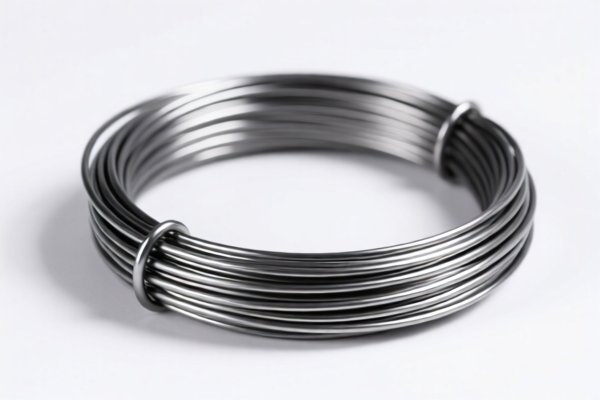
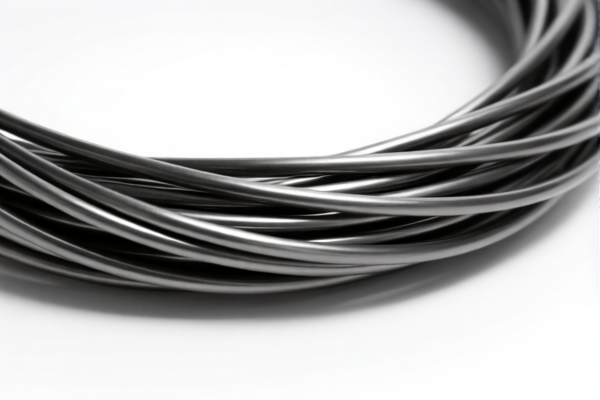
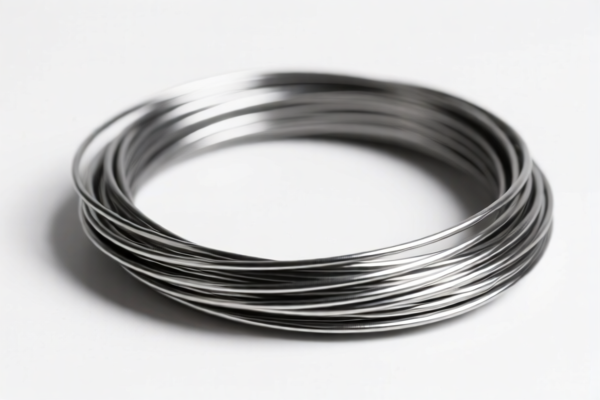
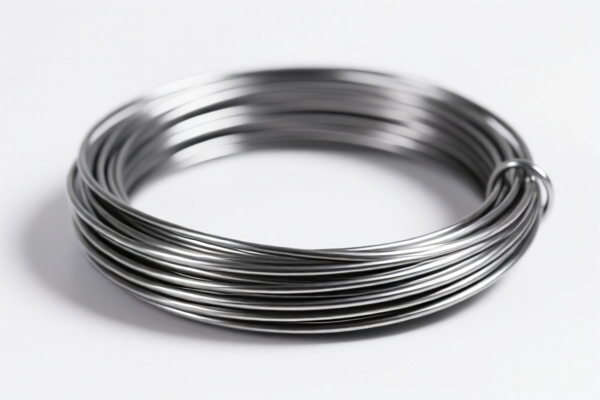
AI分析
🧵 Cable Ties (Plastic Fasteners)
🌐 HS Code Reference & Customs Clearance Guide | 2026 Latest Tariff Analysis | Professional Entry Strategies
📌 1. Product Definition and Classification: Are You Sure You Know "Cable Ties"?
Cable ties (also known as zip ties, wire ties, or cable clamps) are simple devices used to bind bundles of wires and cables together. In international trade, although they look simple, their classification depends heavily on their material composition and specific function.
According to the provided, these products fall under Chapter 39: Plastics and Articles Thereof. Specifically, they are categorized as "Fasteners" made of plastics.
⚠️ Key Distinction Point:
- If the product is a standard plastic cable tie used for bundling wires, it is classified as a Fastener.
- If it is a complex mechanical attachment device with specific engineering features, it might still fall under fasteners but require more detailed description.
- Material Check: Must be Plastic (Headings 3901-3914). If made of rubber or other materials, this classification may not apply (but based on the data, we focus on plastic).
📦 2. HS Code Classification Details (2026 Latest Tariff Authority Comparison)
| HS Code | Product Description | Applicable Scenario | Tax Rate (Total) |
|---|---|---|---|
3926.90.85.00 |
Fasteners, in clips suitable for use in a mechanical attaching device | Standard plastic cable ties (zip ties), bundling straps, plastic fasteners | 14.0% |
3926.90.99.89 |
Other | Plastic articles not specifically defined as fasteners (e.g., decorative clips, non-fastening holders) | 12.8% |
🔍 Important Reminder:
- Standard Cable Ties (Zip Ties): Most common 5m/1.5cm gray cable ties are classified under3926.90.85.00because they are explicitly "fasteners."
- Non-Fastening Items: If the item is not used for attaching or bundling but is merely a "holder" or "decoration," it might fall under3926.90.99.89. However, for typical cable management,3926.90.85.00is the correct and most common classification.
- Error Risk: Misclassifying a fastener as "Other" (3926.90.99.89) to seek a lower tax rate (12.8% vs 14.0%) is risky. Customs may reclassify it and impose penalties if the "fastening" function is evident.
💰 3. 2026 Latest Tariff Rate Details (Including Additional Duties)
✅ Applicable Country: United States (US)
✅ Origin: China (CN)
✅ Effective Date: Current rates apply (Note: Check latest USITC updates for any changes beyond the provided data)
🎯 1. 3926.90.85.00 —— Plastic Fasteners (Cable Ties)
| Item | Content |
|---|---|
| Base Tariff | 6.5% (ad valorem) |
| Additional Tariff (Section 301 / Trump Tariff) | 7.5% |
| Total Tariff Rate | 14.0% |
| Tax Calculation | CIF Value × 14.0% |
| De Minimis Eligibility | ❌ Not Eligible (Plastic fasteners are generally subject to full duty and additional tariffs) |
| Legal Basis Path | HTSUS:3926.90.85.00 → Section 301 Footnote |
📌 Explanation:
- Base Rate (6.5%): Standard Most Favored Nation (MFN) rate for plastic articles of other headings.
- Additional Tariff (7.5%): Imposed on Chinese-origin plastic products under Section 301 of the Trade Act.
- Total (14.0%): This is the effective rate for importing standard plastic cable ties from China to the US.
- Note: There are no widely applicable de minimis exemptions for these goods from China in the US market.
🎯 2. 3926.90.99.89 —— Other Plastic Articles
| Item | Content |
|---|---|
| Base Tariff | 5.3% (ad valorem) |
| Additional Tariff (Section 301 / Trump Tariff) | 7.5% |
| Total Tariff Rate | 12.8% |
| Tax Calculation | CIF Value × 12.8% |
| De Minimis Eligibility | ❌ Not Eligible |
📌 Note:
- Only apply this code if the product is NOT a fastener. For cable ties, this is likely incorrect and risky.
- The 1.2% difference (14.0% vs 12.8%) is minor compared to the risk of misclassification penalties.
🛠️ 4. Customs Clearance Practical Advice (Battle-Tested Pitfall Avoidance)
✅ 1. Required Documentation Checklist (No Exceptions)
| Document | Mandatory? | Notes |
|---|---|---|
| ✅ Commercial Invoice | ✔️ | Must clearly state "Plastic Cable Ties" or "Zip Ties," quantity, and unit price. |
| ✅ Packing List | ✔️ | Detail carton dimensions, weight, and number of ties per box. |
| ✅ Product Photos | ✔️ | Show the tie, the locking mechanism, and packaging. |
| ✅ Material Composition Statement | ✔️ | Confirm 100% Nylon 6.6 or Plastic (PA66). |
| ✅ Certificate of Origin | ✔️ | Essential for proving Chinese origin (if applicable). |
✅ 2. Declaration Tips (Key Mantras)
🔥 “Name Precise, Function Clear, Avoid ‘Other’, Stay Legal!”
| Scenario | Correct Declaration | Wrong Practice |
|---|---|---|
| Standard Cable Ties | 3926.90.85.00 - "Plastic Fasteners, Cable Ties" |
Declaring as "Plastic Articles" (3926.90.99) |
| Bulk Packaging | Declare per HS Code for the entire shipment | Splitting into small parcels to avoid scrutiny |
| Mixed Materials | If metal insert exists, re-evaluate HS Code | Claiming 100% plastic if it’s not |
✅ 3. Special Circumstances Handling
| Situation | Recommendation |
|---|---|
| High-Volume Imports | Consider applying for Exclusions if available (check USTR website for current exclusions on plastic fasteners). |
| Transshipment Risk | Do NOT declare as "Made in Vietnam" if made in China. This is fraud. |
| Customs Audit | Be prepared to show the locking mechanism to prove it’s a "fastener." |
🌍 5. Global Main Market Comparison (2026 Latest)
| Country/Region | Recommended HS Code | Tariff Rate | Notes |
|---|---|---|---|
| 🇺🇸 USA | 3926.90.85.00 |
14.0% | Includes 7.5% additional tariff. |
| 🇨🇳 China | 3926.90.85.00 |
~6-10% | Varies by specific Chinese tariff schedule. |
| 🇪🇺 EU | 3926.90.97 |
~4-6% | Generally lower than US. No Section 301 equivalent. |
| 🇬🇧 UK | 3926.90.90 |
~4-6% | Post-Brexit rates apply. |
| 🇨🇦 Canada | 3926.90.90 |
~5% | Lower than US. |
📌 Conclusion:
- USA has the highest barrier due to additional tariffs.
- EU/UK are more favorable for plastic fasteners.
- Cost Optimization: For US-bound goods, ensure accurate classification to avoid penalties, but consider sourcing from non-China countries if margins are thin.
📌 6. Common Errors & Pitfalls (Blood Lessons)
❌ Error 1: Declaring as "Plastic Parts" under 3926.90.99.89 to save 1.2%
👉 Consequence: Customs may reclassify as fasteners (3926.90.85.00) and charge the difference + penalties.
❌ Error 2: Not declaring the locking mechanism’s function
👉 Consequence: Customs may question whether it’s a "fastener" or "other article," leading to delays.
❌ Error 3: Mixing cable ties with other goods in one HS Code
👉 Consequence: Misclassification risk for all items in the shipment.
✅ Correct Practice:
"Plastic Cable Ties, Gray, 5m Length, 1.5cm Width, Nylon 6.6 Material, For Electrical Bundling, HS Code 3926.90.85.00"
🎯 7. Conclusion: Professional Declaration, Time-Saving, Cost-Effective!
🎯 Remember the Mantra:
🔹 "Fasteners go to .85, Others to .99, Don't guess, be precise!"
🔹 "14% in the US, 12.8% if wrong, Penalties are worse!"
📌 Tips:
- If your cable ties are originally from Vietnam, Thailand, or Malaysia, you may avoid the 7.5% additional tariff, reducing the rate to 6.5% (Base) + local duties.
- Always keep sample products for customs inspection.
- Consult a licensed customs broker for Advance Rulings if dealing with large volumes.
📣 Immediate Action:
📞 Contact your customs broker + Provide Product Specs + Verify HS Code
🚀 Ensure smooth clearance, avoid delays, and maximize profit margins!
✨ Professional customs clearance starts with accurate classification!
💼 Every cent of cost should be precisely calculated!
用户评价
关于 HS 编码归类
协调制度(HS)是由世界海关组织(WCO)制定的国际贸易商品分类标准。全球 200 多个国家采用 HS 系统作为海关关税、贸易统计和进出口监管的基础。
每个 HS 编码遵循以下层级结构:
- 章(2 位)——商品大类(例如:第 84 章:机器和机械设备)
- 品目(4 位)——章内的更具体分类
- 子目(6 位)——国际通用细分,所有 WCO 成员国统一使用
- 本国细分(8-10 位)——各国自行扩展的细分编码,如美国 HTSUS 10 位编码
正确的 HS 编码归类对于顺利通关、准确缴纳关税和遵守贸易法规至关重要。错误归类可能导致海关延误、多缴关税或罚款。
从CN进口到US时,适用的关税税率可能包括:
- 最惠国(MFN)税率——适用于 WTO 成员国的标准关税税率
- 普通税率——适用于无贸易协定国家
- 贸易救济关税——附加关税,如 301 条款(反倾销)、232 条款(国家安全)或反补贴税
本页内容仅供参考。如需正式归类,请咨询当地海关或持牌报关代理。