610mm Wide Photosensitive Material
CN → US| HS编码 | 关税税率 | 原产国 | 目的国 | 文档 |
|---|---|---|---|---|
| 3919905060 | 40.8% | CN | US | 官方文档 |
| 3919905010 | 40.8% | CN | US | 官方文档 |
| 3921904090 | 39.2% | CN | US | 官方文档 |
| 3921904010 | 39.2% | CN | US | 官方文档 |
商品图片


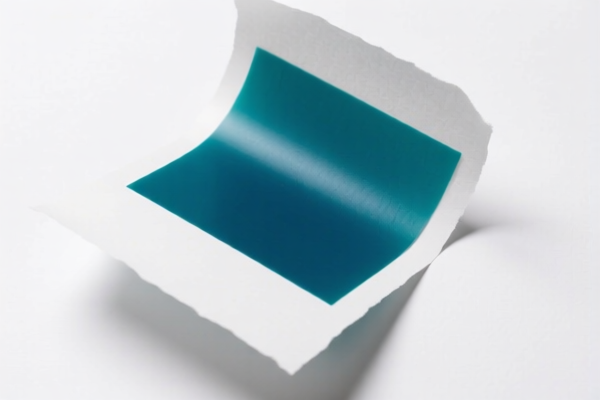
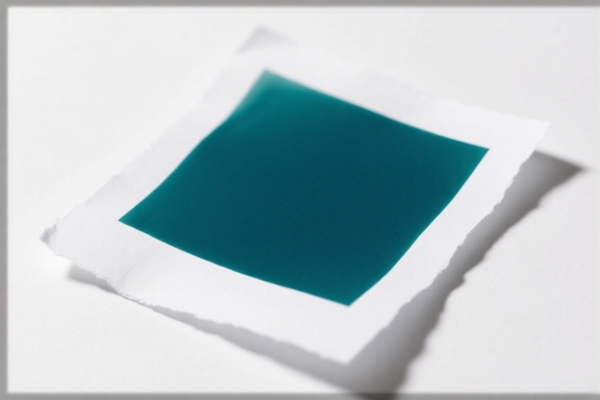
AI分析
📸 Photosensitive Material (610mm Wide)
🌐 HS Code Classification & Customs Clearance Guide | 2026 Tax Regime Analysis | Strategic Compliance Strategy
📌 I. Product Definition & Core Characteristics: What is "Photosensitive Material"?
Photosensitive materials are substances that undergo chemical or physical changes when exposed to light, radiation, or electromagnetic waves. In the context of international trade, the term is broad. For a 610mm wide product, the classification hinges entirely on its base material and physical form (e.g., film, sheet, paper, or plastic).
Key Classification Logic: 1. Form Factor: At 610mm (approx. 24 inches), this is a standardized industrial width, typically used in photography, printing, medical imaging, or industrial coating processes. 2. Base Material: * If the base is Plastic/Polymer (e.g., PET, PVC) → Likely Chapter 39 (Plastics). * If the base is Other Materials (e.g., Paper, Glass, Metal) → May fall under different chapters, but the provided data suggests a focus on plastic-based flexible materials.
⚠️ Critical Distinction:
- Is it a Self-Adhesive Roll/Film? → Points to 3919.
- Is it a Generic Plastic Sheet/Film (coated)? → Points to 3921.
- The "Photosensitive" nature is often a functional description, but customs classification relies on the material composition and shape.
📦 II. HS Code Classification Analysis (Based on Provided Data)
The following four HS Codes are the most likely candidates for a 610mm wide photosensitive material, categorized by their specific plastic film characteristics.
| HS Code | Product Description (from Data) | Key Classification Criteria | Tax Rate (Total) |
|---|---|---|---|
| 3919.90.50.60 | Plastic Self-Adhesive Flat Material | Self-Adhesive + Flat Shape. The material is plastic, comes in rolls/flat shapes, and has adhesive properties (common for photo film backing or transfer films). | 40.8% |
| 3919.90.50.10 | Plastic Self-Adhesive Film/Sheet | Self-Adhesive + Film/Sheet Form. Specifically targets plastic films or sheets that are self-adhesive. The "610mm width" fits the "flat material" definition perfectly. | 40.8% |
| 3921.90.40.90 | Other Plastic Sheets/Films (Coated) | Non-Adhesive Plastic Base. If the material is not self-adhesive but is a plastic film/sheet with a photosensitive coating, it falls under "Other" plastic sheets. | 39.2% |
| 3921.90.40.10 | Plastic Base Plates/Sheets | Plastic Base Material. Focuses on the plastic substrate itself (board, sheet, film, foil). If the photosensitive layer is considered a secondary coating on a plastic base, this may apply. | 39.2% |
🔍 Classification Decision Matrix:
- Step 1: Does the material have an adhesive backing?
- YES → Go to 3919 (Codes:50.60or50.10).
- NO → Go to 3921 (Codes:40.90or40.10).
- Step 2: Is it a "self-adhesive plastic sheet"?
- YES → 3919 is the primary category for self-adhesive plastic films/sheets.
- NO → 3921 covers other plastic sheets/films, including those with coatings.
💰 III. 2026 Tariff Rate Breakdown (Detailed Tax Analysis)
All four HS Codes listed above are subject to the same total tax rate, though the base rates differ slightly. This is due to significant附加 taxes (Additional Duties).
✅ Applicable Country: United States (US)
✅ Origin: China (CN)
✅ Effective Date: November 10, 2025 (and ongoing)
🎯 1. Category A: Self-Adhesive Plastic Materials (HS 3919.90.50.xx)
Includes: 3919.90.50.60 & 3919.90.50.10
| Tax Component | Rate | Legal Basis | Notes |
|---|---|---|---|
| Base Tariff | 5.8% | Harmonized Tariff Schedule (HTS) | Standard import duty for plastic films. |
| Section 301 Duty | 25.0% | USITC Footnote (Section 301) | Additional tariff on Chinese goods. |
| Section 122 Duty | 10.0% | IEEPA / Specific Clause | Additional tariff under specific executive orders. |
| TOTAL EFFECTIVE RATE | 40.8% | Sum of all above | High Risk |
📌 Interpretation:
- The 25% Section 301 duty is the most significant cost driver.
- The 10% Section 122 duty adds further burden.
- No De Minimis Exemption: These codes are not eligible for the $800 de minimis exemption for low-value shipments. Full duty applies.
🎯 2. Category B: Other Plastic Sheets/Films (HS 3921.90.40.xx)
Includes: 3921.90.40.90 & 3921.90.40.10
| Tax Component | Rate | Legal Basis | Notes |
|---|---|---|---|
| Base Tariff | 4.2% | Harmonized Tariff Schedule (HTS) | Standard import duty for other plastic sheets. |
| Section 301 Duty | 25.0% | USITC Footnote (Section 301) | Additional tariff on Chinese goods. |
| Section 122 Duty | 10.0% | IEEPA / Specific Clause | Additional tariff under specific executive orders. |
| TOTAL EFFECTIVE RATE | 39.2% | Sum of all above | High Risk |
📌 Interpretation:
- Slightly cheaper than the self-adhesive category due to a lower base rate (4.2% vs. 5.8%).
- Still subject to the full 35% in additional duties (25% + 10%).
- No De Minimis Exemption: Full duty applies.
🛠️ IV. Customs Clearance Strategy & Practical Advice
✅ 1. Documentation Requirements (Must-Provide)
To prevent customs delays or misclassification, provide the following documents:
| Document | Requirement | Purpose |
|---|---|---|
| Product Specification Sheet | ✔️ Required | Details: Width (610mm), Material (e.g., PET, PVC), Adhesive Type (if any), Coating Type. |
| Composition Statement | ✔️ Required | Explicitly state: "Plastic Base + Photosensitive Coating" or "Plastic Base + Adhesive + Photosensitive Layer". |
| Photos (Actual Product) | ✔️ Required | Show the roll, the coating surface, and any adhesive backing. |
| Commercial Invoice | ✔️ Required | Must clearly state "Photosensitive Material" and HS Code. |
| Packing List | ✔️ Required | Weight, dimensions, number of rolls. |
✅ 2. Classification Tips (Avoid Common Pitfalls)
| Scenario | Correct Approach | Incorrect Approach | Consequence |
|---|---|---|---|
| Self-Adhesive Film | Use 3919 codes | Use 3921 codes | Misclassification → Audit risk |
| Non-Adhesive Coated Film | Use 3921 codes | Use 3919 codes | Overpayment of tax (if 3919 is used incorrectly) or underpayment (if 3919 is used for non-adhesive) |
| Photosensitive Paper | Do NOT use 3919/3921 | Use 3919/3921 | Paper falls under Chapter 48. Misclassification → High penalties. |
| Glass/Photo Plates | Do NOT use 3919/3921 | Use 3919/3921 | Glass falls under Chapter 70. Misclassification → High penalties. |
🔥 Golden Rule:
"Adhesive = 3919. No Adhesive = 3921. Not Plastic = Not Chapter 39."
✅ 3. Cost Optimization Strategies
- Pre-Ruling Request: Submit an Advance Ruling request to US Customs and Border Protection (CBP) to confirm whether your specific product is "self-adhesive." This reduces uncertainty.
- Supply Chain Diversification: If possible, source from countries not subject to Section 301/122 duties (e.g., Vietnam, Thailand) to avoid the 35% additional tariff.
- Value Engineering: If the adhesive is not essential for the final application, consider designing the product as a non-adhesive coated film (3921) to save 1.6% in base duty.
🌍 V. Global Market Comparison (2026)
| Market | Likely HS Code | Total Tax Rate (China Origin) | Key Risk |
|---|---|---|---|
| 🇺🇸 USA | 3919 or 3921 |
39.2% - 40.8% | High additional duties (Section 301 + 122). |
| 🇪🇺 EU | 3920 or 3919 |
~5-6% | No Section 301. Standard EU tariff applies. |
| 🇨🇳 China | 3920 or 3919 |
~5-6% | Low import duty. No anti-dumping tariffs. |
| 🇯🇵 Japan | 3920 or 3919 |
~0-6% | CPTEE/FTA benefits may apply. |
📌 Conclusion:
- The US market is the most expensive due to political tariffs.
- Ensure your commercial invoice explicitly states the material composition to avoid being classified under a higher-risk heading.
📌 VI. Common Errors & Pitfalls (Lessons Learned)
❌ Error 1: Labeling "Photosensitive Material" without specifying "Plastic Base."
👉 Result: Customs may classify it as Chapter 48 (Paper) or Chapter 70 (Glass), leading to reclassification and penalties.
❌ Error 2: Assuming all photosensitive films are "Self-Adhesive."
👉 Result: Using 3919 for a non-adhesive film leads to overpayment or misclassification alerts.
❌ Error 3: Ignoring the 610mm width specification.
👉 Result: While width doesn't change HS code, it helps prove it's an industrial roll (Chapter 39) rather than a finished product like a photo (Chapter 49).
✅ Correct Declaration Example:
"Plastic Photosensitive Film, 610mm Width, Non-Adhesive, Coated with Silver Halide Emulsion on PET Base, Not for Printing or Photography, HS 3921.90.40.90"
🎯 VII. Final Recommendation
- Identify Adhesiveness: First, determine if the material has an adhesive backing.
- Select Code:
- Self-Adhesive: Use 3919.90.50.60 or 3919.90.50.10 (40.8% tax).
- Non-Adhesive: Use 3921.90.40.90 or 3921.90.40.10 (39.2% tax).
- Prepare Documents: Have technical specs and photos ready to prove the plastic base.
- Plan for Cost: Budget for ~40% tax if importing to the US. Consider alternative markets or suppliers.
✨ Professional Clearance, Precise Classification, Optimized Costs!
💼 Your every cent counts!
用户评价
关于 HS 编码归类
协调制度(HS)是由世界海关组织(WCO)制定的国际贸易商品分类标准。全球 200 多个国家采用 HS 系统作为海关关税、贸易统计和进出口监管的基础。
每个 HS 编码遵循以下层级结构:
- 章(2 位)——商品大类(例如:第 84 章:机器和机械设备)
- 品目(4 位)——章内的更具体分类
- 子目(6 位)——国际通用细分,所有 WCO 成员国统一使用
- 本国细分(8-10 位)——各国自行扩展的细分编码,如美国 HTSUS 10 位编码
正确的 HS 编码归类对于顺利通关、准确缴纳关税和遵守贸易法规至关重要。错误归类可能导致海关延误、多缴关税或罚款。
从CN进口到US时,适用的关税税率可能包括:
- 最惠国(MFN)税率——适用于 WTO 成员国的标准关税税率
- 普通税率——适用于无贸易协定国家
- 贸易救济关税——附加关税,如 301 条款(反倾销)、232 条款(国家安全)或反补贴税
本页内容仅供参考。如需正式归类,请咨询当地海关或持牌报关代理。