ASA Resin
CN → US商品图片
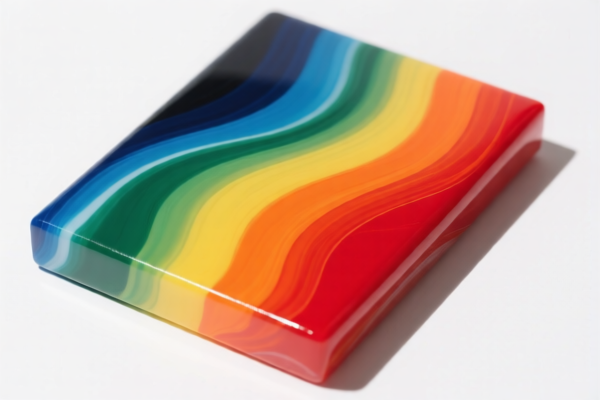



AI分析
🧪 ASA Resin (Acrylonitrile Styrene Acrylonitrile)
🌐 HS Code Reference & Customs Clearance Guide | 2026 Latest Tariff Analysis | Professional-Grade Logistics Strategy
📌 I. Product Definition & Classification: What is "ASA Resin"?
ASA resin, chemically known as Acrylonitrile Styrene Acrylonitrile, is a modified copolymer based on ABS (Acrylonitrile Butadiene Styrene). By replacing the butadiene component with acrylonitrile and styrene, ASA achieves superior UV resistance, weatherability, and heat stability compared to standard ABS, while maintaining similar mechanical strength and processability.
In international trade, it is primarily classified as a plastic in primary forms (granules/pellets), intended for downstream manufacturing (automotive parts, outdoor furniture, consumer electronics casings).
⚠️ Key Distinction:
- Raw Material (Granules/Powder): Classified under 3903 or 3904 (Plastics in primary forms).
- Finished Products (Bumpers/Trims): Classified under 8708 (Automotive parts) or 3926 (Plastic articles).
- ⚠️ Critical Note: The HS Code provided below applies ONLY to the raw resin material (granules/powders). If you are exporting finished plastic parts, the classification changes completely.
📦 II. HS Code Classification Details (2026 Latest Tariff Authority)
| HS Code | Product Description | Applicable Scenario | Form |
|---|---|---|---|
3903.90.00.00 |
Other polymers of styrene, in primary forms | ASA Resin (Acrylonitrile Styrene Acrylonitrile) | ✅ Granules/Powder |
3904.10.00.00 |
Polyamides (Nylons), in primary forms | ❌ Incorrect (ASA is not a Polyamide) | N/A |
3903.30.00.00 |
Polymers of acrylonitrile-styrene (ABS), in primary forms | ❌ Incorrect (ASA ≠ ABS) | N/A |
3926.90.90.90 |
Other articles of plastics | ❌ Incorrect (Finished goods only) | N/A |
🔍 Key Reminder:
- ASA is NOT ABS. While they look similar, ABS contains Butadiene (3903.30), while ASA does not (3903.90).
- Misclassifying ASA as ABS (3903.30) instead of3903.90can lead to customs audits because tariff rates and trade remedy measures (like anti-dumping duties) may differ by origin.
- Primary Form: Must be granules, powder, flakes, or similar bulk forms. If it is pre-molded, it is not "in primary forms."
💰 III. 2026 Latest Tariff Rate Breakdown (Including Surcharges & Policies)
✅ Applicable Country: United States (US)
✅ Origin: China (CN)
✅ Effective Date: Post-2025 Trade Policy Adjustments
🎯 1. 3903.90.00.00 —— Polymers of Styrene (Other), in Primary Forms
| Item | Content |
|---|---|
| Base Tariff Rate | 5.3% (Ad Valorem) |
| Section 301 Surcharge (USITC) | +7.5% (Category 4/4A adjustments) |
| IEEPA Surcharge (China) | +10% (Targeted strategic materials) |
| Total Effective Rate | 22.8% |
| Tax Calculation | CIF Value × 22.8% |
| De Minimis Eligibility | ❌ No (Not eligible for $800 exemption) |
| Legal Authority Path | USITC:3903.90.00.00 → FOOTNOTE:3903.90.00.00 → IEEPA:9903.01.25 |
📌 Explanation:
- "Base 5.3%": Standard Most Favored Nation (MFN) rate for other styrene polymers.
- "Section 301 +7.5%": Most plastic resins from China are subject to this additional duty under USTR enforcement.
- "IEEPA +10%": Under recent executive orders targeting critical supply chain materials, certain chemical inputs face an additional layer of tariff.
- Total 22.8%: This is a high-cost entry. For large-volume shipments, this can significantly impact margins.💡 Cost-Saving Tip:
- If the ASA resin is blended with other polymers (e.g., ASA/PC blend), check if it falls under 3903.90 or a different chapter. Sometimes blending changes the chemical classification.
- Consider third-country transshipment (e.g., processing in Vietnam/Malaysia) ONLY if substantial transformation rules are met. Otherwise, this may be deemed circumvention, leading to severe penalties.
🛠️ IV. Customs Clearance Practical Advice (Real-World Pitfall Guide)
✅ 1. Required Documentation Checklist (Non-Negotiable)
| Document | Must Provide | Notes |
|---|---|---|
| ✅ Material Safety Data Sheet (MSDS) | ✔️ | Must specify chemical composition (Acrylonitrile/Styrene ratio). |
| ✅ Certificate of Origin (CO) | ✔️ | Essential for proving origin and calculating accurate tariffs. |
| ✅ Commercial Invoice | ✔️ | Must explicitly state: "ASA Resin, Acrylonitrile Styrene Acrylonitrile, Granules" |
| ✅ Packing List | ✔️ | Net weight vs. Gross weight must match. |
| ✅ Bill of Lading (B/L) | ✔️ | Ensure proper stowage instructions (avoid moisture). |
| ✅ FCC/REACH Compliance | ✔️ | For downstream use, proof of environmental compliance may be requested. |
✅ 2. Declaration Tips (Critical Keywords)
🔥 "Chemical Name First, Form Second, Origin Clear!"
| Scenario | Correct Declaration | Incorrect Declaration |
|---|---|---|
| Raw ASA Granules | 3903.90.00.00 - ASA Resin, Polymers of Styrene, In Primary Forms |
"Plastic Pellets" (Too vague → Audit Risk) |
| ASA/PC Blend | Check if % of ASA > 50%. If yes, 3903.90.00.00. If no, may shift to PC code (3907.60). |
"Mixed Plastic" (Vague → Higher Duty Risk) |
| Finished ASA Part | 3926.90.90.90 or 8708.29 (Automotive) |
3903.90.00.00 (Wrong Classification → Seizure) |
| Recycled ASA | 3903.90.00.00 (Still primary form if re-granulated) |
"Waste Plastic" (Wrong → Restricted Import) |
✅ 3. Special Handling for Chemical Imports
| Issue | Handling Advice |
|---|---|
| Moisture Sensitivity | ASA is hygroscopic. Ensure packaging is watertight. Customs may inspect for mold/spoilage if packaging is damaged. |
| HS Code Dispute | If customs suspects it’s ABS (3903.30), provide a Chemical Analysis Report proving the absence of Butadiene. |
| Environmental Compliance | Some US ports require REACH/SVHC declarations. Prepare safety data sheets in advance. |
🌍 V. Global Market Comparison (2026 Update)
| Country/Region | Recommended HS Code | Tariff (China Origin) | Certification | Notes |
|---|---|---|---|---|
| 🇺🇸 USA | 3903.90.00.00 |
22.8% (5.3% + 7.5% + 10%) | REACH/TSIA | High tariffs; strict origin rules. |
| 🇨🇳 China | 3903.90.00.00 |
5.3% | N/A | Low import duty for domestic production. |
| 🇪🇺 EU | 3903.90.00.00 |
6.5% | REACH + SVHC | No Section 301 equivalent, but REACH compliance is key. |
| 🇯🇵 Japan | 3903.90.00.00 |
6.0% | JIS Standard | Stable trade relations; low non-tariff barriers. |
| 🇻🇳 Vietnam | 3903.90.00.00 |
0-5% (if local processing) | N/A | Potential for tariff avoidance via processing. |
📌 Conclusion:
- USA is the most expensive market for ASA resin due to叠加 tariffs (Section 301 + IEEPA).
- EU and Japan offer more stable, lower tariff environments, but require strict chemical compliance (REACH/JIS).
- Supply Chain Strategy: Consider sourcing ASA resin from non-China origins (e.g., Japan’s Kuraray, Korea’s LG Chem) to avoid US surcharges, or explore third-country processing if feasible.
📌 VI. Common Mistakes & Pitfall Guide (Blood & Tears Lessons)
❌ Mistake 1: Declaring ASA as ABS (3903.30) to save costs.
👉 Consequence: Customs lab testing reveals no Butadiene. Re-classification + Penalty (25-50% of duty value) + Potential seizure.
❌ Mistake 2: Declaring Finished ASA Parts as Raw Resin (3903.90).
👉 Consequence: Misdeclaration. Customs may assess higher duties for parts (8708 or 3926) + Fraud Investigation.
❌ Mistake 3: Ignoring Moisture Damage in packaging.
👉 Consequence: Resin clumps or degrades. Customs rejects shipment for "unsuitable condition" → Return or Destruction.
❌ Mistake 4: Not disclosing Chemical Composition.
👉 Consequence: Delay in clearance. Customs requests MSDS + Lab Report → Demurrage Charges accrue daily.
✅ Correct Approach:
"ASA Resin, Granules, Polymer of Styrene, Primary Form, HS: 3903.90.00.00, MSDS Attached, Origin: CN"
🎯 VII. Conclusion: Precision in Chemical Importing Saves Money
🎯 Remember the Mantra:
🔹 "ASA ≠ ABS. Form Matters. Origin Determines Cost."
🔹 "22.8% in the US is no joke. Plan your supply chain accordingly."
🔹 "MSDS is your best friend. Without it, your shipment waits."
📌 Pro Tip:
If you are importing large volumes (>50 tons), consider applying for a US Customs Ruling to confirm the specific HS Code and tariff rate. This provides legal certainty and protects against future audits.
📣 Immediate Action:
📞 Contact your customs broker with the exact MSDS and supplier's certificate of composition.
🚀 Evaluate total landed cost including 22.8% tariff. Consider non-China sources if margins are thin.
✨ Professional Customs Clearance Starts with Accurate Chemical Classification!
💼 Your Profit Margin Depends on Your HS Code Accuracy!
用户评价
关于 HS 编码归类
协调制度(HS)是由世界海关组织(WCO)制定的国际贸易商品分类标准。全球 200 多个国家采用 HS 系统作为海关关税、贸易统计和进出口监管的基础。
每个 HS 编码遵循以下层级结构:
- 章(2 位)——商品大类(例如:第 84 章:机器和机械设备)
- 品目(4 位)——章内的更具体分类
- 子目(6 位)——国际通用细分,所有 WCO 成员国统一使用
- 本国细分(8-10 位)——各国自行扩展的细分编码,如美国 HTSUS 10 位编码
正确的 HS 编码归类对于顺利通关、准确缴纳关税和遵守贸易法规至关重要。错误归类可能导致海关延误、多缴关税或罚款。
从CN进口到US时,适用的关税税率可能包括:
- 最惠国(MFN)税率——适用于 WTO 成员国的标准关税税率
- 普通税率——适用于无贸易协定国家
- 贸易救济关税——附加关税,如 301 条款(反倾销)、232 条款(国家安全)或反补贴税
本页内容仅供参考。如需正式归类,请咨询当地海关或持牌报关代理。