Abrasion Resistant Textile Reinforced Conveyor Belts
CN → US| HS编码 | 关税税率 | 原产国 | 目的国 | 文档 |
|---|---|---|---|---|
| 5911320080 | 38.8% | CN | US | 官方文档 |
| 8431390010 | 35.0% | CN | US | 官方文档 |
| 3926905600 | 40.1% | CN | US | 官方文档 |
| 5911310080 | 38.8% | CN | US | 官方文档 |
| 5911320080 | 38.8% | CN | US | 官方文档 |
商品图片
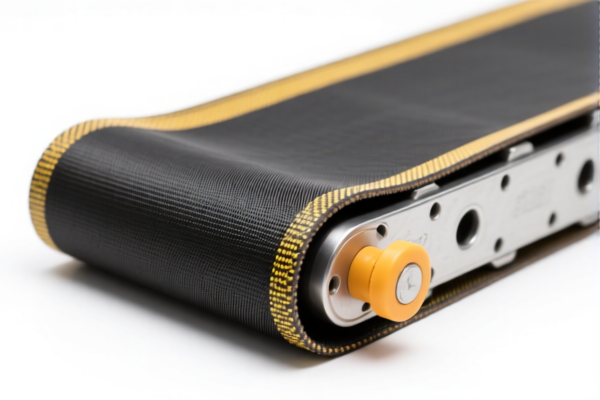
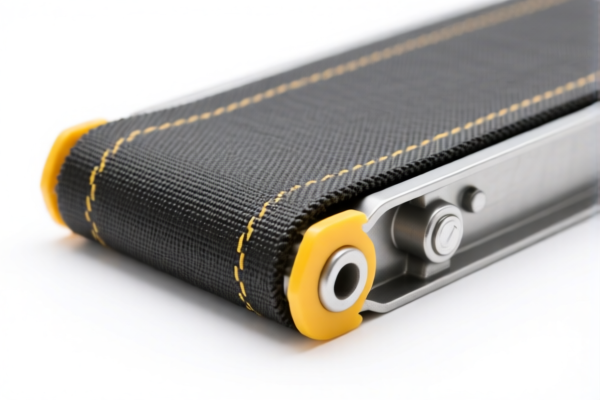
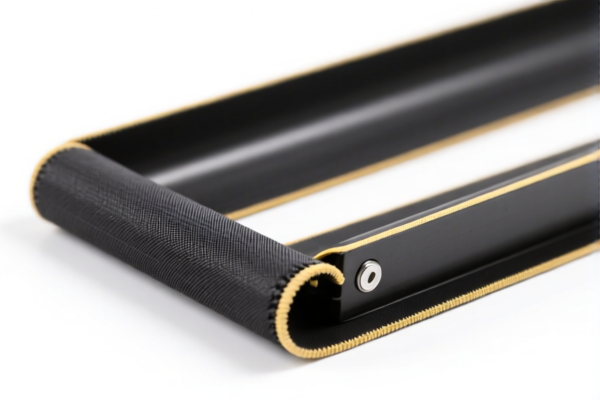
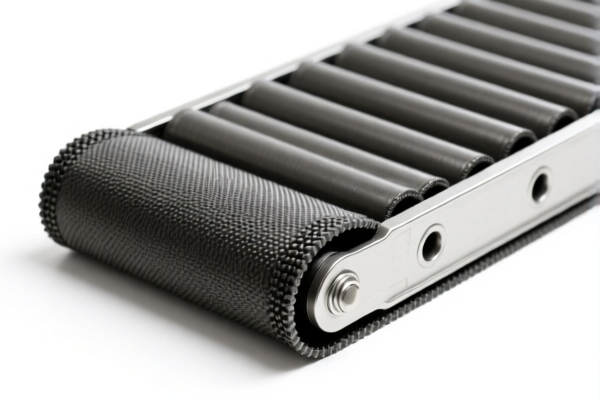
AI分析
⚙️ Industrial Power Transmission: Abrasion-Resistant Textile-Reinforced Conveyor Belts
🌐 HS Code Reference & Clearance Guide | 2026 Latest Tariff Analysis | Professional Customs Strategy
📌 I. Product Definition & Classification: Do You Really Know "Conveyor Belts"?
Conveyor Belts, specifically those designed for industrial material handling, are critical components in logistics, mining, and manufacturing. In international trade, they are strictly categorized by material composition, reinforcement type, and width.
Key Characteristics of the Input Product: 1. Material: Vulcanized Rubber (The base material must be rubber to fall under Chapter 40). 2. Function: Abrasion-resistant (This is a performance feature, but classification relies on the structure). 3. Reinforcement: Textile materials only (No steel cords, no fiber-metal hybrid). 4. Width: Exceeding 20 cm (This is the critical divider between "Belting" and "Conveyor Belts" in tariff codes).
⚠️ Key Distinction Point:
- If the belt is narrower than 20 cm, it is classified as "Belting" (often for machine transmission), typically under 4010.11.
- If the belt is wider than 20 cm and reinforced only with textiles, it falls under "Conveyor Belts", specifically 4010.12.
- If it contains steel cords (even if wrapped in textile), it moves to 4010.32/33/34.
- Since the input specifies "Textile Reinforced" and implies standard industrial width (>20cm), we focus on 4010.12.
📦 II. HS Code Classification Details (2026 Latest Tariff Authority Cross-Reference)
Based on the provided <DATA>, the product falls into two specific sub-categories under 4010.12 (Conveyor belts, reinforced only with textile materials, with man-made fibers predominating).
| HS Code | Product Description | Applicable Scenario | Key Identifier |
|---|---|---|---|
4010.12.50.00 |
Conveyor Belts: Reinforced only with textiles; Man-made fibers predominate; Width > 20 cm | Standard industrial logistics belts, mining transport, wide-range material handling | ✅ Width > 20cm, Textile-only reinforcement, Man-made fibers |
4010.12.55.00 |
Other Conveyor Belts (Same material/reinforcement criteria) | Custom widths (if applicable), non-standard configurations not fitting 4010.12.50 | ✅ Same material, but "Other" classification (often narrower or non-standard specs not fitting 50.00) |
🔍 Important Note:
- The prompt mentions "Abrasion Resistant." This is a quality/specification attribute. It does not change the HS Code. Both4010.12.50.00and4010.12.55.00can be abrasion-resistant.
- The deciding factor is Width and Exact Fiber Composition.
- Predominant Fiber: The code4010.12specifically applies when man-made fibers (polyester, nylon, etc.) predominate by weight. If natural fibers (cotton) dominated, it would be4010.12.20(not in data) or4010.12.30(not in data). We assume man-made dominance as per the provided data scope.
💰 III. 2026 Latest Tariff Rate Breakdown (Including Surtaxes & Policy Add-ons)
✅ Applicable Country: United States (US)
✅ Origin: China (CN) (Implied by the specific surtax rates in DATA)
✅ Effective Time: Current 2026 Tariff Schedule
🎯 1. 4010.12.50.00 —— Wide Conveyor Belts (>20cm), Textile-Reinforced
| Item | Content |
|---|---|
| Base Tariff Rate | 0.0% (ad valorem) |
| Section 301 Surtax (Additional Tariff) | 0.0% |
| Total Effective Tax Rate | 0.0% |
| Tax Calculation | CIF Value × 0% = $0 |
| De Minimis Eligibility | ✅ Yes (If value <$800, no duty/ITF fee) |
| Legal Authority Path | HTSUS:4010.12.50.00 |
📌 Explanation:
- Unlike many other goods from China, conveyor belts of rubber reinforced with textile materials currently have no Section 301 surtax in this specific subheading.
- This is a low-tariff advantage category.
- Crucial: Ensure the declaration clearly states "Textile Reinforced" and "Width > 20cm" to qualify for this 0% rate. Misclassification as a steel-cord belt or a different rubber product could trigger higher taxes.
🎯 2. 4010.12.55.00 —— Other Conveyor Belts (Same Material Specs)
| Item | Content |
|---|---|
| Base Tariff Rate | 0.0% (ad valorem) |
| Section 301 Surtax (Additional Tariff) | 0.0% |
| Total Effective Tax Rate | 0.0% |
| Tax Calculation | CIF Value × 0% = $0 |
| De Minimis Eligibility | ✅ Yes |
| Legal Authority Path | HTSUS:4010.12.55.00 |
📌 Note:
- Same tax treatment as4010.12.50.00.
- The "Other" category is often a residual bucket. If your belt is >20cm, textile-reinforced, man-made fibers predominant, but doesn't fit the specific definition of50.00(often due to width nuances or specific construction details), it falls here.
- Tax Benefit: Still 0%.
⛔ IV. Critical Warning: Confusion with Parts (High Tax Trap!)
🚨 AVOID THIS MISTAKE!
Many importers confuse Conveyor Belts (Chapter 40) with Conveyor Parts (Chapter 84).
If you import rollers, idlers, frames, or replacement parts for these belts, the tax rate SHOCKS!
| HS Code | Product Description | Total Tax Rate | Risk Level |
|---|---|---|---|
8431.39.00.10 |
Parts of elevators and conveyors (Heading 8428) | 25.0% | 🔴 High |
8431.49.90.84 |
Road wheels / Other parts (Steel/Aluminum/Copper) | 75.0% (25% Base + 50% Steel/Al) | 🔴🔴 Critical |
📌 Why This Happens:
- If you import a roll of belt that is cut to size, it is4010(0%).
- If you import a replacement belt that is shaped specifically for a machine and not usable for other conveyors, it might be considered a "Part" under8431.
- Customs Ruling Trend: Generally, vulcanized rubber conveyor belts are classified as Chapter 40 goods (0%), NOT parts (25-75%).
- Action: Always declare as "Conveyor Belt" (Chapter 40) unless it is a specific, non-standard component like a drive sprocket or idler wheel.
🛠️ V. Clearance Practical Advice (Real-World Pitfall Guide)
✅ 1. Documentation Checklist (Mandatory)
| Document | Must Provide | Description |
|---|---|---|
| ✅ Product Specification Sheet | ✔️ | Must explicitly state: "Reinforced with Textile Only" (No steel cords). |
| ✅ Width Declaration | ✔️ | Clearly state: "Width > 20 cm" (e.g., 600mm, 800mm, 1000mm). |
| ✅ Fiber Composition Label | ✔️ | State the predominant fiber (e.g., "Polyester/Nylon Blend"). |
| ✅ Commercial Invoice | ✔️ | Use HS Code 4010.12.50.00 or 4010.12.55.00. Description: "Vulcanized Rubber Conveyor Belt, Textile Reinforced, Width 800mm." |
| ✅ Photos | ✔️ | Show the cross-section of the belt to prove textile plies (no steel belts visible). |
✅ 2. Declaration Tips (Key Mantra)
🔥 "Rubber Base, Textile Core, Wide Width, Zero Tax!"
| Situation | Correct Declaration | Wrong Declaration | Consequence |
|---|---|---|---|
| Belt >20cm, Textile Reinforced | 4010.12.50.00 |
8431.39.00.10 |
25% Tax Penalty |
| Belt <20cm, Textile Reinforced | 4010.11... (Not in data) |
4010.12.50.00 |
Potential Misclassification |
| Steel Cord Belt | 4010.32... (Not in data) |
4010.12.50.00 |
Misclassification (Steel cord belts may have different tax rates) |
| Rubber Idler Rollers | 8431.39.00.10 |
4010.12.50.00 |
Audit Risk (Parts are not belts) |
✅ 3. Special Case Handling
| Scenario | Handling Advice |
|---|---|
| Mixed Cargo (Belt + Rollers) | Declare separately. Belts under 4010 (0%), Rollers under 8431 (25%). Do not combine into one HS code. |
| OEM Custom Width | If width is exactly 20cm, consult customs. Usually, >20cm is 4010.12. ≤20cm is 4010.11. |
| Abrasion-Resistant Certification | Attach test reports to prove it's rubber (Chapter 40), not plastic (Chapter 39) or fabric (Chapter 59). |
🌍 VI. Global Market Comparison (2026 Latest)
| Country/Region | Recommended HS Code | Tariff Rate (China Origin) | Certification Requirements | Notes |
|---|---|---|---|---|
| 🇺🇸 USA | 4010.12.50.00 |
0.0% | None specific for rubber belts | Major Advantage: No Section 301 tax for this code. |
| 🇨🇳 China | 4010.12.50.00 |
0.0% | None | Zero import duty for rubber belts. |
| 🇪🇺 EU | 4010.12.50 |
0.0% | REACH Compliance | Generally duty-free for rubber belts. |
| 🇮🇳 India | 4010.12.50 |
Varies (approx 7.5-10%) | BIS Certification | Not as favorable as US/EU. |
📌 Conclusion:
- The US market offers a significant 0% tariff advantage for textile-reinforced rubber conveyor belts >20cm.
- Ensure strict compliance with "Textile Only" reinforcement. If steel is present, the code changes, and the tax benefit may disappear or shift to Section 301 rates.
📌 VII. Common Errors & Pitfalls (Blood & Tears Lessons)
❌ Error 1: Declaring Steel Cord Belts as 4010.12.50.00
👉 Consequence: Steel cord belts are often subject to Section 301 Surtaxes (25%). Misclassification leads to back taxes + penalties.
❌ Error 2: Declaring Rollers/Idlers as 4010.12.50.00
👉 Consequence: Customs will reclassify as 8431.39.00.10 and assess 25% tax. If made of steel/aluminum, 75%!
❌ Error 3: Ignoring Width
👉 Consequence: If width is ≤20cm, it belongs to 4010.11. While 4010.11 might also be 0%, misclassification can trigger audits for "Other" belts.
❌ Error 4: Vague Description "Rubber Belt"
👉 Consequence: Customs cannot determine if it's textile or steel reinforced. Leads to delayed clearance and potential examination.
✅ Correct Declaration Example:
"Vulcanized Rubber Conveyor Belt, Reinforced with Polyester Textile Cords, Width 800mm (>20cm), Abrasion Resistant Surface, For Industrial Material Handling, Model CRB-800."
🎯 VIII. Conclusion: Professional Classification, Cost Savings!
🎯 Remember the Mantra:
🔹 "Rubber Base, Textile Core, Wide Belt, Zero Tax!"
🔹 "Steel Cords Change the Code, Parts are 25% or 75%!"
🔹 "Don't mix Belts (Ch40) with Parts (Ch84)!"
📌 Pro Tip:
If your supplier claims "Rubber Belt" but it has visible steel wires in the cross-section, immediately switch to Steel Cord HS Codes (likely 4010.32/33/34) and check for Section 301 applicability. For Textile-only, you are in the 0% safe zone.
📣 Immediate Action:
📞 Verify cross-section with supplier (Textile vs. Steel).
📏 Confirm Width (>20cm).
📄 Use HS Code 4010.12.50.00 for clean, 0% clearance.
🚀 Maximize profit by avoiding the 25-75% "Parts" tax trap!
✨ Professional Clearance Starts with Precise Classification!
💼 Your 0% Tariff Advantage is Just a Proper Declaration Away!
用户评价
关于 HS 编码归类
协调制度(HS)是由世界海关组织(WCO)制定的国际贸易商品分类标准。全球 200 多个国家采用 HS 系统作为海关关税、贸易统计和进出口监管的基础。
每个 HS 编码遵循以下层级结构:
- 章(2 位)——商品大类(例如:第 84 章:机器和机械设备)
- 品目(4 位)——章内的更具体分类
- 子目(6 位)——国际通用细分,所有 WCO 成员国统一使用
- 本国细分(8-10 位)——各国自行扩展的细分编码,如美国 HTSUS 10 位编码
正确的 HS 编码归类对于顺利通关、准确缴纳关税和遵守贸易法规至关重要。错误归类可能导致海关延误、多缴关税或罚款。
从CN进口到US时,适用的关税税率可能包括:
- 最惠国(MFN)税率——适用于 WTO 成员国的标准关税税率
- 普通税率——适用于无贸易协定国家
- 贸易救济关税——附加关税,如 301 条款(反倾销)、232 条款(国家安全)或反补贴税
本页内容仅供参考。如需正式归类,请咨询当地海关或持牌报关代理。