Access Control Copier
CN → US商品图片
AI分析
🖥️ Access Control Copier (Multi-Function Peripheral)
🌐 HS Code Reference & Customs Clearance Guide | 2026 Latest Tariff Analysis | Professional通关 Strategy
📌 Part I: Product Definition & Classification: What Exactly is an "Access Control Copier"?
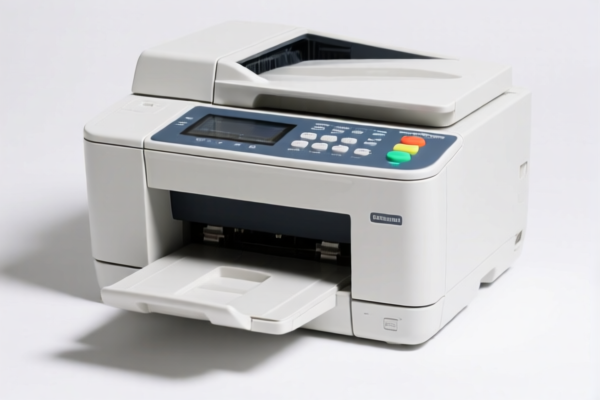
An "Access Control Copier" is a Multi-Function Peripheral (MFP) or Multi-Function Machine (MFM) that combines the functions of copying, printing, scanning, and often faxing. The term "Access Control" typically refers to the device's internal software features (user authentication, secure printing, network access management) rather than a separate hardware security module.
In international trade, the classification hinges on primary function: 1. Machines for Copying: If the machine is designed primarily for making copies (reproducing documents), it falls under Heading 8443. 2. Printers: If the primary function is printing from a computer, it falls under Heading 8443. 3. Security Hardware: If the "Access Control" refers to a dedicated physical security door controller with a small printer/scanner attachment, it might be classified under 8301 (Locks). However, in 99% of commercial office contexts, this is an MFP (8443).
⚠️ Critical Distinction:
- If the device includes a dedicated, separate biometric lock or card reader not integrated into the printer/copier unit, that specific lock might be classified under 8301.
- However, if the "Access Control" is just a login screen/software feature for the copier itself (e.g., swipe badge to release print job), the entire unit is classified as an 8443 MFP.
📦 Part II: HS Code Classification Details (2026 Authoritative Standards)
| HS Code | Product Description | Applicable Scenario | Key Features |
|---|---|---|---|
| 8443.31.00.00 | Machines for printing by means of ink-jet printers | Office Inkjet MFPs | Inkjet technology; common for color office printing. |
| 8443.32.00.00 | Other printers, capable of connecting to an automatic data processing machine | Laser/BW Office MFPs | Laser/BW; connects to PC/Mac; standard office copiers. |
| 8443.99.00.00 | Other machines for copying or facsimile, whether or not combining printing and scanning | Non-standard MFPs | Machines not fitting 8443.31/32 (e.g., high-end industrial digital presses). |
🔍 Key Reminder:
- Most modern "Access Control Copiers" in office settings are Laser or Inkjet MFPs.
- If it connects to a PC/MAC and prints, it is likely 8443.32.00.00 (Laser/BW) or 8443.31.00.00 (Inkjet).
- Do NOT classify as "Security Equipment" (Chapter 83) unless it is a standalone door lock. The "Access Control" is a software feature, not the primary mechanical function.
💰 Part III: 2026 Latest Tariff Rate Details (Including Surtaxes & Policies)
✅ Applicable Country: United States (US)
✅ Country of Origin: China (CN)
✅ Effective Date: November 10, 2025 (including subsequent imports)
🎯 1. 8443.32.00.00 —— Other Printers, Laser/BW (Most Common for Office MFPs)
| Item | Content |
|---|---|
| Basic Duty Rate | 0% (ad valorem) |
| USITC Surtax | +25% (from USITC Footnote 9903.88.01) |
| IEEPA Surtax | +10% (for China/HK products, effective Nov 10, 2025) |
| Total Tariff Rate | 35% |
| Calculation | CIF Value × 35% |
| De Minimis Exemption | ❌ Not Eligible (deny_de_minimis) |
| Legal Basis Path | IEEPA:9903.01.25 → IEEPA:9903.01.24 → USITC:8443.32.00.00 → FOOTNOTE:9903.88.01 |
📌 Explanation:
- The 25% USITC surtax is part of the Section 301 tariffs on Chinese imports.
- The 10% IEEPA surtax is the new additional tariff for Chinese-origin electronic office equipment.
- Total: 35%. This is a high tariff, impacting profit margins significantly.
🎯 2. 8443.31.00.00 —— Inkjet Printers/MFPs
| Item | Content |
|---|---|
| Basic Duty Rate | 0% |
| USITC Surtax | +25% |
| IEEPA Surtax | +10% |
| Total Tariff Rate | 35% |
| Calculation | CIF Value × 35% |
| De Minimis Exemption | ❌ Not Eligible |
| Legal Basis Path | IEEPA:9903.01.25 → IEEPA:9903.01.24 → USITC:8443.31.00.00 → FOOTNOTE:9903.88.01 |
📌 Note:
- Inkjet MFPs face the same tariff structure as Laser MFPs.
- The "Access Control" software feature does not change the tariff rate.
🛠️ Part IV: Customs Clearance Practical Advice (Real-World Pitfall Guide)
✅ 1. Documentation Checklist (Missing Documents = Delay)
| Document | Required | Notes |
|---|---|---|
| ✅ Product Specification Sheet | ✔️ | Must list: Copy/Print/Scan functions, Resolution, Speed, Connectivity (USB/Ethernet/WiFi). |
| ✅ Technical Diagram | ✔️ | Show that "Access Control" is a software interface or integrated card reader, NOT a separate door lock. |
| ✅ Product Photos (Front/Rear/Back) | ✔️ | Show model number, FCC ID (if applicable), and connections. |
| ✅ Commercial Invoice | ✔️ | Describe as: "Multi-Function Printer/Copier with User Access Control Software, Model XYZ" |
| ✅ Country of Origin Certificate | ✔️ | Required for tariff calculation. |
| ✅ FCC Compliance Statement | ✔️ | If sold in the US, FCC ID is mandatory for electronics. |
✅ 2. Declaration Tips (Key Mantra)
🔥 "MFP, Not Lock; Software, Not Hardware; Full Set, No Split!"
| Scenario | Correct Declaration | Incorrect Practice |
|---|---|---|
| Office MFP with badge reader | 8443.32.00.00 |
Splitting badge reader into 8301 (Locks) → Wrong! |
| Standalone Door Lock with Printer | 8301.40.00.00 (Lock) + 8443.32 (Printer) |
Declaring as single MFP → Wrong! |
| "Access Control" is just login software | 8443.32.00.00 |
Adding "Security System" to description → Confusing |
| Device includes scanner | 8443.32.00.00 (covers multi-function) |
Splitting scanner into 8471 → Over-complicated |
📌 Clarification:
- The scanner part of an MFP is not classified separately; it's part of the MFP.
- The network card or hard drive for secure storage is not declared separately.
- Only if the access control mechanism is a physical, standalone door lock sold separately should it be classified under 8301.
✅ 3. Special Cases Handling
| Scenario | Handling Advice |
|---|---|
| OEM Branded Copiers | Provide brand authorization letters to avoid IP issues. |
| Pre-loaded with Access Control Software | State "Software Pre-loaded" on invoice. Software itself is not taxable separately if bundled. |
| Used/Refurbished Copiers | Subject to additional regulations; ensure FCC compliance for reused electronics. |
| High-Security Military Spec | May require ITAR/EAR checks; declare accurately to avoid export control violations. |
🌍 Part V: Global Market Comparison (2026 Latest)
| Country/Region | Recommended HS Code | Tariff (China Origin) | Certification | Notes |
|---|---|---|---|---|
| 🇺🇸 USA | 8443.32.00.00 |
35% (0% + 25% + 10%) | FCC | High tariff for MFPs |
| 🇨🇳 China | 8443.32.00.00 |
5% | CCC | No surtax |
| 🇪🇺 EU | 8443.32.00.00 |
0% | CE + RoHS | No surtax |
| 🇬🇧 UK | 8443.32.00.00 |
0% | UKCA | No surtax |
| 🇯🇵 Japan | 8443.32.00.00 |
0% | PSE | No surtax |
📌 Conclusion:
- The USA is the most expensive market for Chinese-made MFPs due to the 35% total tariff.
- EU, UK, Japan, and China have no surtaxes, making them more attractive for price-sensitive imports.
- Consider supply chain diversification (e.g., sourcing from Vietnam or Mexico) to mitigate US tariffs, if eligible for de minimis or lower rates.
📌 Part VI: Common Mistakes & Pitfall Guide (Lessons Learned)
❌ Mistake 1: Classifying the integrated badge reader as a Lock (8301)
👉 Consequence: Misclassification. If the reader is part of the MFP, it must be included in the MFP HS code. Splitting causes audit flags.
❌ Mistake 2: Using "Security Device" as the primary description
👉 Consequence: Customs may delay inspection to determine if it's a regulated security item. Be clear: "Multi-Function Printer with User Authentication."
❌ Mistake 3: Ignoring FCC Compliance
👉 Consequence: US Customs and Border Protection (CBP) will hold the shipment without a valid FCC ID. Always include FCC ID on the invoice and label.
❌ Mistake 4: Assuming "Access Control" exempts you from tariffs
👉 Consequence: No exemption. Software features do not change the HS code or tariff rate for hardware.
✅ Correct Practice:
"Multi-Function Laser Printer/Copier/Scanner with Web-Based User Access Control, Model XYZ, FCC ID: ABC123, Country of Origin: China"
🎯 Part VII: Conclusion: Precision Classification Saves Money!
🎯 Remember the Mantra:
🔹 "It's an MFP, not a Lock! 35% for US, 0% for EU!"
🔹 "Include FCC ID, Describe Functions, Avoid Split Declarations!"
📌 Pro Tip:
If your MFPs are assembled in Vietnam, Mexico, or Thailand, you may qualify for lower or zero US tariffs (check USMCA or FTAs).
Recommend Applying for an Advance Ruling with US CBP if you have a high-volume shipment to lock in the HS code and avoid surprise audits.
📣 Immediate Action:
📞 Consult a licensed customs broker + Provide Technical Specs + Verify FCC ID
🚀 Ensure your Access Control Copiers clear customs smoothly, minimizing costs and delays!
✨ Professional clearance starts with accurate classification!
💼 Every percentage point of tariff is money in your pocket!
用户评价
关于 HS 编码归类
协调制度(HS)是由世界海关组织(WCO)制定的国际贸易商品分类标准。全球 200 多个国家采用 HS 系统作为海关关税、贸易统计和进出口监管的基础。
每个 HS 编码遵循以下层级结构:
- 章(2 位)——商品大类(例如:第 84 章:机器和机械设备)
- 品目(4 位)——章内的更具体分类
- 子目(6 位)——国际通用细分,所有 WCO 成员国统一使用
- 本国细分(8-10 位)——各国自行扩展的细分编码,如美国 HTSUS 10 位编码
正确的 HS 编码归类对于顺利通关、准确缴纳关税和遵守贸易法规至关重要。错误归类可能导致海关延误、多缴关税或罚款。
从CN进口到US时,适用的关税税率可能包括:
- 最惠国(MFN)税率——适用于 WTO 成员国的标准关税税率
- 普通税率——适用于无贸易协定国家
- 贸易救济关税——附加关税,如 301 条款(反倾销)、232 条款(国家安全)或反补贴税
本页内容仅供参考。如需正式归类,请咨询当地海关或持牌报关代理。