Acrylic Flexible Conductive Film
CN → US商品图片
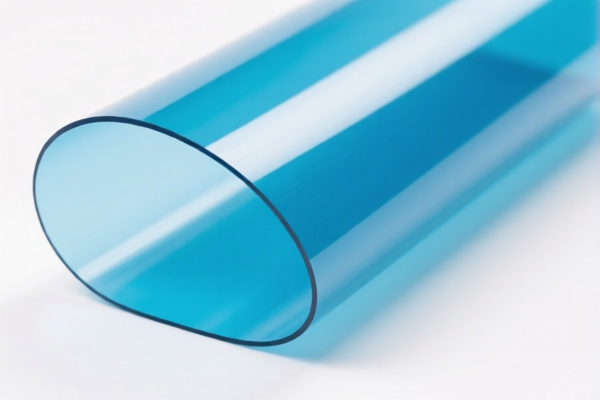
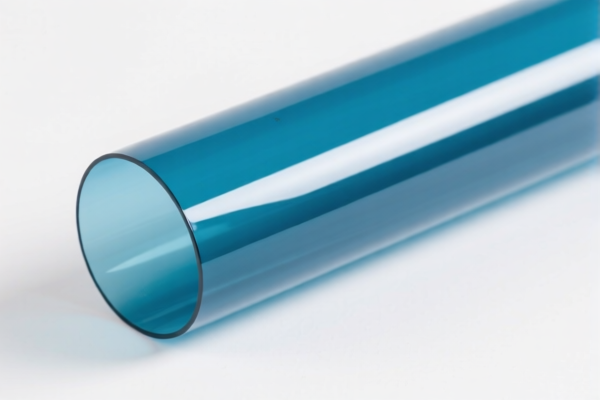
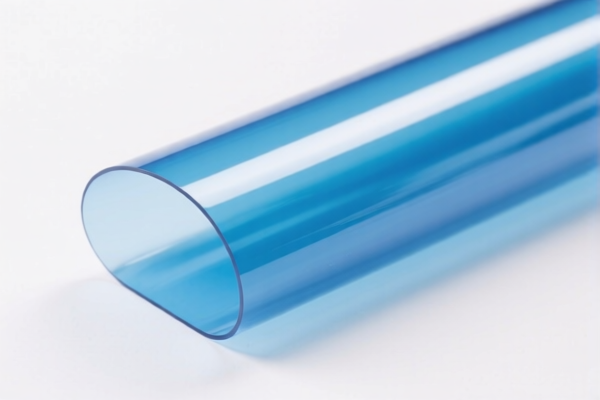
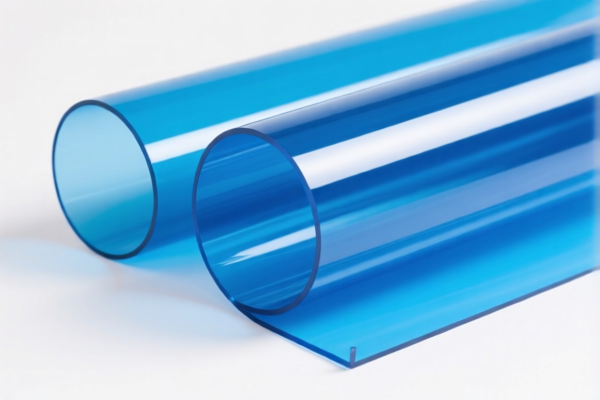
AI分析
🎨 Acrylic Flexible Conductive Film (Conductive Adhesive Films)
🌐 HS Code Reference & Customs Clearance Guide | 2026 Latest Tariff Analysis | Professional Compliance Strategy
📌 I. Product Definition & Classification: What Exactly Is "Acrylic Flexible Conductive Film"?
Acrylic Flexible Conductive Film is a specialized industrial material primarily used for electromagnetic interference (EMI) shielding, static dissipation, and transparent conductive applications. It typically consists of an acrylic pressure-sensitive adhesive layer coated with a conductive mesh (silver, copper, or aluminum) or a transparent conductive oxide (ITO).
In international trade, it is categorized based on its substrate material and primary function:
1. Self-Adhesive Products (Most Common):
If the film is backed by an acrylic adhesive and intended to be stuck onto a surface, it is generally classified under Chapter 39 (Plastics and Articles Thereof).
- Key Feature: It is an "article of plastic" with an adhesive layer.
2. Bare Conductive Foils/Meshes (No Adhesive):
If the film is a bare metal mesh or conductive foil without any self-adhesive backing, it may be classified under Chapter 74 (Copper), Chapter 76 (Aluminum), or Chapter 85 (Electrical machinery), depending on the material and form.
⚠️ Critical Distinction Point:
- If it has an acrylic adhesive backing → Classify under Chapter 39 (e.g., 3919 or 3920/3921 depending on structure).
- If it is bare metal mesh/foil without adhesive → Classify under Chapter 74/76/85.
- Note: The term "Acrylic" in the user input strongly suggests a plastic-based self-adhesive product. The following analysis assumes the most common commercial form: Self-Adhesive Conductive Film.
📦 II. HS Code Classification Details (2026 Latest Tariff Authority Alignment)
| HS Code | Product Description | Applicable Scenario | Contains Adhesive? |
|---|---|---|---|
| 3919.10.00.00 | Self-adhesive plates, sheets, film, foil, tape, strip and other flat shapes, of plastics, whether or not in rolls | Most Common: Standard acrylic-based conductive adhesive tapes/films | ✅ Yes (Acrylic) |
| 3920.99.90.00 | Other plates, sheets, film, foil and strip, of plastics (non-self-adhesive) | Bare conductive acrylic films (rare, usually adhesive is present) | ❌ No (but see note) |
| 3921.90.85.00 | Other plates, sheets, film, foam and strip, of plastics | Multi-layer laminates where the plastic layer is not merely a surface treatment | ✅ Yes (if structured) |
| 8515.21.00.00 | Machines, apparatus and equipment for electric soldering or welding | Incorrect – Do not confuse conductive film with soldering equipment | ❌ N/A |
| 7415.33.00.00 | Copper washers and washers of other shapes, including spring washers | Incorrect – Bare copper mesh without adhesive might fall here, but "Acrylic" implies plastic base | ❌ N/A |
🔍 Key Reminder for Customs:
- Do NOT classify self-adhesive conductive films under Chapter 85 (Electrical parts) unless they are integral parts of a machine declared with that machine.
- Primary Classification Rule: Under the Harmonized System (HS), self-adhesive plastics are primarily classified under Heading 3919.
- Material Specifics: If the conductive layer is silver, it does not change the HS code from 3919 (it remains a plastic article with a conductive coating), unless it is a bare silver mesh (which would be Chapter 71).
💰 III. 2026 Latest Tariff Rate Breakdown (Detailed Tax Clauses)
✅ Applicable Country: United States (US)
✅ Country of Origin: China (CN)
✅ Effective Date: From November 10, 2025 (including subsequent imports)
🎯 1. 3919.10.00.00 – Self-Adhesive Plastic Film (Conductive Acrylic Film)
| Item | Content |
|---|---|
| Basic Tariff Rate | 5.7% (ad valorem) |
| USITC Additional Tariff (Section 301) | +25% (Footnote 9903.88.01) |
| IEEPA Additional Tariff | +10% (Targeting China/HK products, effective Nov 10, 2025) |
| Total Effective Tax Rate | 40.7% (Calculated as: 5.7% + 25% + 10% = 40.7%) |
| Tax Calculation Basis | CIF Value × 40.7% |
| De Minimis Eligibility | ❌ Not Eligible (deny_de_minimis applies to Section 301 goods) |
| Legal Reference Path | IEEPA:9903.01.25 → USITC:3919.10.00.00 → FOOTNOTE:9903.88.01 |
📌 Explanation:
- The Basic Rate (5.7%) is the standard Most Favored Nation (MFN) rate for self-adhesive plastic films.
- The 25% Section 301 Tariff is imposed due to China's origin under the Trade Act of 1974.
- The 10% IEEPA Tariff is a new surcharge effective Nov 2025 for Chinese plastic-related goods.
- Total Burden: 40.7% is a significant cost. This is not a "duty-free" or "low-duty" item.
🎯 2. 3920.99.90.00 – Non-Self-Adhesive Plastic Films (If Applicable)
Note: Only applies if the product is explicitly declared as "Bare Acrylic Film with Conductive Coating" and NO adhesive is present.
| Item | Content |
|---|---|
| Basic Tariff Rate | 5.7% |
| USITC Additional Tariff (Section 301) | +25% |
| IEEPA Additional Tariff | +10% |
| Total Effective Tax Rate | 40.7% |
| De Minimis Eligibility | ❌ Not Eligible |
📌 Warning:
- Even if classified under 3920, the Section 301 and IEEPA penalties still apply.
- Misclassifying an adhesive product as "non-adhesive" to avoid 3919 is considered fraud and can lead to severe penalties.
🛠️ IV. Customs Clearance Practical Advice (Pitfall Avoidance Guide)
✅ 1. Required Documentation Checklist (Non-Negotiable)
| Document | Mandatory? | Description |
|---|---|---|
| ✅ Product Specification Sheet | ✔️ | Must state: Substrate (Acrylic), Conductive Layer (Silver/Copper/ITO), Adhesive Type, Thickness, Conductivity (Ohms/sq). |
| ✅ Technical Data Sheet (TDS) | ✔️ | Must confirm presence or absence of adhesive. This is the #1 factor for HS Code determination. |
| ✅ Product Photos (Clear) | ✔️ | Show roll, core, and close-up of conductive pattern. Label must show "Self-Adhesive" if applicable. |
| ✅ Commercial Invoice | ✔️ | Must explicitly state: "Acrylic Self-Adhesive Conductive Film for EMI Shielding" – Do not use vague terms like "Plastic Sheet". |
| ✅ Packing List | ✔️ | Weight and dimensions. |
| ✅ Certificate of Origin (CO) | ✔️ | To prove origin (China) and apply correct tariff codes. |
| ✅ Third-Party Test Report | ✔️ | Optional but recommended: Conductivity test, Adhesion strength test. |
✅ 2. Declaration Strategy (Key Mnemonic)
🔥 "Adhesive = 3919, Bare = 3920/74, Never Guess, Specify Conductivity!"
| Scenario | Correct Declaration | Incorrect Practice |
|---|---|---|
| Standard Conductive Tape/Film (with acrylic glue) | 3919.10.00.00Desc: "Self-adhesive acrylic film with conductive coating" |
Declare as "Plastic Tape" without mentioning conductive/adhesive properties → Risk of reclassification |
| Bare Conductive Mesh (no glue) | 3920.99.90.00 or 7415.33.00.00 (if copper) |
Declare as 3919 when no adhesive exists → Overpayment + Audit flag |
| ITO Glass/Film (Transparent conductor) | 3919.10.00.00 or 7009.92.00.00 (if glass substrate) |
Declare as "Display Part" → Wrong Chapter |
| Conductive Film integrated into a Device | Include in the Device's HS Code (e.g., 8517 for phone) |
Declare separately if not shipped separately → Dual declaration error |
✅ 3. Special Case Handling
| Situation | Handling Advice |
|---|---|
| Silver-Plated Polyester | If the base is polyester (plastic) and coated with silver, it is still 3919 if adhesive is present. If bare, it may be 3920. |
| Transparent Conductive (ITO) | If on plastic substrate with adhesive → 3919.10.00.00. If on glass → 7009. |
| EMI Shielding for Medical Devices | If sold as a component for a specific medical device, declare with the device. If sold as raw material, declare as 3919. |
| Anti-Static vs. Conductive | "Anti-static" may sometimes fall under 3920 (static dissipative). "Conductive" (low resistance) falls under 3919 if adhesive. Clarify resistance values (e.g., <10^6 ohms/sq). |
🌍 V. Global Market Comparison (2026 Latest)
| Country/Region | Recommended HS Code | Tariff (China Origin) | Certification Requirements | Notes |
|---|---|---|---|---|
| 🇺🇸 USA | 3919.10.00.00 |
40.7% (5.7% + 25% + 10%) | None specific, but data sheet required | High tariff burden due to Section 301 & IEEPA |
| 🇨🇳 China | 3919.10.00.00 |
5% - 10% (Import) | CCC (if electrical component) | Low tariff, high volume |
| 🇪🇺 EU | 3919.10.00.00 |
6.5% | REACH, RoHS | No Section 301 equivalent, but high environmental compliance |
| 🇬🇧 UK | 3919.10.00.00 |
6.5% | UKCA, RoHS | Post-Brexit, aligns with EU rates mostly |
| 🇯🇵 Japan | 3919.10.00.00 |
5% - 6% | PSE (if electrical) | No extra punitive tariffs |
| 🇻🇳 Vietnam | 3919.10.00.00 |
0% - 5% | None | Potential for lower tariffs if processed further, but raw film faces scrutiny |
📌 Conclusion:
- USA is the most challenging market due to the 40.7% effective tariff.
- Europe, Japan, and Australia offer much lower tariff burdens (~5-6.5%).
- Supply Chain Strategy: Consider sourcing from non-China origins (e.g., Vietnam, Thailand, or local suppliers) to avoid IEEPA/Section 301 surcharges if targeting the US market.
📌 VI. Common Errors & Pitfalls (Lessons Learned)
❌ Error 1: Declaring "Conductive Film" as "Electrical Machinery Parts" (Chapter 85)
👉 Consequence: Rejected by customs, delayed shipment, fines. Conductive film is a material, not a machine part, unless integrated.
❌ Error 2: Failing to specify "Self-Adhesive" on the Invoice
👉 Consequence: Customs may question the classification. If adhesive is found, they may penalize for misdeclaration. Always specify "Self-Adhesive" if present.
❌ Error 3: Ignoring the IEEPA 10% Surcharge (Effective Nov 2025)
👉 Consequence: Underpayment of duties. The 10% is new and applies to many plastic products from China. Budget accordingly.
❌ Error 4: Using "Plastic Tape" without specifying material or conductive properties
👉 Consequence: Customs may assign a generic higher duty or require additional testing to determine the exact HS Code.
✅ Correct Declaration Example:
"Acrylic Self-Adhesive Conductive Film, Silver-Coated, for EMI Shielding, Thickness 0.2mm, Roll Form, Model XYZ, China Origin"
🎯 VII. Conclusion: Precision in Classification, Savings in Clearance
🎯 Remember the Rules:
🔹 "Adhesive + Plastic = 3919"
🔹 "No Adhesive + Plastic = 3920"
🔹 "China Origin + US Import = 40.7% Minimum Duty"
🔹 "Specify Conductive Purpose to Avoid Misclassification Penalties"
📌 Pro Tip:
If your product is bare conductive foil (no adhesive) made of copper, consider classifying under 7415.33.00.00 and verify if the 25% Section 301 applies (it usually does, but check the latest HTS notes).
For USA imports, calculate the total landed cost including the 40.7% tariff before finalizing orders. Consider Section 321 De Minimis is NOT available for these goods.
📣 Immediate Action:
📞 Consult a Licensed Customs Broker to confirm the exact HS Code based on your product's technical datasheet.
📄 Prepare a Detailed Technical Description highlighting "Self-Adhesive" and "Conductive Properties".
💡 Explore Duty Drawback or Exclusion Programs if applicable (though limited for IEEPA goods).
✨ Professional Clearance Starts with Accurate Classification!
💼 Every Percent of Duty Saved is Pure Profit!
用户评价
关于 HS 编码归类
协调制度(HS)是由世界海关组织(WCO)制定的国际贸易商品分类标准。全球 200 多个国家采用 HS 系统作为海关关税、贸易统计和进出口监管的基础。
每个 HS 编码遵循以下层级结构:
- 章(2 位)——商品大类(例如:第 84 章:机器和机械设备)
- 品目(4 位)——章内的更具体分类
- 子目(6 位)——国际通用细分,所有 WCO 成员国统一使用
- 本国细分(8-10 位)——各国自行扩展的细分编码,如美国 HTSUS 10 位编码
正确的 HS 编码归类对于顺利通关、准确缴纳关税和遵守贸易法规至关重要。错误归类可能导致海关延误、多缴关税或罚款。
从CN进口到US时,适用的关税税率可能包括:
- 最惠国(MFN)税率——适用于 WTO 成员国的标准关税税率
- 普通税率——适用于无贸易协定国家
- 贸易救济关税——附加关税,如 301 条款(反倾销)、232 条款(国家安全)或反补贴税
本页内容仅供参考。如需正式归类,请咨询当地海关或持牌报关代理。