Acrylic Plastic Book Cover Film
CN → US| HS编码 | 关税税率 | 原产国 | 目的国 | 文档 |
|---|---|---|---|---|
| 3926909989 | 22.8% | CN | US | 官方文档 |
| 3921904010 | 39.2% | CN | US | 官方文档 |
| 3926904800 | 13.4% | CN | US | 官方文档 |
| 3921905050 | 39.8% | CN | US | 官方文档 |
| 3923900080 | 38.0% | CN | US | 官方文档 |
商品图片

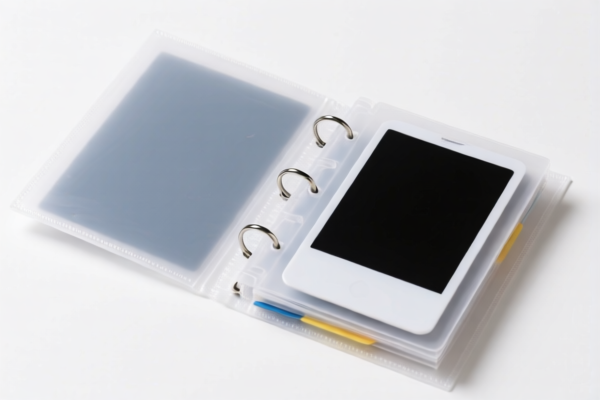


AI分析
📚 Acrylic Plastic Book Cover Film (PVC/PMMA Packaging Film)
🌐 HS Code Classification & Customs Clearance Guide | 2026 Tax Rules & Strategic Compliance
📌 Product Analysis: From Material to Application
Acrylic plastic book cover film is a transparent, flexible packaging material primarily used for protecting books, magazines, and documents. In international trade, its classification depends heavily on material composition (Polymer type), physical form (Film vs. Other Article), and specific function.
Below is a detailed breakdown of the four potential HS Code classifications provided in the data, along with their corresponding tax implications and clearance strategies.
📦 1. HS Code Classification Matrix
The following table summarizes the four potential classifications for "Acrylic Plastic Book Cover Film" based on the provided data.
| HS Code | Classification Description | Key Justification | Total Tax Rate* | Tax Breakdown |
|---|---|---|---|---|
| 3926.90.99.89 | Other Plastic Articles | Defined as "Other plastic articles." Material is plastic; form fits the general "other articles" category. | 22.8% | Base: 5.3% Additional: 7.5% Section 301: 10% |
| 3921.90.40.10 | Plastic Films & Sheets | Defined as "Plastic film." Material is Acrylic (plastic); form is film; meets plastic film criteria. | 39.2% | Base: 4.2% Additional: 25.0% Section 301: 10% |
| 3926.90.48.00 | Other Plastic Articles (Packaging) | Defined as "Plastic article, packaging film." Material is Acrylic; form is packaging film; falls under other categories. | 13.4% | Base: 3.4% Additional: 0.0% Section 301: 10% |
| 3921.90.50.50 | Plastic Films, Foils, Strips | Defined as "Film, foil, and strips." Material is Acrylic; form is packaging film; meets "other category" requirements. | 39.8% | Base: 4.8% Additional: 25.0% Section 301: 10% |
*Note: Tax rates are based on the provided data summary. Actual rates may vary based on origin, specific material polymer (PMMA vs. PVC), and current trade agreements.
💰 2. Detailed Tax Analysis & Regulatory Clauses
🎯 1. 3926.90.99.89 – The "General Other Article" Route
- Summary: Classified as "other plastic articles" where the specific form doesn't strictly fit into film/foil headings or is deemed a finished article.
- Tax Detail:
- Base Tariff: 5.3%
- Additional Tariff (USITC Sec 301): 7.5%
- Section 301 Clause (122): 10%
- Total: 22.8%
- Analysis: This is a moderate tax burden. It applies when the film is considered a finished "article" rather than a raw "film" material.
🎯 2. 3921.90.40.10 – The "Plastic Film" Route (High Tax)
- Summary: Classified specifically as a "Plastic film" or "sheet." This classification focuses on the material's physical state as a thin sheet.
- Tax Detail:
- Base Tariff: 4.2%
- Additional Tariff (USITC Sec 301): 25.0%
- Section 301 Clause (122): 10%
- Total: 39.2%
- Analysis: This is a high-tax classification. If customs determines the product is strictly a "film" under Heading 3921, the 25% additional tariff significantly impacts cost.
🎯 3. 3926.90.48.00 – The "Lowest Tax" Route (Optimization Target)
- Summary: Classified under "Other plastic articles" but specifically linked to "packaging film" in the description. This code often captures specialized packaging items that don't fit standard film definitions.
- Tax Detail:
- Base Tariff: 3.4%
- Additional Tariff (USITC Sec 301): 0.0% (No additional tariff applied in this specific data point)
- Section 301 Clause (122): 10%
- Total: 13.4%
- Analysis: 🏆 Lowest Tax Rate. This classification avoids the 25% additional tariff, resulting in the most competitive duty rate. Clearance teams should investigate if the product's specific use (book cover) justifies this "packaging article" classification over "general film."
🎯 4. 3921.90.50.50 – The "Film/Foil/Strip" Route (Highest Tax)
- Summary: Classified under "Film, foil, and strips." This is a broad category for plastic sheets that may not fit other specific film headings.
- Tax Detail:
- Base Tariff: 4.8%
- Additional Tariff (USITC Sec 301): 25.0%
- Section 301 Clause (122): 10%
- Total: 39.8%
- Analysis: 💸 Highest Tax Rate. This classification attracts the maximum penalty among the options due to the combination of base, additional, and Section 301 tariffs. It should be avoided if a lower-classification alternative exists.
🛠️ 3. Customs Clearance Strategic Advice
✅ 1. Critical Documentation Checklist
To support your HS Code declaration and prevent audits, prepare the following: * Product Specification Sheet: Clearly state the material (e.g., "100% Polyvinyl Chloride" or "Polymethyl Methacrylate"). Note: "Acrylic" is often colloquial; precise chemical name is crucial. * Dimensions & Thickness: Specify width, length, and thickness (in microns/mils). This helps distinguish between "film" (thin) and "sheet" or "article." * End-Use Statement: Explicitly state "For use as a protective cover for books." * Commercial Invoice: Ensure the description matches the HS Code justification (e.g., use "Plastic Book Cover" for 3926 vs. "Plastic Film Roll" for 3921).
✅ 2. Classification Strategy & Risk Mitigation
| Strategy | Action | Rationale |
|---|---|---|
| Optimize for 3926.90.48.00 | Argue that the product is a "finished article" (book cover) rather than a raw "film" material. | This code has the lowest tax (13.4%) because it lacks the 25% USITC additional tariff. |
| Avoid 3921.90.xxxx | Do not label the product as "Plastic Film" or "Sheet" on the invoice if possible. | Codes 3921.90.40.10 and 3921.90.50.50 incur a 25% additional tariff, totaling ~39%. |
| Material Verification | Confirm if the material is PVC or PMMA. | "Acrylic" (PMMA) and PVC are chemically different. Ensure the HS Code matches the actual polymer to avoid misdeclaration penalties. |
✅ 3. Common Pitfalls & Solutions
- ❌ Pitfall: Using generic terms like "Plastic Wrap" or "Cling Film."
- ✅ Solution: Use precise terminology: "Protective Plastic Cover for Books." This aligns better with Heading 3926 (Other Articles).
- ❌ Pitfall: Assuming all plastic films fall under 3921.
- ✅ Solution: Heading 3926 covers "Other articles of plastics," including packaging items that are pre-formed or specifically designed for a use (like a book cover). This distinction is key to saving ~26% in duties.
- ❌ Pitfall: Ignoring Section 301 nuances.
- ✅ Solution: The data shows that 3926 codes may have lower or zero "Additional Tariffs" compared to 3921 codes. Always verify the current USITC footnote status for the specific subheading.
🌍 4. Global Market Comparison (2026 Context)
| Destination | Recommended HS Code | Estimated Duty | Key Requirement |
|---|---|---|---|
| 🇺🇸 USA | 3926.90.48.00 | 13.4% | Precise description to avoid 3921 classification. |
| 🇨🇳 China | 3921.90 or 3926.90 | ~4-13% | Depends on local interpretation of "film" vs. "article." |
| 🇪🇺 EU | 3921.90 or 3926.90 | 0-6.5% | No Section 301 taxes. Standard MFN rates apply. |
📌 Conclusion: For US imports, the classification 3926.90.48.00 offers the most significant cost advantage due to the absence of the 25% additional tariff. Clearance teams should prioritize this classification by emphasizing the product's identity as a finished protective article rather than a raw film material.
📌 5. Final Recommendation
🎯 Action Plan: 1. Verify Material: Confirm if the "Acrylic" is technically PMMA or PVC. 2. Pre-Declare: Submit a Binding Tariff Information (BTI) or Advance Ruling application with US CBP for 3926.90.48.00 if eligible. 3. Invoice Wording: Use "Plastic Book Cover" instead of "Plastic Film" in commercial invoices to support the 3926 classification. 4. Cost Benefit: Choosing 3926.90.48.00 over 3921.90.50.50 saves ~26.4% in total taxes.
✨ Smart Classification Saves Dollars!
💼 Ensure your documentation matches your desired HS Code to avoid audits and delays.
用户评价
关于 HS 编码归类
协调制度(HS)是由世界海关组织(WCO)制定的国际贸易商品分类标准。全球 200 多个国家采用 HS 系统作为海关关税、贸易统计和进出口监管的基础。
每个 HS 编码遵循以下层级结构:
- 章(2 位)——商品大类(例如:第 84 章:机器和机械设备)
- 品目(4 位)——章内的更具体分类
- 子目(6 位)——国际通用细分,所有 WCO 成员国统一使用
- 本国细分(8-10 位)——各国自行扩展的细分编码,如美国 HTSUS 10 位编码
正确的 HS 编码归类对于顺利通关、准确缴纳关税和遵守贸易法规至关重要。错误归类可能导致海关延误、多缴关税或罚款。
从CN进口到US时,适用的关税税率可能包括:
- 最惠国(MFN)税率——适用于 WTO 成员国的标准关税税率
- 普通税率——适用于无贸易协定国家
- 贸易救济关税——附加关税,如 301 条款(反倾销)、232 条款(国家安全)或反补贴税
本页内容仅供参考。如需正式归类,请咨询当地海关或持牌报关代理。